NEW YORK, July 30, 2026, 04:20 EDT
- Amazon is said to be phasing out Nova Premier, Omni, Reel, and Canvas, according to reports.
- Cash capital expenditures surged 78% in the first quarter, while trailing free cash flow dropped 95%.
- Second-quarter earnings will be released following Thursday’s market close. The consensus numbers listed below are initial estimates.
Amazon.com NASDAQ:AMZN is said to be discontinuing most of its main Nova artificial-intelligence models. Resources, including engineers and computing power, are being shifted to a frontier-model team headed by Pieter Abbeel.
The shift is significant as Amazon’s capital requirements are increasing more quickly than its ability to generate cash. Its 2026 capital blueprint totals $200 billion, representing approximately 135% of its most recent trailing operating cash flow.
Chief Executive Andy Jassy has justified the scale. “We expect to invest about $200 billion in capital expenditures across Amazon in 2026,” he stated in February. SEC
The investor takeaway is not a step back from AI. Instead, it reflects a focus on a narrower set of initiatives. With fewer simultaneous projects, additional computing power could be directed towards advanced research and supporting AWS operations.
Amazon’s core source of AI income goes beyond just its own models. According to AWS, its AI revenue run rate surpassed $15 billion in the first quarter. Bedrock is utilized by over 100,000 businesses, with the majority of inference processed on Amazon’s Trainium chips.
The disclosed portfolio breakdown indicates Amazon’s areas of reduction. The last column reflects an investor’s estimation.
| Amazon AI effort | Reported position | Capital-allocation signal |
|---|---|---|
| Nova Premier and Omni | Phasing out; maintenance ongoing | Reduced focus on advanced models |
| Nova Reel and Canvas | Phasing out; maintenance ongoing | Less emphasis on niche video and image pipelines |
| Nova 2 Lite, Nova 2 Sonic, Forge and Act | Maintained or continued | Secures channels for production and customization |
| Frontier Model Research | Lead initiative; flagship release expected at re:Invent | Pools talent and computational resources |
Amazon has not disclosed the roadmap for specific products. The company stated its offerings change in response to customer interest and support continues for current users. “AI models remain one of the most important things we’re working on, and that hasn’t changed,” a spokesperson said. Reuters
Amazon’s AGI division has undergone a restructuring after unreported layoffs. Ex-AGI head Rohit Prasad exited in December. The lab’s head, David Luan, left the company in February. Peter DeSantis is now responsible for models, silicon, and quantum computing.
The figures demonstrate the necessity for greater focus. Percentage differences shown are derived from Amazon’s reports.
| Metric | Q1 2025 or TTM March 2025 | Q1 2026 or TTM March 2026 | Change |
|---|---|---|---|
| Spending on cash capital | $24.3 billion | $43.2 billion | +77.8% |
| Trailing free cash flow | $25.9 billion | $1.2 billion | -95.4% |
| AWS revenue | $29.27 billion | $37.59 billion | +28.4% |
| AWS operating profit | $11.55 billion | $14.16 billion | +22.6% |
| AWS operating margin | 39.5% | 37.7% | -1.8 percentage points |
AWS maintained strong growth, with revenue increasing at a faster rate than operating income. Technology and infrastructure costs climbed 29%, continuing to weigh on margins.
Another limitation comes from funding expenses. Amazon’s $25 billion bond issue in July attracted coverage of around 1.6 times, compared to 3.4 times in March. “We’re making these very large investments with the bet that we have return on invested capital,” said Colby Stilson of Brown Advisory. Reuters
The upcoming test will be Thursday following the close of the market. Amazon’s earnings call is scheduled to start at 5 p.m. EDT. Early consensus forecasts indicate quicker AWS growth and a slight increase in margins compared to a year ago.
| Q2 measure | Q2 2025 actual | Q2 2026 preliminary consensus | Implied change |
|---|---|---|---|
| Net sales | $167.7 billion | About $197.0 billion | About +17.5% |
| Diluted earnings per share | $1.68 | About $1.81 | About +8% |
| AWS sales | $30.9 billion | About $40.54 billion | About +31% |
| AWS operating margin | 33.0% | About 33.8% | +0.8 percentage point |
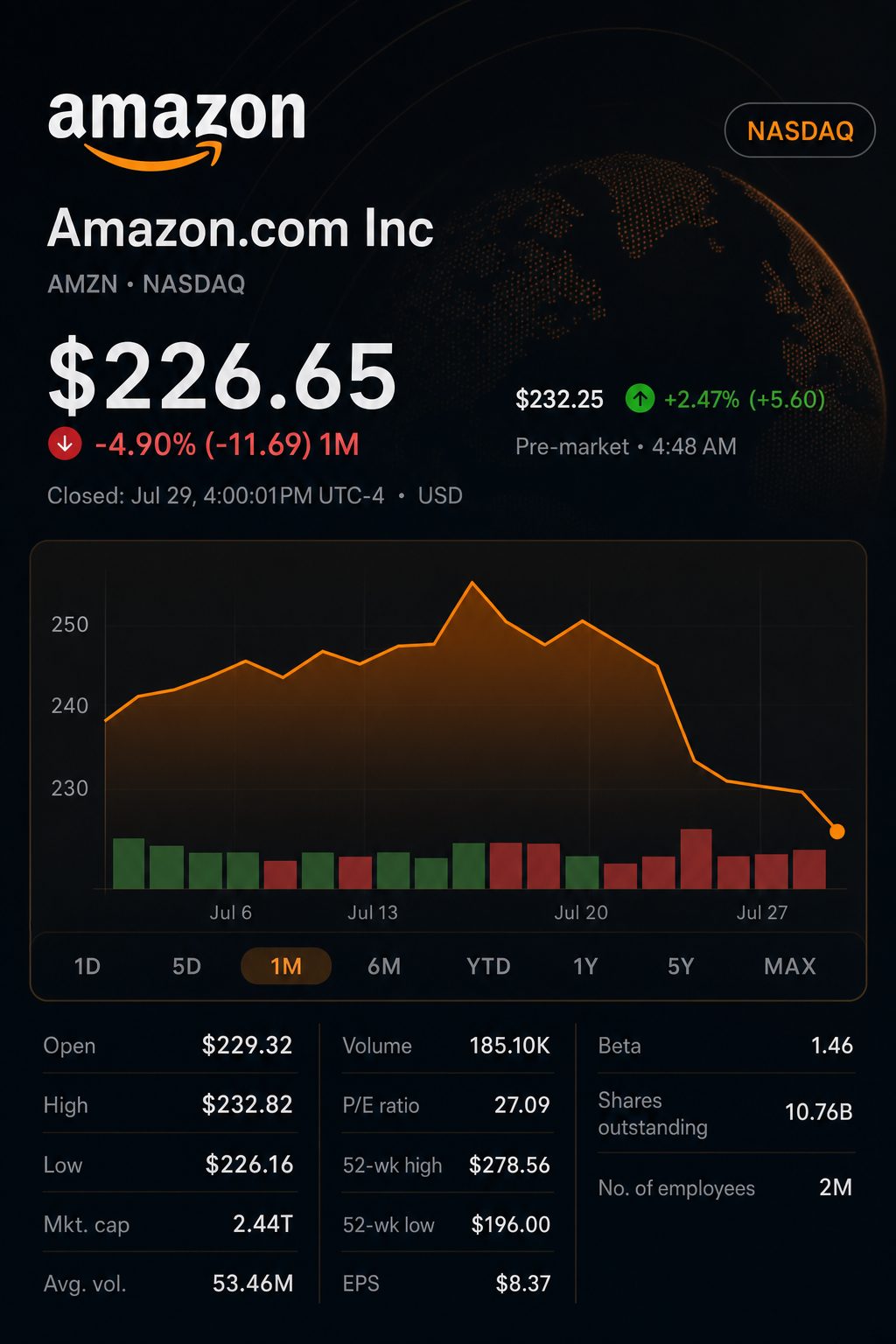
Nasdaq markets were shut when this report was filed. Amazon shares dropped 6.1% in the week that ended July 24. The stock declined an additional 2.4% by Wednesday, finishing July 29 at $226.65.
The initial judgment comes in Friday’s post-results session. Next week’s trading will indicate if investors view the move as discipline or a sign of losing ground to rivals.
Risks persist. Offering fewer models could reduce differentiation or disrupt customers undergoing migrations. Ongoing capital investment, increased borrowing expenses, and swift advancements in competing models may surpass any cost benefits.
Amazon’s AI spending remains steady, but the company is currently selecting a smaller number of areas to invest in.
Related articles: NASDAQ:AMZN