
WASHINGTON, June 30, 2026, 16:06 EDT
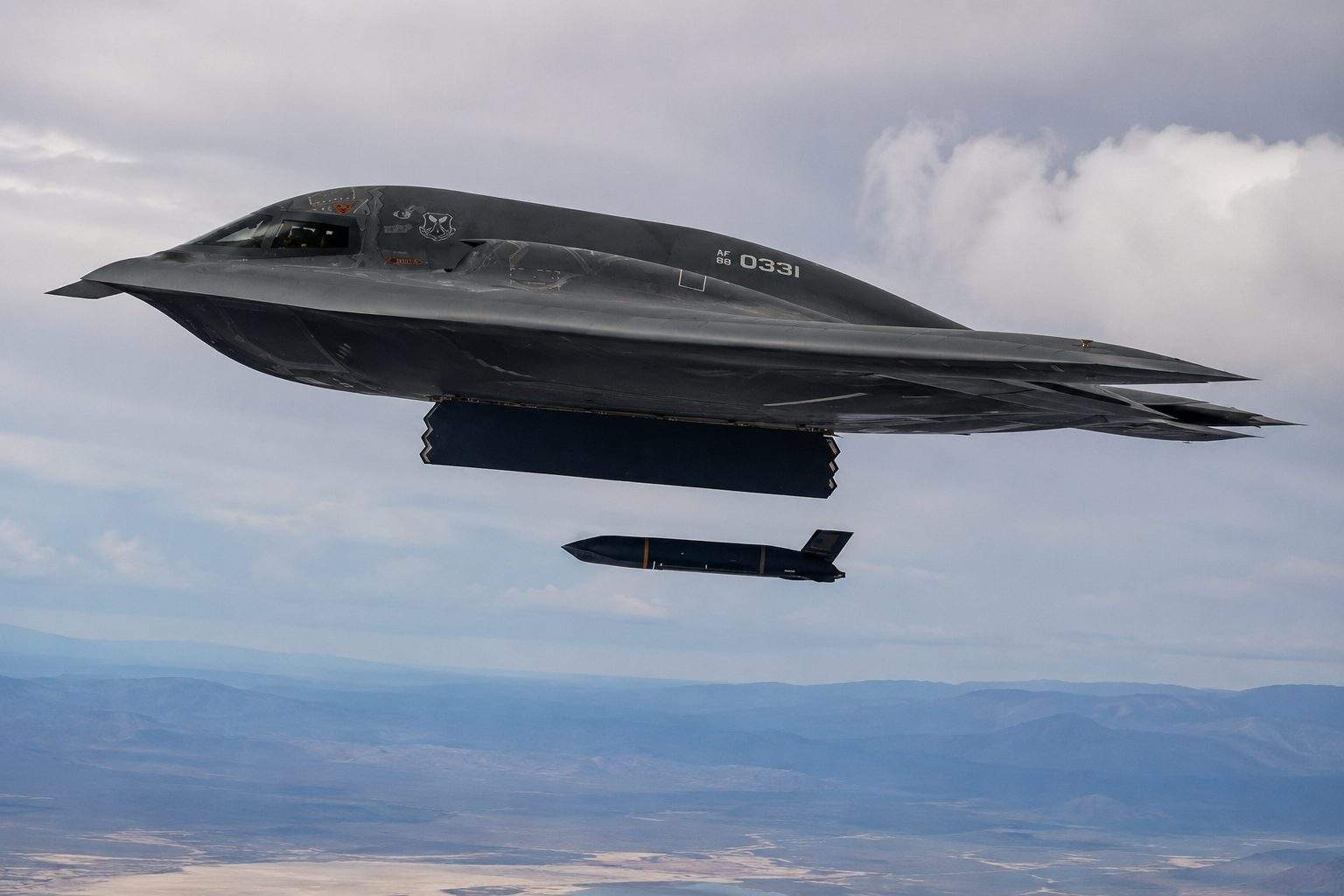
- B-2 launched an AGM-158C LRASM at the ex-USS Juneau during a Pacific SINKEX on June 27
- Investors are paying more attention to missile contract volumes at Lockheed Martin NYSE:LMT and new bomber orders for Northrop Grumman NYSE:NOC after a new public data platform launch
- Navy wants $531.4 million for 120 LRASM missiles in its FY2026 request, with a line-item average close to $4.43 million each.
B-2 Spirit, built by Northrop Grumman NYSE:NOC, launched a Lockheed Martin NYSE:LMT AGM-158C Long Range Anti-Ship Missile in a Pacific live-fire sinking drill. It’s the first time the stealth bomber has been put on the public LRASM platform list. The move may let investors gauge missile demand better than a one-off test. Pacific Air Forces said the B-2 dropped the LRASM north of the Mariana Islands. Air Force images show the missile being loaded at Whiteman Air Force Base on June 22 and fired over the Philippine Sea on June 27.
U.S. Pacific Command said it targeted the decommissioned Austin-class amphibious transport dock USS Juneau, positioning it more than 200 nautical miles from the Mariana Islands Range Complex. The sinking exercise involved U.S. aircraft, a Japanese submarine, and other allied forces. “This SINKEX provided an outstanding opportunity for our joint team to integrate capabilities across domains, honing the lethal precision and coordination essential for high-end maritime operations in the Pacific theater,” Rear Adm. Eric Anduze, commander of Carrier Strike Group 5 and Task Force 70, said. PACOM
The main investor problem is still platform breadth, not the target. TWZ said Air Force Global Strike Command called B-2 integration details classified, and its check of the Pentagon’s FY2027 budget proposal did not find any sign of B-2 LRASM integration. That report listed B-1B and F/A-18E/F as the only cleared launch platforms named, with public work also on F-15E, F-15EX, F-16, some F-35 types, P-8A and B-52.
| LRASM platform | Public status after this disclosure | Investor read |
|---|---|---|
| B-2 Spirit | Now public for live-fire, but integration info still classified | Brings stealth bomber demand into view for LRASM |
| B-1B | Known LRASM bomber in Air Force | Air Force demand already in place |
| F/A-18E/F | Known as Navy carrier-air-wing option | Navy orders remain a mainstay |
| F-35 variants | Integration effort is public info | Connects Lockheed’s jets and missile pitch |
| P-8A, F-15E/F-15EX, F-16, B-52 | Known or public plans for fitting | More launch platforms may enable bigger orders |
Budget numbers offer a sense of scale. The Navy’s FY2026 P-1 shows LRASM line 20 at 91 missiles for $599.636 million in FY2024 actuals, 90 missiles for $326.435 million under FY2025 enacted funding, and a request for 120 missiles worth $531.442 million in FY2026. The number here is a line average, not a per-missile price.
| Navy LRASM line | Missiles | Cost | Implied line-item average |
|---|---|---|---|
| FY2024 actuals | 91 | $599.636 million | $6.59 million |
| FY2025 enacted | 90 | $326.435 million | $3.63 million |
| FY2026 total request | 120 | $531.442 million | $4.43 million |
The technical reason is about the order book. NAVAIR said LRASM cuts the need for intelligence, surveillance and reconnaissance platforms, network links and GPS in electronic warfare. It operates with semi-autonomous guidance that needs less precise targeting. The Pentagon is putting this feature set on more aircraft, not just one bomber.
Lockheed had already made its platform-spread message public. On June 10, the company said it had worked on the first phase of the U.S. Navy F-35C LRASM flight-science test program from September 2024 through April 2026. “By integrating LRASM onto the F-35, we’re giving our warfighters a powerful capability that enhances mission flexibility and expands their operational options,” said Jon Hill, vice president and general manager of Lockheed Martin Air Dominance and Strike Weapons. F-35
For Northrop, the B-2 issue ties directly to the B-21. In February, the Air Force said it worked out a deal with Northrop to use $4.5 billion in existing funds to raise yearly B-21 Raider output by 25%. The first jets are still scheduled for Ellsworth Air Force Base in 2027. “The B-21 is foundational to our long-range strike capability and to credible deterrence,” Air Force Secretary Troy Meink said. U.S. Air Force
Lockheed traded at $508.70, up $6.63, as of 15:51 EDT. Northrop changed hands at $507.75, showing an $11.73 gain. The iShares U.S. Aerospace & Defense ETF (NYSEARCA:ITA) rose $2.72 to $241.85.
Capacity is the main limit, not demand. Reuters said last week the White House pressed top munitions companies to boost arms output, but executives told them they want financial backing before putting money into expansion. Reuters also said Lockheed’s deals to lift Patriot and THAAD production still need Congress to sign off on funding.