Today: 21 June 2026

Internet Access in Yemen: Overview and Key Aspects

Internet Access in Yemen: Overview and Key Aspects

Yemen relies on the aging FALCON subsea cable for most internet traffic, with limited backup via Djibouti and satellite. As of January 2024, only 17.7% of the population had internet access, and 4G coverage reached 56.7%. Major outages hit in January 2020 and 2022, cutting off most of the country. Starlink launched officially in September 2024, boosting speeds in government-held areas.

24 February 2025
Internet Access in Iraq

Internet Access in Iraq

Iraq’s Ministry of Communications controls the national fiber backbone and leases bandwidth to private ISPs at about $50 per 1 Mbps. By early 2024, internet users reached 36.2 million, or nearly 79% of the population. Vodafone received a 5G license in November 2024. Authorities have imposed internet shutdowns during protests, including a 263-hour blackout in 2019.
24 February 2025
Internet Access in Afghanistan: A Comprehensive Overview

Internet Access in Afghanistan: A Comprehensive Overview

Mobile subscriptions in Afghanistan reached nearly 100% by 2021, but Taliban rule since August 2021 stalled fiber rollout and connectivity projects. Internet penetration fell from 22.9% in 2022 to 18.4% in 2024. Taliban authorities blocked 23.4 million websites, banned TikTok and PUBG, and increased censorship. MTN plans to exit the market; fixed broadband speeds remain among the world’s slowest.
24 February 2025
Internet Access in Ukraine: Overview

Internet Access in Ukraine: Overview

Over 4,200 ISPs operated in Ukraine as of August 2024, with Kyivstar holding 19% market share. Starlink received an operator license in April 2022 and had about 42,000 terminals by 2023. Median fixed broadband speed was 74–84 Mbps; mobile, 24–43 Mbps. Around 29.6 million Ukrainians used the internet in 2023, or 79% of the population.
24 February 2025
Internet Access in Mozambique

Internet Access in Mozambique

Tmcel is restructuring to avoid bankruptcy after accumulating over $400 million in debt. Vodacom Mozambique holds about half the mobile market and launched the country's first limited 5G service in Maputo in 2023. By early 2024, there were 18.91 million active mobile SIMs, covering roughly 55% of the population. Fixed-line broadband remains rare, and about one-third of Mozambicans lack mobile broadband coverage.
23 February 2025
Internet Access in Libya: A Comprehensive Overview

Internet Access in Libya: A Comprehensive Overview

Libya had 12.4 million active mobile connections by June 2023, about 179% of its population. State firms dominate the sector, with Libyana and Al-Madar Al-Jadeed covering most of the country’s 4G users. Fixed broadband remains limited at 326,000 subscriptions in 2022. Libya ranked 161st of 179 countries for mobile speed in 2023, with median downloads of 8–16 Mbps.
16 February 2025
Internet Access in China

Internet Access in China

China had 1.09 billion internet users by end-2023, with over 99% on mobile. State-owned ISPs—China Telecom, China Unicom, and China Mobile—control regional access and backbone networks. All international traffic passes through three government-run gateways, slowing foreign site access. The Great Firewall blocks major foreign platforms and censors content; VPN use is tightly restricted.
Internet Access in Syria

Internet Access in Syria

Syria opened public internet access around 2000, years after establishing its first connection in 1997. By 2010–2011, about 4.5 million Syrians were online, but the government kept strict control over infrastructure and content. As of 2021, internet penetration reached 46–47%, still well below the regional average.
7 February 2025
Google’s Bard ‘Learnt Bengali’ Claim Has a Data Problem, Former Researcher Says

Google’s Bard ‘Learnt Bengali’ Claim Has a Data Problem, Former Researcher Says

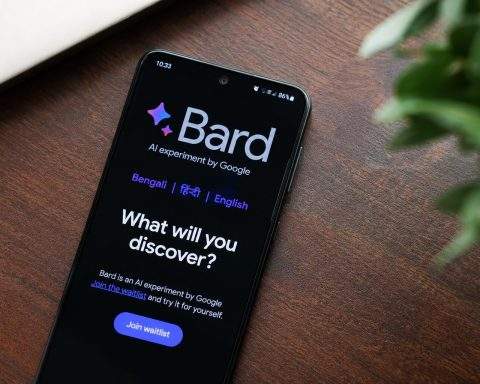
A former Google AI researcher says Google’s claim that its Bard system “learned” Bengali on its own is misleading, citing company data showing Bengali was already in its training mix. The dispute follows a 2023 “60 Minutes” segment where Google executives called Bard’s language abilities a “black box.” Bard has since been rebranded as Gemini and integrated into Google’s core products.
Zebra Medical Vision’s AI Reads Medical Images. Now Comes the Hospital Test

Zebra Medical Vision’s AI Reads Medical Images. Now Comes the Hospital Test

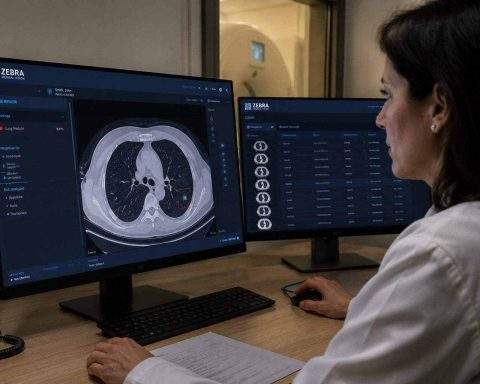
Nanox.AI, formerly Zebra Medical Vision, is now the imaging software unit of Nasdaq-listed Nanox, which acquired Zebra for $100 million in 2021. The company reported losses and financing risk in its 2026 filing but said it added Cedars-Sinai as a trial partner and accelerated U.S. deployment of its Nanox.ARC systems. NICE approved Nanox AI tools for NHS use during a three-year evidence period. FDA cleared its HealthFLD liver analysis software in 2024.
AI Layoffs in 2023: The Real Number Was 4,247, and the Next Wave Is Harder to Count

AI Layoffs in 2023: The Real Number Was 4,247, and the Next Wave Is Harder to Count

U.S. employers cited artificial intelligence in 4,247 announced job cuts in 2023, according to Challenger, Gray & Christmas. By March 2026, AI was the top stated reason for U.S. job cuts that month, with 15,341 announced. The broader labor market showed 6.866 million job openings in March 2026, while layoffs remained at 1.2%, according to the Labor Department.
1 2,089 2,090 2,091

Stock Market Today

  • Six Fiserv Insiders Buy $1.72M in Shares Amid Leadership Shakeup
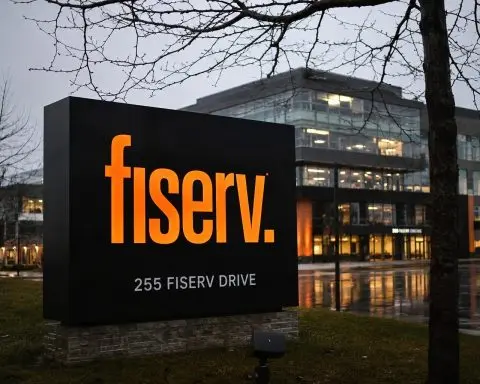
    June 21, 2026, 5:29 PM EDT. Six Fiserv (NASDAQ: FISV) executives and board members purchased 34,781 shares for about $1.72 million at an average price of $49.55, ahead of the Juneteenth market holiday. Despite these insider buys, shares dropped 3.4% to close at $47.86 on Thursday following CEO Mike Lyons' sudden departure, which raised doubts about the company's recovery. Top buyers include CFO Paul Todd and legal head Adam Rosman. Fiserv reaffirmed its 2026 outlook targeting 1%-3% organic revenue growth and $8.00-$8.30 adjusted earnings per share (EPS), implying a valuation of about 5.8-6.0 times expected EPS. Investors remain cautious amid leadership changes, with recent insider purchases not offsetting broader selling pressure.

Latest articles

Six Fiserv Insiders Bought $1.72M of NASDAQ: FISV Ahead of Holiday

Six Fiserv Insiders Bought $1.72M of NASDAQ: FISV Ahead of Holiday

21 June 2026
Six Fiserv insiders bought 34,781 shares for $1.72 million after CEO Mike Lyons’ abrupt exit, but FISV closed at $47.86—down 3.4% from their $49.55 average price and 10.9% since the leadership change—leaving the group with a $58,783 paper loss as the stock trades at just 5.8–6.0 times reaffirmed 2026 adjusted EPS guidance, with investors awaiting proof of a turnaround.
CoreWeave edges higher before Nasdaq-100 debut, week looks ahead to debt moves

CoreWeave stock moves up as it eyes Nasdaq-100 after 17% weekly gain

21 June 2026
CoreWeave will join the Nasdaq-100 before Monday’s open, triggering index fund buying tracked by over $800 billion in assets; shares closed Thursday at $117.95, up 17.3% in five days, as investors weigh AI infrastructure demand against heavy capital spending and a widened Q1 net loss of $740 million.
FDA Readout Looms for ACHV, UNCY; Market Sees Split Odds

FDA Readout Looms for ACHV, UNCY; Market Sees Split Odds

21 June 2026
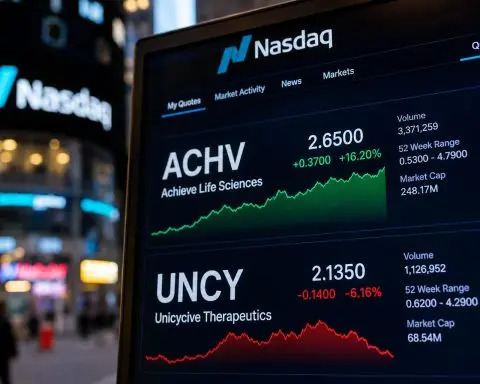
Achieve Life Sciences plunged 9.51% to $4.85 as its June 20 FDA deadline for cytisinicline passed with a manufacturing-related rejection expected; Unicycive Therapeutics dropped 2.84% to $6.85 ahead of a June 29 FDA decision, with both stocks’ applications limited by third-party manufacturing issues, not efficacy, and liquidity representing 39.7% and 31.2% of implied equity values, respectively.
Go toTop