Today: 30 June 2026

Internet Access in Libya: A Comprehensive Overview

Internet Access in Libya: A Comprehensive Overview

Libya’s internet infrastructure is recovering and evolving after years of conflict. Under Muammar Gaddafi’s regime, the telecom sector was entirely state-controlled and private competition was virtually nonexistent​ mondaq.com. The primary telecommunications holding is the Libyan Post, Telecommunication and Information Technology Company, which oversees key state-owned providers​ libyareview.com. Major service providers include: Libya’s international bandwidth comes through a mix of submarine cables and satellite links. The country is connected to Europe and regional networks via undersea fiber – for example, an older cable to Italy and the newly operational Silphium cable to Greece​ submarinecablemap.com. In 2023, Libya also signed on to the upcoming Medusa pan-Mediterranean cable, which will land in Tripoli and Benghazi by 2025, boosting international capacity and redundancy​ datacenterdynamics.com​ datacenterdynamics.com. These developments aim to improve a network that, despite damage from war, remained “one of the more robust in the region” by the mid-2010s​ mondaq.com. Overall, Libya’s core internet infrastructure is state-dominated but is gradually diversifying, with new investments in fiber and satellite backbones to reconnect and upgrade the country after the disruptions of civil conflict.

16 February 2025
Internet Access in China

Internet Access in China

China’s internet landscape is characterized by massive scale, state-controlled infrastructure, and strict governance. With over a billion users online, China hosts the world’s largest internet community, but this access comes with significant restrictions and a parallel digital ecosystem separate from the global internet. Below is an overview of key aspects of internet access in China, from infrastructure and service providers to censorship policies and emerging trends. China has built an extensive internet infrastructure, largely through state-run enterprises. Major Internet Service Providers in China include:
Internet Access in Syria

Internet Access in Syria

Syria was relatively late in opening internet access to the public. An internet connection was established in the country by 1997, but for years Syria was the only connected Middle Eastern country that did not allow general public access Hrw. In the late 1990s, only government institutions and a few individuals could get online Hrw. This cautious rollout reflected official policy: the regime under President Hafez al-Assad took a “go-slow” approach, fearing the free flow of information. All media in Syria were tightly controlled, and officials were wary that the internet could enable dissent Hrw. Even Bashar al-Assad advocated for expanding internet access, but security services resisted due to concerns over “making it safe” for a traditional society Hrw. Public internet access only truly began around 2000, shortly after Bashar al-Assad took power Thenetmonitor. Once the internet was introduced, usage grew steadily, though under heavy state oversight. The first internet service providers were state-affiliated, and the Syrian Telecommunications Establishment became the principal gateway. By July 1998, about 35 Syrian government agencies were online Wikipedia, marking the initial step toward connectivity. In the early 2000s growth was modest – for example, in 2000 there were only about 30,000 users online Wikipedia.
7 February 2025
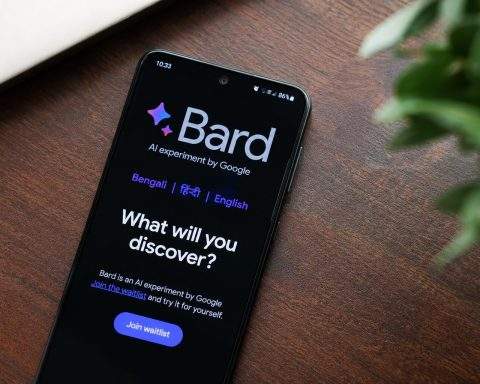
Google’s Bard ‘Learnt Bengali’ Claim Has a Data Problem, Former Researcher Says

Google’s Bard ‘Learnt Bengali’ Claim Has a Data Problem, Former Researcher Says

UPDATED: SAN FRANCISCO, May 6, 2026, 05:05 Google’s claim that a Bard-era AI system learned Bengali on its own is facing scrutiny because a former company researcher pointed to Google training data showing Bengali was already in the mix. The dispute cuts at a basic question in the AI race: whether companies are describing real technical surprises, or dressing up known training effects as mystery.
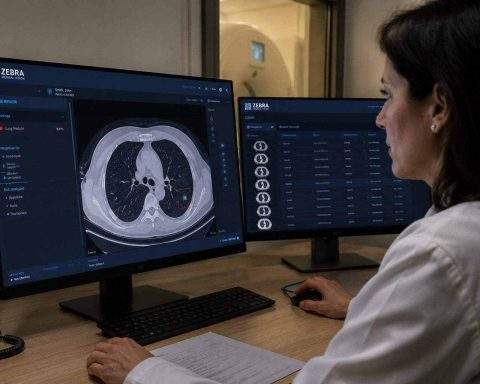
Zebra Medical Vision’s AI Reads Medical Images. Now Comes the Hospital Test

Zebra Medical Vision’s AI Reads Medical Images. Now Comes the Hospital Test

Updated: PETAH TIKVA, Israel, May 6, 2026, 14:59 Nanox is trying to turn Zebra Medical Vision’s scan-reading software into a hospital business, not just an AI demo. The company said it had accelerated work around Nanox.AI, added Cedars-Sinai as a clinical-trial partner for an aortic valve calcification tool and pushed U.S. deployment of Nanox.ARC systems, with Chief Executive Erez Meltzer calling the fourth quarter “strong momentum.”
AI Layoffs in 2023: The Real Number Was 4,247, and the Next Wave Is Harder to Count

AI Layoffs in 2023: The Real Number Was 4,247, and the Next Wave Is Harder to Count

Updated: Washington, May 6, 2026, 08:00 EDT The answer to the headline question “How many jobs have been lost to AI in 2023?” is not millions. Using Challenger, Gray & Christmas data, U.S. employers linked 4,247 announced job cuts to artificial intelligence in 2023, based on the firm’s January 2024 figure of 4,628 AI-linked cuts since May 2023, including 381 that January; Andrew Challenger said companies were “not outright blaming AI” for many layoff decisions.
1 2,123 2,124 2,125

Stock Market Today

  • Dell (DELL) Price Target Raised as AI Server Sales Fuel 23% Upside, Says 24/7 Wall St.
    June 30, 2026, 2:16 PM EDT. Dell Technologies (NYSE:DELL) stock could rally more than 20%, with 24/7 Wall St. putting a price target at $503, about 23% above the latest trade. That view follows a massive 757% jump in AI server revenue to $16 billion, which underpins a $43 billion AI backlog. Management raised fiscal 2027 revenue guidance on the back of those numbers. Gross margins dropped from 21% to 18% as more low-margin AI servers shipped, and supply chain issues tied to NVIDIA are a risk. Still, gross profit climbed 58% and operating income more than doubled. Dell shares are up 228% for the year and close to 52-week highs, driven by solid earnings and positive analyst calls. Margin compression remains a key worry for bears, but bulls say AI demand is driving the story.
Go toTop