Browse Category

Comets News 5 September 2025 - 26 October 2025

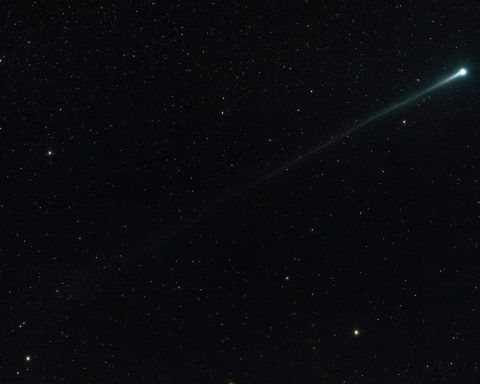
Interstellar Comet 3I/ATLAS Shoots Giant Sunward Jet — Experts Debunk Alien Probe Rumors

Interstellar Comet 3I/ATLAS Shoots Giant Sunward Jet — Experts Debunk Alien Probe Rumors

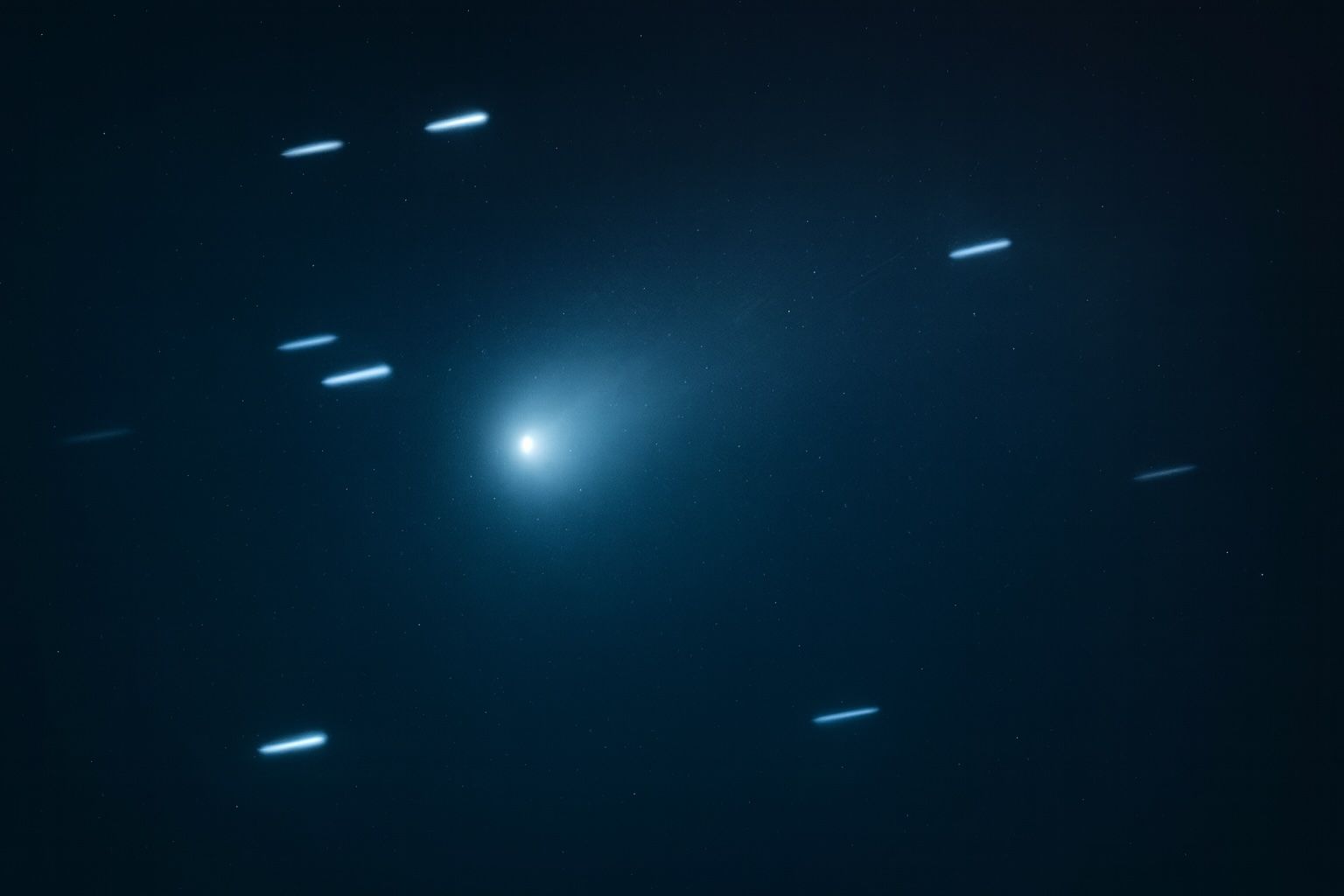
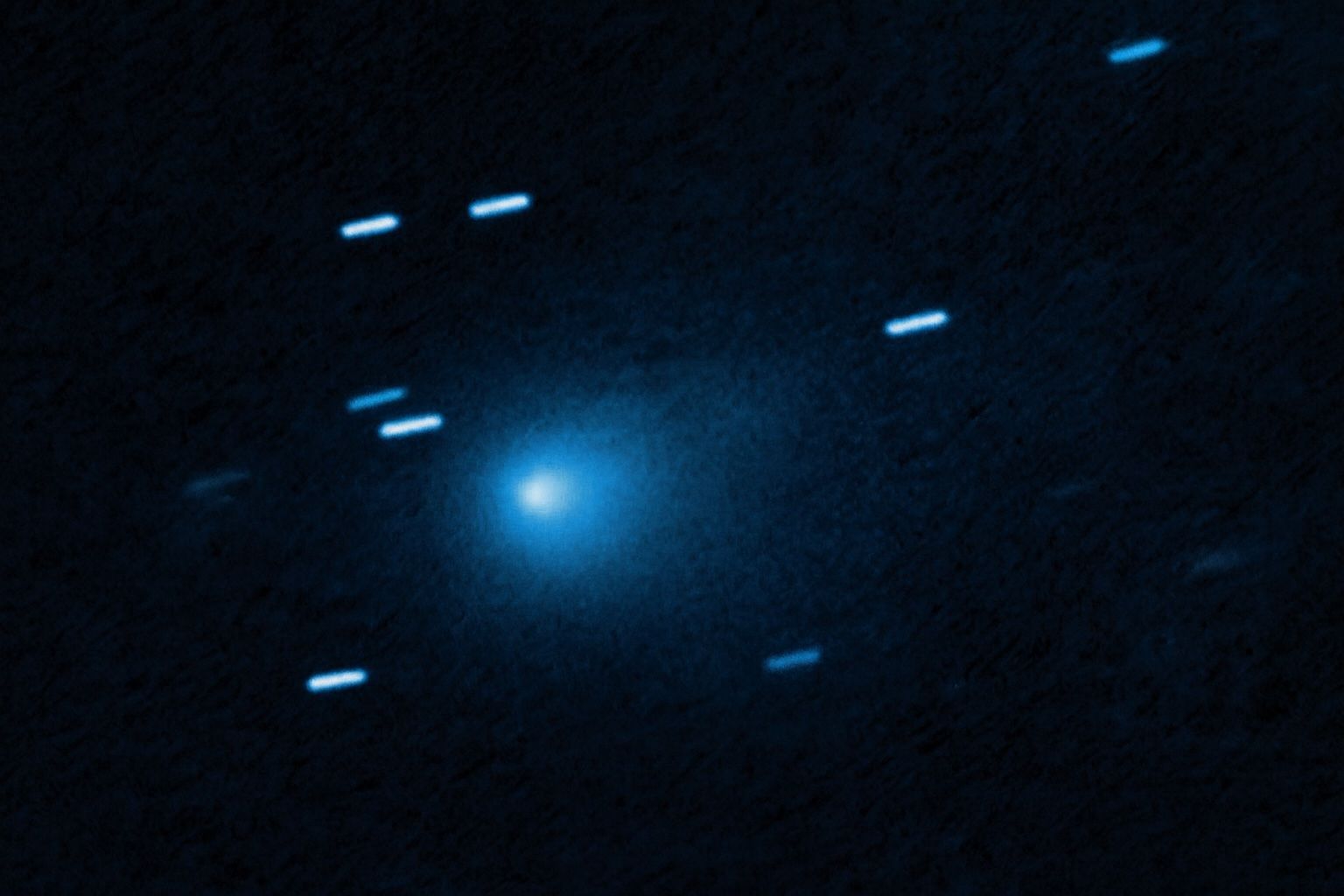
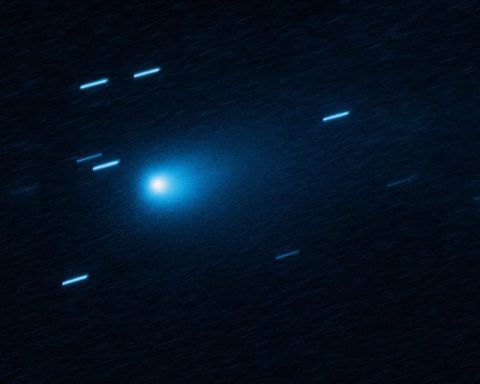
In recent weeks astronomers have been fascinated by the interstellar comet 3I/ATLAS as it rushes through the inner Solar System. First spotted by the ATLAS telescope (Chile) on July 1 ts2.tech, it turned out to be moving so fast on a hyperbolic path that it could only have come from outside our solar neighborhood. Follow-up orbits confirm it is on a one-way trip, never to return ts2.tech. Importantly, orbital calculations show its minimum distance from Earth is about 1.8 AU (far beyond Mars) ts2.tech, so it will not collide with us. In fact, the comet’s closest brush with any planet was
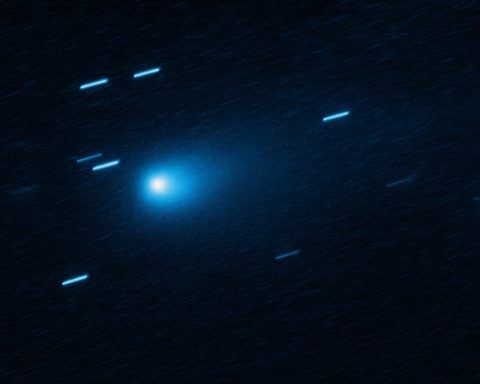
Rare Interstellar Comet 3I/ATLAS – a 10-Billion-Year-Old Time Capsule – Flies Past Mars

Alien Comet 3I/ATLAS Is Spewing Water Like a Fire Hose — And Scientists Are Stunned

These astounding discoveries come from coordinated observations worldwide. Below we delve into the details: what we’ve learned about 3I/ATLAS, how it compares to other interstellar visitors, and why scientists are so excited. What Is 3I/ATLAS? A Rare Interstellar Comet 3I/ATLAS (sometimes simply called “ATLAS”) is an interstellar comet – a chunk of ice and rock that formed around a distant star and is now speeding through our Solar System on a one-way trip. It was first spotted on July 1, 2025, by the Asteroid Terrestrial-impact Last Alert System (ATLAS) telescope in Chilets2.tech. Follow-up analyses quickly confirmed its hyperbolic orbit and
Rare Interstellar Comet 3I/ATLAS – a 10-Billion-Year-Old Time Capsule – Flies Past Mars

Rare Interstellar Comet 3I/ATLAS – a 10-Billion-Year-Old Time Capsule – Flies Past Mars

A Visitor from Beyond the Solar System Humanity has waited a long time to study a comet from another star – and suddenly, within a decade, we’ve had three. 3I/ATLAS (officially 3I/2025 A1) is the latest of these rare interstellar interlopers. It was first detected moving through the outer Solar System in June 2025 with an exceptionally eccentric orbit. Follow-up observations quickly confirmed what its speed and trajectory implied: this object was not bound to the Sun’s gravityts2.tech. By July 2025, the Minor Planet Center designated it the third interstellar object ever foundts2.tech. Like its predecessors – the cigar-shaped 1I/‘Oumuamua and cometary 2I/Borisov – 3I/ATLAS is
Northern Lights, Draconid Meteors & Bright Comets – Skywatch Highlights for Oct 7–8, 2025

Northern Lights, Draconid Meteors & Bright Comets – Skywatch Highlights for Oct 7–8, 2025

Draconid Meteor Shower Peaks in Early Evening The Draconid meteor shower – a minor but convenient annual shower – is active October 6–10 and is expected to peak on the night of October 8, 2025 livescience.com. The Draconids are so named because their meteors appear to fan out from the head of the constellation Draco, the Dragon, which lies in the northwestern sky after nightfall in October science.nasa.gov livescience.com. Unlike many meteor showers that are best in the wee hours of morning, the Draconids are most easily viewed in the early evening – just after darkness falls – because Draco’s
Interstellar Comet 3I/ATLAS Shrouded in CO₂ Fog – NASA’s SPHEREx Reveals a Cosmic Visitor’s Secrets

Is 3I/ATLAS an Interstellar Messenger? New Findings Debunk Alien Rumors but Reveal an Ancient, Carbon‑Rich Comet

A Rare Interstellar Visitor When astronomers with the Asteroid Terrestrial‑impact Last Alert System (ATLAS) noticed an object with an extraordinarily high orbital eccentricity racing through the outer solar system in June 2025, they immediately suspected an interstellar origin. Follow‑up observations confirmed that the body, now designated 3I/ATLAS, follows a hyperbolic path and moves faster than any known comet, approximately 210 000 km per houresa.int. Unlike periodic comets, this object will never return once it leaves the Sun’s gravitational grasp, making it only the third confirmed interstellar visitor after ʻOumuamua in 2017 and 2I/Borisov in 2019science.nasa.gov. The comet’s trajectory takes it between the orbits
Two Comets Will Light Up October’s Night Sky – When and How to Watch

Two Comets Will Light Up October’s Night Sky – When and How to Watch

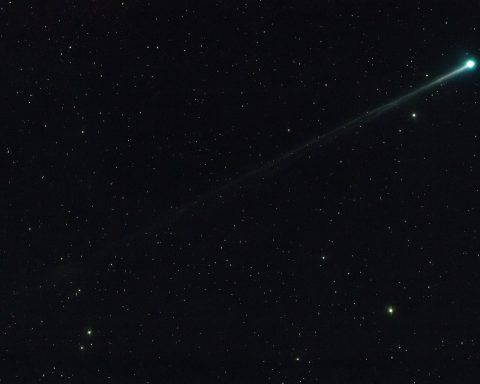
Two Icy Visitors from the Outer Solar System This fall’s night sky brings not one but two comets into view – a rare cosmic coincidence that has amateur astronomers buzzing. Comet C/2025 A6 (nicknamed Lemmon) and Comet C/2025 R2 (SWAN) both formed in the frigid outskirts of the solar system and have traveled inward for the first time in millennia. “These features make ‘Lemmon’ a striking reminder of the icy wanderers that visit the inner solar system from the distant Oort Cloud,” noted astronomer Aleix Roig after capturing the comet’s eerie green glow in late September space.com. Comets like these
4 October 2025
Interstellar Comet 3I/ATLAS: A Visitor from Beyond the Solar System

Rare Cosmic Flyby: Interstellar Comet 3I/Atlas to Zip Past Mars as Spacecraft Brace for Close-Up Study

Looking Ahead: What 3I/Atlas Can Teach Us This week’s close approach marks just the beginning of an intensive observation campaign. Once 3I/Atlas dives behind the Sun in late October, Earth-based telescopes will lose it, but Mars and Jupiter satellites (and later telescopes on Earth in December) will continue the story. During perihelion and its outbound journey past Jupiter (in early 2026) the comet should reveal its secrets – or at least its usual cometary face. As one commentator notes, watching 3I/Atlas in this active phase “will give some of the clearest insights yet into the mystery of interstellar comets” space.com.
Cosmic Skywatch Alert: Geomagnetic Storms, Shooting Stars & Comets Light Up Late Sep–Early Oct 2025

Cosmic Skywatch Alert: Geomagnetic Storms, Shooting Stars & Comets Light Up Late Sep–Early Oct 2025

Space Weather & Aurora Forecast NOAA forecasts a Strong (G3) geomagnetic storm on Sept 30, 2025. According to SWPC, “G3 (Strong) geomagnetic storming is expected through 30/1200 UTC due to CME influences” swpc.noaa.gov. This follows an M6.4-class solar flare on Sept 29 (from active Region 4232), which caused an R2-level radio blackout swpc.noaa.gov. Aurora experts note that such storms can power dazzling Northern Lights. The peak storming late Sept 30 (early Oct 1 UT) means northern skies may glow. “Quiet to active” conditions are forecast after the storm, so Sept 30 is the prime aurora night. (Skywatchers should watch real-time SWPC
30 September 2025
Saturn Dazzles, New Comet Rises, and Auroras Loom: Skywatch Alert for Sept 24–25, 2025

Saturn Dazzles, New Comet Rises, and Auroras Loom: Skywatch Alert for Sept 24–25, 2025

Saturn Steals the Show If you step outside on these late-September nights, Saturn immediately grabs your attention. The ringed planet reached opposition (when Earth passed directly between Saturn and the Sun) on September 21, and it remains exceptionally bright and gorgeous in the sky planetary.org. At opposition Saturn is closest to Earth for the year, so it shines at maximum brilliance and is visible all night, rising around sunset and setting near dawn. “Saturn will be at its closest and brightest all year!” as NASA explains science.nasa.gov – truly the best time to enjoy this gas giant. Look for Saturn
24 September 2025
Rare Interstellar Comet Racing Through Our Solar System Could Be the Oldest Ever Seen

Rare Interstellar Comet Racing Through Our Solar System Could Be the Oldest Ever Seen

A Mysterious Visitor from Beyond the Solar System Interstellar comet 3I/ATLAS photographed under dark skies during a lunar eclipse, revealing an emerald-green coma surrounding its nucleus space.com. This rare alien comet carries chemical clues from a distant star system. In September 2025, skywatchers in Namibia captured a stunning sight: a ghostly green comet drifting against the starry backdrop of space. This was 3I/ATLAS, an interstellar comet – a piece of another star system – paying a brief visit to our cosmic neighborhood. Only two interstellar objects had ever been seen before (the infamous ‘Oumuamua in 2017 and comet 2I/Borisov in
17 September 2025
Mysterious Comet SWAN R2: New Interstellar Visitor or Oort Cloud Wanderer?

Mysterious Comet SWAN R2: New Interstellar Visitor or Oort Cloud Wanderer?

Discovery of Comet C/2025 R2 (SWAN) Comet C/2025 R2 (SWAN) was spotted in early September 2025 in a rather unconventional way – by searching for faint glows in SOHO satellite images. The SOHO spacecraft’s SWAN instrument scans the entire sky in ultraviolet light, primarily to track solar wind interaction with hydrogen. Astrophotographers and amateur astronomers often comb through these SWAN images for telltale moving smudges that betray new comets. On 11 September 2025, Ukrainian amateur Vladimir Bezugly noticed such a moving fuzzball in SWAN’s data Universetoday. Within hours it was confirmed by others and reported, earning the provisional label “SWAN25B”
Interstellar Comet 3I/ATLAS Shrouded in CO₂ Fog – NASA’s SPHEREx Reveals a Cosmic Visitor’s Secrets

Interstellar Comet 3I/ATLAS Shrouded in CO₂ Fog – NASA’s SPHEREx Reveals a Cosmic Visitor’s Secrets

3I/ATLAS (C/2025 N1 ATLAS) was discovered July 1, 2025 by the ATLAS survey telescope in Chile and is on a hyperbolic, unbound path with eccentricity ~6.2, making it the third confirmed interstellar object after 1I/‘Oumuamua and 2I/Borisov. Early estimates suggested a diameter of several kilometers, and Hubble data later indicated a nucleus of about 5–6 km across, making 3I/ATLAS the largest interstellar object observed. SPHEREx detected a huge CO₂ cloud around 3I/ATLAS, with the coma extending at least 348,000 km from the nucleus, alongside evidence of water ice in the nucleus. JWST measurements found a CO₂-to-H₂O ratio of roughly 8:1
5 September 2025
1 6 7 8 9

Stock Market Today

Meta stock faces an AI split: ad gains vs a $135 billion bill

Meta stock faces an AI split: ad gains vs a $135 billion bill

7 February 2026
Meta shares dropped 1.3% to $661.46 on Friday after the company projected 2026 capital spending of up to $135 billion, raising investor concerns over cash flow. Meta reported Q4 revenue of $59.89 billion, up 24% year-over-year, with ad impressions rising 18%. Analysts remain divided on whether AI-driven ad gains can offset the steep spending ramp.
IAG share price jumps toward a 52-week peak — what to watch before London reopens

IAG share price jumps toward a 52-week peak — what to watch before London reopens

7 February 2026
IAG shares rose 4.33% to 438.50 pence Friday, near their 52-week high, ahead of full-year results due later this month. The company reported 162,073,135 treasury shares and total voting rights of 4,565,128,012. Brent crude fell 2.2% Thursday to $67.93 a barrel. South Europe Ground Services logged 712,340 operations in 2025 and seeks approval to operate in Portugal.
Go toTop