Browse Category

Future Trends News 28 August 2025 - 24 September 2025

Baidu’s AI-Powered Revival: Latest Stock Surge, Tech Breakthroughs, and 2025 Outlook

Baidu’s AI-Powered Revival: Latest Stock Surge, Tech Breakthroughs, and 2025 Outlook

Baidu Inc. (BIDU) Stock and Business Overview as of September 24, 2025 Latest News and Recent Developments Baidu has seen a flurry of noteworthy developments leading up to September 24, 2025. In late August, the company delivered strong quarterly results (for Q2 2025), beating estimates on both revenue and profit. Revenue grew in the low teens percentage YoY – a clear sign that Baidu’s business has regained momentum post-pandemic. Management credited a recovery in online advertising demand as well as rapid growth in its AI-driven businesses for the upbeat results. This marked the second consecutive quarter of double-digit top-line growth,
Turkey’s Space and Satellite Industry: 2025 Market Report and 2030 Outlook

Turkey’s Space and Satellite Industry: 2025 Market Report and 2030 Outlook

Key Facts Historical Background: From First Satellites to a National Space Agency Turkey’s foray into space began with modest steps in the late 20th century and has since picked up remarkable speed. The country’s early efforts were focused on satellite communications as Turkey sought to improve telecommunications and broadcast infrastructure for its growing economy. 1994 – First Turkish Satellite: After joining the international Intelsat consortium in the 1980s uydu.turksat.com.tr, Turkey launched its first communications satellite, Türksat 1B, in August 1994 on an Ariane rocket uydu.turksat.com.tr. (An earlier attempt, Türksat 1A in January 1994, failed during launch.) Türksat 1B’s successful deployment to geostationary orbit
Quantum Computing Inc (QUBT) – Quantum Hype or The Next Tech Breakthrough? 📈⚛️

Quantum Computing Inc (QUBT) – Quantum Hype or The Next Tech Breakthrough? 📈⚛️

Company (Ticker) Quantum Tech Market Cap Q2 2025 Revenue Q2 Net Loss Cash (mid-2025) Quantum Computing Inc. (QUBT) Photonic (Integrated optics) ~$3.3 B moomoo.com (stock ~$20) $61 K quantumcomputinginc.com (–67% YoY) $–36.5 M quantumcomputinginc.com (widened by warrant charges) ~$349 M (June 30) quantumcomputinginc.com → $850 M after Sept raise quantumcomputinginc.com IonQ (IONQ) Trapped-ion qubits ~$14 B (stock ~$72) dividendstocks.cash fastcompany.com $20.7 M datacenterdynamics.com (+15% vs guidance) $–177.5 M datacenterdynamics.com $500M+ (raised via SPAC & strategic investors) Rigetti (RGTI) Superconducting qubits (gate model) ~$2–3 B (stock ~$22) fastcompany.com $1.8 M datacenterdynamics.com $–39.7 M datacenterdynamics.com $571.6 M datacenterdynamics.com D-Wave (QBTS) Quantum annealing ~$2 B (stock ~$22) fastcompany.com $3.1 M datacenterdynamics.com $–167.3 M datacenterdynamics.com (incl. big warrant charge)
Mexico’s Space Industry Is Taking Off: 2025 Market Report & Future Outlook

Mexico’s Space Industry Is Taking Off: 2025 Market Report & Future Outlook

Overall, Mexico’s space and satellite industry in 2025 is at an inflection point. After decades of gradual groundwork – from the first experimental rockets in the 1950s room.eu.com, to launching communications satellites in the 1980s, to establishing AEM in 2010 – the country is now leaping forward with a coordinated national strategy. Government programs are aligning with private innovation and academic talent, creating an ecosystem primed for takeoff. The historical constraints (limited funding, fragmented efforts) are giving way to new momentum fueled by ambitious policies and global partnerships. Challenges remain – funding needs to scale up from the modest ~$3
The Netherlands’ Space Industry Is Booming: Inside the Dutch Satellite Sector and 2030 Outlook

The Netherlands’ Space Industry Is Booming: Inside the Dutch Satellite Sector and 2030 Outlook

Key Facts Brief History of the Dutch Space & Satellite Sector The Netherlands has a rich space heritage dating back to the dawn of the space age. It was an early participant in European space efforts – by 1968, ESA’s ESTEC technical center was established in Noordwijk, inaugurated by Dutch royalty to spearhead Europe’s space research esa.int. The country joined the newly formed European Space Agency in 1975 as a founding member, embedding itself in collaborative programs from the start. The Netherlands launched its first satellite in 1974: the Astronomical Netherlands Satellite (ANS) was built in partnership with NASA and
Flying Car Revolution: The Terrifying 10% Traffic Chaos Surge That Could Devastate Your Daily Commute

Flying Car Revolution: The Terrifying 10% Traffic Chaos Surge That Could Devastate Your Daily Commute

The Flying Car Revolution: Current State of Technology Flying cars have long been a staple of futuristic dreams, from The Jetsons to Back to the Future. Today, they are finally on the cusp of reality, but the term “flying car” now covers two distinct categories of vehicles with different technologies: Key Players and Prototypes In 2025, dozens of companies and startups are vying to launch either air taxis or flying cars. Some of the notable ones include: Recent News and Developments in Urban Air Mobility The past two years have seen rapid developments bringing flying cars closer to everyday use.
Tech Shockwave: Major Tech Breakthroughs from Sept 18–19, 2025

Tech Shockwave: Major Tech Breakthroughs from Sept 18–19, 2025

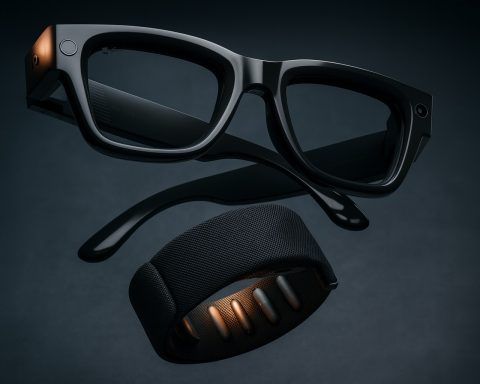
Key Facts In-Depth Report Meta Unveils Smart Glasses with Built-In Display Meta (Facebook’s parent) kicked off its annual Connect conference by introducing the Meta Ray-Ban Display, the company’s first consumer smart glasses that include a tiny digital display in one lens reuters.com. Priced at $799 with an AI-powered wristband controller, the glasses can show notifications and respond to hand gestures, and will hit stores on September 30 reuters.com. CEO Mark Zuckerberg framed the device as a step toward everyday “superintelligence,” arguing that smart glasses let people stay present while seamlessly tapping AI assistance to “improve your memory, improve your senses,
Ray-Ban Meta 2 vs the Smart Glasses Competition: Which High-Tech Specs Lead the Future?

Ray-Ban Meta 2 vs the Smart Glasses Competition: Which High-Tech Specs Lead the Future?

Features and Tech Capabilities Camera & Video: Ray-Ban Meta (Gen 2) is one of the few in this class with an integrated camera. It packs a 12MP ultrawide camera capable of snapping 4K-resolution stills and recording up to 3 minutes of video in 3K at 30fps (or 60fps at lower resolution) tomsguide.com tomsguide.com. This is a big step up from the previous 1080p limit. Users can tap a temple button or use voice commands (“Hey Meta, record a video”) to capture life’s moments hands-free. A forward-facing LED blinks on during capture, but as noted, its subtlety has raised eyebrows from
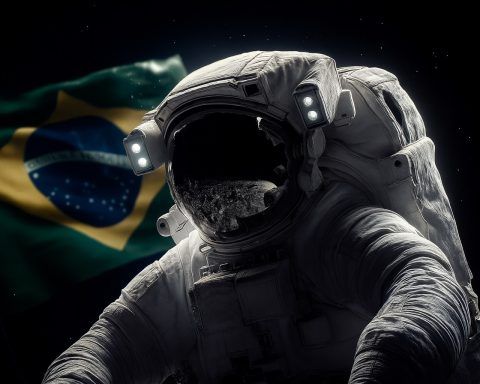
Brazil’s Space Industry Is Taking Off: New Players, Big Plans, and a Sky-High 2040 Outlook

Brazil’s Space Industry Is Taking Off: New Players, Big Plans, and a Sky-High 2040 Outlook

Key Facts Historical Development of Brazil’s Space & Satellite Industry Brazil’s space journey began in the early 1960s amid the space race era. In 1961, the government formed its first space research group (GOCNAE) and by 1964 started launching home-grown Sonda sounding rockets for high-atmosphere research en.wikipedia.org. Over the next two decades, Brazil methodically built up expertise in rocketry and satellite technology, albeit under military oversight during the Cold War. A milestone plan, the Missão Espacial Completa Brasileira (MECB) launched in 1980, aimed to make Brazil self-sufficient in space tech – including developing launch vehicles, a launch site, and a
Agentic AI Revolution: How Autonomous, Goal-Driven AI Agents Are Reshaping Our World

Agentic AI Revolution: How Autonomous, Goal-Driven AI Agents Are Reshaping Our World

Comprehensive Overview of Agentic AI What Is Agentic AI (and How Is It Different from Traditional AI)? Agentic AI, often described as autonomous, goal-oriented AI, refers to AI systems endowed with a form of “agency.” In practical terms, an agentic AI can make independent decisions and take actions in pursuit of an objective, without needing a human to prompt each step. It’s a step beyond traditional AI models that simply respond to explicit inputs. For example, a classic AI system (say, a chess program or a language model like ChatGPT) generates outputs only when prompted and doesn’t initiate further action
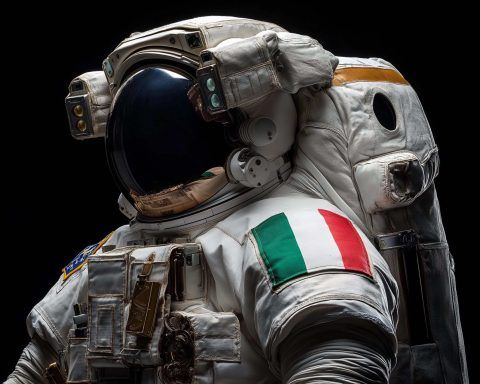
Italy’s Space Industry Skyrockets: Inside the Satellite Boom and Race to 2030

Italy’s Space Industry Skyrockets: Inside the Satellite Boom and Race to 2030

Key Facts Historical Development of Italy’s Space & Satellite Sector Italy’s engagement with space stretches back to the dawn of the Space Age. In the 1950s, visionaries like aerospace engineer Luigi Broglio and physicist Edoardo Amaldi laid the groundwork for Italy’s space program Wetheitalians Wetheitalians. Their efforts led to the San Marco project, a collaboration with NASA that saw Italy design and build its own satellites while the U.S. provided launch vehicles. On December 15, 1964, Italy’s first satellite, San Marco 1, was successfully launched – making Italy the fifth country to put a satellite in orbit (and notably, one
Photonic AI Accelerators vs. GPUs – The Battle for AI’s Future in Efficiency, Cost, and Scale

Photonic AI Accelerators vs. GPUs – The Battle for AI’s Future in Efficiency, Cost, and Scale

1. Performance per Watt: Photon vs. Electron Efficiency One of the biggest promises of photonic AI accelerators is superior energy efficiency. By using light to perform computations (especially matrix multiplications at the heart of AI models), photonic chips can potentially execute more operations per joule than electronic GPUs: Bottom Line: On raw efficiency, photonic accelerators can theoretically leave GPUs in the dust, performing AI computations with 10× to 1000× less energy. Early evidence (both academic and startup) backs significant gains – e.g. >10× energy reduction for optical matrix math earlybird.com. However, achieving these gains outside the lab will require overcoming
1 3 4 5 6 7 9

Stock Market Today

GSK share price set for Monday watch after EU clears Nucala COPD use

GSK share price set for Monday watch after EU clears Nucala COPD use

7 February 2026
GSK shares closed Friday up 0.83% at a 52-week high after the EU approved Nucala for certain uncontrolled COPD patients. Insider filings showed chairman Jonathan Symonds bought 2,500 shares while executive David Redfern sold 100,000. The FTSE 100 rose 0.6%. Broker ratings on GSK remained mixed.
Go toTop