Today: 2 July 2026
Browse Category

NYSE:VZ 2 July 2025 - 11 September 2025

Smartphones Reach for the Skies: How Satellite Connectivity Is Revolutionizing Phones & Wearables

Smartphones Reach for the Skies: How Satellite Connectivity Is Revolutionizing Phones & Wearables

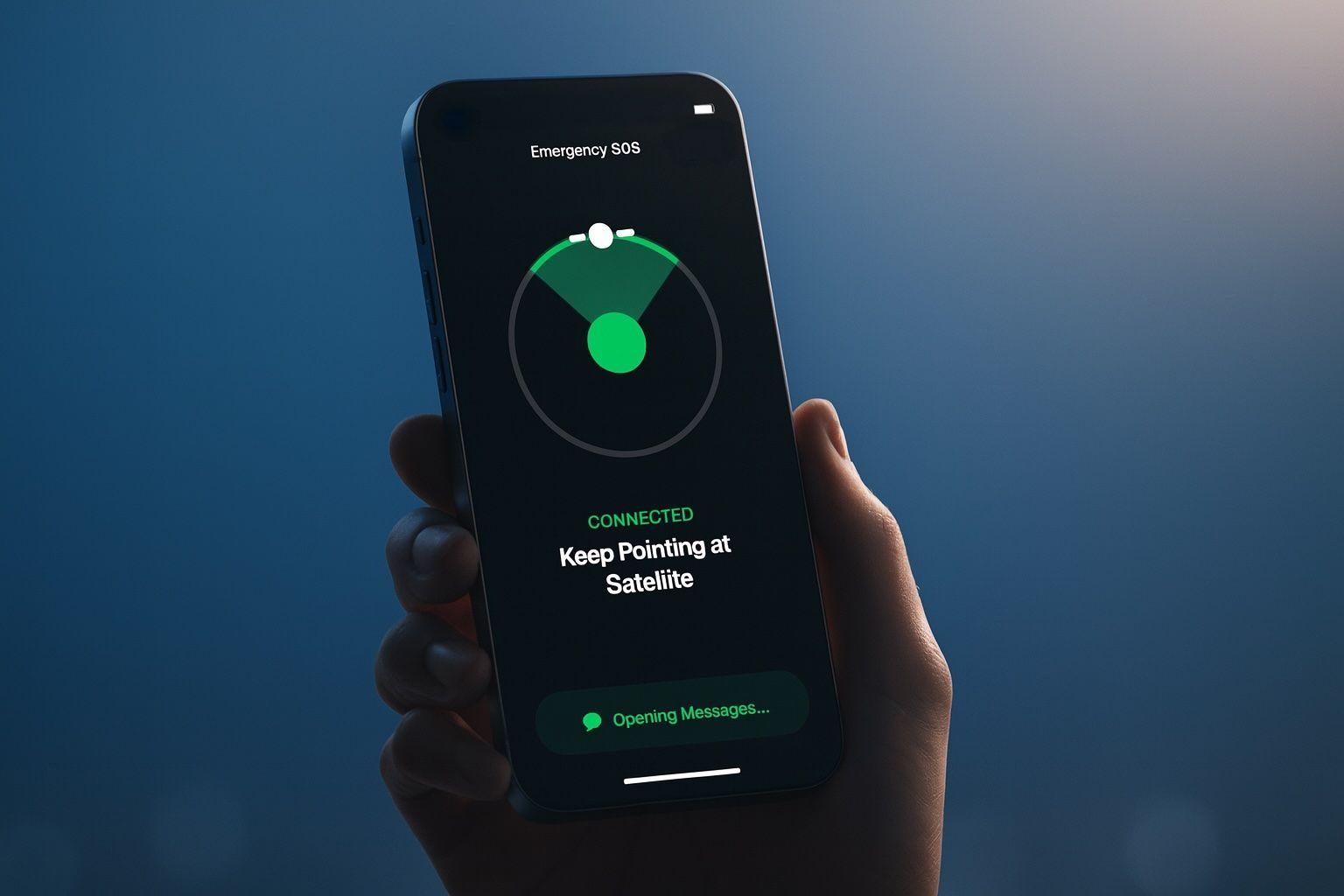
Not long ago, the idea of texting from a smartphone to a satellite sounded like science fiction or at least something reserved for clunky satellite phones. But as of 2025, this has become reality for millions of consumers. Mainstream smartphones and even smartwatches can now connect directly to satellites orbiting Earth, allowing basic communication where traditional cell networks fail. This development marks a convergence of the mobile tech industry and the satellite industry, unlocking capabilities that were previously limited to specialized devices. At its core, this trend is about staying connected anywhere on the planet – turning dead zones into reachable areas, at least for emergency or essential messages. Whether you’re trekking through remote wilderness, caught in a natural disaster that knocks out towers, or simply outside cellular coverage, your phone might still manage to send a cry for help or a check-in message to loved ones by relaying it through space. Companies are investing heavily in this technology, seeing it as the next frontier for personal devices.
Internet Access Chaos: Blackouts, Crackdowns & Broadband Breakthroughs (Sept 5–6, 2025)

Internet Access Chaos: Blackouts, Crackdowns & Broadband Breakthroughs (Sept 5–6, 2025)

In early September 2025, multiple outages and deliberate shutdowns disrupted internet access for millions across different regions. In the United States, a major Verizon network failure on August 30 demonstrated the fragility of even advanced telecom systems ts2.tech. Starting around midday, Verizon mobile users from California to New York suddenly lost service, with their phones stuck in emergency “SOS only” mode instead of connecting to any network ts2.tech. By mid-afternoon, outage reports spiked above 23,000 as people complained they couldn’t make calls or use mobile data ts2.tech. Verizon attributed the blackout to a software issue in its 4G/5G core network and scrambled engineers to fix it ts2.tech. Service was largely restored by that evening after roughly 9 hours of downtime ts2.tech. It was Verizon’s third nationwide outage of 2025, prompting renewed debate over telecom reliability and calls for stronger oversight of network resiliency ts2.tech ts2.tech. The disruption had ripple effects – some users on other carriers experienced slowdowns in apps like Instagram and Twitter, illustrating how interdependent networks are and how a failure in one can jam internet traffic more broadly ts2.tech. For many Americans, the outage underscored how essential connectivity has become to daily life: during those hours, some
Global Internet Access Turmoil: Outages, Crackdowns & New Lifelines (Sept 4–5, 2025)

Global Internet Access Turmoil: Outages, Crackdowns & New Lifelines (Sept 4–5, 2025)

Widespread outages disrupted internet access across multiple regions in recent days. In the United States, a major Verizon network failure on August 30 underscored the fragility of even advanced telecom systems ts2.tech. Starting around midday on the 30th, Verizon wireless customers from California to New York suddenly found their phones showing “SOS only” – meaning no cellular service except emergency calls ts2.tech. By mid-afternoon outage reports spiked above 23,000 as users complained of being unable to make calls or use mobile data ts2.tech. Verizon acknowledged a software issue in its 4G/5G core network and scrambled engineers to fix it ts2.tech. Service was largely restored by that night after roughly 9 hours of downtime ts2.tech. It was Verizon’s third nationwide outage of 2025, prompting renewed debate over telecom reliability ts2.tech ts2.tech. Even customers on other carriers felt side effects – some apps like Instagram and Twitter slowed down, apparently because they rely on Verizon routes for certain traffic, illustrating the ripple effects a major network failure can have ts2.tech. The incident has led U.S. officials and consumers alike to call for stronger oversight of network resiliency, given how essential connectivity is to daily life ts2.tech ts2.tech. Across the Atlantic, Google experienced
Blackouts, Crackdowns & Broadband Booms: Internet Access News Roundup (Sept 3–4, 2025)

Blackouts, Crackdowns & Broadband Booms: Internet Access News Roundup (Sept 3–4, 2025)

Over the past 48 hours, major investments in physical internet infrastructure were unveiled worldwide. SpaceX capped a busy summer of launches with yet another batch of 24 Starlink broadband satellites lifted into orbit on August 29 ts2.tech. This marked SpaceX’s fourth Starlink launch in a month, expanding its constellation and improving coverage in high-latitude regions like Alaska, Canada and Scandinavia ts2.tech. With this growth, Starlink continues to deliver high-speed internet to remote areas in dozens of countries. And it’s not alone – Amazon’s Project Kuiper, a rival low-Earth orbit satellite network, is accelerating its deployment. Amazon launched its first 27 Kuiper satellites in April and just announced that beta service will begin by late 2025, with another launch planned for September 25 ts2.tech. Ultimately Amazon aims for a 3,200+ satellite fleet beaming up to 1 Gbps internet to underserved regions globally ts2.tech. These rapid satellite rollouts are poised to bring broadband to hard-to-reach communities from the Arctic Circle to rural Asia, complementing terrestrial fiber and cellular networks. On the subsea front, new undersea fiber-optic cables are being laid to boost global bandwidth and network resilience. In Africa, Kenya’s top telco Safaricom – in partnership with Meta – just revealed the
Global Internet Access Shake-Up: Outages, Crackdowns, and a Race to Connect the Unconnected

Global Internet Access Shake-Up: Outages, Crackdowns, and a Race to Connect the Unconnected

Major investments in physical internet infrastructure were unveiled over the past 48 hours, spanning undersea cables and satellites. SpaceX completed its fourth Starlink launch from California in a month, lofting 24 satellites on August 29 to enhance coverage in polar regions. This bolsters SpaceX’s constellation of over 8,000 active satellites, which is already delivering broadband to dozens of countries. Rival project Kuiper – Amazon’s satellite internet network – is also accelerating: Amazon announced it expects to begin beta service by late 2025, after deploying its first 27 satellites in April and scheduling another launch for Sept. 25. Kuiper plans to eventually operate 3,200+ satellites aimed at blanketing underserved areas with up to 1 Gbps speeds. These satellite rollouts are poised to bring connectivity to remote communities from the Arctic to rural Asia, complementing ground networks. On the subsea front, new transoceanic cables are being laid to boost bandwidth and resiliency. Kenya’s leading telco Safaricom, with backing from Meta’s infrastructure arm, just unveiled the Daraja cable – a 4,100 km undersea fiber link between Mombasa, Kenya and Muscat, Oman. The $23 million system will add a new high-capacity route out of East Africa, reducing reliance on older cables and cutting wholesale
Global Internet Shockwaves: Governments Clamp Down, Tech Giants Invest Billions & Massive Outages Hit Millions (Sept 1–2, 2025)

Global Internet Shockwaves: Governments Clamp Down, Tech Giants Invest Billions & Massive Outages Hit Millions (Sept 1–2, 2025)

Key Facts: Satellite broadband saw major gains. SpaceX’s August 29 launch of 24 Starlink satellites into polar orbit—its fourth California launch that month—aims to blanket high-latitude regions with low-latency internet. As Spaceflight Now reported, “SpaceX launched 24 Starlink broadband satellites… as it rolls out the service to more countries and territories around the world” spaceflightnow.com. Meanwhile Amazon’s Project Kuiper is gearing up: head Rajeev Badyal confirmed a U.S. launch by late 2025 offering up to 1 Gbps speeds pymnts.com.
Tech Turmoil: Outages, Spyware Scares & Billion‑Dollar Deals – Non‑AI Tech News (Sept 1–2, 2025)

Tech Turmoil: Outages, Spyware Scares & Billion‑Dollar Deals – Non‑AI Tech News (Sept 1–2, 2025)

A massive Verizon outage struck U.S. wireless customers over the holiday weekend, illustrating how a single glitch can knock out critical connectivity nationwide. Starting August 30, users across many states reported their mobile service suddenly dropped, with iPhones displaying “SOS only” in lieu of signal. Verizon confirmed a “software issue” was to blame, acknowledging that many couldn’t make or receive calls for hours theverge.com theverge.com. “Our engineers are engaged and we are working quickly to identify and solve the issue,” Verizon spokesperson Karen Schulz said, adding “we know how much people rely on Verizon and apologize for any inconvenience” theverge.com. The carrier urged patience as it raced to restore service. The incident – which prompted over 20,000 outage reports on DownDetector – highlights the vulnerability of telecom networks to software bugs theverge.com. Even brief wireless downtime can disrupt businesses and 911 access for millions, raising calls for greater resilience in mobile infrastructure. Verizon has since resolved the outage and is reviewing what went wrong. In a stark reminder of evolving cyber threats, WhatsApp users on Apple devices fell prey to a zero-click spyware exploit that required no action by the victim. Meta revealed that a previously unknown WhatsApp bug was
No Signal? No Problem – Starlink’s Direct-to-Cell Satellites Are Eliminating Dead Zones

Direct-to-Cell Revolution: What It Is and When It Will Work in Your Country

Direct-to-Cell satellite connectivity is an emerging technology that lets ordinary mobile phones connect directly to satellites – effectively creating “cell towers in space.” Unlike traditional satellite phones, D2C aims to use the phone already in your pocket to get a signal virtually anywhere on Earth. In essence, satellites outfitted with advanced cellular base stations beam signals directly to standard smartphones far outside normal coverage reuters.com starlink.com. The goal is to eliminate mobile dead zones, so that even in remote deserts, mountains, oceans or disaster areas – anywhere you can see the sky – you could still send a text or make a call using your regular phone and phone number t-mobile.com starlink.com. Why is this a big deal? Today, over half a million square miles in the U.S. have no cell coverage t-mobile.com. Traditionally, if you traveled or lived in such areas, you’d be completely disconnected or forced to carry an expensive satellite phone. D2C technology changes that by extending standard mobile networks via satellite. As SpaceX CEO Elon Musk put it, “The important thing about this is that it means there are no dead zones anywhere in the world for your cell phone.” t-mobile.com In other words, D2C promises
Why 5G Internet Providers Are Replacing Cable Faster Than You Think

Why 5G Internet Providers Are Replacing Cable Faster Than You Think

Move Over, Cable – 5G Home Internet is Taking the Fast Lane: Not long ago, the idea of ditching your cable or fiber line for home internet sounded far-fetched. But the rapid rise of 5G fixed wireless access internet is turning the broadband market on its head – and it’s happening much faster than almost anyone predicted. Millions of consumers are already swapping coaxial cables for 5G home internet routers, drawn by lower prices, easy setup, and “good enough” performance. In this report, we’ll explore how 5G home internet is surging, who the big players are, how it stacks up against traditional cable/fiber, and what this all means for your internet choices. Prepare to be surprised at just how quickly wireless carriers are challenging the cable giants – and why this 5G vs. cable showdown matters for your wallet and online life. Just a few years ago, cable companies like Comcast and Charter had a stranglehold on home broadband in many regions, and the phrase “wireless home internet” usually meant slow, last-resort solutions. That changed with the rollout of 5G. Using upgraded cellular networks, carriers began offering 5G home internet – essentially a fixed wireless service where your home gets
Are You Still Overpaying for Internet? The Truth About US ISP Pricing in 2025

Are You Still Overpaying for Internet? The Truth About US ISP Pricing in 2025

Are internet plans too expensive? Many Americans suspect they are – and the data backs it up. In 2024, the median U.S. household paid about $85 per month for broadband service nexttv.com, up from roughly $76 just two years prior. That puts the United States among the most expensive nations for internet access – the average U.S. broadband bill ranks in the top five globally worldpopulationreview.com. For perspective, half of U.S. households’ combined cable TV and internet bills now exceed $121 monthly tvtechnology.com. Meanwhile, countries in Europe and Asia often enjoy far cheaper service: the average broadband cost in the UK is only ~$39 per month, and South Korea’s is about $26 atlasandboots.com worldpopulationreview.com. By another measure, Americans pay about $0.45 per Mbps of speed – many times more than consumers in France, Romania, or China pay per unit of bandwidth worldpopulationreview.com. All this raises the question: are you overpaying for internet, and what can be done about it? In this report, we’ll break down current U.S. internet pricing, compare major ISPs and regional providers, expose hidden fees and pricing tricks, look at trends over time, and examine how U.S. broadband costs stack up against the rest of the world.
Top 10 US Internet Service Providers of 2025: Speed, Coverage, and Customer Satisfaction Ranked

Top 10 US Internet Service Providers of 2025: Speed, Coverage, and Customer Satisfaction Ranked

Top 10 US Internet Service Providers of 2025: Speed, Coverage, and Customer Satisfaction Ranked In 2025, competition among America’s internet providers has never been fiercer. New fiber and 5G rollouts are raising the bar on speed and reliability, forcing even the biggest cable companies to step up cabletv.com cabletv.com. Nationwide giants are expanding their networks and upgrading technology, while regional standouts are earning rave reviews for fast, affordable service. This report ranks the top 10 U.S. ISPs of 2025 – including both residential and business services – based on speed, coverage, customer satisfaction, and value. We also highlight major recent developments that are shaping each provider’s performance and reputation.
SpaceX Wins $81.6 Million U.S. Space Force Deal to Launch WSF-M2 Weather Satellite in 2027

SpaceX’s Action-Packed 48 Hours: Starlink Outage Shakes Users, Satellite Phone Service Debuts, Launch & Starship Updates

In the span of two days, SpaceX and its Starlink satellite venture experienced a whirlwind of developments. A rare global Starlink outage knocked tens of thousands offline and prompted high-level apologies, even as SpaceX rolled out a groundbreaking satellite-to-cellphone service with T-Mobile. The company also readied a new Starlink satellite launch using a record-breaking reusable rocket, and shared updates on its Starship mega-rocket’s next test flight amid regulatory and political cross-currents. Below is a comprehensive roundup of all the key SpaceX and Starlink news from July 24–25, 2025 – complete with mission details, business moves, tech milestones, and expert insight. Even as the Starlink network was restoring service, SpaceX and T-Mobile achieved a major service expansion – the launch of satellite-to-cellular texting for mobile phones. On July 24, T-Mobile rolled out “T-Satellite,” a new add-on that lets regular cell phones connect directly to SpaceX’s satellites when terrestrial coverage is unavailable datacenterdynamics.com.
Smartphones vs. Satellite Phones: Are Off-Grid Cell Phones Killing the Satellite Phone?

Smartphones vs. Satellite Phones: Are Off-Grid Cell Phones Killing the Satellite Phone?

Staying connected “anywhere under the sky” is no longer just the promise of bulky satellite phones carried by explorers and mariners. Today, mainstream smartphones are gaining satellite links, letting users send SOS texts from remote mountains or even make calls from the middle of the ocean. This report dives deep into the battle between traditional satellite phones and the new wave of satellite-connected smartphones, exploring current capabilities, upcoming models, and what industry experts predict for the future of off-grid communication. Dedicated satellite phones are standalone handsets designed to communicate directly with satellites for voice calls and messaging. They often have large antennae and specialized hardware to maintain a link outside cellular coverage. In contrast, satellite-enabled smartphones are ordinary mobile phones that include satellite connectivity features – typically limited to emergency texting for now – integrated via special antennas and chipsets.
Smartphone Wars 2025: Inside the Global Market Shake-Up, Trends, and Future Tech Disruptions

Smartphone Wars 2025: Inside the Global Market Shake-Up, Trends, and Future Tech Disruptions

The global smartphone industry is undergoing a pivotal transformation in 2025. After rebounding from pandemic-era slumps, worldwide smartphone shipments grew to around 1.24 billion units in 2024 iconnect007.com, marking a 6.4% annual increase and a return to growth after two years of decline. Revenues have surged past $500 billion annually, fueled by a wave of premiumization even as overall unit growth remains modest. Two giants – Samsung and Apple – continue to dominate, together accounting for nearly 40% of global shipments idc.com, with fast-rising Chinese manufacturers aggressively expanding their market share. Consumers are becoming more discerning: battery life, durability, security, cost, and camera quality consistently rank as the top buying criteria, while flashy innovations like AI assistants and foldable screens play a secondary role for many buyers sellcell.com. On the technology front, smartphones are integrating cutting-edge features – from on-device AI and 5G connectivity to satellite messaging – yet face longer replacement cycles as users hold onto devices ~3.5 years on average phonearena.com. Meanwhile, supply chains are rapidly realigning: manufacturing is shifting geographically, and industry players are navigating chip shortages, trade wars, and new regulations on repairability and e-waste. This report provides an in-depth analysis of the current market landscape,
America’s Internet Divide Exposed: The Truth About Access, Speed, and the Satellite Revolution

America’s Internet Divide Exposed: The Truth About Access, Speed, and the Satellite Revolution

The internet is the backbone of modern American life, but not all Americans enjoy equal access or quality of service. As of 2025, the United States boasts some of the fastest average internet speeds in the world, yet millions remain either unconnected or stuck with slow, outdated service. This report provides a comprehensive overview of U.S. internet access – from the current infrastructure and major providers to the stark urban-rural digital divide, the emergence of satellite broadband, government efforts to close the gap, and what the next decade might hold. We expose the truths and trends shaping America’s internet landscape: who has high-speed access, how different technologies compare in speed and reliability, and how innovations like low-Earth orbit satellites are redefining connectivity. The goal is to shed light on America’s internet divide – in availability, affordability, and performance – and examine the “satellite revolution” that promises to reach the hardest-to-connect corners of the nation. By 2025, American internet infrastructure is a mix of ultra-fast modern networks and lingering legacy systems, with overall access improving but not yet universal. Key aspects of the current landscape include:
Space News Shockers: Satellite Wars, NASA Upheaval, and the Next Celestial Wonders Revealed / Updated: 2025, July 11th, 12:01 CET

Space News Shockers: Satellite Wars, NASA Upheaval, and the Next Celestial Wonders Revealed / Updated: 2025, July 11th, 12:01 CET

Over 2,000 senior NASA employees have resigned amid budget cuts, with a potential 25% funding reduction threatening missions, while Sean Duffy, a former congressman and reality TV star, was named interim NASA administrator and serves as both NASA administrator and Secretary of Transportation. An alleged Iranian missile strike destroyed a $15 million U.S. communications radome at Al Udeid Air Base in Qatar, which housed the Modernization Enterprise Terminal (MET) for secure military communications. Russia’s secret Nivelir project drew attention after Cosmos 2558 released a small object in orbit, a move interpreted as a possible anti-satellite test signaling space-arms concerns. The
Summer Streaming Shake-Up: Global OTT Power Moves and Trends (June–July 2025)

Summer Streaming Shake-Up: Global OTT Power Moves and Trends (June–July 2025)

June–July 2025 – The streaming wars kicked into high gear this summer, marked by blockbuster business moves, bold content strategies, shifting viewer habits, tech breakthroughs, executive insights, and legal showdowns. Below is a comprehensive roundup of the major developments in video-streaming and OTT media platforms worldwide over June and July 2025. Industry leaders and observers offered candid insights into these trends over the past two months:
Starlink Satellite Internet FAQ

Space-Age WiFi: How Starlink, HughesNet, and Viasat Are Beaming Broadband from Space

Complete Guide to Satellite Internet WiFi Introduction: Satellite internet has gone from a last-resort connection to a game-changing way to get online, thanks to a new generation of satellites beaming broadband down to Earth. Once known for slow speeds and high latency, satellite internet “WiFi” is now undergoing a revolution. Companies like SpaceX’s Starlink are launching thousands of low-orbit satellites to deliver fast internet even in the most remote corners of the globe. Meanwhile, established providers HughesNet and Viasat have launched new satellites and plans to remain competitive. The result is that people in rural villages, ships at sea, and even disaster zones can now get online where traditional cable or fiber can’t reach. This report will explain how satellite internet works, compare major providers, discuss technical advantages and limitations, explore key use cases from farms to war zones, outline costs and equipment, and examine recent innovations like low-Earth-orbit constellations. We’ll also forecast the future of satellite broadband – including global expansion and the challenges ahead – all in a clear, structured breakdown for both general readers and tech-savvy audiences.
Smart Grid and Energy Management Systems – Latest Developments (June–July 2025)

Smart Grid and Energy Management Systems – Latest Developments (June–July 2025)

The energy sector saw significant progress in smart grid technologies and energy management systems during June and early July 2025. This report highlights the period’s technical breakthroughs, major projects and investments, policy shifts, and insights from industry experts. Key themes include advances in grid digitization, AI and IoT integration, large-scale investments in grid infrastructure, evolving regulatory frameworks, demand-side innovations, and emerging market trends. The goal is to provide a comprehensive overview of how smart grids and energy management are evolving in mid-2025, drawing on reputable news, industry reports, and expert analysis. In summary, June–July 2025 has been a dynamic period for smart grids and energy management systems worldwide. Technical innovations – from AI-driven grid management and 5G-enabled meters to integrated digital platforms – are equipping the grid to be more intelligent and adaptive. We’ve seen major investments by governments and industry, whether it’s multi-billion-dollar utility plans, federal grid resilience grants, or cutting-edge battery projects, all aimed at bolstering grid capacity and flexibility. On the policy front, regulators are actively removing barriers to accelerate the transition to smart, clean grids. Meanwhile, consumers are being empowered through smart tariffs, home energy AI systems, and IoT integration, turning homes and businesses into active
Edge Computing Global News & Trends Roundup (June–July 2025)

Edge Computing Global News & Trends Roundup (June–July 2025)

Coverage: This report highlights global developments in edge computing from June 1, 2025 through early July 2025, including regional news, industry-specific trends, market forecasts, and expert insights. North America: Edge computing momentum in North America remained strong. U.S. telecom operators rolled out new 5G multi-access edge computing services. For example, Verizon Business launched an Edge Transportation Exchange – a V2X platform leveraging 5G and mobile edge computing for real-time data sharing between vehicles, infrastructure, and pedestrians edgeir.com. The platform enables road safety use cases without expensive roadside units by using a virtualized edge architecture edgeir.com. Key deployments are underway with partners like Volkswagen, state transportation departments and universities to improve connected traffic systems. As Verizon’s VP Shamik Basu noted, “Cars are evolving from mechanical vehicles to software-defined mobile devices… Edge [technology] gives automakers, governments, and developers a robust platform for the cellular-connected future of transportation” edgeir.com. In industrial tech, Rockwell Automation introduced OptixEdge, an advanced gateway to process factory machine data on-site. By doing so, it reduces reliance on cloud servers and improves efficiency for smart manufacturing operations edgeir.com. According to Rockwell’s latest report, today’s smart machines generate massive data yet only 44% of it is used effectively – a
1 6 7 8 9

Stock Market Today

  • Market profit-taking in focus as Najarian talks second-half winners and trends
    July 1, 2026, 6:52 PM EDT. Jon Najarian, co-founder of Market Rebellion, talks about market profit-taking and where the second-half stock market race could head. He flags data center stocks and points to Meta Platforms and its new cloud push, which sells extra artificial intelligence (A.I.) computing capacity. Najarian makes his case for fresh picks as investors look at their portfolios in a market that's shifting.
Go toTop