Browse Category

Renewable Energy 27 June 2025 - 10 September 2025

Plug Power (NASDAQ:PLUG) Stock Braces for Cash-Runway Scrutiny as U.S. Markets Close Monday
Saltwater Revolution: How Osmotic Power Could Be the Next Big Clean Energy Source

Saltwater Revolution: How Osmotic Power Could Be the Next Big Clean Energy Source

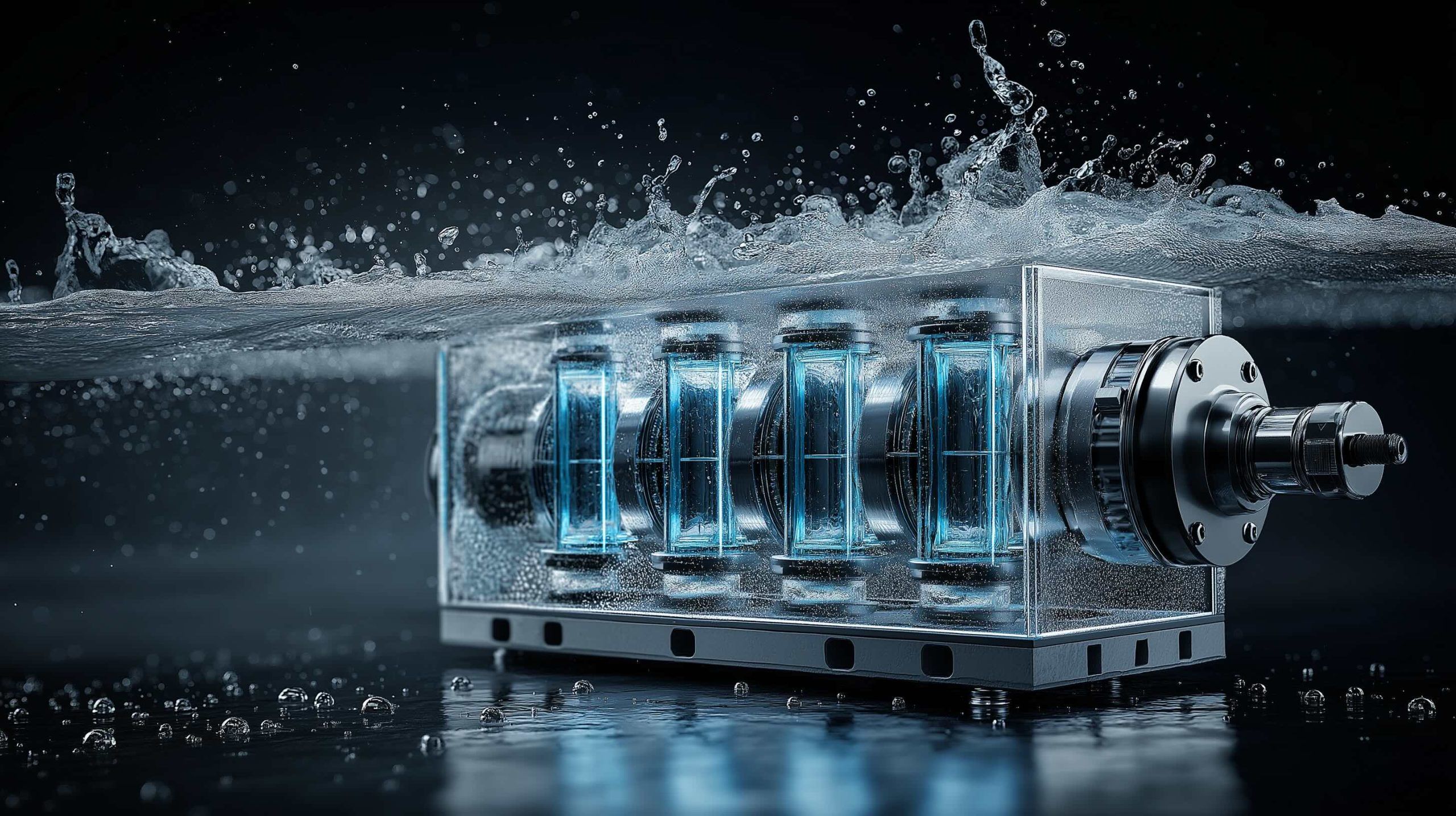
Osmotic power is electricity generated from the natural process of osmosis – the movement of water across a membrane from a dilute solution to a salty solution theguardian.com. At river deltas where freshwater meets the ocean, immense chemical energy is continuously released as the two mix. Osmotic power plants capture a portion of this energy by separating fresh and salt water with special membranes in a controlled setting theguardian.com. The concept has been studied since at least the 1970s, but only in recent years have technological advances started to make it feasible at scale earth.org earth.org.
10 September 2025
PEM vs Alkaline vs Solid Oxide Electrolyzers: The 2025 Hydrogen Technology Showdown

PEM vs Alkaline vs Solid Oxide Electrolyzers: The 2025 Hydrogen Technology Showdown

Hydrogen electrolyzers are at the heart of the green hydrogen revolution. In this comprehensive comparison, we explore the three leading water electrolysis technologies – Proton Exchange Membrane, Alkaline, and Solid Oxide electrolyzers – highlighting how each works, their efficiency, costs, durability, and latest developments as of 2024–2025. We’ll also look at which technologies suit intermittent renewables, who the market leaders are, new innovations on the horizon, environmental considerations, and what experts are saying about the future of these electrolyzers.
Solar Tech Showdown 2025: N-Type TOPCon vs HJT vs Perovskite Tandem – Which Will Power the Future?

Solar Tech Showdown 2025: N-Type TOPCon vs HJT vs Perovskite Tandem – Which Will Power the Future?

Solar energy is experiencing a next-generation technology boom. Three advanced solar photovoltaic technologies – N-Type TOPCon, Heterojunction, and Perovskite-Silicon Tandems – are at the center of industry buzz. Each promises higher efficiency and lower degradation than yesterday’s standard p-type PERC panels, potentially delivering more power from the same sun. As manufacturers race to innovate, solar enthusiasts are asking: Which of these technologies will dominate, and what do their performance and market readiness look like?
Your Next Rooftop Will Be a Power Plant. Rooftop Energy Technologies: Present and Future Innovations.

Your Next Rooftop Will Be a Power Plant. Rooftop Energy Technologies: Present and Future Innovations.

Imagine if every roof could not only shelter you from the elements, but also generate clean electricity. Advances in renewable energy are turning that vision into reality. From tried-and-true solar panels to futuristic solar paints, rooftops worldwide are being transformed into mini power plants. This report provides an in-depth look at current rooftop energy generation technologies, emerging innovations on the horizon, the latest news and trends, expert insights, and the global landscape of adoption. We’ll also examine the benefits and limitations of rooftop generation, and how policies are encouraging homeowners to turn their roofs into renewable energy assets.
This New Solar Panel Tech Works Even at Night

This New Solar Panel Tech Works Even at Night

Thermoradiative energy generation – often dubbed “nighttime solar” or “anti-solar” power – is a new way to generate electricity after the sun goes down. It exploits a simple scientific principle: heat flows from warmer objects to cooler surroundings, and that flow can be converted into electricity. During the day, the Sun warms the Earth; at night, the Earth’s surface cools by radiating heat as infrared light into the cold darkness of space. Thermoradiative devices aim to tap into this outgoing heat radiation and turn it into usable power nature.com abc.net.au. In essence, they act like solar cells in reverse: instead of absorbing sunlight from a hotter source, they emit infrared light to a colder sink to drive an electric current nature.com unsw.edu.au. As long as the device is warmer than its environment, it will radiate heat and can produce electricity from that energy flow nature.com abc.net.au.
Renewable Revolution 2025: Game-Changing Innovations in Solar, Wind, Geothermal, Bioenergy & Hydropower

Renewable Revolution 2025: Game-Changing Innovations in Solar, Wind, Geothermal, Bioenergy & Hydropower

From ultra-efficient solar panels to turbines floating on the ocean, a wave of renewable energy breakthroughs is transforming how the world generates power. In 2025, these innovations – across solar, wind, geothermal, bioenergy, and hydropower – are moving from labs and pilot projects into real-world use, marking a pivotal shift in the global energy landscape. Renewables already supply over 30% of global electricity and are expected to surpass coal as the world’s largest power source by 2025 Ratedpower. Despite recent geopolitical and economic headwinds, the renewables industry added an extra 858 TWh of generation in 2024 – more than the annual electricity use of the UK and France combined, as one industry alliance noted Reuters. This rapid progress is drawing massive investment: global clean energy spending in 2025 is projected at $2.2 trillion Reuters, with solar alone attracting nearly $450 billion Reuters. “Countries are thinking about their energy security more than ever before and that means homegrown renewable power like wind and solar becomes more and more attractive,” says Euan Graham, an energy analyst Reuters.
1MW vs 100kW Solar Power Plants – Cost, ROI & Global Insights (India in Focus)

1MW vs 100kW Solar Power Plants – Cost, ROI & Global Insights (India in Focus)

Basic Definitions: A 100 kW solar power plant is a mid-scale photovoltaic system often used for commercial or community applications. In contrast, a 1 MW solar power plant is a utility-scale or large commercial installation – essentially 10 times the capacity of a 100 kW system. In solar context, 1 MW is a substantial plant capable of powering hundreds of homes, whereas 100 kW is suited to individual commercial sites or large residences. For perspective, 1 MW of solar can produce around 1.6–1.8 million kWh per year under good sun residentialsolarpanels.org residentialsolarpanels.org. That translates to roughly 150–200 average U.S. homes powered per MW of solar capacity linkedin.com. “One megawatt is enough to power roughly 670 homes [when averaged over a year],” notes Daniel Cohan, an engineering professor, highlighting how estimates can vary with usage assumptions cbsaustin.com. A 100 kW system, by comparison, can generate about 150–175 thousand kWh annually ornatesolar.com ornatesolar.com – sufficient for a large commercial building or a small community. In industry terms, systems above ~100 kW are sometimes dubbed “solar power stations” or utility-scale projects amplussolar.com.
Smart Grid and Energy Management Systems – Latest Developments (June–July 2025)

Smart Grid and Energy Management Systems – Latest Developments (June–July 2025)

The energy sector saw significant progress in smart grid technologies and energy management systems during June and early July 2025. This report highlights the period’s technical breakthroughs, major projects and investments, policy shifts, and insights from industry experts. Key themes include advances in grid digitization, AI and IoT integration, large-scale investments in grid infrastructure, evolving regulatory frameworks, demand-side innovations, and emerging market trends. The goal is to provide a comprehensive overview of how smart grids and energy management are evolving in mid-2025, drawing on reputable news, industry reports, and expert analysis.
Global Renewable Energy Developments (May–June 2025)

Global Renewable Energy Developments (May–June 2025)

Global renewable energy generation saw significant growth and pivotal changes during May and June 2025. A surge in clean energy investments is driving record-high spending: the International Energy Agency projected global energy investment to reach $3.3 trillion in 2025, with $2.2 trillion flowing into clean energy technologies reuters.com reuters.com. According to an IEA report released on June 5, 2025, solar power is expected to attract the largest share – around $450 billion in 2025 – making it the single biggest area of energy investment reuters.com reuters.com. IEA Executive Director Fatih Birol noted that despite economic uncertainties, most ongoing renewable projects have not been derailed: investors may be in “wait-and-see” mode for new projects, but “in most areas we have yet to see significant implications for existing projects” reuters.com reuters.com. This optimistic outlook comes amid record renewable energy expansion on the ground. In China, for example, installations of solar and wind power surged to unprecedented levels this period – The Guardian reported on June 26, 2025 that China added 198 GW of solar and 46 GW of wind capacity between January and May 2025, an astonishing build-out “enough to generate as much electricity as Indonesia or Turkey” theguardian.com theguardian.com. China’s solar
Beaming the Watts Down: NASA × Ascent Solar’s Thin-Film Array Sets the Stage for Space-to-Earth Power Transmission

Beaming the Watts Down: NASA × Ascent Solar’s Thin-Film Array Sets the Stage for Space-to-Earth Power Transmission

Space-based solar power is the ambitious concept of harvesting solar energy in space and beaming it down to Earth. The idea dates back to 1968, when engineer Peter Glaser first proposed placing giant satellites in orbit to collect sunlight and transmit power wirelessly to Earth space.com. In theory, SBSP could tap a virtually unlimited 24/7 supply of solar energy in orbit, free from weather or nightfall. Experts note that orbital solar panels could generate 8 times more power than the same area on Earth’s surface pv-magazine-usa.com. Unlike ground solar or wind farms that stop producing at night or in bad weather, space solar stations could deliver continuous clean energy day and night, potentially displacing fossil fuels and stabilizing grids space.com.
1 22 23 24
AI PORTFOLIO

Top Stock Picks

Today’s highest-ranked model selections.

#1 STRONG BUY

AerCap

NYSE: AER 95 / 100
#2 BUY

Uber

NYSE: UBER 93 / 100
#3 BUY ON WEAKNESS

Taiwan Semiconductor

NYSE: TSM 91 / 100
#4 ACCUMULATE

AIG

NYSE: AIG 88 / 100
#5 BUY THE RESET

Ferguson

NYSE: FERG 86 / 100
View full portfolio
Editorial model selection. Not personalised advice.