
NEW YORK, July 13, 2026, 12:08 (EDT)
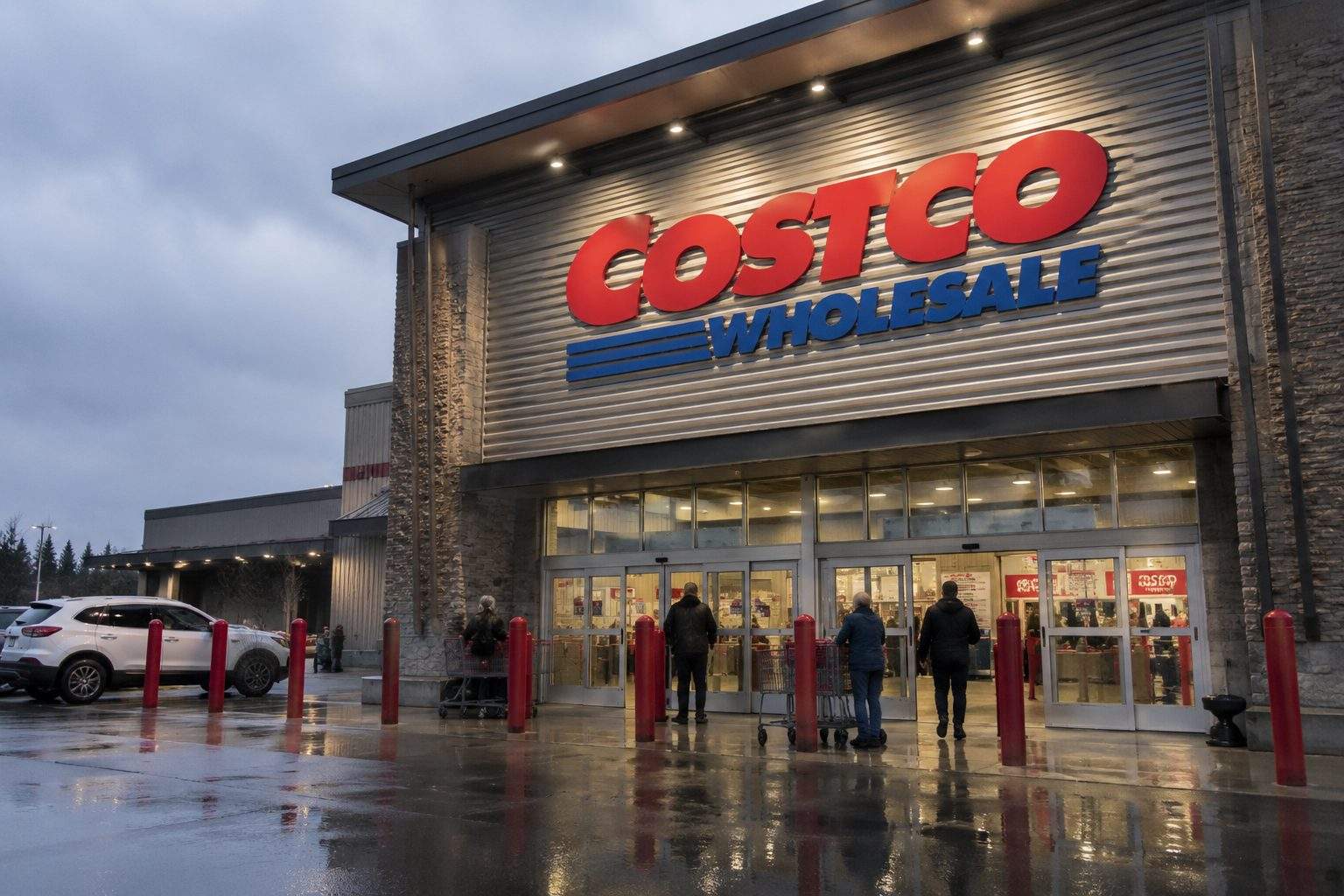
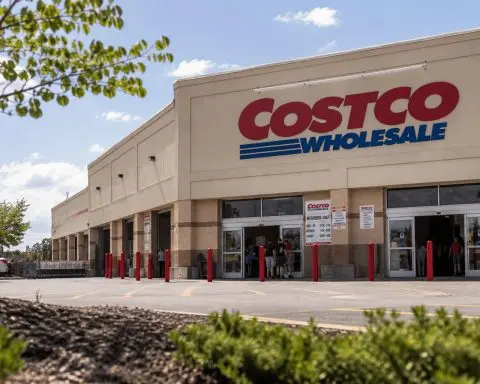
Costco Wholesale NASDAQ:COST shares rose about 0.8% to $923.65 in midday trading on Monday after RBC Capital Markets initiated coverage with a Sector Perform rating — roughly a hold — and a $1,000 price target. That leaves about 8.3% price upside from the current quote.
The sharper investor angle is the low churn on both sides of the checkout. Turnover among employees after their first year is about 7%, while Costco’s U.S.-Canada membership renewal rate was 92.2%, implying a 7.8% lapse rate. The retailer also raised maximum hourly pay to $32.90 and increased its annual bonus; the two churn measures are not directly comparable, but both remain unusually low.
| Retention measure | Latest rate | Investor read-through |
|---|---|---|
| Employee turnover after year one | About 7.0% | Less hiring and training churn |
| U.S.-Canada member lapse rate | 7.8% | Based on 92.2% renewal |
| Difference | 0.8 percentage point | Low churn among staff and shoppers |
Experienced labor is not merely a cost line. Long-tenured staff can move shoppers through checkout faster and train newer workers, the Wall Street Journal reported. Chief Executive Ron Vachris, who began his career as a forklift driver, has said: “You’ve got to give people room to try new things.” The Wall Street Journal
The membership stream gives that service loop financial weight. Costco recorded $4.057 billion of membership-fee revenue in the first 36 weeks of fiscal 2026, equal to 51.5% of its $7.884 billion in operating income. That is not a profit-margin calculation — fee revenue and operating income are different accounting lines — but it shows how heavily the earnings base rests on keeping members.
June sales remained strong, though growth slowed from May. Net sales rose 10.6% to $29.24 billion, while comparable sales — which largely remove the effect of new warehouse openings — increased 8.8%, or 7% excluding fuel-price and currency movements. Digitally enabled comparable sales rose an adjusted 21.5%; Telsey Advisory said traffic increased 3.2% and the adjusted average ticket, or spending per visit, rose 3.7%, an almost even split between more visits and bigger baskets. Telsey retained an Outperform rating and a $1,135 target.
Costco’s valuation premium is clear against two relevant rivals: Walmart NYSE:WMT, whose operations include Sam’s Club, and BJ’s Wholesale Club NYSE:BJ. The price-to-earnings ratio, or share price divided by annual earnings per share, was 46.5 times for Costco, about 16% above Walmart and 125% above BJ’s.
| Company | Share price | Trailing P/E | Costco P/E premium |
|---|---|---|---|
| Costco NASDAQ:COST | $923.65 | 46.5x | — |
| Walmart NYSE:WMT | $114.22 | 40.1x | About 16% |
| BJ’s Wholesale Club NYSE:BJ | $89.93 | 20.7x | About 125% |
RBC analyst Steven Shemesh still called Costco “one of the best stories in retail.” His research estimated food-retail market-share gains of 67 basis points in 2024 and 77 in 2025 — one basis point is one-hundredth of a percentage point — and identified scope for as many as 660 additional U.S. warehouses. RBC also estimated that online sales account for 10% of Costco’s business versus roughly 16% at club peers and flagged the possibility of a $23 special dividend within two years. Yet at about 37 times RBC’s fiscal 2028 earnings forecast, Shemesh said he “struggles with the path to significant upside.” Investing.com
But the downside case is straightforward. Costco’s third-quarter gross margin fell 21 basis points as it cut prices on some food and household goods, and CFO Gary Millerchip said customers who join online “renew at a slightly lower rate than warehouse sign ups.” If digital acquisition rises without a matching lift in retention, while wages and price investments keep costs high, earnings could grow without closing the valuation gap. The Motley Fool
RBC’s target offers about 8.3% upside, while its possible $23 special dividend equals another 2.5% of the current share price, though the two figures cannot safely be added because their timing and valuation treatment may differ. Telsey’s target implies roughly 22.9%. The wide spread captures the choice facing investors: Costco’s retention engine is hard to challenge, but the stock already charges heavily for it.
Related articles: NASDAQ:COST


![US Stock Market Today 08/25/2026 [UPDATE: 02:14 EDT] [Sandisk Jumps as QQQ Clears $710 Overnight]](https://ts2.tech/wp-content/uploads/2026/08/US-market-dashboard-2026-08-25-0208-480x384.jpg "US Stock Market Today 08/25/2026 [UPDATE: 02:14 EDT] [Sandisk Jumps as QQQ Clears $710 Overnight]")