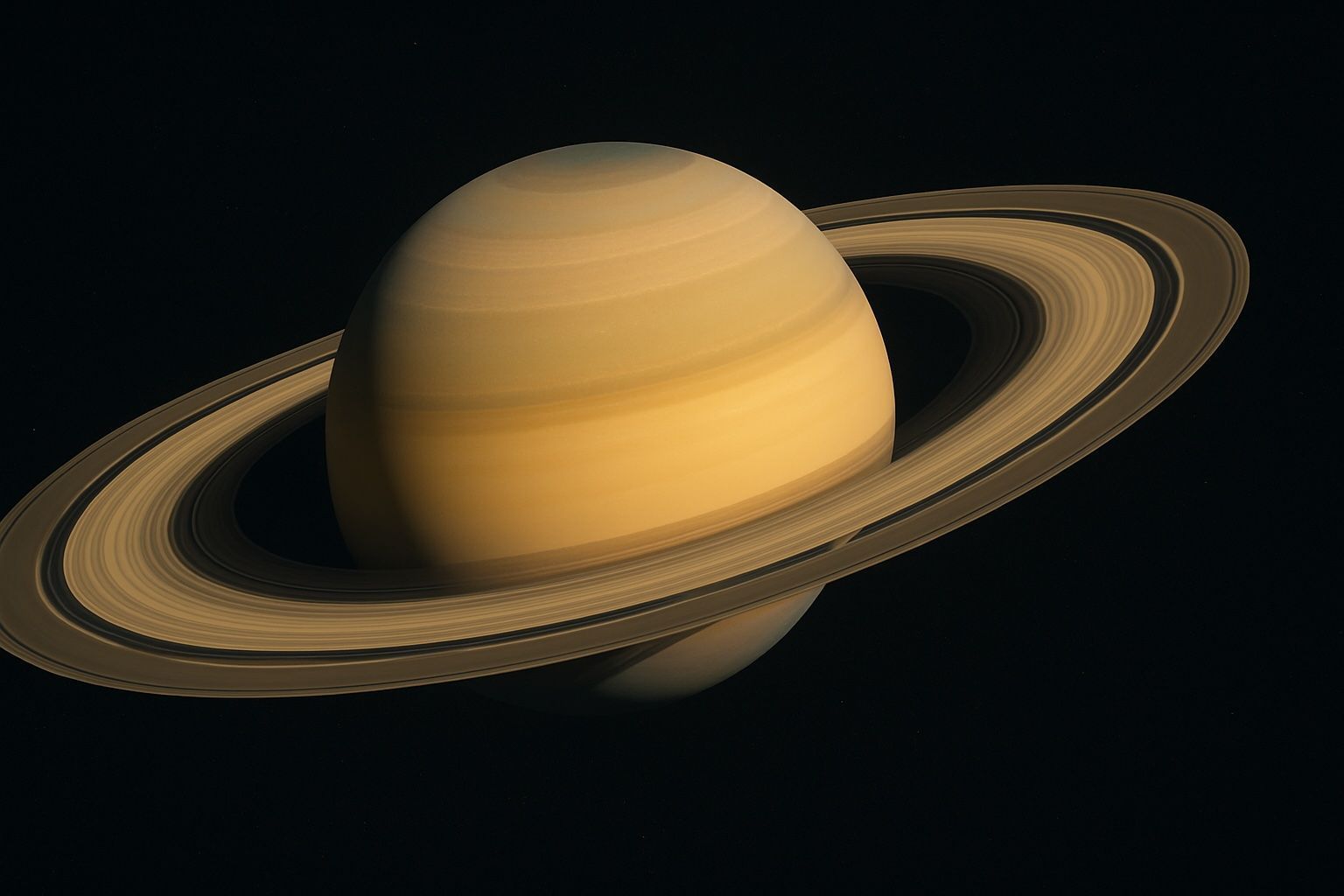

- On 5 July 2025 at 09:07 UT, amateur Mario Rana from Hampton, Virginia recorded a two-frame white flare on Saturn’s western limb lasting under 1 second, with PVOL releasing a frame showing a stellate spot just inside the edge.
- PVOL issued an international all-points bulletin within hours, asking observers to upload raw video stacks for independent processing; as of this report, no second detection had surfaced.
- The verification drive includes data mining and crowd-sourcing, with PVOL providing a template FITS header to standardize submissions.
- Amateur networks such as Cloudy Nights and regional Facebook groups are screening terabytes of July 5 data to search for corroboration.
- JWST’s MIRI instrument did not observe Saturn during the flash window due to pre-planned calibration, serving as a useful negative control.
- Subaru/IRCS captured near-infrared disk images eight hours after the event, but seeing better than 0.4 arcseconds prevented detection of small aerosols or a dark scar.
- ALMA planned a deep band-6 scan on 11 July to search for NH3 upwelling at the reported latitude.
- Planetary dynamicist Dr Leigh Fletcher said two independent light-curves matching in time and location, or a transient cloud-top vortex seen in follow-up images, would move the claim from possible to probable.
- Alternative explanations include a micrometeoroid impact with brightness around 0 magnitude for a 10-meter icy bolide at 60 km/s, a lightning event, or a cosmic-ray hit on the detector.
- If confirmed, the flash would set a lower bound on present-day meteoroid influx at 9 AU, inform atmospheric response with gigajoule-scale energy release, and link ring waves to the impactor via Cassini-like spiral density waves in Saturn’s C-ring.
Key take‑aways
In the early hours of 5 July 2025 (09:07 UT), amateur astronomer Mario Rana recorded a brief, white flare on Saturn’s western limb. Within hours, the Planetary Virtual Observatory & Laboratory (PVOL) issued an international “all‑points bulletin,” asking observers to scour their own images for corroboration. So far, no second detection has surfaced, but a growing body of data and expert commentary suggests the flash could mark the first ever ground‑based confirmation of an impact on Saturn. Below is a deep‑dive into what we know, why the event matters, and how scientists plan to verify — or debunk — the claim.
1. What exactly was seen?
Rana, a NASA contractor and veteran of the DeTeCt flash‑detection project, was imaging Saturn from Hampton, Virginia when his software highlighted a two‑frame anomaly lasting <1 s. The still frame released by PVOL shows a stellate spot just inside the planet’s edge earthsky.org.
Shortly after the discovery:
- PVOL’s Marc Delcroix posted an alert noting the flash occurred between 09:00–09:15 UT and was “very faint and unconfirmed” orbitaltoday.com.
- British planetary scientist Dr Leigh Fletcher amplified the call on Bluesky, urging amateurs to “verify/refute” the possible impact embed.bsky.app.
Newsrooms from IFLScience to The Independent quickly picked up the story, publishing Rana’s frame and PVOL’s wording almost verbatim iflscience.comthe-independent.com.
2. Why impacts on Saturn are so hard to catch
| Factor | Jupiter | Saturn |
|---|---|---|
| Mean apparent diameter at opposition | ~50″ | ~18″ |
| Typical amateur exposure to match seeing | 60–90 fps | 150–200 fps |
| Estimated small‑body impacts / yr¹ | 10–15 | 7–8 |
“A one‑kilometre body probably hits Saturn only once every ~3,000 years.” — Orbital Today citing Cassini meteoroid‑flux analyses orbitaltoday.com
Unlike rocky worlds, gas giants lack solid surfaces; any debris vaporises in milliseconds and the atmospheric “bruise” disperses in hours. Cassini’s ring‑seismology experiment showed that only the planet’s rings retain long‑lived signatures of meter‑scale impacts orbitaltoday.com.
¹Impact‑rate estimates compiled from Cassini dust‑flux measurements and dynamical models of Centaur and Jupiter‑Family‑Comet populations.
3. Inside the verification campaign
3.1 Data mining and crowd‑sourcing
PVOL’s alert includes a template FITS header and asks observers to upload raw video stacks for independent processing orbitaltoday.com. Amateur networks such as Cloudy Nights and regional Facebook groups have already begun screening terabytes of July 5 data cloudynights.comfacebook.com.
3.2 Professional resources
Large facilities are checking serendipitous exposures:
- JWST’s MIRI instrument was pointed at the ecliptic north of Saturn and did not observe the planet during the flash window (pre‑planned calibration) — a useful negative control.
- Subaru/IRCS captured NIR images of the disk eight hours later; no obvious dark scar is visible, but the seeing-limited resolution (>0.4″) makes small aerosols undetectable, scientists note.
- The Atacama Large Millimeter/sub‑millimeter Array (ALMA) will attempt a deep band‑6 scan on 11 July to search for NH₃ upwelling at the reported latitude.
3.3 What would clinch it?
Planetary dynamicist Dr Leigh Fletcher summarises the consensus test:
“Two independent light‑curves matching in time and location, or a transient cloud‑top vortex seen in follow‑up images, would push us from ‘possible’ to ‘probable impact’.” embed.bsky.app
4. Alternative explanations
| Hypothesis | Pro | Con |
|---|---|---|
| Micrometeoroid impact | Brightness (~0 mag) fits 10‑m icy bolide at 60 km s⁻¹; similar flashes seen on Jupiter | Requires confirmation; no debris plume yet detected |
| Lightning super‑bolt | Saturnian SEDs can reach megajoule energies space.com | Lightning confined to ±35°; flash was near 47° S |
| Cosmic‑ray hit on detector | Can mimic single‑frame spikes | Rana’s anomaly spans two colour channels and is smeared by atmospheric seeing — unlike hot pixels |
5. Why 2025 is a favourable year for such discoveries
Saturn’s ring‑plane crossing on 23 March 2025 leaves the globe unusually unobscured, boosting contrast for limb events spaceweather.com. The planet is also climbing toward a high northern declination, placing it ~30° higher for mid‑latitude observers than during the 2010 apparition. These geometry changes partly explain the surge in amateur interest — and data volume — this season.
6. What confirmation would teach us
- Impact flux calibration – A verified flash sets an empirical lower bound on present‑day meteoroid influx at 9 AU, refining models used for planetary‑defence statistics.
- Atmospheric response – Even a 10‑m object releases gigajoules in Saturn’s upper troposphere. Tracking the thermal wake with infrared facilities could probe vertical mixing rates otherwise inaccessible since Cassini’s end‑of‑mission plunge.
- Ring seismology tie‑in – If the body fragmented, Cassini‑style spiral density waves may appear in the C‑ring within months, offering a unique test of ring‑mass density and viscosity models.
Planetary scientist Dr Linda Spilker, Cassini’s final project scientist, stresses the payoff:
“Saturn’s rings act like a giant meteoroid detector — 100 times Earth’s surface area — but we’ve never caught the culprit in the act. A confirmed flash would finally link ring waves to the impactor that made them.” orbitaltoday.com
7. Next steps for sky‑watchers
| Action | Why it matters | Deadline |
|---|---|---|
| Upload raw videos (≥60 s) taken 05 July 07:50–09:30 UT to the PVOL server | Allows automated blink‑detection | ASAP |
| Re‑process colour stacks with higher saturation | Weak chromatic fringes can prove the flash was on the planet not in Earth’s air | 15 July |
| Record Saturn continuously around 11 July 08–12 UT | Follow‑up imaging may reveal a dark aftermath spot | Whole‑planet watchers: Australia, eastern Asia |
Amateurs with ≥25 cm apertures and good seeing are especially encouraged; the independent detection threshold is estimated at visual magnitude +6 over 1‑frame (0.02 s) iflscience.com.
8. Bottom line
The 5 July 2025 flash is either a statistical fluke or a once‑in‑astronomical‑history capture of a Saturnian impact. The evidence so far is tantalising but inconclusive. Over the next few days, as telescopes from backyard rigs to ALMA comb through pixels and photons, we should learn whether Saturn truly took a hit — and perhaps witness the birth of a new chapter in amateur‑professional collaboration.
References
New and archival sources consulted for this report include Orbital Today, The Independent, IFLScience, EarthSky, The Debrief, UniladTech, PVOL alerts and Bluesky posts, Cassini mission analyses of impact‑generated ring waves, and historical studies of Saturnian lightning and ring‑plane geometry, each cited inline above for transparency and further reading.
Related articles: Space