NEW YORK — Wednesday, December 17, 2025 — U.S.-listed EV stocks are trading on a mix of regulatory headlines, shifting policy risk, and company-specific catalysts that are widening the gap between winners and laggards. Tesla remains the sector’s main gravity well as investors weigh a California Department of Motor Vehicles (DMV) action tied to “Autopilot” marketing—while also continuing to price in Tesla’s robotaxi ambitions. Meanwhile, Ford’s decision to cancel a multibillion-dollar battery supply agreement adds to the narrative of an industry retrenchment in EV investment, even as charging-network operators and battery-tech names chase cost reductions and new partnerships. Reuters+1
EV stocks in focus: where key U.S.-listed names are trading today
As of about 11:40 a.m. ET (16:40 UTC) on Dec. 17, here’s a snapshot of notable U.S.-listed EV and EV-adjacent tickers:
- Tesla (TSLA): $477.59, down about 2.5%
- Rivian (RIVN): $18.14, up about 1.3%
- Lucid (LCID): $11.38, down about 1.2%
- Ford (F): $13.39, down about 2.1%
- General Motors (GM): $80.94, down about 1.0%
- QuantumScape (QS): $11.16, up about 3.0%
- EVgo (EVGO): $3.14, up about 0.8%
- ChargePoint (CHPT): $7.51, down about 1.4%
- Blink Charging (BLNK): $0.81, down about 0.3%
- NIO (NIO): $4.95, down about 1.6%
- XPeng (XPEV): $18.26, down about 1.2%
- Li Auto (LI): $16.30, down about 2.3%
Macro backdrop: why EV stocks are reacting so sharply to headlines
EV stocks tend to behave like “long-duration” growth equities: they’re sensitive to interest-rate expectations, consumer affordability, and policy support (tax credits, emissions rules, charging infrastructure funding). Today’s tape reflects that sensitivity, with investors juggling rate uncertainty and fresh policy/legal headlines around EV infrastructure. Investopedia+1
Tesla stock today: California pauses a sales suspension order tied to “Autopilot” marketing
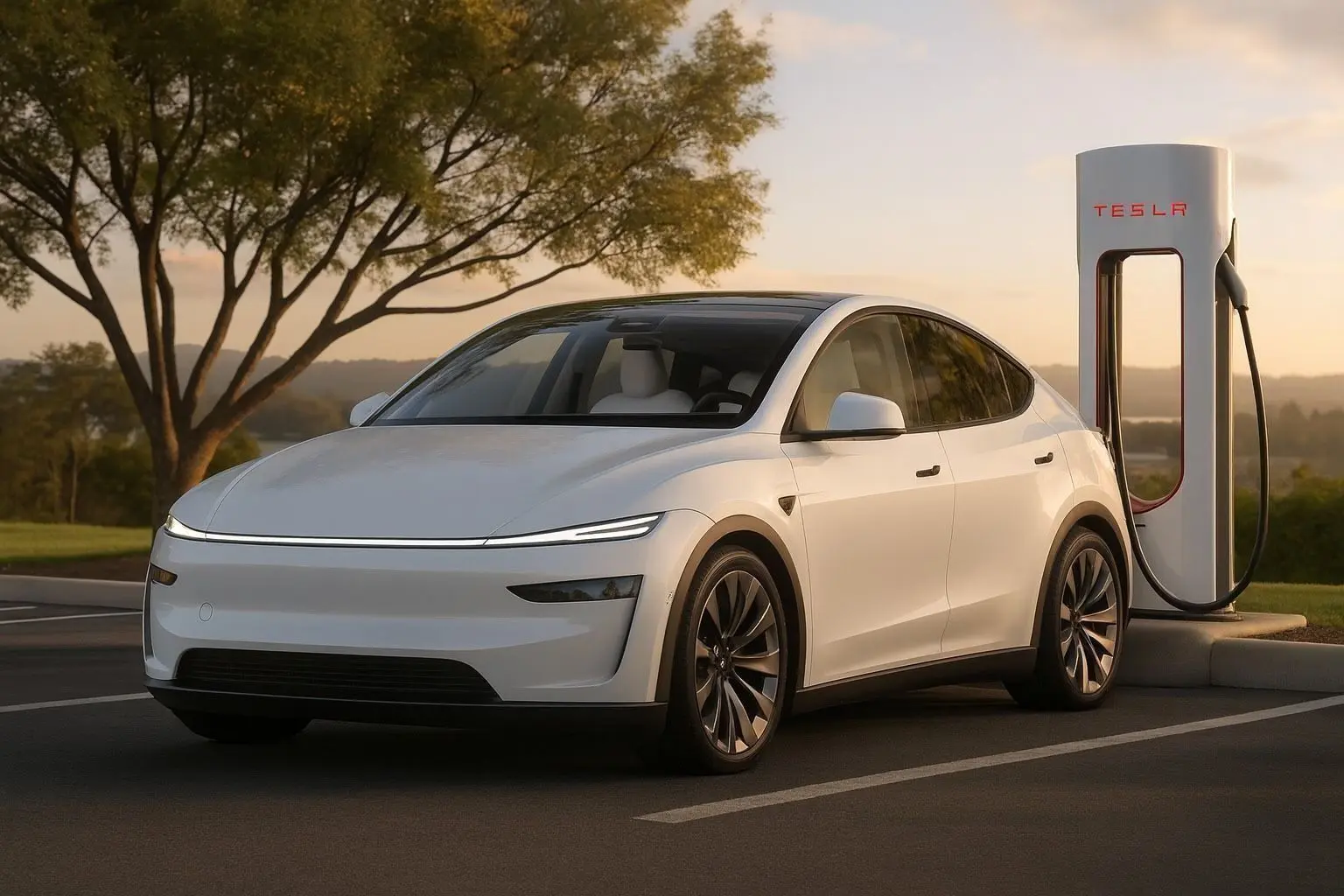
Tesla is once again at the center of the EV-stock conversation—this time due to a California DMV action that, at first glance, sounds severe but is currently paused.
What happened
Reuters reports that California’s DMV adopted an administrative judge’s proposal to suspend Tesla’s sales and manufacturing licenses for 30 days, but immediately stayed (paused) the order. The DMV said it issued a 90-day stayon Tesla’s sales license and an indefinite stay on Tesla’s manufacturing license—describing the pause as a chance for Tesla to remedy what the regulator considers misleading statements. Reuters
What Tesla can do next
Per Reuters, to avoid suspension, Tesla can submit a statement confirming either:
- it has stopped using the name “Autopilot” for its driver-assistance software, or
- its cars can operate without active human monitoring. Reuters
The company can also appeal or seek court review by February 14, Reuters reports. Reuters
Why investors seem unfazed
Investor’s Business Daily framed the situation as one where investors are largely not concerned about near-term disruption, noting the 60-day/90-day window and highlighting commentary that Tesla has changed terminology before when needed. Investors.com
Barron’s similarly emphasized that the key issue is marketing language around Level 2 driver-assistance systems (not fully autonomous driving), while noting the market’s continued focus on Tesla’s longer-term autonomy narrative. Barron’s
The bigger driver: robotaxi and autonomy expectations
Today’s Tesla debate is happening against a backdrop where many investors increasingly view Tesla less as “just” an automaker and more as an AI/autonomy platform—especially after Tesla’s stock notched a fresh milestone this week.
- MarketWatch reported Tesla closed at $489.88 on Tuesday—its first record close since December 17, 2024—amid optimism about AI/robotics and autonomous vehicle testing. MarketWatch
- Reuters noted Tesla has been emphasizing robotaxis and that the company uses a supervised version of Full Self-Driving for customers while also operating an Austin robotaxi service with human safety monitors and remote support. Reuters
- Barron’s highlighted that a Mizuho price-target upgrade has been part of the bullish narrative alongside robotaxi progress. Barron’s
What to watch next for TSLA: whether Tesla tweaks branding/consumer messaging in a way that satisfies California regulators without undermining the autonomy narrative investors are paying for—and whether similar scrutiny spreads to other states or lawsuits.
Ford’s battery reversal hits EV sentiment: $6.5 billion LG Energy Solution deal is terminated
While Tesla’s story is about autonomy and regulation, Ford’s headline is about investment pullbacks—and it matters for the whole EV supply chain.
Reuters reported that LG Energy Solution said Ford terminated an EV battery supply deal worth about 9.6 trillion won (roughly $6.5 billion). The deal had been expected to support Ford’s European battery supply beginning in 2026 and 2027, but the termination followed notice from Ford after it decided to halt some EV models due to policy changes and a shifting outlook for EV demand. Reuters
Reuters also pointed to the broader context: Ford announced a $19.5 billion writedown earlier in the week and said it was “killing” several EV models—an unusually stark signal of how quickly major automakers will pivot when the profitability math and policy environment change. Reuters+1
Why this matters for EV stocks beyond Ford:
When a major OEM retreats, it can ripple into:
- battery demand expectations,
- supplier revenue visibility,
- charging buildout assumptions,
- and investor sentiment toward capital-intensive EV strategies.
Charging stocks and policy risk: states sue over EV charging program suspensions
One of the most important “under the surface” stories for EV stocks today is not a single earnings report—it’s a policy and legal fight over charging infrastructure funding.
Reuters reported that 16 states and Washington, D.C. sued after the Trump administration suspended approvals tied to two EV charging grant programs created under the 2022 infrastructure law (with $2.5 billion allocated for EV and hydrogen fueling infrastructure). The lawsuit argues the pause jeopardizes billions in grants. Reuters
The Associated Press described the case as a challenge over more than $2 billion in funding that states say is being unlawfully withheld, and noted it follows earlier litigation related to separate EV infrastructure funding. AP News
The Wall Street Journal similarly reported the lawsuit targets the suspension of federal funding for EV charging infrastructure and identifies specific grant programs at issue. Wall Street Journal
Why charging stocks care (CHPT, EVGO, BLNK):
Even when federal money flows primarily to states and local governments (not directly to public companies), a funding freeze can slow project timelines, delay procurement decisions, and raise uncertainty around pipeline visibility.
EVgo stock catalyst: modular “prefabricated” charging skids to cut costs and speed deployment
Not all charging news is policy risk—there’s also an execution story.
A Dec. 17 report from Electrive says EVgo deployed more than 40% of its new U.S. fast-charging stations in 2025 using domestically manufactured prefabricated charging skids. The modular approach reportedly reduced average station costs by around 15% and supported faster expansion. electrive.com
EVgo’s own release frames this as a scaling strategy built around prefabrication to speed deployment and support network growth. EVgo
Investor takeaway: in a tougher funding and demand environment, charging-network operators that can demonstrate lower installed costs and faster build cycles may be better positioned—even if policy uncertainty remains a headline risk.
QuantumScape stock surges on a new automaker partnership
Battery-tech developer QuantumScape is drawing attention after announcing another partnership milestone.
Investing.com reports QuantumScape shares rose after the company announced a joint development agreement with a top-10 global automaker to develop QSE-5 cells, describing it as the fourth OEM agreement and noting it aligns with QuantumScape’s goal of adding another OEM during 2025. The report also notes earlier agreements involving PowerCoas well as supply-chain collaborations (including Murata and Corning). Investing.com
Why QS matters to EV investors today:
Even as some automakers slow near-term EV spending, the race for differentiated batteries (energy density, cost, manufacturability) continues—especially among OEMs looking for long-term competitive edges.
Rivian stock: forecasts stay divided as analysts recalibrate targets
Rivian hasn’t had a single dominant “breaking” headline today on the level of Tesla or Ford, but it remains a heavily traded EV name where analyst forecasts and valuation frameworks are moving.
A widely circulated analyst-summary item referenced on Yahoo Finance indicates some Wall Street analysts have raised targets (examples cited include Goldman Sachs and Mizuho) while broader views remain mixed, reflecting a tug-of-war between optimism over positioning and caution about demand and execution risk. Yahoo Finance+1
MarketBeat’s compiled consensus for Rivian shows an average target in the mid-teens and frames it as a potential downside from recent trading levels—illustrating how quickly sentiment can diverge after a rally. MarketBeat
Investor takeaway: Rivian’s story is increasingly being judged on (1) path to gross margin improvement, (2) the ramp and reception of next-gen vehicles, and (3) software/autonomy monetization potential—areas where forecasts can change meaningfully with one quarter’s execution.
Lucid stock: new lows put the spotlight back on profitability timelines
Lucid continues to trade as one of the sector’s most volatile “funding and profitability” battlegrounds.
Investing.com reported Lucid hit a new 52-week low (around $11.46) amid a steep year-over-year decline, while also pointing to recent developments including a certified pre-owned program, the Gravity Touring SUV pricing, and a convertible-notes financing step. The same report noted Morgan Stanley downgraded Lucid, citing concerns about the timeline to profitability. Investing.com
MarketBeat’s recap of Lucid’s downtrend highlighted the stock’s low print and cited Morgan Stanley lowering its price objective to $10 (from a higher prior target earlier this month), underscoring the market’s focus on dilution risk and execution. MarketBeat
Why LCID moves matter for the broader EV complex:
In periods when rates are elevated and policy support is uncertain, the market often punishes EV companies most dependent on external capital—while rewarding those with stronger balance sheets or clearer paths to positive cash flow.
China EV ADRs in U.S. trading: NIO, XPeng, and Li Auto remain headline-sensitive
U.S.-listed Chinese EV makers often trade on a combination of China demand signals, pricing competition, and macro risk appetite. Today’s price action shows broad pressure across the group, with NIO, XPeng, and Li Auto all lower in the U.S. session snapshot.
On the research side, MarketBeat published a Dec. 17 note on Li Auto’s consensus rating, reflecting the “hold/neutral” tone that still dominates many coverage summaries as investors wait for clearer demand and margin signals. MarketBeat
The EV stock outlook: three themes shaping forecasts into 2026
Across today’s reporting and analysis, three forces stand out as likely to keep EV stocks volatile into year-end and early 2026:
- Policy whiplash and legal fights
- Autonomy is becoming the valuation battleground
- Tesla’s valuation story is increasingly linked to robotaxi/autonomy expectations, even as regulators focus on marketing language for driver-assistance features. Reuters+1
- Capital costs and execution discipline
- With yields still elevated compared with the ultra-low-rate era, investors are demanding more proof of margin improvement, cost control, and credible funding plans—especially from smaller EV manufacturers and charging-network operators. Investopedia+1
What to watch next for EV stocks (and why it matters)
- Tesla (TSLA): any change to Autopilot/FSD branding and the legal/regulatory calendar ahead of Feb. 14. Reuters
- Ford (F) and suppliers: whether additional battery or model decisions follow, and how suppliers adjust expectations for 2026–2027 volumes. Reuters
- Charging networks: whether the lawsuit over funding suspensions produces injunctions, settlements, or extended uncertainty—and how that affects project timelines. Wall Street Journal+2Reuters+2
- EVgo (EVGO): evidence that prefabrication reduces costs and accelerates deployments at scale. electrive.com+1
- Battery tech (QS): confirmation of timelines and scope for the new top-10 automaker partnership. Investing.com
- Rivian and Lucid: any new guidance updates, financing moves, or demand indicators that shift analyst target ranges. MarketBeat+1
This article is for informational purposes only and does not constitute investment advice.