
NEW YORK, March 4, 2026, 18:42 (EST)
Exxon Mobil Corporation (XOM.N) is set to ship around 600,000 barrels of fuel from the U.S. Gulf Coast to Australia in mid-March, according to four people familiar with the situation—marking the company’s first such move. These shipments are intended to supply Exxon’s own Australian import needs as Asian refiners grapple with crude shortages linked to ongoing Strait of Hormuz disruptions. Exxon runs three fuel terminals across Australia and distributes to retailers via its Mobil Oil arm.
According to analysts, U.S. and Israeli strikes on Iran prompted some regional oil and gas fields to shut down, and shipping in the Strait of Hormuz has ground to a stop. The channel, which runs between Iran and Oman, serves as the main artery for tankers moving crude, fuel, and LNG out of the Middle East.
Australia, heavily reliant on imported transport fuels, reported it holds 36 days’ worth of petrol, 34 days of diesel, and 32 days of jet fuel in its reserves, urging consumers there’s no need for panic buying. “We are a long way from other countries,” said Tony Wood, senior fellow at the Grattan Institute’s energy program. Reuters
Exxon has lined up two medium-range tankers, the Largo Eagle and Nord Ventura, to ship gasoline, diesel, or jet fuel out of Houston, sources told reporters. Loading windows are set for March 13-16 and March 15-18. Both vessels are chartered by Vitol, which is subletting them to Exxon. While Exxon didn’t reply to a request for comment, Vitol chose not to weigh in. Shipping the route runs about $6 million per tanker, or around $20 per barrel. These are poised to be the first Gulf Coast fuel cargoes bound for Australia since Marathon Petroleum’s Garyville facility sent gasoline there in December 2023, Kpler shiptracking data shows.
Brent jumped 4.7% to finish at $81.40 a barrel on Tuesday. U.S. West Texas Intermediate ended the session at $74.56. Supply risks and rising shipping costs pushed prices higher. “so the market is thinking there might be a quicker resolution than previously feared,” said Phil Flynn, senior analyst at Price Futures Group. Reuters
Forward diesel east-west spreads — the price gap tracking Asia to Europe — surged to their highest levels in over three years, according to LSEG data. Still, traders reported no confirmed arbitrage cargoes fixed on that route, since the price difference hasn’t yet justified the freight costs. “The trajectory for both diesel and jet though now hinges on the scale and duration of escalation,” said Sparta Commodities analyst James Noel Beswick. Reuters
With the strait still closed, banks aren’t expecting prices to fall further just yet. Goldman Sachs bumped its Q2 2026 Brent call up by $10, now targeting $76 a barrel. J.P. Morgan flagged that if the shutdown drags on, as much as 4.7 million bpd from Iraq and Kuwait could be knocked out in a matter of days.
Exxon, along with TotalEnergies and Shell, has a hefty footprint in the Middle East — a factor that weighs on both supply and profits. According to Jefferies, around 20% of Exxon’s oil and gas comes from the region. For Shell, the figure is the same, but TotalEnergies relies even more heavily, with 29% of its output tied there. Then there’s Exxon’s LNG business: TD Cowen pegs nearly 60% of that segment, which involves shipping gas in chilled form, as Middle East-based.
On Wednesday, Qatar invoked force majeure on its gas exports, sources told Reuters, effectively waiving contractual penalties as it prepares to fully halt gas liquefaction. The Gulf producer accounts for roughly a fifth of the world’s LNG, all typically shipped through the Strait of Hormuz. “Nothing can replace Qatari LNG,” said Saul Kavonic, head of energy research at MST Marquee. Reuters
Exxon might head back to Venezuela after a long hiatus, with a technical team set to visit in a few weeks, according to Senior Vice President Jack Williams. The trip depends on sorting out logistics and security first. Williams, speaking at a Morgan Stanley conference, said the company is open to returning if investment terms work out: “we will be interested in going back.” Reuters
Long-haul fuel cargo economics can pivot quickly if tanker shortages persist or freight costs keep surging. The Middle East-to-China supertanker benchmark just hit a record $423,736 a day. March vessel supply was already tight, according to Wood Mackenzie. “There will be very strong competition for any available vessels,” said Fraser Carson, principal analyst for global LNG at Wood Mackenzie. Reuters
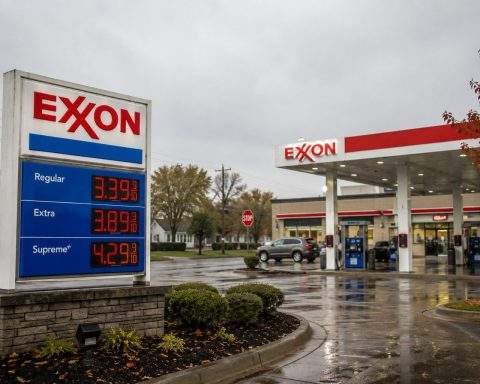
U.S. retail diesel cracked the $4-per-gallon mark on Wednesday, something AAA hasn’t reported in almost two years. That’s a fresh pinch for freight and manufacturing. “We could see the average rise to $4.25-$4.45/gal in the days ahead, but any new developments could push the needle either way,” GasBuddy’s Patrick De Haan said. According to Vortexa, roughly 900,000 bpd of diesel and 350,000 bpd of jet fuel usually ship out from the Gulf, putting markets on edge over potential supply hiccups. Reuters
Related articles: NYSE:XOM