
NEW YORK, August 3, 2026, 04:14 EDT
- Prior to the start of trading on Monday, U.S. futures rose between 0.6% and 0.95%. Oil declined by over 5%.
- The S&P 500 advanced 1.05% over the past week, while the Nasdaq added 1.59%.
- Ahead of July’s report, a Reuters poll forecasts 83,000 jobs added with unemployment estimated at 4.3%.
U.S. stock futures climbed in early trading on Monday as oil prices tumbled. Washington postponed an additional strike on Iran and continued talks on Tehran’s nuclear activities and the Strait of Hormuz. Cash markets remained closed.
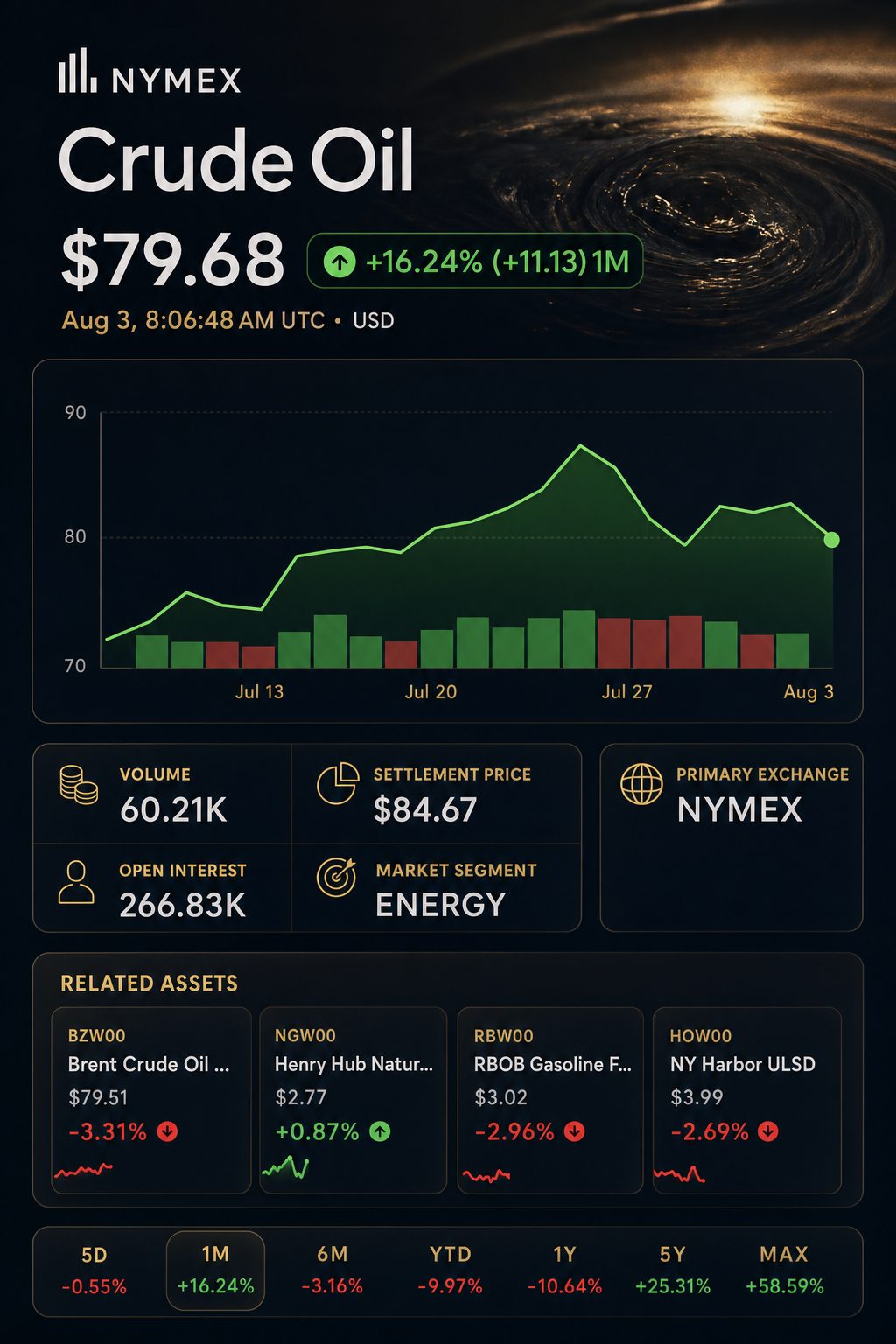
The actions provided some respite after the energy shock in July. However, stock advances stayed limited compared to the decline in oil prices.
| Early-Monday market | Latest verified reading | Move |
|---|---|---|
| Dow Jones futures | — | up 0.55% |
| S&P 500 futures | — | up 0.60% |
| Nasdaq-100 futures | — | up 0.95% |
| Brent crude | $83.28 a barrel | down 5.29% |
| U.S. crude | $79.47 a barrel | down 6.14% |
| U.S. 30-year yield | 5.238% | down 3.7 basis points |
Measurements were taken at various market times prior to 04:14 EDT.
The key indicator for investors is that difference. U.S. crude dropped by a percentage roughly 6.5 times greater than the increase in Nasdaq futures.
Market participants seem to be factoring in a shift in margins rather than widespread geopolitical stability. Lower fuel costs benefit transportation companies and consumers, while producer earnings decline.
European markets mirrored the divide, with travel stocks rising while energy producers posted steep declines.
| European sector signal | Monday move |
|---|---|
| Travel and leisure | up 2.1% |
| STOXX Europe 600 | gained 0.4% |
| Energy | dropped 2.0% |
| Travel minus energy | 4.1 percentage point gap |
The sector spread comes from recorded changes in the index.
Bond yields continue to be the more significant limit. The 30-year Treasury yield held close to its highest point in 19 years.
“The market has sort of been at the mercy of both oil prices and the 10-year yield,” stated Art Hogan, chief market strategist at B. Riley Wealth. Reuters
Stocks closed the week with gains, though Friday saw narrow breadth as decliners led advancers by about 1.3 to one.
| U.S. index | July 31 close | Weekly change |
|---|---|---|
| Dow Jones Industrial Average | 52,485.03 | up 1.04% |
| S&P 500 | 7,489.72 | up 1.05% |
| Nasdaq Composite | 25,373.85 | up 1.59% |
The Dow’s move reflects Reuters’ closing figures. All other weekly shifts were provided as reported.
Major tech earnings drove notable gains and losses. Amazon.com NASDAQ:AMZN surged over 15% on Friday. Microsoft NASDAQ:MSFT rose 3%, but Apple NASDAQ:AAPL dropped 7.4%.
The divide indicates that investors continue to favor immediate gains from artificial intelligence investments. There is less tolerance for slower growth or squeezed margins.
There is minimal margin for error in current valuations. The S&P 500 is trading at nearly 20 times projected earnings, compared to its 10-year average of approximately 19 times. In July, the Nasdaq declined by 3.2%.
The week ahead features a packed schedule, with four sessions holding multiple key tests. Over a quarter of S&P 500 firms plan to release their results.
| Date | Company or release | Scheduled timing | Main investor test |
|---|---|---|---|
| Aug. 3 | Palantir Technologies NASDAQ:PLTR | After market close | Commercial AI demand |
| Aug. 4 | Advanced Micro Devices NASDAQ:AMD | After market close | Data-center chip growth |
| Aug. 4 | SpaceX NASDAQ:SPCX | After market close | First quarterly report |
| Aug. 5 | Eli Lilly NYSE:LLY | 10:00 EDT call | Obesity drug supply and overall sales |
| Aug. 5 | Sandisk NASDAQ:SNDK | 16:30 EDT call | Trends in memory pricing and demand |
| Aug. 7 | U.S. employment report | 08:30 EDT | Payroll figures, wage growth, unemployment rate |
The outcome of Friday’s jobs report could determine if the oil price respite continues. A Reuters early estimate forecasts 83,000 new jobs and an unemployment rate of 4.3%.
Interest-rate futures have indicated a roughly 65% chance of a hike in September. Higher payroll numbers may push yields upward and constrain advances in stocks.
The oil supply outlook faces added complexity following OPEC+’s decision to implement a production change of 188,000 barrels per day for September. Earlier increases in quotas had little effect on export volumes amid the ongoing regional instability.
As a result, diplomatic efforts take on greater importance than the stated quota. IG analyst Tony Sycamore asked “whether this week turns into a rinse and repeat of last week.” Reuters
Risks: Failure in Iran negotiations may lead to renewed tanker attacks and lift oil’s risk premium. Robust employment figures could drive Treasury yields upwards. Disappointing technology outlooks might reveal overextended valuations.
The strongest indication would be wider participation combined with declining yields. For now, Monday’s action primarily benefits energy consumers rather than producers. A wholesale risk reset has yet to occur.
Related articles: Artificial Intelligence