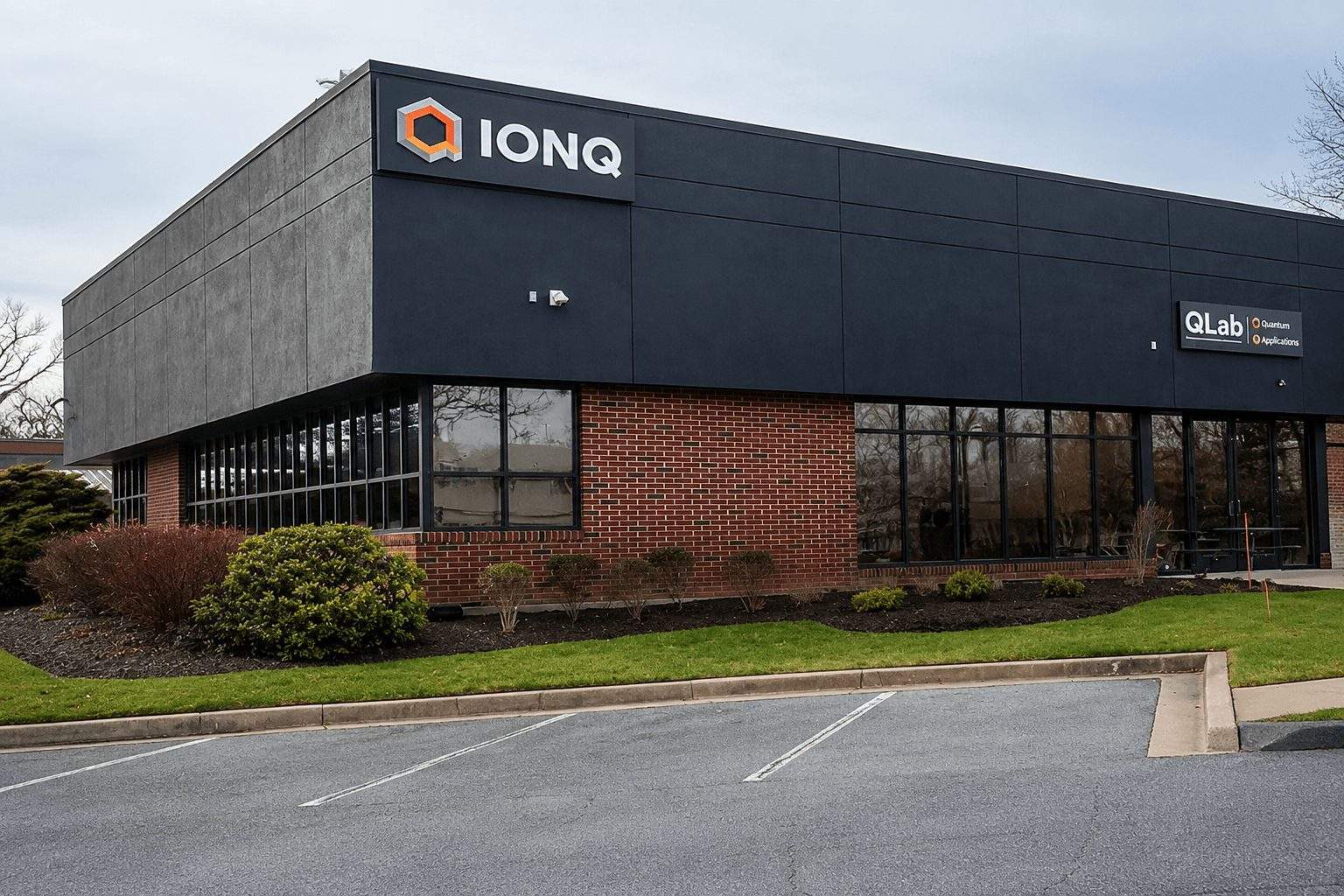

COLLEGE PARK, Maryland, May 7, 2026, 06:06 ET
- IonQ bumped up its 2026 revenue outlook, following a first-quarter sales result that topped Wall Street expectations.
- Shares dropped after hours, with investors still wary about whether quantum computing will deliver commercially.
- Backlog jumped, though losses from core operations are still on the table.
IonQ bumped up its full-year revenue guidance after notching record first-quarter sales, giving investors a clearer sense of whether the quantum-computing specialist can turn interest in its systems into broader commercial gains. The company now forecasts 2026 revenue between $260 million and $270 million, a jump from its previous range of $225 million to $245 million. First-quarter revenue landed at $64.7 million, well ahead of the $49.7 million analyst consensus collected by LSEG.
Timing’s a key factor here. Quantum stocks have pulled in strong attention lately, with governments, cloud providers, and industrial players all running trials on systems designed for challenges classical computers can’t handle. Still, plenty of investors are left wondering when steady profits will actually materialize. After the report, IonQ shares dropped about 6% in after-hours trade, according to Reuters.
IonQ reported a 755% jump in quarterly revenue from the same period last year, landing 30% above the midpoint of its guidance. CEO Niccolo de Masi described it as the company’s “biggest quarter” yet, pointing to strong demand for quantum computers and IonQ’s expanding platform as reasons for boosting annual forecasts. Business Wire
The company posted remaining performance obligations totaling $470 million—a 554% jump from a year ago. These obligations, essentially a backlog of contracted sales awaiting recognition as revenue, are on the books but not yet counted as revenue.
On the earnings call, Chief Operating and Financial Officer Inder Singh noted that for every $1 in revenue IonQ booked during the quarter, it stacked up around $2.50 in remaining performance obligations. Breaking down revenue sources, Singh put commercial customers at about 60%, while international markets contributed 35%, and another 35% came from clients purchasing more than one product.
IonQ has announced its first sale of a sixth-generation, chip-based 256-qubit machine, landing the deal with the University of Cambridge. In quantum computing, a qubit serves as the core unit of information. It packs a punch compared to a standard bit, but keeping it stable and precise is a challenge.
The company’s approach relies on trapped-ion tech—lasers and electromagnetic fields manipulate charged atoms within a vacuum. D.A. Davidson analyst Alex Platt told Reuters that the selloff pointed to “high expectations” but lingering skepticism about both the “viability of the technology” and IonQ’s bet on the trapped-ion model. Reuters
Profit isn’t front and center for IonQ this year, De Masi told Reuters. Instead, the company is channeling cash into both revenue expansion and R&D. IonQ stuck to its outlook for a 2026 adjusted EBITDA loss in the $310 million to $330 million range. Adjusted EBITDA, a non-GAAP metric, excludes items like interest, taxes, depreciation, amortization, and certain other expenses.
That’s the catch. IonQ’s GAAP net income landed at $805.4 million, though CEO Singh pointed out on the call that the bulk of that came from a roughly $1.1 billion mark-to-market warrant valuation—a non-cash adjustment tied to stock price moves, with no bearing on actual business operations.
At the end of March, the company was sitting on $3.1 billion in cash, cash equivalents, and investments — enough to support R&D, product development, and deals. Singh described the war chest as “financial firepower.” But costs are still climbing: GAAP R&D expenses jumped 215% from a year earlier, reaching $125.7 million for the quarter. The Motley Fool
Pressure from rivals isn’t letting up. IonQ, which trades with a handful of quantum peers—D-Wave Quantum, Rigetti Computing, and Quantum Computing Inc.—often sees its stock move more on sector mood than company news. Barron’s noted IonQ slipped in premarket hours even after posting better-than-expected numbers; D-Wave and Rigetti got swept up in the same investor reaction.
IonQ’s revenue, backlog, and cash are all up compared to a year earlier. But the central challenge remains: convincing the market that quantum systems can move beyond being pricey, speculative hardware and show they work as dependable commercial solutions.