
NEW YORK — As of 2:45 a.m. ET on Saturday, December 27, 2025, U.S. stock markets are closed for the weekend, leaving investors to digest a burst of late‑December NVIDIA headlines before the next regular session begins Monday morning.
NVIDIA NASDAQ:NVDA last traded at $190.53, up about 1.02% in the most recent session (Friday, Dec. 26), with heavy volume around 139.7 million shares, after news broke that the company struck a non‑exclusive inference technology licensing agreement with AI‑chip startup Groq and will bring Groq’s founder and key executives into NVIDIA.
The market backdrop: “Santa Claus rally” season, light volume, and a pause near highs
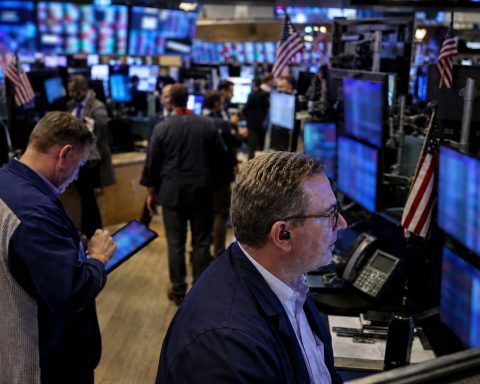
NVIDIA’s move came as the broader market ended Friday nearly flat in light, post‑holiday trading—snapping a short winning streak but still sitting close to all‑time highs. Reuters quoted Carson Group chief market strategist Ryan Detrick describing the session as the market “catching our breath” after a strong run, while also noting the seasonal “Santa Claus rally” window that many traders track into early January. Reuters
The Associated Press similarly reported that the S&P 500, Dow, and Nasdaq each slipped less than 0.1% on Friday, with trading activity muted as many institutions wrap up for the year.
That context matters for NVDA because year‑end trading can amplify headline reactions—especially in mega‑cap AI leaders—while also making “true” price discovery a little noisier than usual.
Why NVIDIA stock moved: the Groq deal is about AI inference, not training
Late‑week attention centered on NVIDIA’s agreement with Groq, a startup focused on chips optimized for AI inference—the phase where trained models generate answers in real time. Reuters reported that NVIDIA agreed to a non‑exclusive license for Groq’s technology, and that Groq founder Jonathan Ross and Groq President Sunny Madra, along with other engineering team members, will join NVIDIA. Groq will continue operating as an independent company under CEO Simon Edwards, and its cloud business will continue.
That “license + talent” structure is not a random corporate kink—it’s increasingly common in Big Tech, where companies try to bring in scarce AI expertise without triggering the full legal and regulatory baggage that can follow an outright acquisition. Reuters explicitly framed NVIDIA’s move as part of that broader pattern. Reuters
What analysts and commentators are saying
Not everyone reads the Groq news the same way:
- Bullish/strategic framing: Investor’s Business Daily described the agreement as “strategic” as inference becomes a larger share of AI workloads and custom chips proliferate—while noting Wall Street price targets reaching into the mid‑$200s. Investors.com
- Regulatory realism: Bernstein analyst Stacy Rasgon warned that antitrust is the obvious risk vector around these “acqui‑hire via licensing” structures—though he also suggested a non‑exclusive license can help preserve the appearance of competition. Reuters
- Skeptical take: Investing.com reported that D.A. Davidson analyst Alex Platt had “a hard time seeing the rationale,” questioning whether the move is technological or defensive and arguing that Groq’s current‑generation memory capacity limits the scope of workloads it can serve. Investing.com
This split is useful for investors: the market isn’t just pricing “Groq good/bad,” it’s pricing what the deal implies about the next battlefield—inference economics, where margins, competition, and software lock‑in all matter.
China headlines are back: H200 shipments may resume, but approvals and politics remain the swing factor
Another major catalyst in the current NVDA news cycle is China.
Reuters reported that NVIDIA has told Chinese clients it aims to start shipping H200 chips to China before the Lunar New Year holiday in mid‑February 2026, with initial shipments expected to total 5,000 to 10,000 chip modules—equated by Reuters sources to roughly 40,000 to 80,000 H200 AI chips—and that shipments are contingent on Beijing’s approval.
At the policy level, Reuters also reported that the Trump administration launched an inter‑agency review that could pave the way for these exports, after the president said he would allow H200 sales to China with a 25% fee collected by the U.S. government—an approach Reuters characterized as a shift from Biden‑era restrictions.
For investors trying to translate that into earnings impact, the key nuance is that “China re‑opening” is not automatically “China revenue surge tomorrow.” In NVIDIA’s own CFO commentary for fiscal Q3 2026, the company said H20 sales were insignificant in the quarter, underscoring how policy constraints have already reshaped the mix. s201.q4cdn.com
Fundamentals check: Blackwell demand, record revenue, and a big Q4 guide
Away from policy drama and deal talk, NVIDIA’s most powerful story remains the fundamentals.
In its fiscal Q3 2026 results, NVIDIA reported record revenue of $57.0 billion (up 62% year over year) and record Data Center revenue of $51.2 billion.
CEO Jensen Huang put a blunt, very SEO‑friendly point on the product cycle: “Blackwell sales are off the charts, and cloud GPUs are sold out.” NVIDIA Newsroom
Looking ahead, NVIDIA guided for fiscal Q4 2026 revenue of $65.0 billion ±2% and projected non‑GAAP gross margin around 75.0% ±50 bps.
The company also highlighted how the platform is expanding beyond GPUs into networking and systems: the CFO commentary shows networking revenue reached a record level (driven in part by NVLink‑related compute fabric for GB200/GB300 systems), and it flagged growing supply commitments as NVIDIA orders long lead‑time components to meet demand.
Wall Street forecasts for NVDA: bullish targets persist, but the “why” is changing
In late‑2025 coverage, analysts remain broadly bullish on NVIDIA, but the debate is shifting from “Is AI real?” to “How does AI value get distributed—training vs inference, GPU vs custom silicon, and what happens to margins?”
Investopedia reported that Wall Street’s mean price target sits well above recent trading levels (it cited a mean target of $254) and noted NVIDIA’s strong 2025 performance.
Meanwhile, Investor’s Business Daily highlighted multiple bullish calls clustering at $275 price targets, including Truist’s William Stein and Bernstein’s Stacy Rasgon, with commentary that AI infrastructure semiconductors look “cheap” relative to growth—while also flagging real‑world constraints like data center power and funding. Investors.com
But skepticism exists right alongside the optimism. The D.A. Davidson note cited by Investing.com is a good example of the bear case evolving from “AI is hype” to “inference competition could get weird,” including questions around whether specialized architectures can pressure NVIDIA’s pricing power over time. Investing.com
At the macro level, Reuters’ broader market outlook heading into 2026 emphasized that continued upside may depend on AI spending, corporate profit growth, and a dovish Fed, while also pointing to more cautious forecasts (Reuters cited CFRA’s Sam Stovall projecting a more modest gain for the S&P 500).
NVDA’s recent trading range: the numbers investors are staring at into Monday
With the market closed right now, most investors are effectively doing weekend homework: “Where did we close, where are the nearby levels, and what headline could gap us up or down on Monday?”
From recent historical pricing, NVDA:
- Closed Friday (Dec. 26) at $190.53, after trading roughly $188.00 to $192.69 intraday.
- Rallied sharply off mid‑December levels: the same dataset shows a Dec. 17 close around $170.94, underscoring how quickly sentiment can swing in a headline‑driven AI tape.
Those levels aren’t magic spells, but they do shape how traders think about risk: a stock that just sprinted $20 in a week can be more sensitive to “good news that isn’t good enough.”
If you’re holding or watching NVDA: what to know before the next session (Monday, Dec. 29)
Because it’s Saturday in New York and the exchange is closed, the actionable question becomes: what catalysts could matter most when liquidity returns?
1) Expect follow‑through coverage on the Groq structure (and potential regulatory angle).
Reuters framed the deal as part of a wider pattern of licensing arrangements plus executive hires that can attract scrutiny. If additional details emerge about economics, IP scope, or integration plans, NVDA could react quickly.
2) Watch Washington and Beijing headlines on H200 licensing and approvals.
Two moving parts matter: U.S. export licensing (including the inter‑agency review Reuters described) and China‑side approval for purchases/imports. Either can change the market’s assumptions about 2026 China exposure.
3) Keep earnings season timing on the radar—even when it’s weeks away.
NVIDIA’s next major fundamental checkpoint is its fiscal Q4 results, which market calendars currently point to late February 2026. Between now and then, the stock tends to trade on: (a) AI capex signals from hyperscalers, (b) supply chain capacity, and (c) competitive inference narratives.
4) Remember the tape: year‑end can exaggerate moves.
Friday’s session was light, and strategists are openly calling out the seasonal dynamics. That environment can produce Monday gaps that are more about positioning than new fundamentals.
Bottom line
NVIDIA stock heads into the final trading days of 2025 with two dominant narratives colliding in the same headline stream: (1) sustained demand for Blackwell‑era AI infrastructure, and (2) a rapidly evolving inference battlefield, where NVIDIA is signaling it wants to stay dominant—even if that means unusual deal structures like the Groq licensing agreement.
Add in the renewed uncertainty (and potential upside) around China H200 exports, and NVDA enters Monday’s session with plenty of catalysts capable of moving the stock fast—especially in a thin, year‑end market.
Related articles: NASDAQ:NVDA