
New York, June 9, 2026, 08:08 EDT
Pfizer Inc. shares fell in premarket trading Tuesday after the FDA cleared a new label for its hemophilia treatment Hympavzi. Investors are still sizing up the company’s longer path to profits in obesity drugs. The stock traded at $25.62, off 43 cents, or 1.7%.
Pfizer is in focus this week with two key stories: one is a short-term regulatory approval in the rare-disease space, the other is a bigger, higher-risk push into obesity with a once-monthly shot that could drive growth as its older drugs face LOE. Loss of exclusivity exposes branded drugs to copycats when patent or regulatory shields drop.
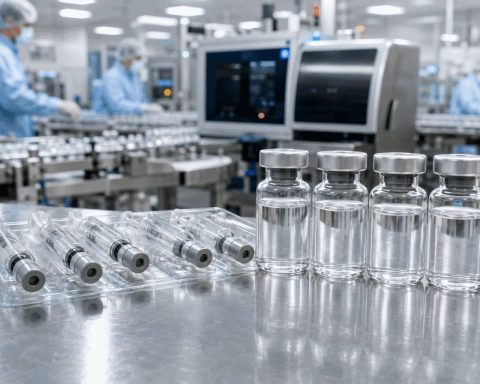
FDA clears Pfizer’s once-weekly under-the-skin drug Hympavzi for a wider group, the company said Monday. The new approval adds use in patients 12 and up with hemophilia A or B who have inhibitors, and in kids 6 to 11 with or without inhibitors. Pfizer said Hympavzi is the first subcutaneous non-factor option for kids ages 6 to 11 with hemophilia B.
Pfizer’s U.S. commercial chief Aamir Malik said the approval could be a “transformative option” for patients 6 and up. Guy Young, who leads the Hemostasis and Thrombosis Center at Children’s Hospital Los Angeles, said switching to a once-weekly treatment might offer families “a level of simplicity” they had been missing. Pfizer
The FDA decision also includes certain hemophilia patients who have inhibitors, or antibodies that make clotting-factor therapy less effective, Reuters reported. Hympavzi uses an auto-injector pen, which gives another option to patients who might otherwise need IV infusions several times a week.
Obesity is still the key question for Pfizer’s stock. Pfizer reported on Saturday that its monthly GLP-1 weight-loss shot, berobenatide, showed mid-stage results with a side-effect profile like Novo Nordisk’s weekly Wegovy. Pfizer picked up berobenatide in the $10 billion Metsera buy. GLP-1 drugs copy gut hormones to help manage appetite and blood sugar.
Pfizer is pitching less frequent dosing as it tries to compete with Novo Nordisk’s Wegovy and Eli Lilly’s Zepbound. Jim List, a Pfizer exec, told Reuters the drug’s long half-life creates what he called a “smooth profile.” On side effects, JPMorgan’s Chris Schott had said investors wanted vomiting rates at “20-25% or lower.” Pfizer said its VESPER-3 study showed a mean vomiting rate around 23.3% for the drug. Reuters
Eli Lilly edged up roughly 1.5% in early moves but Novo Nordisk’s U.S. shares were down 4.6%. The XLV healthcare ETF slipped 0.2%, tracking behind the S&P 500 ETF SPY, which saw a small gain before the open.
Pfizer posted first-quarter revenue of $14.5 billion, up 2% operationally. Stripping out Comirnaty and Paxlovid, revenue was up 7%. Adjusted earnings dropped to 75 cents a share. The company kept its 2026 revenue guidance at $59.5 billion to $62.5 billion, with adjusted EPS between $2.80 and $3.00. Investors keep watching pipeline news closely.
The company has said its 2026 revenue forecast is about $1.5 billion lower from COVID-19 products and expects another $1.5 billion loss where products are losing exclusivity. It’s also planning adjusted R&D spending between $10.5 billion and $11.5 billion to support programs, including assets it got from Metsera.
But the risk is still there. Hympavzi gives Pfizer a bigger footprint in hemophilia, though that won’t settle the growth argument for a $147 billion firm. With berobenatide, investors are waiting on late-stage results, filings, and evidence that monthly dosing will draw patients without new safety or tolerability issues. Easing dose escalation might help manage side effects, but it could also mean slower weight loss for patients.
Related articles: NYSE:PFE