
NEW YORK, August 30, 2026, 15:31 (ET)
- Rivian stock declined 4.35% on Friday, trading at 127% of its average volume.
- The decline wiped out roughly $1.1 billion from the company’s equity value.
- Chief Financial Officer Claire McDonough is set to depart as the R2 production ramp speeds up.
- Rivian’s software income continues to outweigh losses from its automotive division.
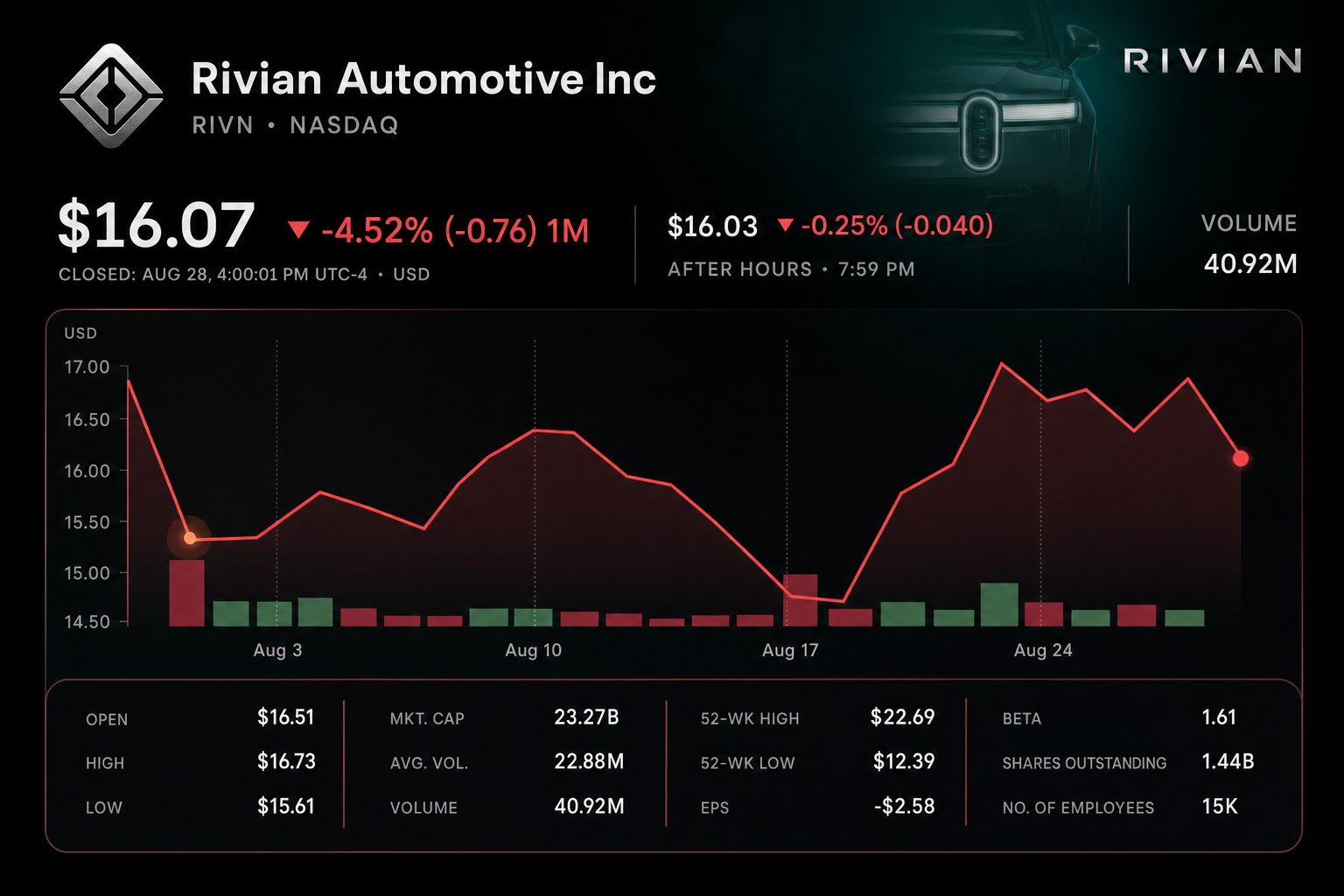
Rivian Automotive stock fell 4.35% on Friday, wiping out roughly $1.1 billion in market capitalization. Trading volume totaled 40.9 million shares, accounting for 127% of the 65-day average.
The decision came after reports that Chief Financial Officer Claire McDonough is set to leave. She will continue in her role until October as Rivian looks for a replacement Reuters.
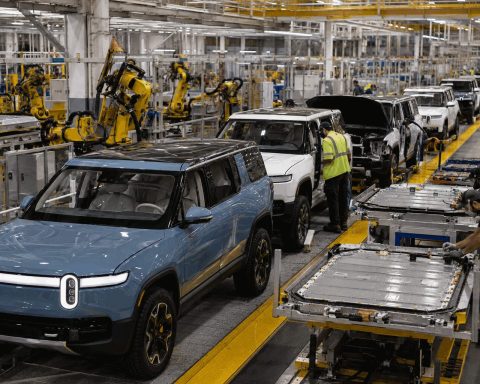
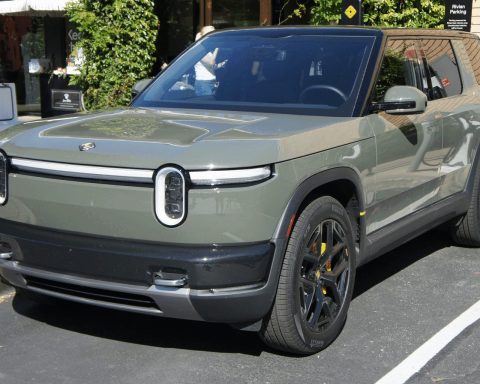
Timing plays a role. Rivian Automotive, Inc. NASDAQ:RIVN started R2 deliveries in June. The more affordable model is key to Rivian’s efforts to grow beyond its high-end R1 lineup.
Rivian finished at $16.07 on August 28. Shares moved in a range from $15.61 to $16.73, with short interest at 16.38% of the public float MarketWatch.
| Operating metric | Q2 2026 | Q2 2025 | Change |
|---|---|---|---|
| Revenue | $1.66 billion | $1.30 billion | +27% |
| Gross profit | $179 million | -$206 million | +$385 million |
| Automotive gross profit | -$36 million | -$335 million | +$299 million |
| Adjusted EBITDA | -$379 million | -$667 million | +$288 million |
| Deliveries | 12,194 | 10,661 | +14% |
Rivian reported a 27% increase in second-quarter revenue, reaching $1.66 billion. The company posted gross profit of $179 million, compared with a loss of $206 million in the same period last year Rivian.
However, the distribution is still unbalanced. Software and services generated $215 million in gross profit from $515 million in revenue. In contrast, automotive operations posted a $36 million gross loss on $1.14 billion in revenue.
This turns the CFO transition into an operational matter, rather than simply a change in personnel. The incoming finance chief will need to safeguard liquidity as R2 manufacturing expenses are reflected in the income statement.
At the end of June, Rivian held $5.31 billion in cash and short-term investments, representing roughly 23% of its $23.27 billion market value as of Friday.
The stock is valued at about 3.5 times its annualized revenue from the second quarter. Sustaining this multiple will depend on improved automotive margins as production scales up. Ongoing vehicle losses cannot be offset by software earnings forever.
The company forecasts 65,000 to 70,000 deliveries for 2026, with the midpoint suggesting a significant jump in the latter half compared to the 12,194 units delivered in the second quarter.
Analysts continue to exercise caution. In August, the IBES consensus rating stood at Hold, indicating that while gross profit is on the rise, the company still faces ongoing cash requirements Reuters company data.
Risks: Margin recovery could be held back by R2 delays, softer demand, or higher supplier costs. Elevated short interest could further increase volatility.
The immediate challenge is clear. Rivian needs to turn the R2 launch into automotive gross profit while avoiding a wider funding shortfall.
Related articles: NASDAQ:RIVN