
Updated November 16, 2025
Snapshot: Where RKLB Stands After a Busy November
Rocket Lab (NASDAQ: RKLB) closed Friday, November 14, 2025 at $45.54 (after-hours indicated $46.08), capping a volatile week that mixed a record quarter with a high‑profile schedule slip for its next‑gen Neutron rocket.
What changed in November 2025
- Record Q3 and stronger Q4 guide. On November 10, Rocket Lab reported Q3 FY2025 revenue of $155.1M (+48% YoY) at a record GAAP gross margin of 37%, and guided Q4 revenue to $170–180M. That implies full‑year 2025 revenue of ~$592–$602M (Q1–Q3 $422.1M + Q4 guide). Management also noted more than $1B of liquidity after the ATM program.
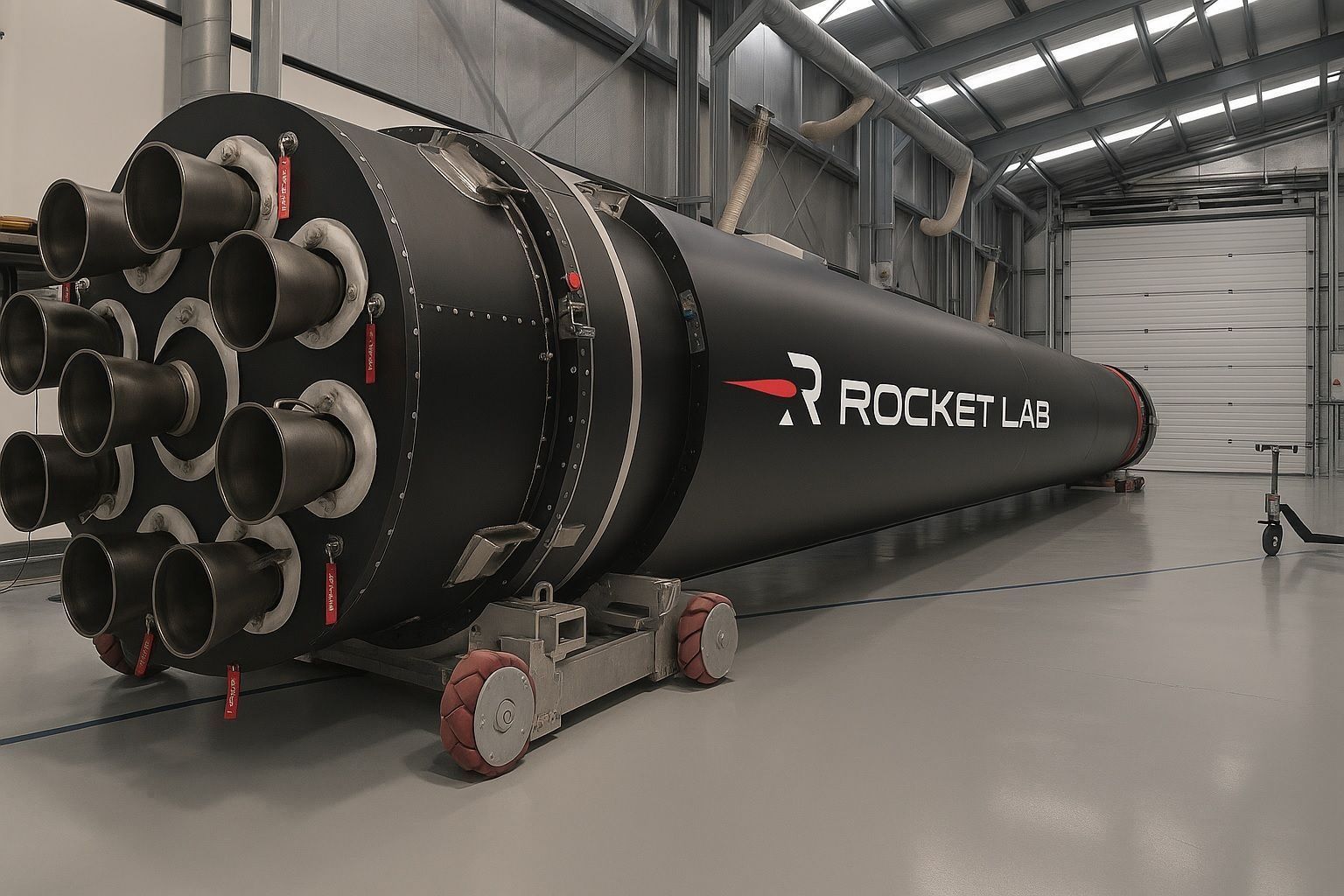
- Neutron first flight slips to 2026. During the results window, Rocket Lab pushed Neutron’s debut from late 2025 to 2026, with the vehicle now arriving at Launch Complex 3 (LC‑3) in Q1 2026 for qualification ahead of launch. CFO Adam Spice also outlined peak Neutron spending into Q4’25.
- Electron keeps delivering. On Nov 5, Rocket Lab completed its 74th Electron mission, deploying iQPS’s latest SAR satellite on the “The Nation God Navigates” mission—16th Electron of 2025, keeping the company on pace for 20+ launches this year. GlobeNewswire
- Mars-bound success—built by Rocket Lab. On Nov 13, Blue Origin’s New Glenn launched NASA/UC Berkeley’s ESCAPADE twin probes—spacecraft built and being operated by Rocket Lab, now healthy on orbit and beginning commissioning prior to a loiter trajectory and 2027 Mars arrival.
- Defense and payloads push forward. The company closed the acquisition of GEOST (electro‑optical/IR sensors) during Q3 “for up to $325M” and highlighted continued progress on a planned Mynaric acquisition following the target’s restructuring—steps that deepen Rocket Lab’s national‑security payload capabilities. GlobeNewswire
- A watch‑item for Space Systems: MDA/Rocket Lab’s 17‑satellite Globalstar program has slipped toward mid‑2026, with Globalstar signaling liquidated damages under the contract—timing that investors should monitor for backlog-to-revenue conversion.
The stock move, explained
RKLB ran hard into October (printing an all‑time high in the low‑$70s), then cooled. The Q3 beat and strong Q4 guide helped, but the Neutron delay and a choppy tape kept shares volatile this week. In brief: fundamentals improved, the medium‑lift catalyst moved right.
Earnings and operations: the parts that matter for valuation
Launch cadence (Electron & HASTE). Electron is now a proven, high‑frequency revenue engine, with 16 flights YTD and “20+” targeted for 2025. HASTE (suborbital, hypersonics) adds profitable defense test launches and schedule resiliency. Sustained cadence supports gross‑margin expansion and operating leverage into 2026. GlobeNewswire
Space Systems mix. Spacecraft, payloads, and components (solar, reaction wheels, avionics, sensors) continue to scale. Q3 results show the systems business now meaningfully contributing to margin. The GEOST deal deepens payload vertical integration for U.S. government demand, while Mynaric’s restructure keeps that potential acquisition path open.
Balance sheet. Exiting Q3 with $1B+ in liquidity gives Rocket Lab room to finish Neutron, bridge timing lags in programs like Globalstar, and stay opportunistic on M&A without stressing the cap structure.
Neutron: why the delay matters—and why it may be prudent
Pushing Neutron to 2026 is a tangible negative for medium‑lift revenues and National Security Space Launch (NSSL) tasking visibility. However, the company reiterated that Neutron will arrive at LC‑3 in Q1 2026 for qualifications, with peak program spend near year‑end 2025—signaling the engineering team is trading calendar for risk reduction. In a market where first‑flight success matters, that trade can protect long‑term ROI.
Competitive backdrop. Blue Origin’s New Glenn advancing (and nailing ESCAPADE’s insertion plus a booster landing) underscores a crowded heavy/medium‑lift field—but Neutron’s targeted Lane 1 missions under NSSL Phase 3 and constellation deployment sweet spots still look accessible if the vehicle proves out in 2026.
2026–2027 forecast: base, bull, bear (qualitative)
Base case (most likely):
• 2025 finish near the $592–$602M revenue range if Q4 hits guidance; Electron posts a new annual record and HASTE continues.
• 2026: Neutron arrives Q1 at LC‑3; first flight later in the year; limited 2026 Neutron revenue but greater 2027 contribution. Space Systems remains a steady growth driver; Globalstar timing shifts revenue into mid‑2026 and beyond.
Bull case:
• Electron cadence sustains ~20+ annual flights with improving unit economics; HASTE books additional DoD runs.
• Neutron qualifies smoothly and is task‑order competitive under NSSL by late 2026/early 2027; payload vertical integration (GEOST, Mynaric if consummated) lifts margins.
Bear case:
• Further Neutron slips or higher‑than‑planned cash burn; defense/payload programs (e.g., Globalstar) see more schedule friction; macro or launch‑site weather bottlenecks dent cadence.
6 near‑term catalysts to watch
- Q4 execution: Converting the $170–180M guide, with margin follow‑through.
- Electron missions: Additional 2025 flights to lock in a new annual record.
- Neutron program gates: Arrival at LC‑3 in Q1 2026; acceptance testing milestones (structures, avionics, Archimedes engine acceptance on the integrated stage).
- NSSL Phase 3 Lane 1: Any tasking or demonstration items that increase 2027+ visibility.
- Space Systems contracts: Updates on Globalstar schedule and any new national‑security payload awards.
- ESCAPADE commissioning updates: Confirmation of early in‑space checkouts and trajectory milestones (long tail credibility for Rocket Lab’s interplanetary capabilities).
Bottom line for RKLB
- The good: Q3 was objectively strong (growth + margin + liquidity), Electron is performing, and Space Systems is scaling; November also showcased Rocket Lab’s deep‑space chops via ESCAPADE.
- The caution:Neutron—the multiyear valuation driver—moves to 2026, delaying medium‑lift revenues; a key Space Systems program (Globalstar) is pushed.
- The setup: If Rocket Lab delivers Q4 and hits LC‑3 arrival plus early Neutron test gates in Q1, the company enters 2026 with cash runway, operational momentum, and multiple government/constellation avenues—supportive for a 2026–2027 re‑rating case despite near‑term schedule risk.
Sources & further reading
- Q3 FY2025 results, guidance, liquidity, GEOST & Neutron timing: Rocket Lab press release, Nov 10, 2025.
- Neutron delay to 2026 & spend cadence: Spaceflight Now, Nov 11, 2025.
- ESCAPADE (RL‑built spacecraft) launched & commissioning status: Rocket Lab press release, Nov 13, 2025; and Reuters report on the launch.
- Electron/iQPS Nov 5 mission: Rocket Lab press release, Nov 5, 2025.
- Globalstar constellation schedule update & LDs note: Space Intel Report, Nov 7, 2025.
- Closing price reference (Nov 14, 2025): Nasdaq and MarketWatch.
This article is for informational purposes only and is not financial advice. Always do your own research before making investment decisions.
Related articles: NASDAQ:RKLB