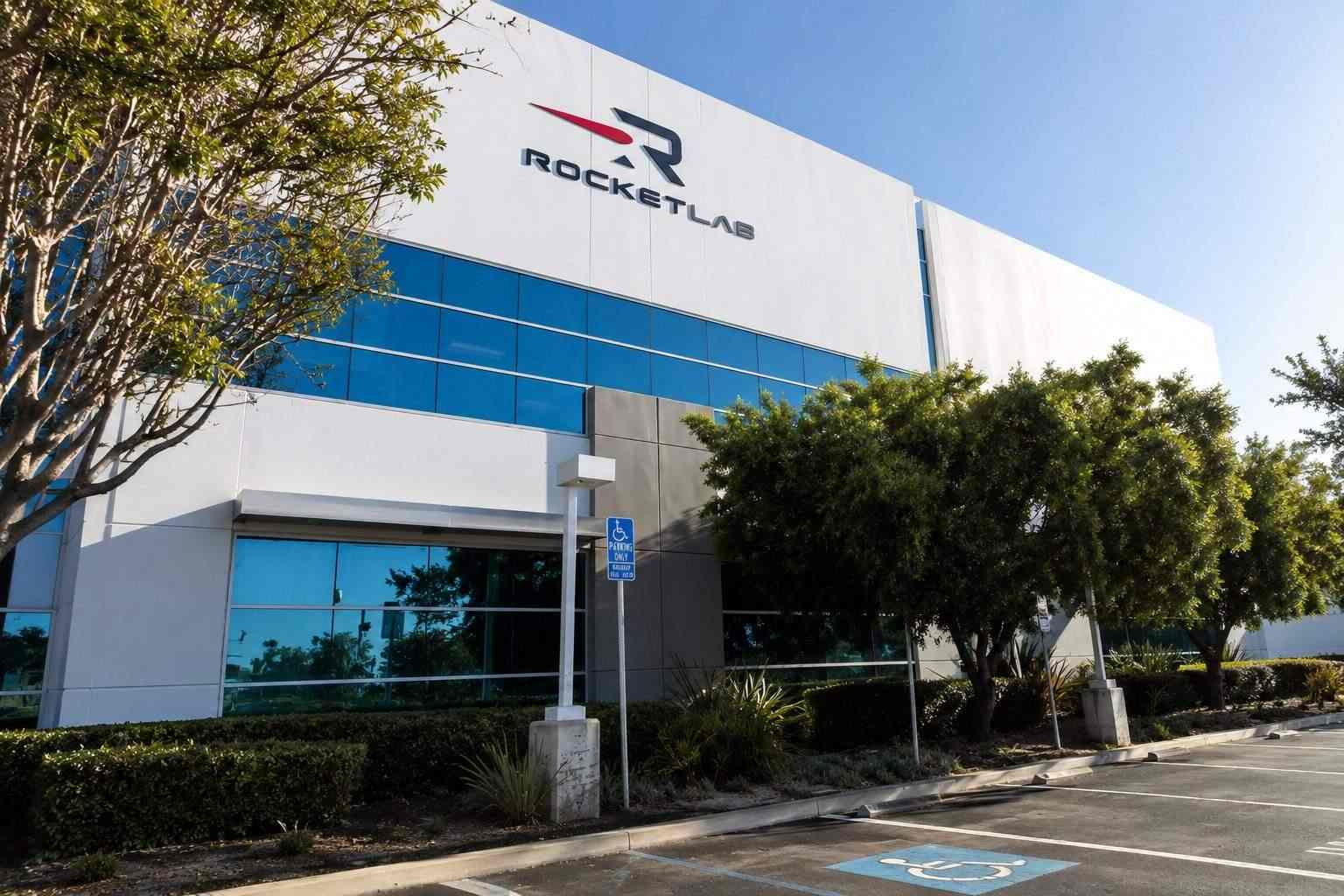

New York, June 14, 2026, 12:02 (ET).
- Rocket Lab will be added to the Nasdaq-100 at the open on June 22.
- RKLB finished Friday at $102.39, dropping 10.79%. Space stocks took a hit after SpaceX’s market debut.
- Next up is the June 22 index effective date. Traders are also watching for Neutron execution and Q2 guidance.
Rocket Lab Corporation’s spot in the Nasdaq-100 hasn’t stopped heavy selling. Shares of RKLB were at $102.39, down $12.38, or 10.79%. Friday’s session was volatile, with shares trading between $99.75 and $125.71 on high volume.
Rocket Lab is set to join the Nasdaq-100 Index before trading starts on Monday, June 22, after Nasdaq’s quarterly rebalance. The Nasdaq-100 tracks 100 of the biggest non-financial stocks on Nasdaq. Being part of the index pushes index funds and ETFs that track the Nasdaq-100 to buy in. Nasdaq says over $800 billion is tied to products following the index.
Rocket Lab said in its own announcement that the change is “a landmark moment for Rocket Lab,” according to founder and CEO Sir Peter Beck. The company said it’s logged over 80 successful launches and put more than 250 satellites into orbit. Rocket Lab is also still developing Neutron, the medium-class rocket meant for constellation deployment. GlobeNewswire
Stocks didn’t just rally on the SpaceX debut. Reuters said U.S. space names dropped Friday as investors took profits, with Rocket Lab and Planet Labs both off about 8% during that session. “Investors may worry that the ‘hype can’t quite live up to expectations,’” Chris Beauchamp of IG Group told Reuters. Reuters
Rocket Lab could get a visibility boost from joining the Nasdaq-100, plus some forced buying from index funds. That follows a solid quarter. Rocket Lab said first-quarter revenue hit $200.3 million, up 63.5% from a year ago, with backlog reaching $2.2 billion. Backlog tracks signed work not yet counted as revenue, so investors look to it for hints at future demand. For the second quarter, Rocket Lab forecast revenue between $225 million and $240 million, and expects an adjusted EBITDA loss of $20 million to $26 million. Adjusted EBITDA removes interest, taxes, depreciation, amortization and one-time items.
Valuation and execution are the bear case. Reuters pointed out Rocket Lab’s market cap was about $66 billion as of the last close, with annual revenue only $600 million last year. The stock is priced for years of fast growth. Reuters Reuters financials showed Rocket Lab booked $601.8 million in 2025 revenue and lost $198.2 million on a net basis, so it’s still not GAAP profitable.
Investors are focused on June 22, when Nasdaq-100 inclusion takes effect. Funds tracking the index might rebalance around then, which could keep short-term trading choppy. The company’s next key event after that is Neutron. Rocket Lab said it’s still aiming to launch Neutron before the end of the year, with hardware integration and the Archimedes engine qualification on schedule.
RKLB still looks risky here. An index upgrade and a growing backlog support its growth pitch, but shares sold off Friday. Losses are ongoing, and valuation is stretched on big expectations. There’s not much margin for error if Neutron slips, launch demand softens, margins get squeezed, or investors move into SpaceX and bigger space stocks.
Related articles: NASDAQ:RKLB

![US Stock Market Today 08/25/2026 [UPDATE: 00:06 EDT] [Micron and Sandisk Turn Green as QQQ Gains Overnight]](https://ts2.tech/wp-content/uploads/2026/08/US-market-dashboard-2026-08-25-0002-480x384.jpg "US Stock Market Today 08/25/2026 [UPDATE: 00:06 EDT] [Micron and Sandisk Turn Green as QQQ Gains Overnight]")