Search result

ETHIOPIA

Inside Ethiopia’s Internet Boom: Fiber Optics, 5G Dreams, and Starlink Skies

Inside Ethiopia’s Internet Boom: Fiber Optics, 5G Dreams, and Starlink Skies

As of early 2025, about 28.6 million Ethiopians were internet users, roughly 21.3% of the population. Ethio Telecom owned about 23,000 km of fiber-optic cable across Ethiopia as of 2023, forming the national backbone and linking to neighboring undersea cables via Djibouti. In late 2024, Ethio Telecom signed a Horizon Fiber corridor deal with Djibouti Telecom and Sudatel to create a multi-terabit cross-border link between Ethiopia, Djibouti, and Sudan. Ethio Telecom launched commercial 5G in Addis Ababa in October 2022, with 145 sites active in the capital by September 2023 and expansion to additional cities planned. Safaricom Ethiopia launched commercial

29 May 2025
Eritrea’s Digital Desert: Inside the World’s Most Isolated Internet – and the Satellite Lifeline on the Horizon

Eritrea’s Digital Desert: Inside the World’s Most Isolated Internet – and the Satellite Lifeline on the Horizon

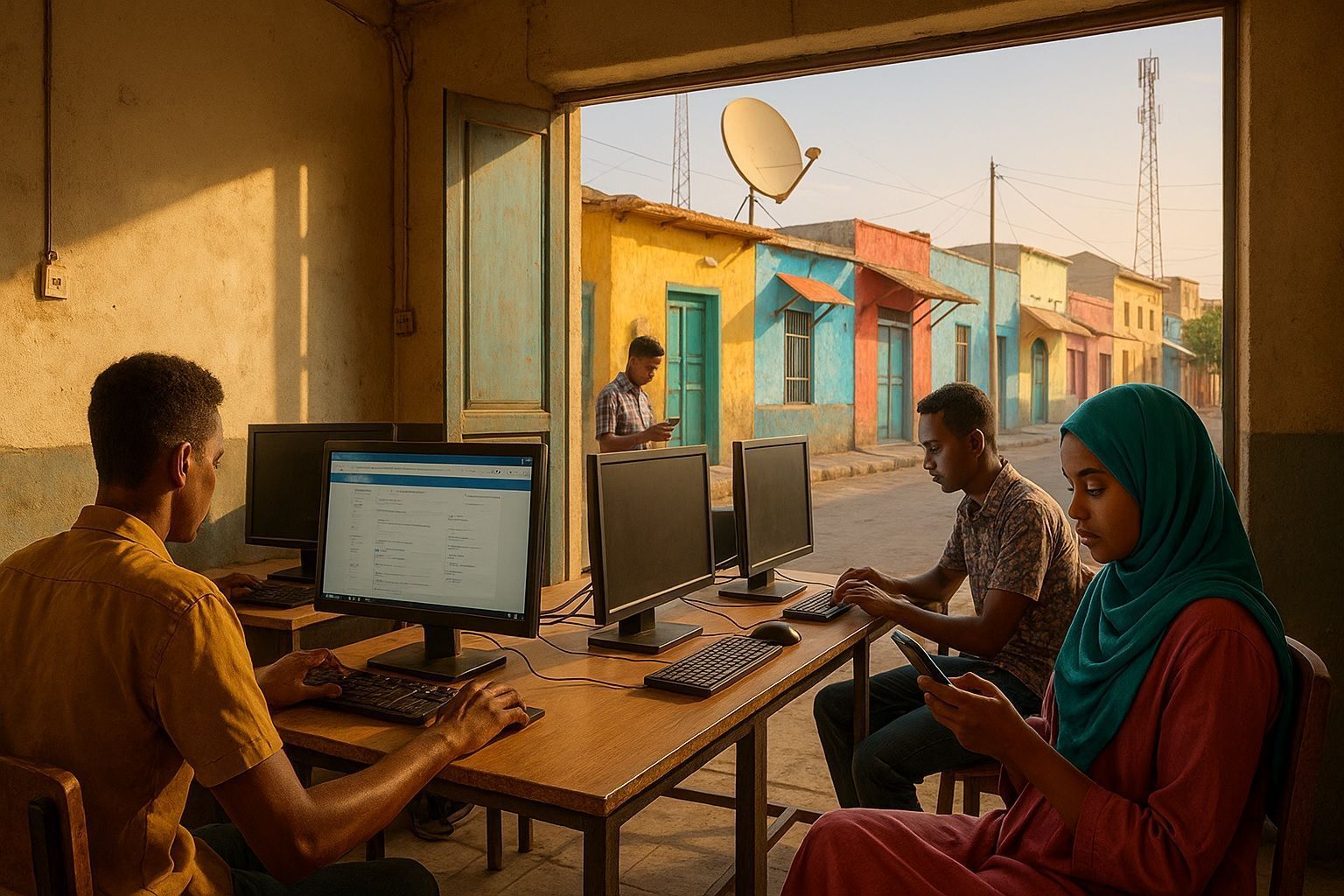
As of early 2024, about 26% of Eritrea’s 3.7 million people were internet users. Eritrea is the only coastal African nation with zero submarine fiber-optic cable landings. The telecom sector is entirely state-owned and monopolized by Eritrean Telecommunication Services Corporation (EriTel), with no private ISPs or competing mobile operators. Public mobile data is essentially unavailable; the mobile network runs on 2G GSM with 3G/4G largely disabled for ordinary users. Fixed broadband remains extremely limited, with fewer than 150 subscriptions in the mid-2010s. Internet cafés are the primary access point, with fewer than 10 in Asmara and roughly 100 nationwide. EriTel’s
12 June 2025
Internet Kill Switch: Recurring Blackouts in Syria, Iraq, Algeria – And Who’s Next?

Internet Kill Switch: Recurring Blackouts in Syria, Iraq, Algeria – And Who’s Next?

Syria has conducted annual nationwide internet shutdowns on high school exam days since 2016, with 2020–2025 patterns showing daily outages of roughly 3.5 to 5.5 hours during exam periods. Syria’s shutdowns use an asymmetric model that allows outbound traffic but blocks inbound responses, making the internet effectively unusable. In Syria, the 2023 exam season produced at least 11 nationwide outages, each about 4 hours long (06:00–10:00), spanning May–June for the first round and late June–July for the second. Iraq began regular exam-related shutdowns in 2023, imposing near-daily four-hour nationwide outages (04:00–08:00) during exams, with a total of 42 outages in
18 June 2025
Inside Ethiopia’s Internet Boom: Fiber Optics, 5G Dreams, and Starlink Skies

Im Inneren von Äthiopiens Internet-Boom: Glasfaser, 5G-Träume und Starlink-Himmel

Ethio Telecom besitzt ein ca. 23.000 km langes Glasfaser-Backbone durch Äthiopien, das Ballungszentren verbindet und internationale Übergänge ermöglicht (2023). Ende 2024 wurde das Horizon-Fiber-Korridorprojekt-Vertrag geschlossen, eine multi-terabit-fähige Glasfaserverbindung zwischen Äthiopien, Djibouti und Sudan zur Kapazitätserhöhung und Resilienz. Ende 2024 betrug die Internetnutzerzahl in Äthiopien laut ena.et über 42 Millionen. 5G-Ausbau: Der kommerzielle Betrieb begann in Addis Abeba im Oktober 2022, bis September 2023 waren 145 5G-Standorte in Addis Abeba live und weitere Städte wie Hawassa folgten Ende 2023. Safaricom Ethiopia erhielt im Mai 2021 eine Lizenz im Wert von 850 Mio USD; der kommerzielle Betrieb startete im Oktober 2022; bis
2 June 2025
Inside Djibouti’s Digital Frontier: The Rise of Internet Access and Satellite Connectivity

Inside Djibouti’s Digital Frontier: The Rise of Internet Access and Satellite Connectivity

Djibouti hosts about 10–12 international undersea cables on the Red Sea coast, including SMW3, EIG, SEA-ME-WE-5/6, AAE-1, EASSy, WIOCC, Yemeni, and DARE1, linking to Europe, Asia and East/Southern Africa. Djibouti Telecom invested over $200 million in the last decade in landing stations and a protected submarine corridor, reinforcing Djibouti as a regional internet gateway. Terrestrial fiber links connect Djibouti to Ethiopia and Somalia, and AfriFiber serves thousands of homes in Djibouti City. The Djibouti Data Center (DDC) is the first and only carrier-neutral data center in East Africa, co-locating major cable landing points with Tier-3 colocation, peering, and the DjIX
Internet Access in Sudan

Internet Access in Sudan

Sudan’s internet backbone is centered at Port Sudan and links land via the East Africa Submarine System (EASSy) and FLAG/FALCON, with terrestrial fiber reaching Egypt and Ethiopia. Sudatel (Sudani) is over 60% state-owned and operates the national backbone along with fixed-line, mobile, and internet services under the Sudani brand. Zain Sudan, a subsidiary of Kuwait’s Zain Group, is the largest mobile operator with roughly 50% of the mobile market and offers nationwide 2G/3G/4G services. MTN Sudan, part of South Africa’s MTN Group, holds about a 25% share of the mobile market and provides mobile voice and data. Canar Telecom is
25 February 2025
New African 100 Most Influential Africans 2025: Business and AI Surge as NJ Ayuk and Dr Brook Taye Take Spotlight

New African 100 Most Influential Africans 2025: Business and AI Surge as NJ Ayuk and Dr Brook Taye Take Spotlight

December 20, 2025 — The latest wave of Africa-focused business, technology, and leadership news is being shaped by one headline theme: influence is shifting toward boardrooms and breakthroughs in artificial intelligence. That shift is at the heart of New African magazine’s 2025 “100 Most Influential Africans” (MIA) list, which is drawing fresh attention on December 20, 2025 as outlets across the continent amplify its highlights — and as individual honourees receive new, country-by-country recognition. New African Magazine+1 A notable pivot in African influence: business and finance move to the front New African’s annual MIA list has long served as a
20 December 2025
Where Satellite Phones Are Illegal?

Where Satellite Phones Are Illegal?

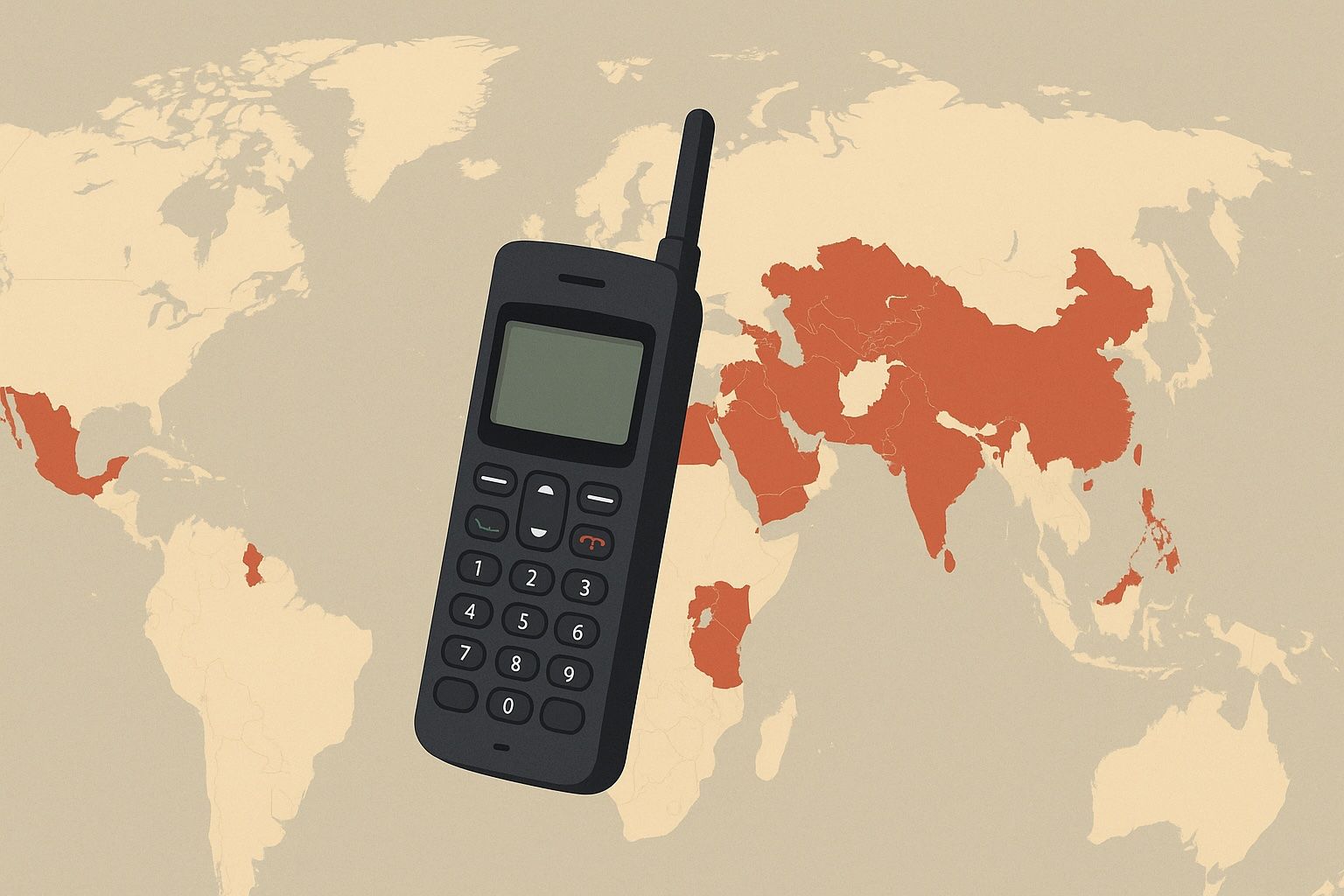
Bangladesh bans satellite phone use; possession can lead to arrest and imprisonment. North Korea prohibits all unauthorized communication devices, foreigners must surrender phones and privacy is not guaranteed, with detention possible. India restricts satellite phones to government‑approved Inmarsat devices, requiring a license (No Objection Certificate) from the Department of Telecommunications before bringing one in. China maintains a de facto ban on private sat phones, requiring registration for limited state use and has deployed jammers in some areas to block unapproved devices. Chad bans satellite phones under any circumstances, with Thuraya explicitly outlawed and Iridium sometimes tolerated. Myanmar (Burma) effectively bans
6 June 2025
Inside Rwanda’s Internet Revolution: How the Nation Is Connecting Remote Villages and Launching Satellites

Inside Rwanda’s Internet Revolution: How the Nation Is Connecting Remote Villages and Launching Satellites

Rwanda’s first internet access occurred around 1996, and by 2000 there were about 5,000 users (less than 0.1% of the population). In 2004 Rwanda privatized Rwandatel and sold it to Terracom, opening the ISP market to competition. Between 2008 and 2010, Rwanda laid over 3,000 km of national fiber backbone across all 30 districts, linking to SEACOM, EASSy and TEAMS in 2009, driving international bandwidth costs from about $3,000 per Mbps in 2006 to roughly $25 per Mbps. In 2013, Korea Telecom Rwanda Networks (KTRN) built a nationwide 4G network on a wholesale-only basis, achieving over 95% population coverage by
6 August 2025
Inside Madagascar’s Internet Revolution: From Mobile Networks to Starlink Skies

Inside Madagascar’s Internet Revolution: From Mobile Networks to Starlink Skies

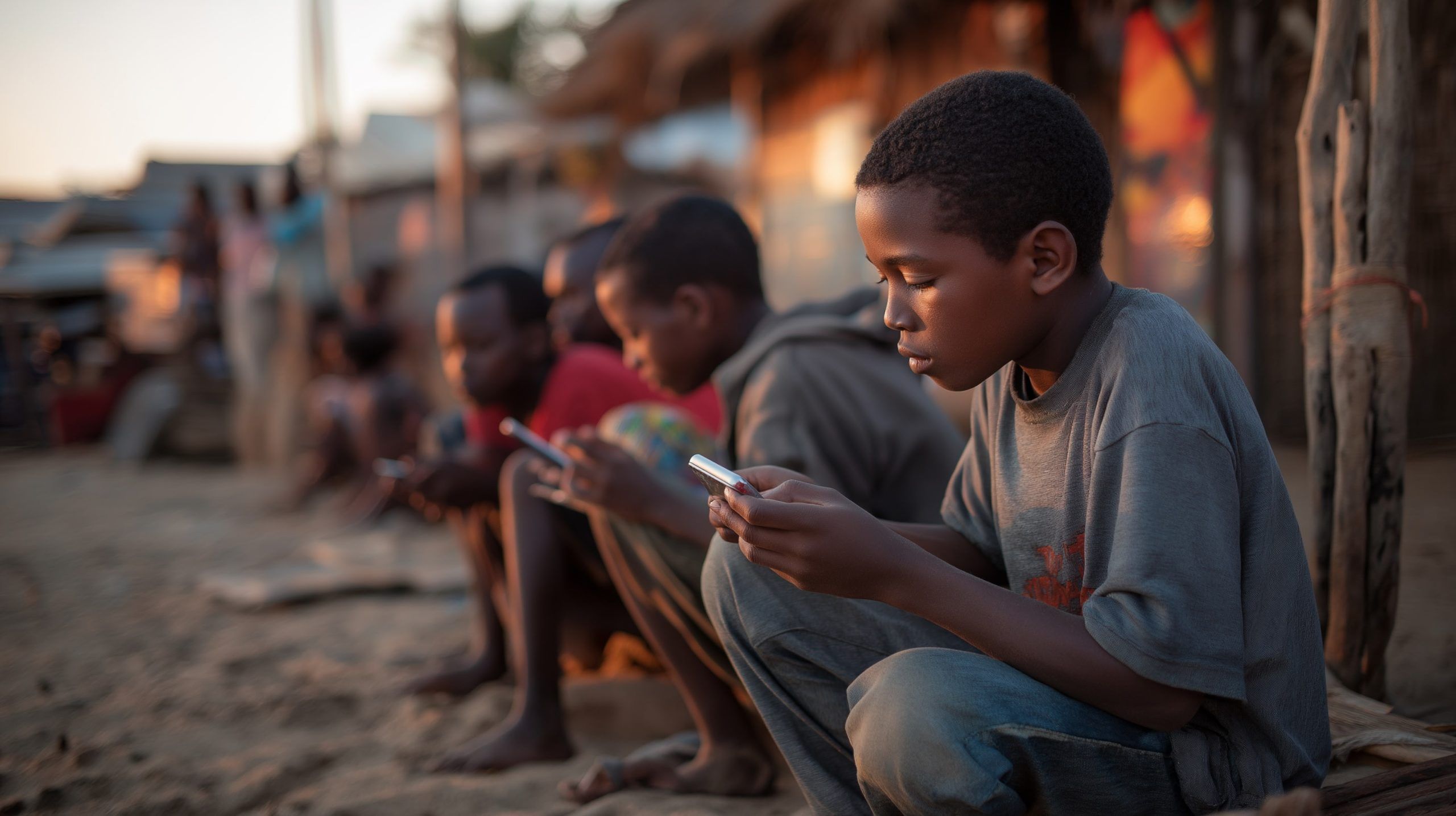
Madagascar is connected to four major submarine cables—EASSy, LION/LION2, METISS, and 2Africa—with the 2Africa landing at Mahajanga in February 2023 and becoming operational in late 2023. Fixed broadband penetration is extremely low, at about 0.11 per 100 people in 2023, forcing most of the population to rely on mobile networks. Market shares are Telma about 50%, Orange about 30%, Airtel about 7%, Blueline’s bip about 2%, and SpaceX Starlink around 10% of Madagascar’s internet market as of 2024–2025. 4G coverage reaches roughly 71% of the population, while overall mobile signal availability sits around 92%. Madagascar experimented with 5G early on:
Starlink Global Coverage and Availability Report

Starlink Global Coverage and Availability Report

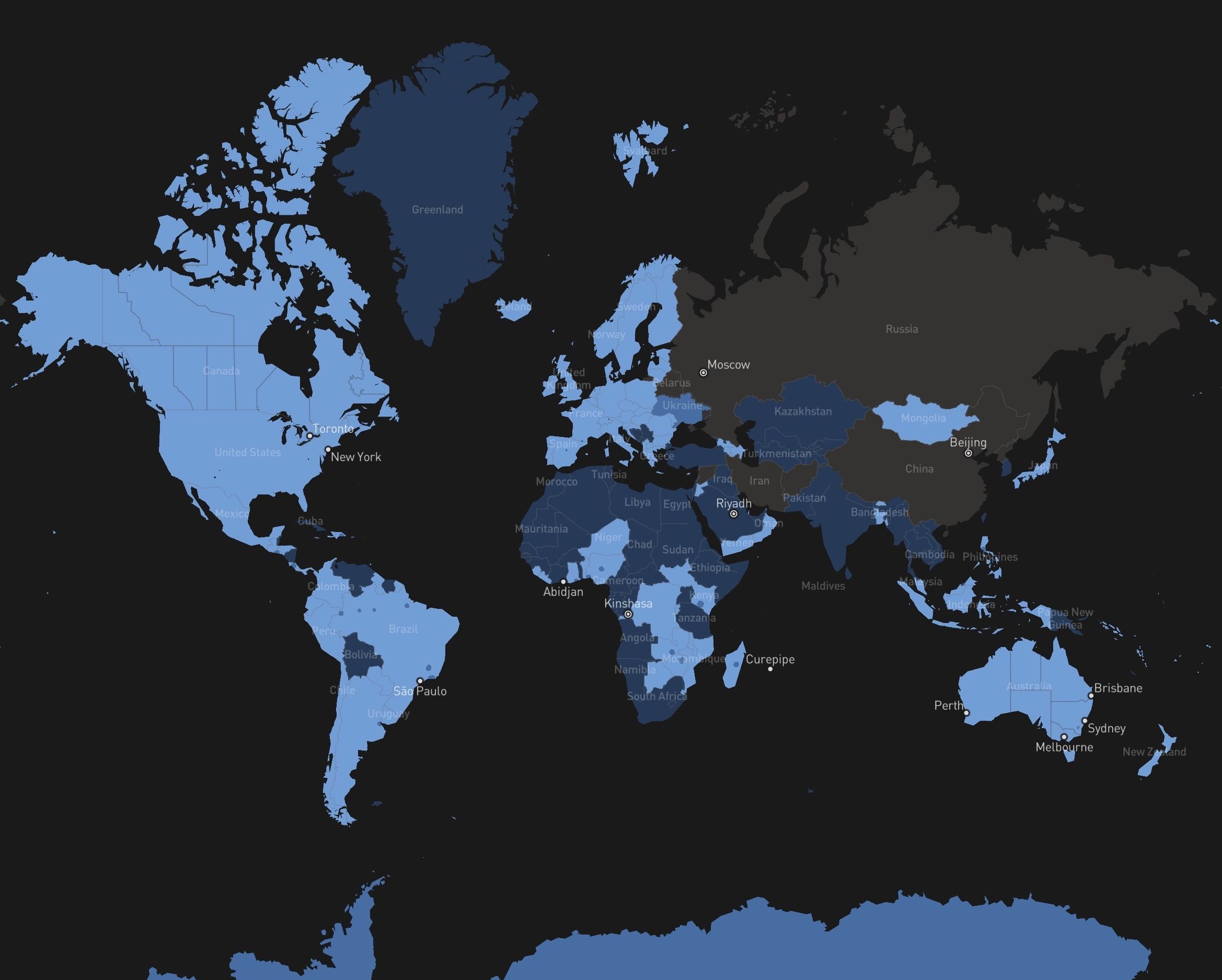
As of mid-2025, Starlink is available in over 110 countries and territories. In the United States, Starlink began with limited trials in August 2020 and the public beta “Better Than Nothing Beta” in November 2020, and now has nationwide commercial coverage including Puerto Rico and the U.S. Virgin Islands, with over 2.5 million subscribers as of early 2025. Canada went live in January 2021 after a late-2020 beta and now has broad coverage across all provinces. Mexico received a license in mid-2021, began service by November 2021, and by 2024 had over 160,000 subscribers, with the federal “Internet para Todos”
7 June 2025
1 2 3 4

Stock Market Today

Broadcom Stock Gets a Google AI Spend Lift as Jefferies Sees 60% Upside

Broadcom Stock Gets a Google AI Spend Lift as Jefferies Sees 60% Upside

7 February 2026
Google raised its 2026 capital expenditure forecast to $175 billion–$185 billion, with most spending expected on data-center chips. Broadcom shares rose about 2% after the announcement, while Nvidia and AMD slipped. Jefferies reiterated a buy rating on Broadcom, maintaining a $500 price target, implying a 62% upside from Wednesday’s close.
No $2,000 IRS stimulus check is coming in February 2026 — but Trump’s tariff-check talk keeps the rumors alive

No $2,000 IRS stimulus check is coming in February 2026 — but Trump’s tariff-check talk keeps the rumors alive

7 February 2026
The IRS has not announced new federal stimulus payments for February 2026, and Congress has not approved fresh checks. Trump told NBC he is considering $2,000 tariff rebate checks but has not committed, saying any payout would likely come later in 2026. The IRS warns taxpayers to ignore texts and emails about “stimulus payments” and verify notices through official channels.
Go toTop