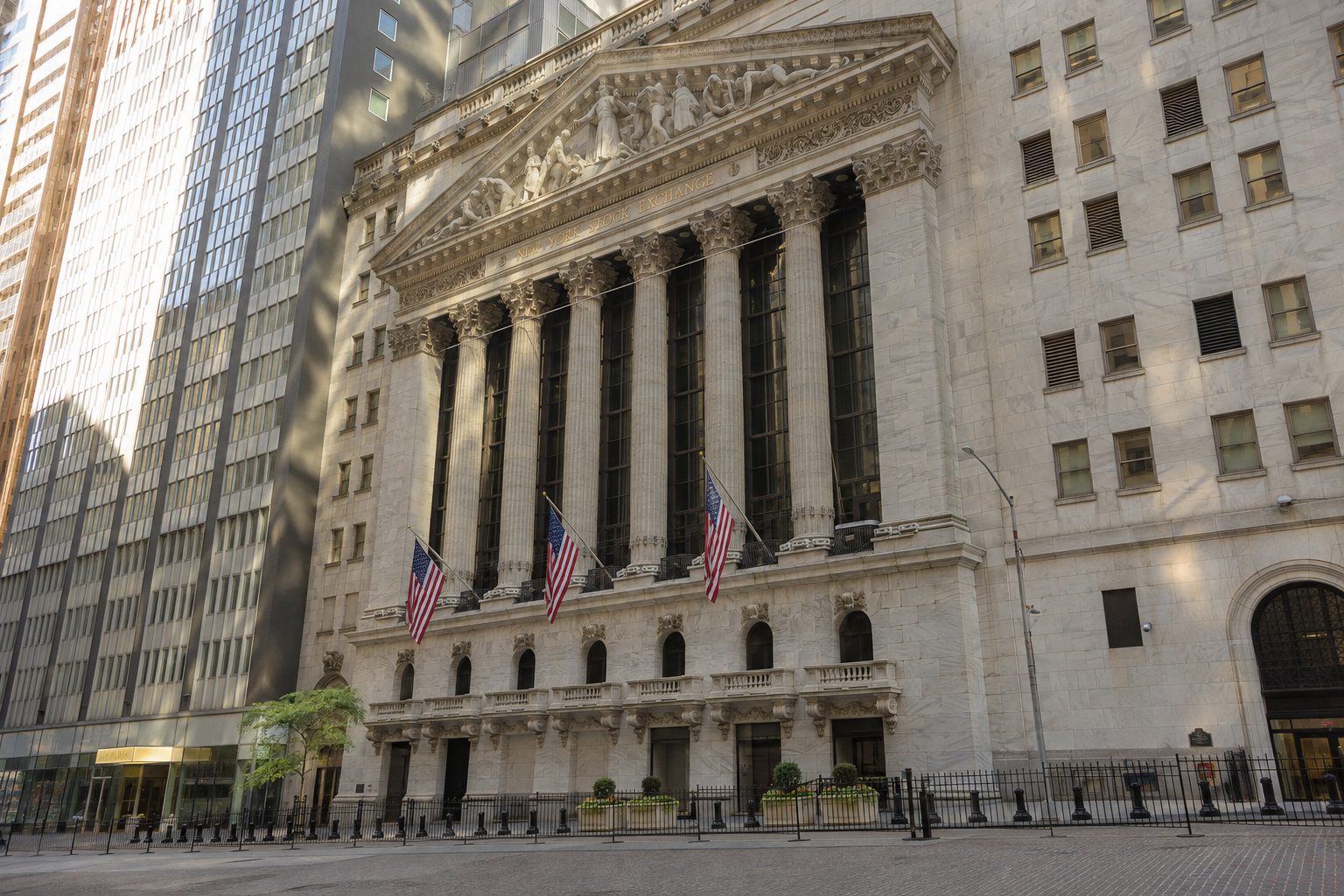

NEW YORK, August 1, 2026, 05:38 EDT — The U.S. stock market closed for the week.
- Last week, the S&P 500 advanced 1.1%. The Nasdaq climbed 1.6%, and the Russell 2000 finished little changed.
- Microsoft NASDAQ:MSFT and Amazon.com NASDAQ:AMZN jumped following their earnings results. Apple NASDAQ:AAPL declined by 7.4%, and Meta Platforms NASDAQ:META dropped after reporting weak cash conversion.
- July’s payroll numbers are set for release on August 7. Projections by economists anticipate 83,000 jobs added with an unemployment rate of 4.3%.
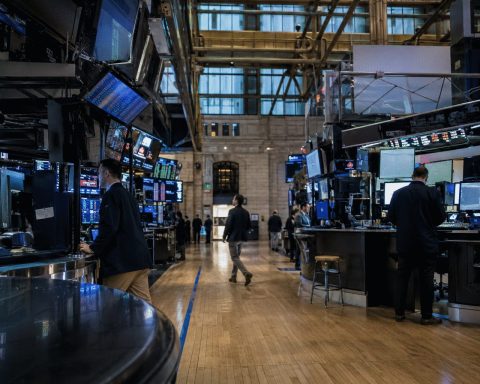
Wall Street advanced last week, yet the market rally heightened scrutiny of AI investments. Investors favored strong cloud earnings, while companies with poor cash conversion faced selling pressure.
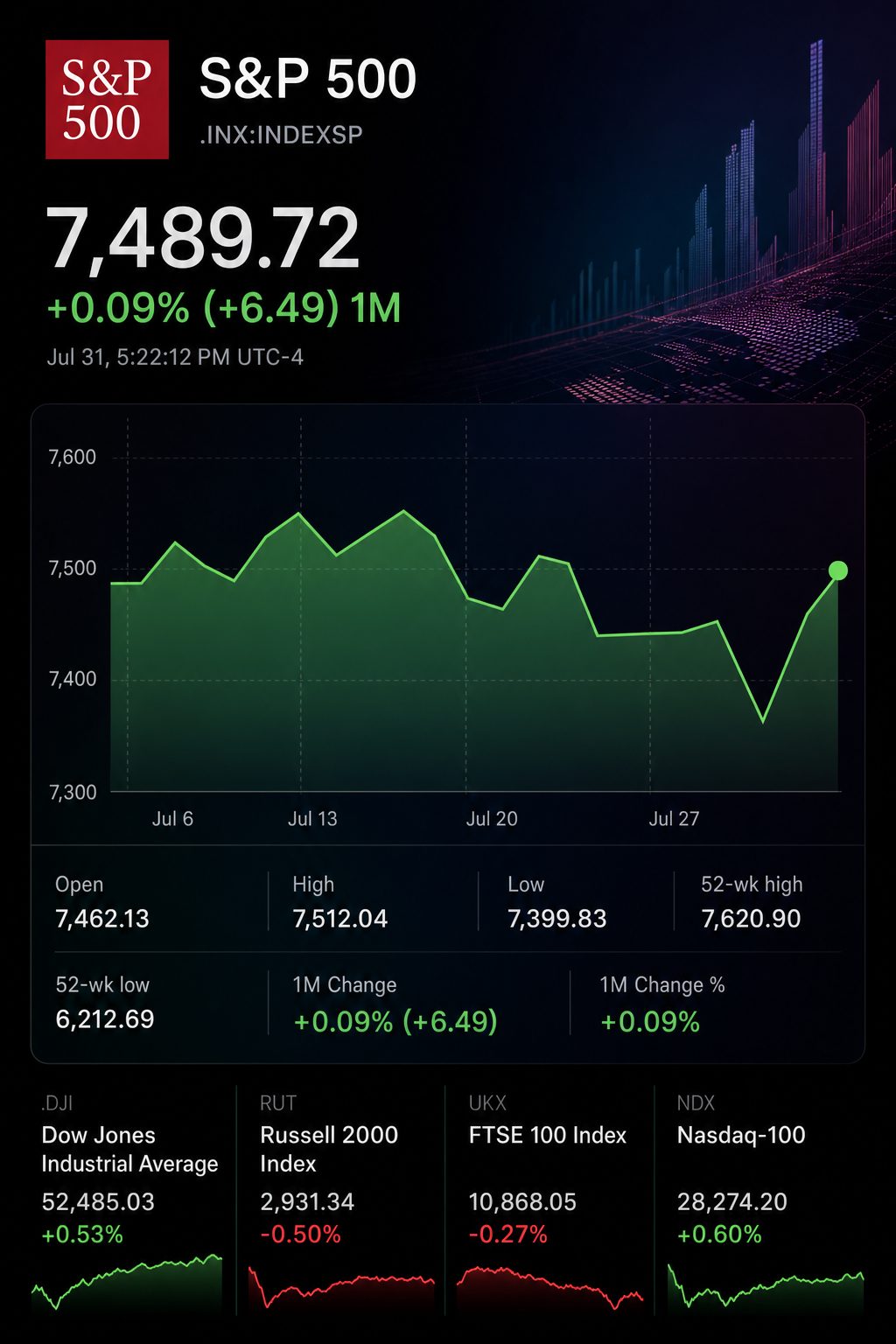
The S&P 500 advanced 1.1%, and the Nasdaq climbed 1.6%. The Russell 2000 was little changed, indicating minimal impact on smaller stocks.
Friday highlighted the limited breadth in the market. The number of stocks falling exceeded those rising by a ratio of 1.3-to-1, despite gains in both major indexes. Trading volume totaled 20.6 billion shares, surpassing the 20-day moving average of 17.1 billion.
The weekly scorecard indicates large-cap strength while small-caps remain cautious.
| Index | Friday close | Friday | Week | 2026 YTD |
|---|---|---|---|---|
| S&P 500 | 7,489.72 | up 0.7% | gained 1.1% | advanced 9.4% |
| Nasdaq Composite | 25,373.85 | rose 1.0% | added 1.6% | up 9.2% |
| Dow Jones Industrial Average | 52,485.03 | climbed 0.5% | increased 1.0% | higher by 9.2% |
| Russell 2000 | 2,931.34 | fell 0.5% | edged up less than 0.1% | gained 18.1% |
The path was bumpier than the outcome. Losses from Wednesday’s Fed-driven selloff were wiped out over the following two sessions.
| Session | S&P 500 move | Main driver |
|---|---|---|
| Monday, July 27 | +0.02% | Market participants awaited key tech company reports |
| Tuesday, July 28 | +0.21% | Gains in value stocks contrasted with weaker chipmakers |
| Wednesday, July 29 | -1.52% | Fed paused, with three officials objecting on hawkish grounds |
| Thursday, July 30 | +1.66% | Microsoft’s performance fueled a recovery in AI and chip stocks |
| Friday, July 31 | +0.70% | Amazon’s rally more than offset Apple’s drop |
This week’s earnings breakdown delivered the most definitive indication yet. Rapid expansion was not adequate by itself. Investors sought concrete evidence that AI investments translated into revenue, margins, or cash flow.
Microsoft reported quarterly capital expenditures of $41 billion and generated $19.6 billion in free cash flow. Amazon’s AWS unit posted 37% revenue growth and an estimated operating margin close to 39%. Meta’s free cash flow dropped by 91% to $784 million. Apple’s revenue rose 16%, but outlook was tempered by ongoing supply constraints.
| Company | Post-report reaction | Reported evidence | Investor verdict |
|---|---|---|---|
| Microsoft | Climbed over +15% Thursday | Cloud revenue up 27%; free cash flow $19.6 billion | Major investments were covered by cash generation |
| Amazon | Gained more than +15% Friday | AWS revenue increased 37%; AWS operating margin close to 39% | Momentum in cloud offset worries about cash flow |
| Meta Platforms | Dropped following the release | Revenue rose 28%; free cash flow $0.8 billion | Expenditure surpassed immediate cash creation |
| Apple | Down 7.4% Friday | Revenue up 16%; supply limitations noted | Solid performance did not clarify the forward view |
Positive free cash flow was not the sole criteria. Amazon posted a $7.6 billion outflow over the trailing 12 months, mainly due to spending on AI. A surge in AWS growth shifted the market’s perspective.
“These are definitely battleground stocks,” said Jed Ellerbroek, portfolio manager at Argent Capital Management. Jake Dollarhide, CEO of Longbow Asset Management, said Amazon’s results “put overspending fears to bed.” Reuters
The Federal Reserve introduced an additional filter, focusing on funding costs. Policymakers kept rates steady at 3.50%-3.75%, with the decision passing by a 9-3 margin. Three members advocated raising rates by a quarter point.
Treasury yields continued to reflect that strain. The two-year yield finished Friday at 4.28%. The 10-year yield settled at 4.75%, and the 30-year was at 5.27%. Markets factored in a 65% chance of a rate hike in September.
Valuations offer little margin for error. The S&P 500 is currently valued at close to 20 times projected earnings, compared to a 10-year average of roughly 19 times.
Focus moves to employment data next week as over a quarter of S&P 500 components prepare to release results.
| Date | Event | Market relevance |
|---|---|---|
| Monday, August 3 | Palantir Technologies NASDAQ:PLTR announces results post-market | Measures investor appetite for AI software premiums |
| Tuesday, August 4 | June JOLTS released at 10:00 EDT | Provides early read on labor market demand |
| Tuesday, August 4 | Advanced Micro Devices NASDAQ:AMD releases earnings after market close | Indicator for interest in non-traditional AI processors |
| Wednesday, August 5 | Eli Lilly NYSE:LLY earnings with call at 10:00 EDT | Significant impact within healthcare sector results |
| Thursday, August 6 | Q2 preliminary productivity data out at 08:30 EDT | Key for wage and inflation outlook |
| Friday, August 7 | July payroll report at 08:30 EDT | Forecast shows 83,000 job gain, 4.3% jobless rate |
Federal and corporate statements have verified the calendar and corporate dates.
The upcoming jobs report will indicate if the recovery is expanding. A modest and steady result may lower yields while avoiding renewed recession worries. A robust figure could increase expectations for rate hikes and weigh on long-duration valuations.
Risks are still clustered. An oil price increase, unexpected payroll data or another disappointing AI cash-flow report could push yields up and undo the limited rally.
Monitor breadth. The rally’s strength will appear more sustainable once small caps and overall market participation start to support it.
Related articles: NASDAQ:META





![Australia Stock Market Today 08.22.2026 [UPDATE: 08.22.2026 08:37 AEST] [Weekly Recap and Week Ahead: Healthcare Leads, CPI Looms]](https://ts2.tech/wp-content/uploads/2026/08/AU-market-dashboard-2026-08-22-0837-480x384.jpg "Australia Stock Market Today 08.22.2026 [UPDATE: 08.22.2026 08:37 AEST] [Weekly Recap and Week Ahead: Healthcare Leads, CPI Looms]")