
NEW YORK, Dec. 27, 2025, 9:41 a.m. ET — Market closed
Tesla, Inc. NASDAQ:TSLA enters the final trading week of 2025 with investors balancing two powerful storylines that have repeatedly driven the stock this year: autonomy optimism and headline risk around safety and regulation.
With U.S. markets closed for the weekend, Tesla shares are coming off a softer finish to the holiday-shortened week. TSLA closed Friday at $475.19, down 2.10%, and last traded around $473.84 in after-hours.
That pullback comes as Wall Street’s broader tone remains constructive: major indexes ended the week near record territory, even as thin year-end volume can amplify day-to-day moves.
Tesla stock today: the weekend setup and what the last session signaled
Friday’s action left TSLA still hovering near its recent highs (and within reach of the psychologically important $500 level), but the stock’s short-term direction is now tightly linked to near-dated catalysts rather than broad market momentum alone.
On the tape, Tesla’s latest dip coincided with renewed attention on a federal safety review involving Model 3 door releases—an issue highlighted in multiple market wrap-ups and “stock movers” recaps. Barron’s+1
At the same time, Tesla is pushing the other side of its narrative—its autonomy roadmap—hard into year-end, just as investors position for the next major data point: global Q4 deliveries expected in early January.
The biggest Tesla headline risk right now: NHTSA’s Model 3 door-release review
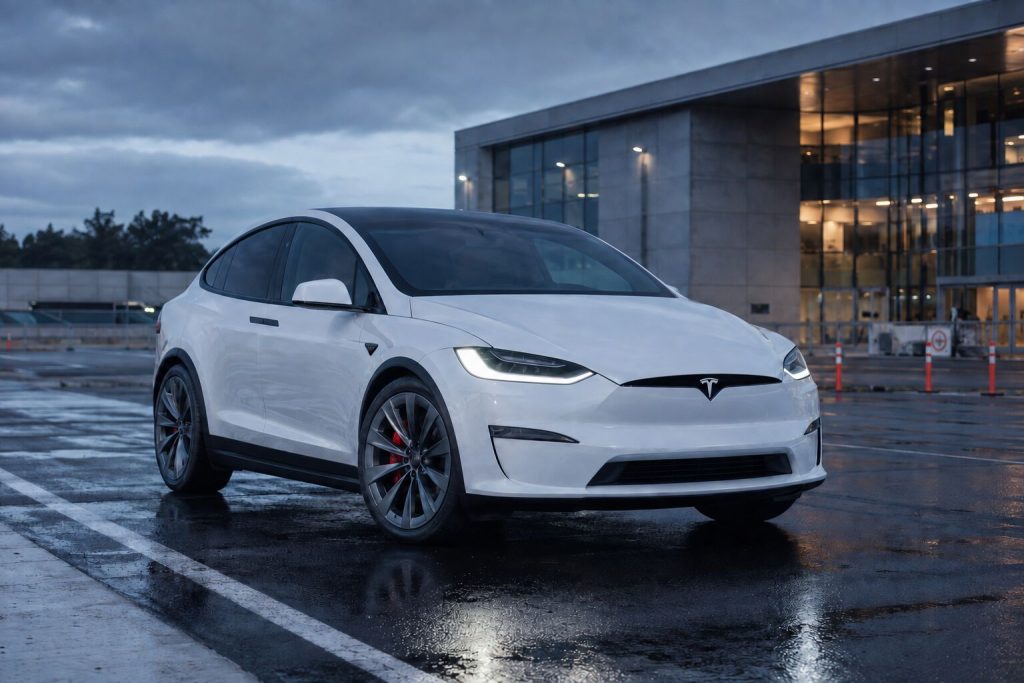
A key overhang for TSLA into next week is scrutiny of the mechanical emergency door release on certain 2022 Model 3 vehicles.
U.S. auto safety regulators opened a defect review after a petition alleged the manual release could be difficult to locate or use in an emergency. Reuters reported the probe covers an estimated 179,071 vehicles and noted that opening a defect petition does not automatically mean a recall—but it can be the first step in a process that may lead to further action.
The Los Angeles Times, citing the filing and related reporting, described allegations that the release is “hidden” and “unlabeled,” and connected the current probe to broader scrutiny of powered door handles and emergency egress in Tesla vehicles. Los Angeles Times
Why it matters for the stock: even when the financial impact of a safety review is uncertain, TSLA is a “headline-sensitive” name—especially in thin year-end trading—so incremental regulatory developments can move shares quickly.
The other dominant TSLA catalyst: Tesla ramps up robotaxi messaging into a year-end deadline
While the safety story adds friction, Tesla’s autonomy storyline continues to supply the upside optionality that many bulls believe justifies the stock’s premium valuation.
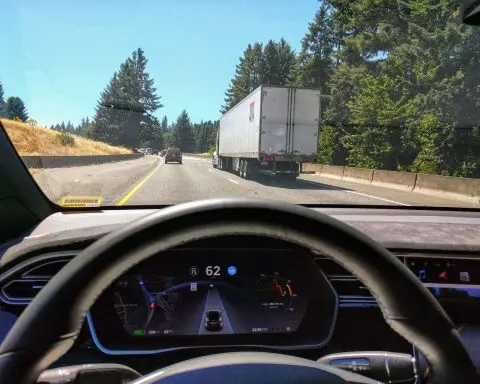
Over the last 24–48 hours, Investors Business Daily reported Tesla has intensified messaging around Full Self-Driving and “unsupervised”/robotaxi progress ahead of CEO Elon Musk’s self-imposed year-end deadline tied to safety-monitor-free robotaxi operations in Austin. The report also referenced public claims of additional testing and promotional efforts (including advertising that frames FSD as a chauffeur-like experience). Investors.com
At the same time, Tesla’s own consumer-facing documentation continues to draw a bright line between today’s product and true autonomy. On Tesla’s website, the company states that Full Self-Driving (Supervised) requires active driver supervision and does not make the vehicle autonomous—language investors often revisit whenever “robotaxi” hype accelerates. Tesla+1
The investment implication is straightforward: any credible evidence of faster progress toward unsupervised driving can lift TSLA, while setbacks, regulatory intervention, or messaging that outpaces reality can pressure the stock.
A weekend read-through from Waymo: why a San Francisco outage is showing up in the Tesla debate
One of the most market-relevant autonomy stories in the last day did not originate at Tesla—it came from Waymo.
In an analysis published Saturday, Reuters described how a San Francisco power outage caused Waymo robotaxis to stall and snarl traffic in areas where signals went dark, renewing debate about whether robotaxi operators are ready for major emergencies (earthquakes, floods) and whether governments need stricter rules for “teleoperation” (remote human assistance). Reuters explicitly framed this as relevant beyond Waymo, noting that other companies including Tesla are racing to expand robotaxi services. Reuters+1
Reuters cited autonomous-systems expert Philip Koopman (Carnegie Mellon) and autonomy researcher Missy Cummings (George Mason University) arguing that large-scale deployment raises questions about remote operations capacity, standards, and permitting requirements as fleets grow.
For TSLA investors, the takeaway is not that Waymo’s issue directly changes Tesla’s fundamentals overnight—it’s that the regulatory bar for robotaxis may rise, and scrutiny of how autonomous fleets behave under stress scenarios could become a bigger market theme into 2026.
The next hard catalyst: Q4 deliveries (and why expectations are drifting)
The next scheduled Tesla “moment” is the company’s Q4 2025 deliveries report, which investors widely expect in the first days of January—a timing consistent with Tesla’s past practice (for example, Tesla released its Q4 2024 production and deliveries update on Jan. 2, 2025). Tesla Investor Relations+1
What’s in focus now is less the exact day and more the spread between forecasts:
- Investors Business Daily reported analysts forecasting about a 9.5% year-over-year decline in Q4 deliveries to roughly 449,000 units.
- In a delivery preview dated Dec. 26, Gene Munster (with Brian Baker) argued Q4 deliveries could come in materially lower—about 415,000—while also suggesting the market may increasingly treat deliveries as secondary to Tesla’s “physical AI” narrative (FSD/robotaxi/Optimus). GeneMunster.com
That divergence matters because Tesla has recently traded like a stock with two scoreboards:
- the traditional one (deliveries, margins, EV competition), and
- the “optionality” one (autonomy and robotics scale).
A meaningful miss versus consensus can still hit the stock, but bulls argue the market’s center of gravity is shifting toward autonomy milestones—especially if Tesla signals momentum in Austin.
Wall Street outlook: bullish narratives vs. valuation gravity
Tesla’s valuation remains central to any TSLA stock article because it changes the burden of proof. As of Friday’s close, StockAnalysis listed Tesla with a market cap around $1.58 trillion and a reported trailing P/E above 300, with an “Analysts: Buy” consensus and an average price target around $402 (below the current quote). StockAnalysis
That’s the tension: the “average” target implies downside, while the bull case relies on Tesla executing autonomy and robotics at a scale few companies have achieved.
On the bullish end, Investors Business Daily highlighted Wedbush analyst Dan Ives calling 2026 a defining year for Tesla’s autonomy push and describing a path toward a much larger valuation if robotaxi execution turns from promise into repeatable operations.
Meanwhile, ARK Invest’s Cathie Wood has continued to frame Tesla through a robotaxi-first lens, even as her firm trims and adds around position sizing; IBD noted ARK’s long-run TSLA projections still lean heavily on autonomy economics.
Market backdrop for Monday: why the broader tape still matters for TSLA
Even for a catalyst-driven stock, the market environment can change how news is priced.
Reuters’ “week ahead” coverage pointed to:
- year-end positioning effects and light volumes, and
- Federal Reserve meeting minutes due next week that could influence rate expectations.
That context matters because TSLA often behaves like a high-duration equity—more sensitive to shifts in sentiment about rates and risk appetite than a traditional automaker.
If you’re watching Tesla stock before the next session, here’s the checklist
With markets closed now and the next regular session ahead, these are the practical items investors and traders are likely to track before Monday’s open:
- Any incremental updates on the Model 3 door-release review
The key swing factor is whether the review expands, whether additional complaints surface, or whether Tesla comments publicly. Reuters emphasized that a defect petition is not automatically a recall, but it can escalate. - Proof points around Tesla’s robotaxi timeline (and the “supervised vs. unsupervised” distinction)
Tesla’s marketing and investor narrative can move faster than regulatory acceptance. Tesla’s own language still frames today’s consumer system as supervised and non-autonomous, which is relevant to how investors interpret any “unsupervised” claims. Tesla+1 - Autonomy regulation tone—especially around remote operations (“teleoperation”)
Reuters’ Waymo analysis shows regulators and experts are increasingly focused on how fleets behave in emergencies and whether there should be stricter standards as fleets scale—an issue that touches Tesla by implication as it pursues expansion. Reuters - Delivery-whisper numbers into early January
The spread between a ~449k consensus-style view and lower forecasts like Munster’s 415k sets up volatility risk around the print—and potentially around any pre-release chatter. - The “$500 question,” technically and psychologically
TSLA’s 52-week high is listed at $498.83, keeping $500 as a natural magnet for headlines and positioning into 2026. StockAnalysis+1
Bottom line
Tesla stock heads into the next session with a familiar setup: near-term regulatory headlines versus long-term autonomy optionality, with deliveries looming as the next measurable datapoint.
In the very near term, watch whether the door-release probe remains a contained story or broadens—and whether Tesla’s year-end robotaxi narrative produces verifiable milestones that investors treat as “real progress” rather than promotional momentum. On a thin year-end tape, either direction can be exaggerated. Investors.com+2Reuters+2
Related articles: NASDAQ:TSLA