
Tesla, Inc. stock is ending 2025 with a familiar cocktail of ingredients: a fresh record high, a big autonomy narrative, and a regulatory plot twist that could matter a lot more than a one-day candle on a chart.
On Tuesday, TSLA closed at $489.88, up about 3%, marking its first record close in roughly a year and putting the psychologically loud $500 level within striking distance.
But under the celebratory confetti, California regulators are telling Tesla to fix or drop language around “Autopilot”—or risk a 30-day sales license suspension in the state that remains Tesla’s biggest U.S. market. Reuters+1
What makes today’s Tesla stock story unusually electric is that these two threads—robotaxi optimism and “Autopilot” scrutiny—collide in the same week.
Why Tesla stock is rising now: the robotaxi narrative is back in the driver’s seat
A key spark for TSLA’s recent momentum is Elon Musk’s claim that Tesla is testing robotaxis without safety monitors, a step that investors interpret as movement toward real driverless operations (and eventually, real driverless revenue).
Reuters reported that Tesla launched a limited robotaxi service in Austin in June, using modified Model Y vehicles equipped with Full Self-Driving, initially geo-fenced and staffed with a human safety monitor. Reuters also reported Musk saying testing is now underway with no occupants in the car.
That detail matters for the stock because Tesla’s valuation increasingly trades like an autonomy-and-robotics option: a bet that software and fleet services can become high-margin businesses that dwarf the car business. Reuters explicitly noted that while much of Tesla’s valuation is tied to self-driving and humanoid robot ambitions, the bulk of revenue and profit still comes from selling EVs.
Investopedia similarly framed the rally as investors “buying into” Tesla’s plans in autonomous driving, robotics, and AI, with the stock more than doubling from its March lows. Investopedia
The big speed bump: California’s DMV puts Tesla on a clock over “Autopilot”
While the market is rewarding the robotaxi story, California regulators are asking Tesla to clean up the language around that story.
What happened
Reuters reported that the California Department of Motor Vehicles (DMV) adopted a judge’s proposal to suspend Tesla’s manufacturing and sales licenses for 30 days, then immediately put the suspensions on hold—staying the sales license suspension for 90 days and staying the manufacturing suspension indefinitely.
The DMV’s underlying claim (dating back to 2022) is that Tesla’s naming—particularly “Autopilot” and “Full Self-Driving”—can mislead consumers into thinking the cars are autonomous when they are not. Tesla says it has consistently explained that the systems require driver supervision. Reuters
What the actual order says (and why it’s unusually specific)
A copy of the DMV order (as published in the record) spells out the compliance logic in detail: it states that continuing to use the “Autopilot” name for driver-assistance features that do not cause vehicles to operate at SAE Level 3, 4, or 5 violates multiple California provisions, and it lays out the suspension-and-stay framework. assets.bwbx.io+1
Key mechanics from the order include:
- Tesla’s dealer license suspension is 30 days, stayed for 90 days under specific terms.
- Tesla can mitigate the penalty if, within 60 days of the effective date, it files a statement that it has either:
- ceased using the Autopilot name, or
- implemented changes such that the “Autopilot”-described features now operate at SAE Level 3–5 (with enough detail for DMV evaluation). assets.bwbx.io
- If DMV accepts Tesla’s statement, the stay can become permanent; the order also references timelines for petitions and judicial review (including a court review deadline cited by Reuters as Feb. 14).
Why investors should care
Even if you assume Tesla ultimately complies, this is a live risk factor for TSLA because it mixes three things markets hate: regulatory uncertainty, branding constraints, and autonomy claims under a microscope—all while the stock price is being pulled upward by autonomy expectations.
And this is California: not just a big EV market, but a narrative market. A state-level action that forces Tesla to reword, rename, or reframe autonomy features could ripple into consumer perception, legal exposure, and how other regulators choose to posture.
Wall Street forecasts: bullish targets exist, but the “average” view implies downside
Here’s the fun part about Tesla stock: it can be up at record highs and still have many analysts saying, effectively, “slow down, space cowboy.”
Investopedia reported:
- Mizuho raised its price target to $530 (from $475), citing improving self-driving performance and the possibility of faster robotaxi expansion.
- Wedbush maintained a Street-high target of $600, arguing Tesla is pushing further into an “AI Revolution” with autonomy and robotics central heading into 2026. Investopedia
- Yet, of the analysts tracked by Visible Alpha in that report, only about half rated TSLA a “buy,” and the average target was around $400, implying a meaningful drop from the ~$490 level. Investopedia
Separately, 24/7 Wall St. summarized broader Street positioning with a median one-year price target of $386.42 and a consensus “Hold” profile (with a split among Buy/Hold/Sell ratings). 24/7 Wall St.
That divergence is the entire Tesla story in miniature:
- Bulls value Tesla like a software platform with a car factory attached.
- Bears value Tesla like a car company with a lot of ambitious R&D.
- Everyone agrees the stock can move violently when the autonomy storyline shifts even slightly.
Reality check: Tesla isn’t alone in robotaxis—and competitors are scaling in public
The robotaxi market is no longer a theoretical arena where Tesla can shadowbox with the future. There are real fleets doing real rides.
Reuters noted that Alphabet’s Waymo is operating at a scale Tesla hasn’t publicly matched yet, citing more than 2,500 commercial robotaxis across major U.S. cities (as of November) and referencing CNBC reporting of roughly 450,000 paid rides per week.
Meanwhile, the Financial Times reported Waymo was in talks to raise significant funding at a valuation exceeding $100 billion, alongside expansion ambitions.
For TSLA investors, this matters because Tesla’s robotaxi thesis isn’t just “can Tesla make it work?” It’s also “can Tesla make it work faster, cheaper, and at higher margin than competitors that are already operating without human supervision?”
Europe headline: Tesla expands German battery cell ambitions, but warns about cost reality
While autonomy dominates the stock tape, Tesla also dropped a more traditional manufacturing headline: batteries.
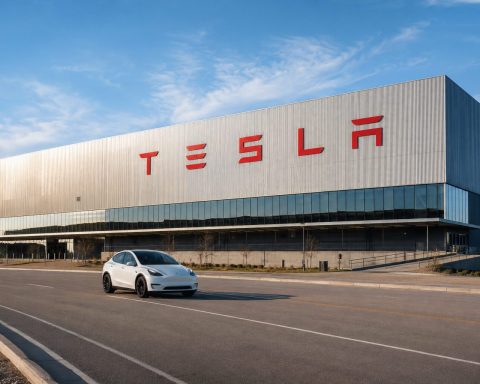
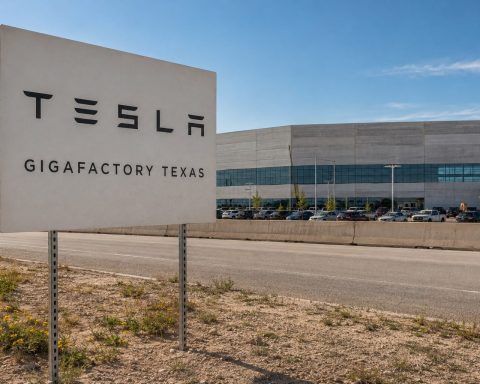
Reuters reported Tesla plans to expand battery cell production at Gigafactory Grünheide (near Berlin), aiming for conditions to produce up to 8 GWh per year starting in 2027, adding another several hundred million euros and bringing total cell-factory investment to nearly €1 billion. Tesla also acknowledged it’s currently hard to produce cells economically in Europe compared with China and the U.S.
From a stock perspective, this is a quieter—but important—signal:
- If Tesla wants to protect margins in a more competitive EV market, it needs supply-chain and manufacturing leverage.
- But Tesla is also openly signaling the cost disadvantage in Europe, which can pressure profitability if pricing power fades.
Corporate governance undertone: board pay and Musk incentives remain part of the TSLA narrative
Tesla’s stock doesn’t trade purely on cars, software, or robots. It trades on governance drama too.
Reuters reported that Tesla directors have reaped outsized gains via stock awards relative to peers, and tied that to ongoing legal and governance scrutiny—alongside the continuing saga of Musk compensation structures.
Even when this isn’t the “headline of the day,” it affects how institutional investors model risk: governance stability can influence everything from investor confidence to discount rates applied in valuation models.
What to watch next for Tesla stock: near-term catalysts and risk points
As TSLA heads into year-end and the early weeks of 2026, investors are likely to fixate on a handful of catalysts:
- California DMV compliance path
- Will Tesla stop using “Autopilot” wording, further emphasize “Supervised,” or attempt a more aggressive claim about capability?
- The timeline in the order (90-day stay; mitigation steps tied to a 60-day statement) makes this a real, dated catalyst rather than a vague “regulatory risk.” assets.bwbx.io+2assets.bwbx.io+2
- Robotaxi expansion evidence
- Investors will look for proof that “testing” becomes broader deployment, without safety monitors, and with reliability that regulators will tolerate.
- Expect comparisons to Waymo’s scaling metrics to remain a persistent shadow over Tesla’s claims.
- Street target revisions
- When a stock is near $490 and a large chunk of published targets hover near $400, upgrades/downgrades (and the language inside them) can move the tape quickly.
- Execution in the core business
- Even in the autonomy era, Tesla is still funded by cars—so delivery trends, pricing, and margin direction remain the gravity well beneath every moonshot.
The weird, true takeaway: Tesla stock is behaving like two companies stitched together
On one side, Tesla is acting like a classic industrial firm—investing in European battery production, grinding supply chains, managing costs.
On the other side, TSLA is being priced like a high-beta AI/autonomy play—where an update about “no safety monitor” can push it to record highs, even as regulators argue the branding is misleading. Reuters+2Reuters+2
Related articles: NASDAQ:TSLA