
NEW YORK, Jan 5, 2026, 02:44 ET — Market closed
- PDVSA has begun cutting crude output as a U.S. oil embargo stalls exports and storage fills, sources said.
- Washington’s move to put Venezuela under temporary U.S. control has sharpened questions over who buys Venezuelan crude — and on what terms.
- Chevron and major U.S. refiners ended Friday higher; traders are watching for clarity on sanctions, shipping flows and inventory data.
Venezuela’s state-run oil company PDVSA has started trimming crude output as a U.S. oil embargo — a government-ordered ban on trade — has choked off exports and squeezed storage capacity, sources familiar with the situation said.
The cuts land as President Donald Trump moves to place the oil-rich nation under temporary American control after the U.S. captured President Nicolás Maduro over the weekend, putting Venezuela’s oil policy — and who ultimately controls the barrels — at the center of the market’s next move.
Why this matters now: Venezuela’s heavy crude is a key feedstock for some U.S. Gulf Coast refineries, while China has become the biggest buyer in recent years as sanctions pushed exports into opaque channels. A shift in U.S. rules could quickly redirect cargoes even if rebuilding Venezuela’s production takes far longer.
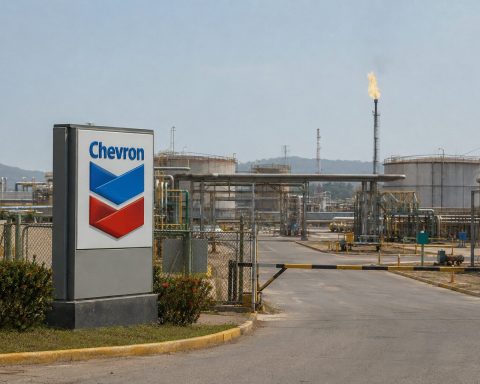
PDVSA’s move includes shutting some oilfields and asking multiple joint ventures — including projects with Chevron and China’s CNPC — to cut back, the sources said. The company has also been forced to use tankers as floating storage, with more than 17 million barrels stuck offshore, according to TankerTrackers.com.
Diluents — light oils used to thin Venezuela’s extra-heavy crude so it can flow through pipelines and load onto ships — have become harder to secure as the blockade bites, the sources said. Workers at the Sinovensa venture were preparing to disconnect well clusters, and LSEG shipping data showed China-bound tankers that had been approaching Venezuela stopped toward the end of December.
Chevron (CVX) had kept lifting some Venezuelan crude under a U.S. authorization, but its cargoes bound for the United States have stopped moving since Thursday, shipping data showed. Chevron has said it continues to operate in compliance with relevant laws and regulations.
Trump has said U.S. oil companies would return to rebuild Venezuela’s petroleum industry, but analysts say bringing output back meaningfully would require years of work on degraded infrastructure and stable contract terms. “It will take tens of billions of dollars to turn that industry around,” Peter McNally, global head of sector analysts at Third Bridge, said. Reuters
In the last U.S. session on Friday, energy shares ended higher: Chevron closed up 2.3% at $155.90, Exxon Mobil (XOM) rose 1.9% to $122.65, Valero (VLO) gained 1.5% to $165.31 and Marathon Petroleum (MPC) added 1.6% to $165.14. The United States Oil Fund (USO), which tracks oil futures, slipped 0.3%.
The competitive stakes extend beyond Chevron. ConocoPhillips and Exxon have long histories in Venezuela and unresolved financial claims tied to past nationalizations, while oilfield service firms such as SLB, Halliburton and Baker Hughes would be needed for any sustained ramp-up, analysts and industry sources have said.
Oil’s early-week signal has been cautious rather than panicked. Brent crude fell 0.4% to $60.54 a barrel in early Asian trade and U.S. WTI slipped 0.5% to $57.04, as analysts pointed to ample supply and said the price impact depends on how U.S. sanctions policy evolves.
But the path from embargo to “control” is still foggy. A prolonged shipping blockade or a disorderly political transition could keep exports stranded and tighten the market for heavy crude, while a rapid easing of restrictions could bring more Venezuelan barrels back and weigh on prices later in 2026.
What markets watch next: any U.S. Treasury guidance on Venezuela sanctions and licenses, along with real-time signs that tankers resume loading and clearing Venezuela’s ports. Oil traders also have the U.S. Energy Information Administration’s weekly inventory report on Wednesday, Jan. 7, on their near-term calendar.
Related articles: NYSE:CVX