Search result

KIRIBATI

Internet Access in Kiribati: Bridging the Digital Divide Across Remote Pacific Islands

Internet Access in Kiribati: Bridging the Digital Divide Across Remote Pacific Islands

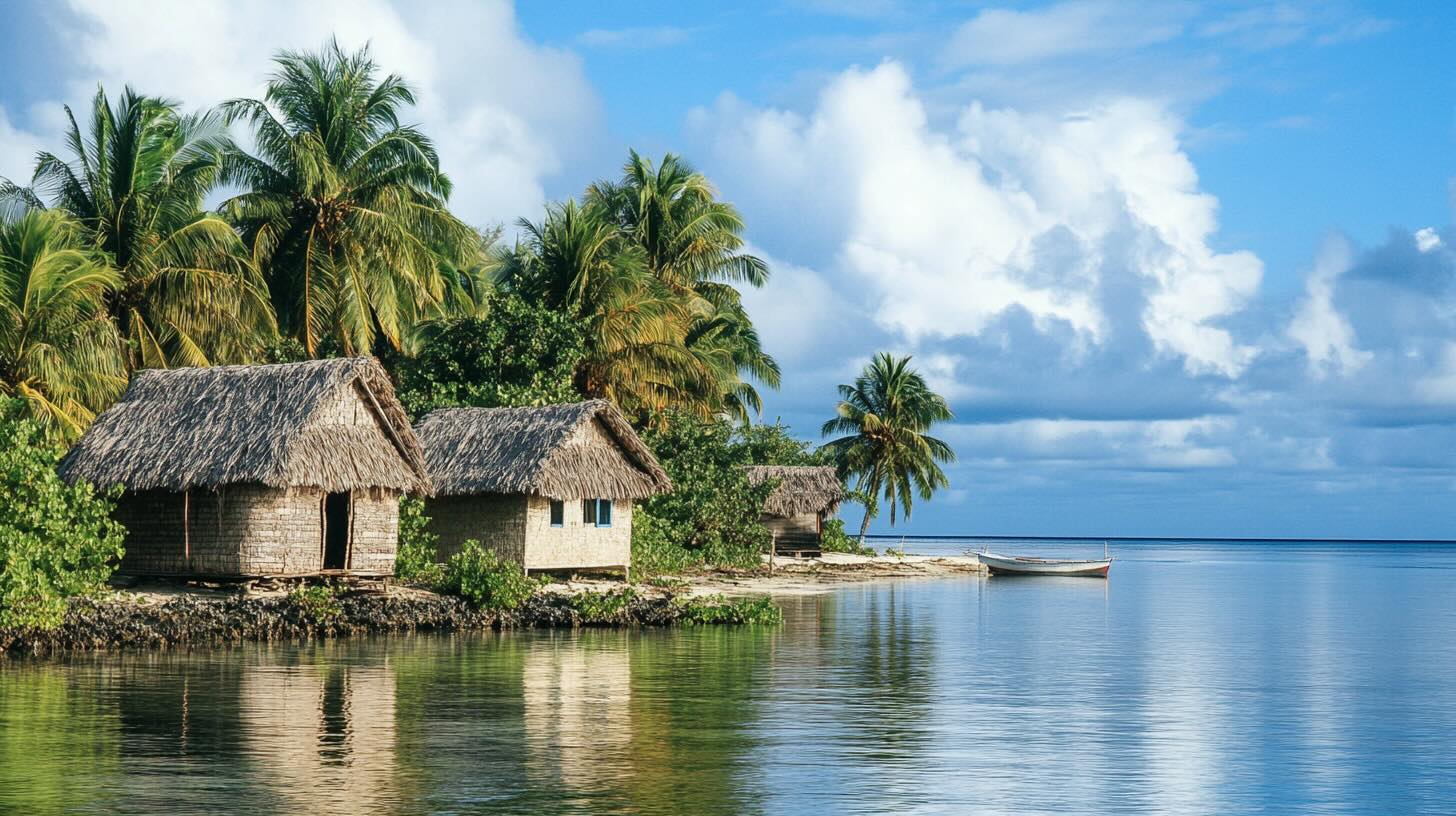
Kiribati comprises 33 atolls spread across 3.5 million square kilometers of ocean. As of January 2024, there were about 73,300 internet users, representing 54.4% of the population. In early 2024, there were about 69,200 mobile cellular connections, equal to 51.4% of the population. All international and inter-island connectivity currently depends on satellite links, and Kiribati has no submarine fiber cable. Amalgamated Telecom Holdings Kiribati Ltd (ATHKL), trading as Vodafone Kiribati, is the main operator after acquiring Telecom Services Kiribati Ltd in 2015 and upgrading 3G/4G coverage in Tarawa and Kiritimati. Ocean Link launched in 2019 to introduce competition and extend
Internet Access in Kiribati: Bridging the Digital Divide Across Remote Pacific Islands

Acceso a Internet en Kiribati: Cerrando la Brecha Digital en las Remotas Islas del Pacífico

Kiribati está compuesto por 33 atolones distribuidos en 3,5 millones de km² de océano, lo que dificulta la conectividad y exige soluciones innovadoras. En enero de 2024 había aproximadamente 73.300 usuarios de internet, el 54,4% de la población, frente a alrededor del 15% en 2018. En 2024, unos 52.000 residentes eran usuarios activos de redes sociales, es decir, el 38,7% de la población, con plataformas como Facebook como ejemplo destacado. A principios de 2024, había unas 69.200 conexiones móviles activas, equivalentes al 51,4% de la población, haciendo de la banda ancha móvil la principal forma de acceso. La banda ancha
23 marzo 2025
Internet Access in Kiribati: Bridging the Digital Divide Across Remote Pacific Islands

Dostęp do Internetu na Kiribati: Zmniejszanie przepaści cyfrowej na odległych wyspach Pacyfiku

Kiribati składa się z 33 atoli rozciągniętych na 3,5 miliona km² oceanu. W styczniu 2024 roku było około 73 300 użytkowników internetu, co stanowiło około 54,4% populacji. Około 45% obywateli Kiribati nadal nie ma dostępu do internetu, co wskazuje na potencjał dalszego wzrostu. Na początku 2024 roku liczba aktywnych połączeń komórkowych wynosiła około 69 200, co stanowi 51,4% populacji. Amalgamated Telecom Holdings Kiribati Ltd (ATHKL, Vodafone Kiribati) przejęła państwowego Telecom Services Kiribati Ltd (TSKL) w 2015 roku i zmodernizowała zasięg 3G/4G w Tarawa i Kiritimati. Ocean Link wszedł na rynek w 2019 roku, by wprowadzić konkurencję i rozszerzyć usługi na
22 marzo 2025
Starlink in Kiribati: 2025 Update on Coverage, Costs and the New Community Gateway

Starlink in Kiribati: 2025 Update on Coverage, Costs and the New Community Gateway

Kiribati, a nation of 33 low‑lying coral atolls spread over a vast swathe of the central Pacific, has long been one of the hardest places on Earth to connect to the internet. That is changing quickly. In 2025, Starlink moved from “grey‑market” satellite dishes on rooftops to an officially recognised national service, capped by the launch of a state‑backed Starlink Community Gateway in South Tarawa. DatacenterDynamics+2APNIC Blog+2 This article looks at how Starlink now operates in Kiribati, what the new Community Gateway means, how much service costs, and how satellite internet will sit alongside new submarine cables as the country upgrades
Internet Access in the Micronesian Region: Status, Challenges, and Outlook (2025)

Internet Access in the Micronesian Region: Status, Challenges, and Outlook (2025)

The Micronesian region comprises the Federated States of Micronesia (FSM), Palau, the Marshall Islands, Nauru, and Kiribati. In 2010 the HANTRU-1 fiber cable reached Majuro and Kwajalein in the Marshall Islands, branching from Pohnpei to FSM, marking the region’s first international fiber backbone. Palau connected to the SEA-US cable in 2017 and is slated to receive a second Echo cable spur by 2025 to boost redundancy. The East Micronesia Cable (EMC) project began in 2022 and is on track for completion by late 2025, linking Nauru, Tarawa, and Kosrae via FSM’s Pohnpei hub. SpaceX Starlink became available in 2022–23, with
2 agosto 2025
Internet Access in Nauru: Infrastructure, Access, and Future Outlook

Internet Access in Nauru: Infrastructure, Access, and Future Outlook

Nauru has a population of about 12,000 and an area of 21 km², with roughly 83% of residents using the internet as of 2023. Since 2022–2023, SpaceX Starlink has become available in Nauru, and the Starlink Community Gateway on Command Ridge began operating in December 2024. In January 2025 Neotel launched a nationwide 5G network in Nauru, marketed as the first nationwide 5G+ network in Oceania. Digicel Nauru launched the island’s first GSM mobile network in August 2009, initially with about a two-year monopoly. Telstra acquired Digicel Pacific in 2021, bringing Digicel Nauru under Australia’s largest telecom group. By 2023
From Submarine Cables to Starlink: Marshall Islands Internet Connectivity in 2025

From Submarine Cables to Starlink: Marshall Islands Internet Connectivity in 2025

The HANTRU-1 cable is 2,917 km long with a 160 Gbps design capacity, extended to Majuro and Kwajalein/Ebeye in 2010, linking to a Pohnpei hub and onward to Guam. A 2017 HANTRU-1 cable fault caused a nationwide 3-week outage, forcing a 97% bandwidth cut as the islands relied on limited satellite links. The East Micronesia Cable (EMC) project, funded by Japan, Australia, and the US, connects Kosrae (FSM) and Tarawa (Kiribati) to Pohnpei and HANTRU-1, with completion expected around 2025–26 and improved resilience. The Central Pacific Cable (CPC) is a 15,900 km subsea link from Guam to American Samoa with
Deep-Sea Mining Goldmine or Fool’s Gold? The Metals Company (TMC) Stock Analysis 2025

Deep-Sea Mining Goldmine or Fool’s Gold? The Metals Company (TMC) Stock Analysis 2025

Key Facts & Figures 📊 The Metals Company Overview: Undersea Minerals for the EV Boom The Metals Company (“TMC”) is a deep-sea minerals exploration firm on a mission to harvest polymetallic nodules – often called “a battery in a rock” – from the ocean floor metals.co investors.metals.co. These potato-sized nodules are extraordinarily rich in critical battery metals: nickel, cobalt, copper, and manganese. TMC’s business model is to collect nodules from the Clarion-Clipperton Zone (CCZ) of the Pacific Ocean (in international waters between Hawaii and Mexico) and process them into high-grade metals needed for electric vehicle (EV) batteries, renewable energy technology,
Starlink Global Coverage and Availability Report

Starlink Global Coverage and Availability Report

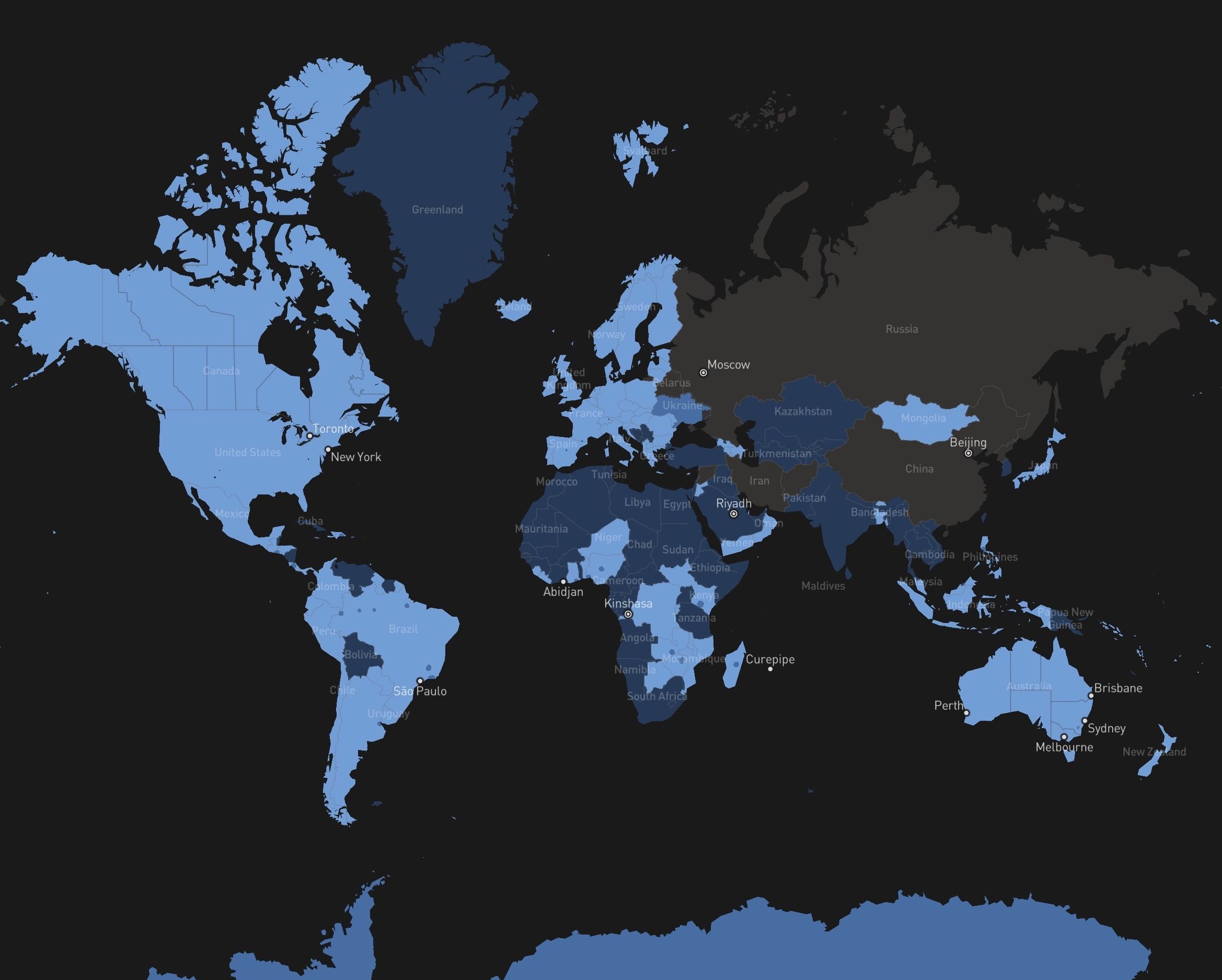
As of mid-2025, Starlink is available in over 110 countries and territories. In the United States, Starlink began with limited trials in August 2020 and the public beta “Better Than Nothing Beta” in November 2020, and now has nationwide commercial coverage including Puerto Rico and the U.S. Virgin Islands, with over 2.5 million subscribers as of early 2025. Canada went live in January 2021 after a late-2020 beta and now has broad coverage across all provinces. Mexico received a license in mid-2021, began service by November 2021, and by 2024 had over 160,000 subscribers, with the federal “Internet para Todos”
From Satellite Struggles to Starlink: Tuvalu’s Internet Revolution

From Satellite Struggles to Starlink: Tuvalu’s Internet Revolution

Overview: Current Internet Infrastructure and Access in Tuvalu Tuvalu is a Polynesian microstate of about 10,000 people spread across nine coral atolls. Until recently, its internet infrastructure consisted solely of satellite links – there were no subsea fiber cables, and even regional microwave links to neighbors were absent due to the vast ocean distances. All international and inter-island data traveled via satellite, terminating at earth stations in Funafuti (the capital island) and smaller VSAT terminals on outer islands en.wikipedia.org prepaid-data-sim-card.fandom.com. This satellite dependency made Tuvalu’s internet expensive, bandwidth-constrained, and prone to outages (e.g. in bad weather). For most of the
3 septiembre 2025
Starlink Global Availability and Impact Report

Starlink Global Availability and Impact Report

Starlink is available in over 100 countries as of mid-2025, spanning North America, Europe, Asia, Africa, Oceania, and parts of South America. As of late 2024, Starlink had surpassed 4 million subscribers. Starlink offers five service types: Residential, Roam, Business (Priority), Maritime, and Aviation. Typical speeds range from about 50 Mbps to 150+ Mbps, with most users above 100 Mbps under good conditions, and latency around 20–50 ms. Monthly pricing ranges from about $90–$120 in well-connected markets, with discounts to roughly $30–$50 in developing regions. The United States was the first to receive Starlink, with public beta in mid-2020 and
2 junio 2025
Starlink Globaler Abdeckungs- und Verfügbarkeitsbericht

Starlink Globaler Abdeckungs- und Verfügbarkeitsbericht

Mitte 2025 ist Starlink weltweit in über 110 Ländern und Territorien verfügbar. USA: Begrenzte Tests starteten im August 2020, die öffentliche Beta begann im November 2020, und der kommerzielle Vollbetrieb ist landesweit gesichert, mit über 2,5 Millionen Abonnenten Anfang 2025. Kanada startete im Januar 2021 nach einer Beta-Phase Ende 2020 und hat landesweite Abdeckung in allen Provinzen. Mexiko erhielt Mitte 2021 eine Lizenz, der Dienst startete im November 2021, und 2024 zählte Starlink Mexiko über 160.000 Abonnenten, unterstützt durch das Regierungsprogramm „Internet para Todos“. Ukraine – Verfügbar (Sonderfall) seit Februar 2022 als Notfall-Verbindung; zehntausende aktive Terminals für Regierung, Militär und
7 junio 2025

Stock Market Today

Go toTop