
December 14, 2025 is shaping up as one of the most “Moon-centric” nights of the month—not because the Moon is bright and dominating the sky, but because it isn’t. With the Moon now a waning crescent and shrinking toward the New Moon on December 19, skywatchers are getting darker skies right as the Geminid meteor shower reaches its peak window. WUSF+2Space+2
At the same time, December’s Moon story isn’t only about stargazing. NASA’s lunar program is also in the headlines this month, from new Artemis lunar surface science instruments to “blast-in-a-vacuum-sphere” tests designed to understand how rocket exhaust will kick up abrasive lunar dust during future Moon landings. NASA Science+1
Below is what’s happening with the Moon in December 2025, what’s making news today (14/12/2025), and what to mark on your calendar next.
Moon phase today: December 14, 2025 (waning crescent, darker skies ahead)
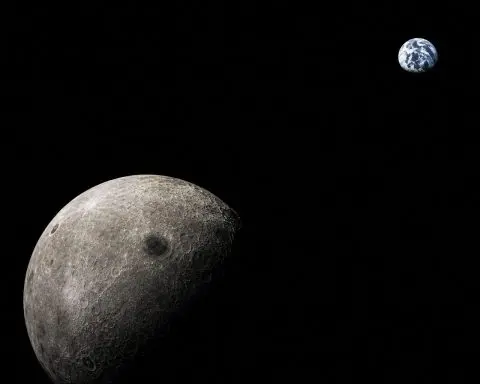
If you’re searching for “moon phase today December 14 2025,” the key takeaway is simple: the Moon is in its waning crescent stretch, heading toward the New Moon on December 19. That timing matters because the thinner the crescent gets, the less moonlight competes with faint sky targets like meteors. WUSF+1
Skywatching coverage today also emphasizes that the Moon’s light shouldn’t be a major spoiler: one report notes a ~26% lit waning crescent rising an hour or two after midnight, meaning earlier evening skies stay relatively dark.
Key dates for the December 2025 Moon (major phases):
- Full Moon: December 4
- Last/Third Quarter: December 11
- New Moon: December 19 (listed at 8:43 p.m. EST / 0143 GMT Dec 20)
- First Quarter: December 27 Space+1
Today’s biggest Moon-related headline: the Geminids peak with minimal moonlight
The most widely shared space-and-sky story around December 14, 2025 is the Geminid meteor shower peak window (Dec. 13–14). Several outlets are calling attention to the same fortunate combination: Geminids at peak strength while the Moon is a waning crescent trending toward New Moon darkness.
Why the Moon matters for the Geminids
Meteor showers aren’t just about how many meteors are in Earth’s path—they’re also about contrast. Bright moonlight can wash out fainter streaks. This year, skywatching coverage notes that the crescent Moon’s light “shouldn’t spoil the show too badly,” because it rises later and stays relatively dim. Space+1
When to look (and where)
A common rule of thumb: you’ll usually see more meteors after midnight when the radiant is higher and your local sky rotates into the stream of debris. Reporting on today’s peak notes that conditions improve late at night into the pre-dawn hours—even once the crescent Moon comes up—especially if you keep the Moon out of your direct field of view.
Another sky guide lists a predicted peak around 3 UTC on December 14, 2025, while also emphasizing that you can watch from mid-to-late evening into dawn.
Quick Geminids refresher: where do they come from?
Unlike many meteor showers tied to icy comets, the Geminids are linked to the asteroid 3200 Phaethon, a detail highlighted again in today’s coverage.
If clouds ruin it: there’s a livestream option
If local weather—or city light pollution—gets in the way, one of today’s articles points viewers to a free livestream of the Geminids from a dark-sky site, specifically framed as a backup for anyone clouded out.
A subtle Moon show for early risers: the crescent Moon meets Spica
Not all December 2025 Moon moments are loud and obvious. Some are quiet “step outside for two minutes” alignments—and December 14 has one: the waning crescent Moon near Spica, Virgo’s brightest star.
A skywatching guide highlights December 14, 15, and 16 mornings as a mini-run of Moon-and-star positioning, starting with the Moon near Spica on the morning of the 14th.
This is one of those alignments that rewards even casual observers: you don’t need a telescope, but binoculars can make the pairing feel more intimate—two distinct points of light sharing the same patch of sky.
What’s next: the New Moon on Dec. 19 sets up a darker late-December sky
The New Moon on December 19 is the pivot point for the rest of the month’s skywatching, because it brings the darkest nights of the lunar cycle. Space-focused coverage lists the New Moon time explicitly (8:43 p.m. EST / 0143 GMT Dec 20).
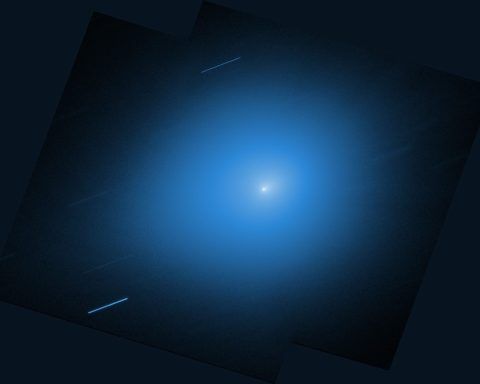
NASA’s December skywatching roundup also spotlights December 19 for another reason: that’s when interstellar comet 3I/ATLAS makes its closest approach to Earth, and NASA frames that date as a prime observing opportunity—while stressing it remains very far away and requires substantial aperture to see well.
Why this matters for “Moon December 2025” searches:
If you’re planning a late-month observing session—deep-sky objects, astrophotography, or simply trying to see faint details—your best odds typically cluster around the New Moon window, when moonlight interference is lowest. Space
Cold Moon recap: December’s Full Moon was also the year’s last supermoon
Earlier this month, the Moon wasn’t shy at all. December’s Full Moon—often called the Cold Moon—arrived as the final supermoon of 2025, according to an AP report carried by local outlets.
That same reporting explains the basics: because the Moon’s orbit isn’t a perfect circle, sometimes the Full Moon happens when the Moon is closer to Earth, producing what’s commonly called a supermoon—described as making the Moon appear up to ~14% larger and ~30% brighter than the faintest full moon of the year.
For readers tracking exact timing, a lunar phase listing places the Full Moon on December 4 (with a published time of 6:14 p.m. EST).
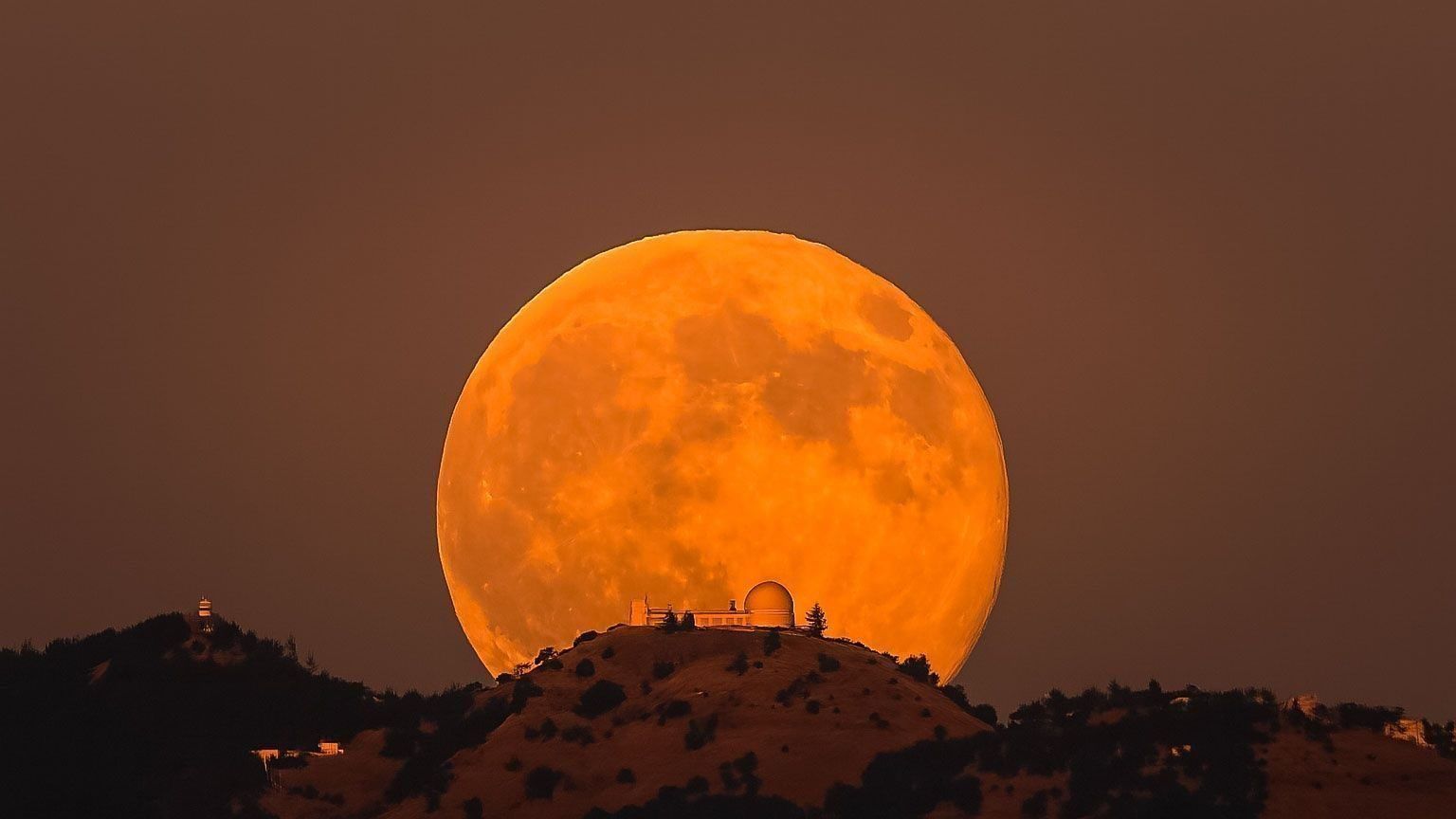
One extra note that keeps coming up in public-facing Moon stories: even when it isn’t a supermoon, the Moon can look huge near the horizon due to the well-known “moon illusion,” a perception effect that can make low Moons feel oversized. WKRC
Moon exploration news in December 2025: dust, landers, and Artemis science hardware
Skywatching is only half the December Moon conversation. The other half is the steady drumbeat of lunar exploration updates—especially about lunar dust, which remains one of the Moon’s most stubborn hazards.
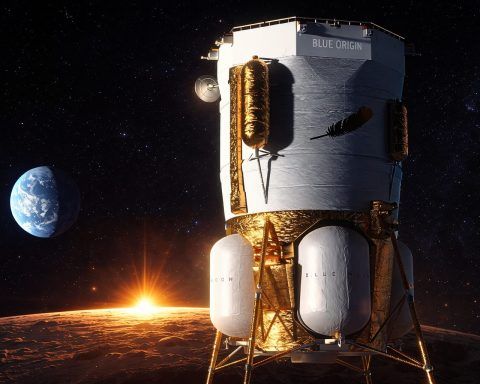
NASA begins plume-surface interaction tests for future Moon landings
NASA says it has begun a series of plume-surface interaction tests inside a massive 60-foot vacuum sphere at NASA Langley, firing propulsion plumes into simulated lunar soil to understand how lander exhaust will move dust, soil, and rocks during landing and liftoff.
In NASA’s description, the campaign is designed to generate real data—crater formation, particle behavior, plume shape—that can validate computer models and help predict how engine exhaust could affect nearby equipment, landers, and infrastructure.
The same NASA article lays out two phases of propulsion testing: an initial system that produces about 100 pounds of thrust followed by a 14-inch 3D-printed hybrid rocket motor producing around 35 pounds of thrust, both aimed into a bin of lunar regolith simulant.
Why it matters: this is the kind of engineering “unsexy but essential” work that determines whether repeated Moon landings can happen safely—and whether future landing sites can be shared without turning every touchdown into a sandblaster event. NASA
NASA selects two Artemis IV lunar surface science instruments
Another major lunar headline this month: NASA announced it selected two instruments intended for astronauts to deploy on the lunar surface during Artemis IV at the lunar south polar region, aiming to improve knowledge of the lunar environment for future exploration.
NASA identifies those selections as:
- DUSTER (DUst and plaSma environmenT survEyoR), a set of instruments mounted on a small rover platform to characterize dust and plasma and how they respond to human activity near a landing site.
- SPSS (South Pole Seismic Station), a seismometer system meant to characterize lunar interior structure and monitor the real-time seismic environment, including impacts.
NASA’s write-up also includes notable program details—like the instrument leads, the use of a rover platform, and multi-year award values—underscoring that lunar science planning is moving in parallel with human exploration timelines.
NASA JPL unveils a rover operations center aimed at Moon and Mars missions
In another December development tied directly to future Moon surface work, NASA’s Jet Propulsion Laboratory announced the inauguration of its Rover Operations Center (ROC), describing it as a center of excellence to support current and future surface missions to the Moon and Mars, with an emphasis on partnerships and technology transfer.
The same NASA article points to AI as a central theme—stating the center leverages AI and highlighting “the first-ever use of generative AI” by the Perseverance rover team to generate future routes (a Mars example, but presented as part of the operational toolkit NASA expects to expand). NASA
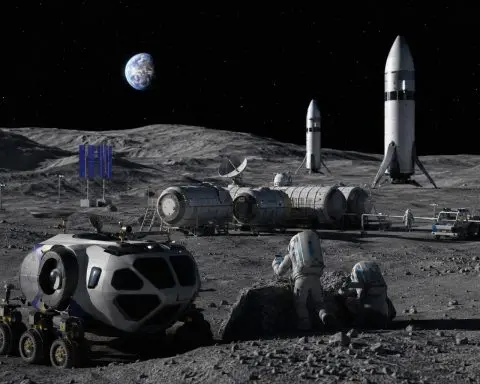
For Moon watchers, the connection is straightforward: a future with sustained lunar activity is also a future with more robotics—rovers, autonomous systems, and human-robot coordination—operating in one of the harshest dust-and-radiation environments in the solar system.
Reality check: there is no lunar eclipse in December 2025
Because Moon content spreads fast online, it’s worth stating clearly: December 2025 does not include a lunar eclipse.
An eclipse schedule for 2025 lists two lunar eclipses total:
- March 13–14, 2025: Total lunar eclipse
- September 7–8, 2025: Total lunar eclipse Time and Date
So if you see viral posts claiming a “Chandra Grahan” or “Blood Moon eclipse” tonight in mid-December 2025, they’re not aligned with the published eclipse calendar. Time and Date
One more “moon” headline today: NASA spotlights Ganymede (not Earth’s Moon)
While most readers searching “moon December 2025” mean our Moon, today’s NASA Astronomy Picture of the Day highlights another: Ganymede, Jupiter’s largest moon, via a reconstructed flyby visualization from the Juno mission. It’s a reminder that “moon news” often spans the entire solar system—even on a night when Earth’s Moon is keeping a low profile. Astronomy Picture of the Day
The bottom line for the Moon in December 2025
As of December 14, 2025, the Moon is doing what it does best: setting the rhythm.
- It set the stage earlier this month with the Cold Moon / supermoon Full Moon on Dec. 4.
- It’s helping tonight by staying a waning crescent, keeping skies darker for the Geminid peak.
- It’s about to reset at the New Moon on Dec. 19, opening a darker late-month observing window.
- And it’s central to the future in NASA’s engineering and Artemis science plans, as agencies and industry prepare for more ambitious lunar surface operations.
For anyone building a December skywatching checklist—or tracking the latest lunar exploration news—this is the key moment: the Moon is quiet in the sky, but loud in the headlines.
Related articles: Space Exploration