HELSINKI, July 29, 2026, 12:03 EEST
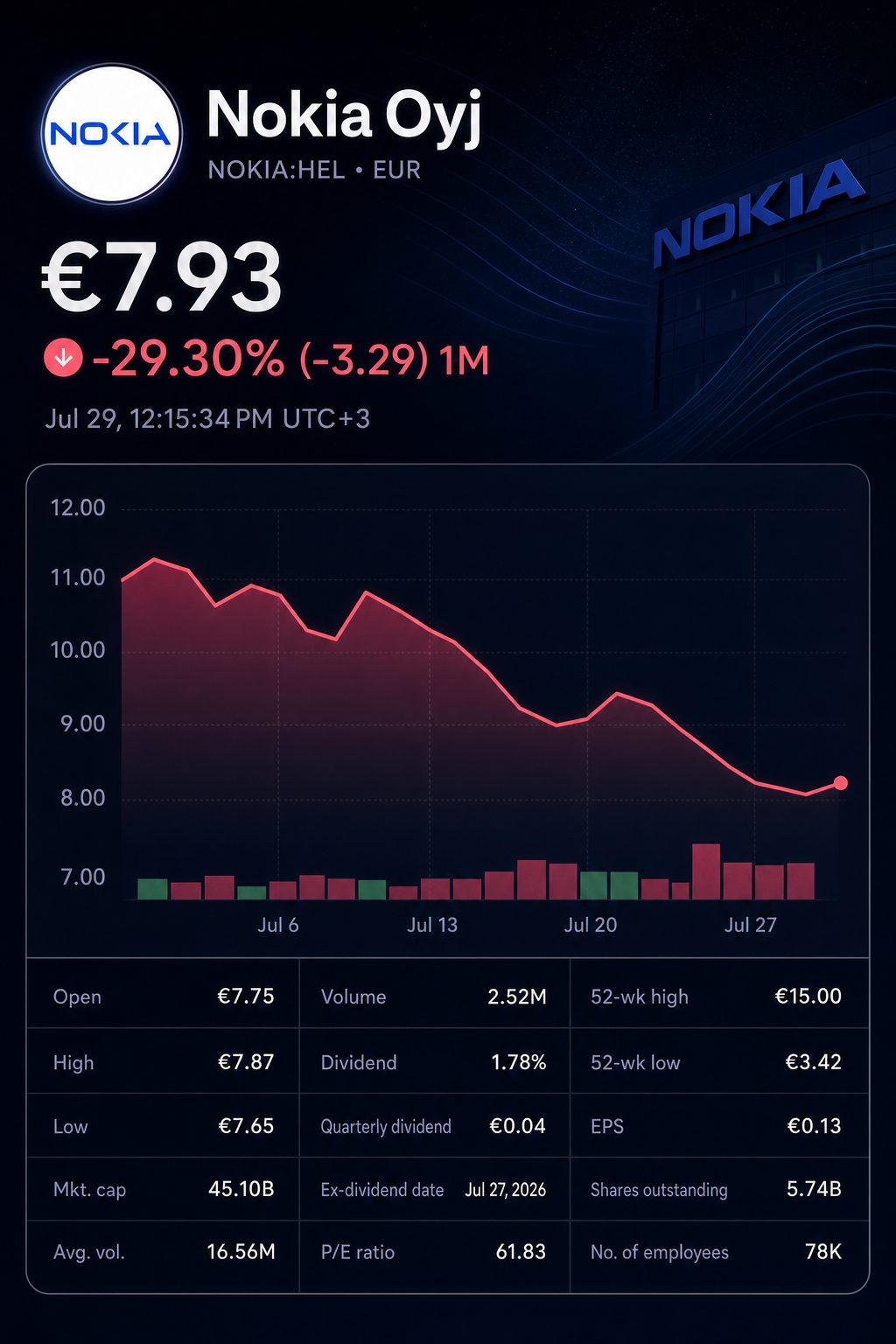
- Nokia slipped 0.95%, changing hands at €7.75 after the Helsinki market opened.
- AI and cloud orders in the second quarter were 6.3 times higher than the quarter’s sales.
- Nokia’s increased upper end of its 2026 profit outlook is due to accounting factors rather than improved business performance.
Nokia Oyj HEL:NOKIA hovered close to €7.75 by midday Wednesday, deepening losses seen after its latest results. Shares have fallen roughly 15.4% since the July 22 close.
The company’s U.S. depositary shares declined by 3.3% on Tuesday. The Nasdaq Composite eased 0.2%. Shares continued to lag in Helsinki.
The trading pattern indicates a worry over conversion rather than weak demand. Nokia has secured AI orders more quickly than it has reported sales.
Based on company filings, AI and cloud orders in Q2 were 6.3 times higher than the quarter’s sales. In contrast, the Q1 proxy stood at roughly 2.8 times.
| AI and cloud indicator | Q1 2026 | Q2 2026 |
|---|---|---|
| Sales | ~€360 million | €446 million |
| New order intake | €1.0 billion | €2.8 billion |
| Order to sales ratio | 2.8 times | 6.3 times |
| Sales increase, year-over-year | 49% | 105% |
Initial estimate: First-quarter sales represent 8% out of €4.5 billion in group sales on a comparable basis. Second-quarter sales were reported directly.
The proxy increased by over two times in just one quarter. This is separate from Nokia’s official book-to-bill metric. Nonetheless, it indicates that delivery commitments have grown faster than recorded revenue.
Chief Executive Justin Hotard stated, “Demand remains strong, while supply continues to be the main industry constraint.” Nokia anticipates about half of the €2.8 billion intake will convert over the next 12 months. Nokia Corporation | Nokia
The timing of the conversion window is important. Extending lead times increases transparency but delays both revenue and cash flow.
Nokia’s updated profit forecast of €2.1 billion to €2.6 billion contains no improvement in operations. The €100 million rise simply results from two units shifting to discontinued operations.
Management forecasts Q3 sales will increase by 3% to 7% from the previous quarter. Comparable operating profit is projected to hold steady, with growth anticipated in Q4.
Comparable operating profit for Q2 increased by 18% to €434 million, surpassing the analyst consensus of €382 million. Revenue advanced 8% to €4.82 billion.
Nokia posted a €50 million operating loss as it sped up restructuring, and reported softer results. The company projects restructuring cash outflows between €700 million and €800 million for this year.
Operating margin at Network Infrastructure increased to 8.1% compared with 6.4%. Mobile Infrastructure reported a margin decline to 11.6% from 12.2%.
Peer Ericsson NASDAQ:ERIC is facing similar cost challenges. The stock dropped almost 12% following a warning regarding increased memory-chip expenses.
That pressure does not eliminate Nokia’s growth in orders. Instead, it increases the expense of fulfilling them.
Risks: Conversion may be postponed if semiconductor supplies remain tight, component prices climb, or customers build products more slowly. Nokia also relies on a stronger profit contribution in Q4, which reduces flexibility for any timing delays.
The focus now shifts to conversion. Orders are no longer in short supply.
Related articles: HEL:NOKIA