SANTA CLARA, August 10, 2026, 23:15 EDT
- Intel intends to offer $15 billion in common stock, featuring a $2.25 billion option for underwriters.
- The base offer represents 75% of Intel’s projected $20 billion capital spending for 2026.
- By the close on Monday, the base deal suggests an approximate 3.1% rise in the number of shares outstanding.
Intel NASDAQ:INTC intends to issue $15 billion in common equity, taking advantage of a strong rally in its shares to help finance its expensive manufacturing expansion.
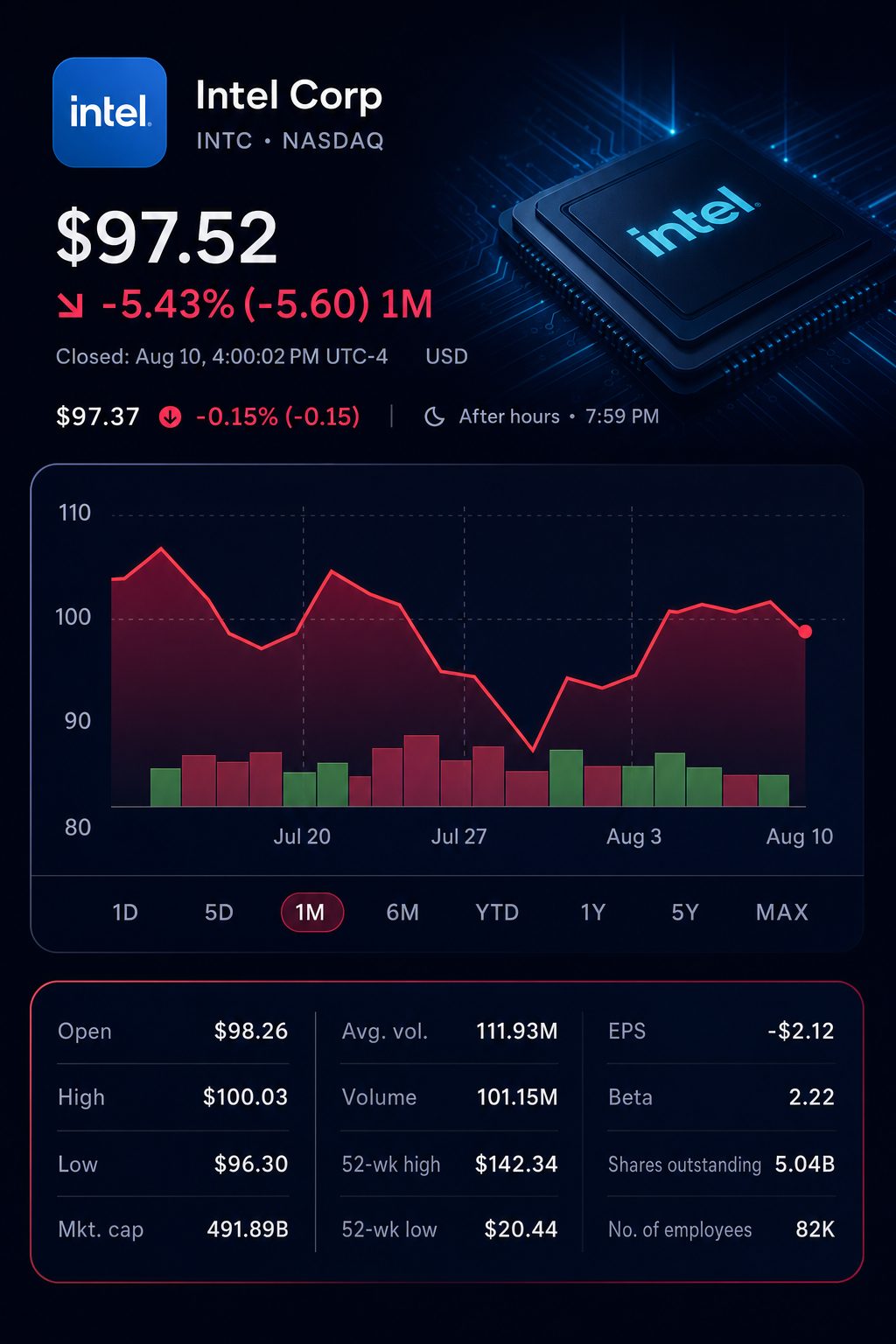
Timing holds greater significance than the headline dilution. Based on Monday’s closing price of $97.52, the base offering translates to approximately 154 million additional shares, or about 3.1% of Intel’s share count in January.
In exchange, Intel secures funds amounting to 75% of its capital expenditure planned for this year. Shares dropped over 4% on Monday. Prior to the sale, the stock had almost tripled in 2026.
| Offering measure | Base deal | With full option |
|---|---|---|
| Gross proceeds | $15.00 billion | $17.25 billion |
| Example share count at $97.52 | 153.8 million | 176.9 million |
| Change compared with 4.995 billion shares | 3.1% | 3.5% |
| Portion of 2026 capex matched | 75.0% | 86.3% |
Intel announced a $15 billion share sale along with a 30-day option to issue an additional $2.25 billion. The share calculations are based on Monday’s closing price. Ultimately, the actual dilution will be determined by the final price set in the offer. As of January 16, Intel’s outstanding shares stood at 4.995 billion.
The increase makes valuation a key part of financing strategy. This year, Intel has performed ahead of Advanced Micro Devices NASDAQ:AMD, Nvidia NASDAQ:NVDA, as well as the Philadelphia Semiconductor Index. The index climbed almost 75% as of Monday.
| Market or analyst measure | Earlier level | Latest level | Change |
|---|---|---|---|
| Intel share performance in 2026 | Start of year | Almost tripled by Monday’s close | Around +200% |
| Philadelphia Semiconductor Index in 2026 | Start of year | Up nearly +75% | Roughly +75% |
| Visible Alpha Q3 Data Center and AI revenue estimate | $4.1 billion | $6.6 billion | +61% |
| Intel 2026 capital-spending forecast | $18 billion | $20 billion | +11% |
Analysts’ third-quarter forecast for Intel’s Data Center and AI revenue increased by $2.5 billion compared to a year earlier. The upgrade reflects heightened demand for AI agent server processors. In July, Intel boosted its capital spending as demand surpassed available capacity.
Russ Mould, investment director at AJ Bell, said “it makes perfect sense for Intel to raise money, especially after a five-fold increase in the stock price since last August.” Reuters
That stance marks a reversal of Intel’s previous capital strategy. Mould says the company allocated $82 billion to share repurchases during the 2010s. The current base sale retrieves just 18% of that figure.
| Capital comparison | Amount | Base offering as a share |
|---|---|---|
| Intel 2026 projected capital spending | $20.00 billion | 75.0% |
| Ireland factory investment | $5.77 billion equivalent | 2.6 times the project |
| Intel’s stock buybacks in the 2010s | $82.00 billion | 18.3% |
| Rise in 2026 capital expenditure outlook | $2.00 billion | 7.5 times the increase |
The table shows gross proceeds alongside released spending numbers. Intel’s €5 billion investment in Ireland equates to $5.77 billion at the Reuters-applied exchange rate. This sum amounts to over a quarter of the capital spending plans scheduled for 2026.
The cash alone does not address the foundry issue. Intel continues to require consistent manufacturing yields, reliable outside orders and costs that can compete. Taiwan Semiconductor Manufacturing NYSE:TSM is still the leading contract chipmaker.
Intel aims to begin mass production using its 14A process in 2028. The announcement came after previous cautions that the node might be cancelled if a significant external customer was not secured. The coming two years will determine if investment can be translated into marketable capacity.
Intel is seeing demand shift in its direction. “The next wave of AI will bring intelligence closer to the end user, moving from foundational models to inference to agentic,” Chief Executive Lip-Bu Tan stated in April. Intel
| Intel equity funding event | Amount | Terms or investor |
|---|---|---|
| SoftBank share offering, 2025 | $2.0 billion | 87 million shares priced at $23.00 |
| Nvidia share offering, 2025 | $5.0 billion | 215 million shares priced at $23.28 |
| U.S. government transaction, 2025 | $8.9 billion | CHIPS and Secure Enclave funds exchanged for equity |
| Planned public offering, 2026 | $15.0 billion | Common stock deal with underwriting |
Intel previously secured $15.9 billion by completing three significant equity deals set for 2025. The latest offering nearly equals that sum in a single move, marking a bigger and more market-sensitive capital-raising effort.
JPMorgan Chase NYSE:JPM, Goldman Sachs NYSE:GS, Morgan Stanley NYSE:MS, and Citigroup NYSE:C are acting as joint bookrunners. The distribution of their allocation will indicate the extent of demand from long-only investors versus interest from short-term trading accounts.
Risks: The eventual price may further dilute shares. Losses at the foundry, poor production yields, or slower-than-expected customer onboarding could consume funds without boosting returns. A pullback in AI expenditure could also reduce CPU demand and weigh on Intel’s valuation.
The next drivers are the offer price and the definitive number of shares. Strong demand paired with a modest discount would support the case for the trade. If the discount is substantial, it could indicate that Intel’s stock surge has surpassed investor willingness to support its manufacturing costs.
Related articles: NASDAQ:INTC