
NEW YORK, August 14, 2026, 16:22 EDT — As U.S. cash markets remained shut, after-hours trading saw heightened activity.
- U.S. 30-year real yields hovered close to 3%, marking their highest in 18 years.
- AI hyperscalers have sold nearly $220 billion in bonds due in 2026.
- Equities remain supported by robust earnings, though access to capital is tightening.
An influx of AI-linked bond issuance totaling $220 billion is intersecting with significant government debt sales, pushing inflation-adjusted yields higher in key global markets. This trend stands out as the dominant cross-asset theme to watch in the coming week.
The U.S. 30-year real yield is close to 3%, marking an 18-year peak. Ten-year real yields in both the UK and Germany are hovering at levels not seen in about a decade. On Thursday, Washington issued 30-year paper at a 5.22% yield, the highest rate at auction since 2001.
This is significant since real yields determine the inflation-adjusted benchmark for investment. When real yields are higher, bonds become more attractive compared to equities. Elevated real yields also diminish the present value of cash flows expected in the future.
| Capital-demand measure | 2025 | 2026 | Change |
|---|---|---|---|
| Bond issuance by three major AI hyperscalers | $108 billion | Nearly $220 billion YTD | More than doubled |
| Big Tech AI spending | Roughly $400 billion | More than $700 billion forecast | Up at least 75% |
| U.S. budget deficit | — | Close to $1.9 trillion, equivalent to 6% of GDP | Significant competing funding requirement |
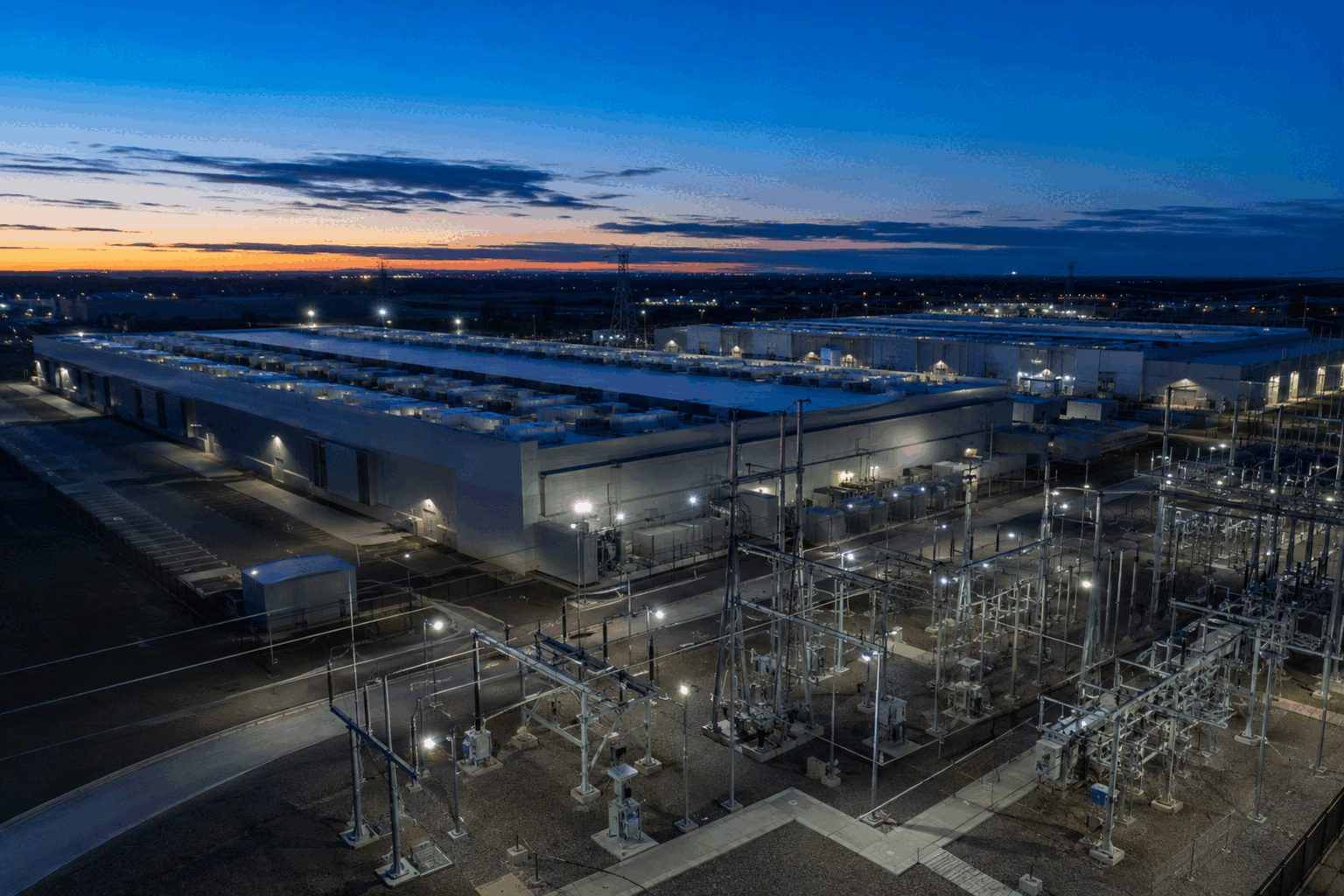
Nearly $220 billion comes from Alphabet NASDAQ:GOOGL, Amazon NASDAQ:AMZN and Meta Platforms NASDAQ:META. Their issuance has already more than doubled the total for the whole of 2025. Big Tech’s AI investment is expected to exceed $700 billion this year, compared to $400 billion previously.
| Yield benchmark | Latest level or condition | Historical context |
|---|---|---|
| U.S. 30-year real yield | Roughly 3% | Close to an 18-year peak |
| U.S. 30-year auction yield | 5.22% | Most elevated since 2001 |
| UK 10-year real yield | Hovering near cycle peak | Top level in more than ten years |
| German 10-year real yield | Hovering near cycle peak | Top level in more than ten years |
Government funding adds to the strain. France’s deficit is close to 5% of GDP, while Britain’s hovers around 4%. With central banks reducing their bond purchases, private investors are left to take on a greater share of new debt issuance.
“There’s a competition for capital which is relatively unprecedented in recent times,” Vivek Paul of BlackRock NYSE:BLK said. He attributed the limited capital to the rapid expansion of AI infrastructure. Reuters interview
Stocks have remained resilient despite the pressure. The S&P 500 finished Friday at 7,785.76, slipping 0.17%. The Nasdaq Composite fell 0.28%, and the VIX ended the session at 14.23.
| Market | Friday level | Move | Signal |
|---|---|---|---|
| S&P 500 | 7,785.76 | -0.17% | Close to all-time high |
| Dow Jones | 53,732.53 | -0.20% | Defensive sentiment |
| Nasdaq Composite | 26,729.16 | -0.28% | Long-duration assets under pressure |
| VIX | 14.23 | -2.73% | Low level of equity volatility concerns |
| Brent crude | $88.33 | +1.45% | Increase in inflation risk |
| Gold | $4,380.03 | +0.69% | Safe-haven demand |
| Dollar index | 99.67 | -0.25% | Expectations for lower rates |
| Bitcoin | $62,929 | -0.77% | Subdued risk appetite |
Earnings underpin the market’s stability. Roughly 85% of S&P 500 firms that have reported exceeded forecasts. Excluding mark-to-market increases from Alphabet and Amazon, profits climbed 32.7%. U.S. equity funds attracted $2.58 billion in inflows during the week ending August 12.
The breakdown of flows highlights a clear trend. Growth funds received $8.78 billion, marking their best week since November 2024. Meanwhile, technology funds saw outflows of $4.62 billion. Bond funds collected $9.4 billion, primarily into shorter-duration investment-grade and Treasury products.
| Analyst or investor | Recommendation or view | Investor implication |
|---|---|---|
| Ashok Bhatia, Neuberger | Maintains a cautious stance on long-term bonds | Continued fiscal supply could sustain higher term yields |
| Matt King, Satori Insights | Sees real yields climbing until borrowing cools | Prefers investments offering near-term cash returns |
| Max Kitson, Barclays LON:BARC | Notes ongoing structural pressure on yields | Advises against expecting a swift recovery in bonds |
| Chris Grisanti, MAI Capital | Views earnings as the main strength for stocks | Investors should prioritize consistent profit over AI expenditure |
The upcoming hurdle is economic rather than just technical. Ashok Bhatia projects that real yields climbing to between 3% and 4% could start to weigh on growth. U.S. growth is still in the 1.5% to 2% range, but the point of concern is not far off.
Walmart NYSE:WMT and Analog Devices NASDAQ:ADI earnings will put investor sentiment to the test. The Federal Reserve is expected to provide limited guidance until Jackson Hole, set for August 27–29. Rising oil prices and escalating U.S.-Iran tensions continue to pose the most immediate risks for heightened inflation expectations.
Risks: Another surge in oil prices may drive up both inflation and nominal yields. On the other hand, slower growth or underwhelming AI gains could reduce issuance, weigh on earnings, and spark a quick move into long-term bonds.
The investor test is straightforward: earnings are required to surpass the increasing real discount rate. If this does not occur, capital scarcity—initially seen in bonds—could extend into worldwide risk assets.
Related articles: NASDAQ:META