
HSINCHU, Taiwan, August 24, 2026, 19:34 CST – United Microelectronics Corp (UMC) shares rose 6% after the company maintained its confidence in its AI foundry strategy despite a wider sector selloff affecting semiconductor stocks.
- Shares of UMC in the U.S. climbed 6.2% to $19.48 ahead of Monday’s market open.
- The move boosted its market capitalization by an initial $2.85 billion.
- Taiwan-listed stocks rose 6.0%, as the domestic benchmark slipped 1.0%.
- The ADR was trading 5.1% higher than the average price target set by Wall Street analysts.
Shares of United Microelectronics Corporation NYSE: UMC surged 6.2% to $19.48 in U.S. premarket trade on Monday. The increase came as the iShares Semiconductor ETF NASDAQ: SOXX slipped 2.1%. Price data was captured from 06:00 to 07:16 EDT.
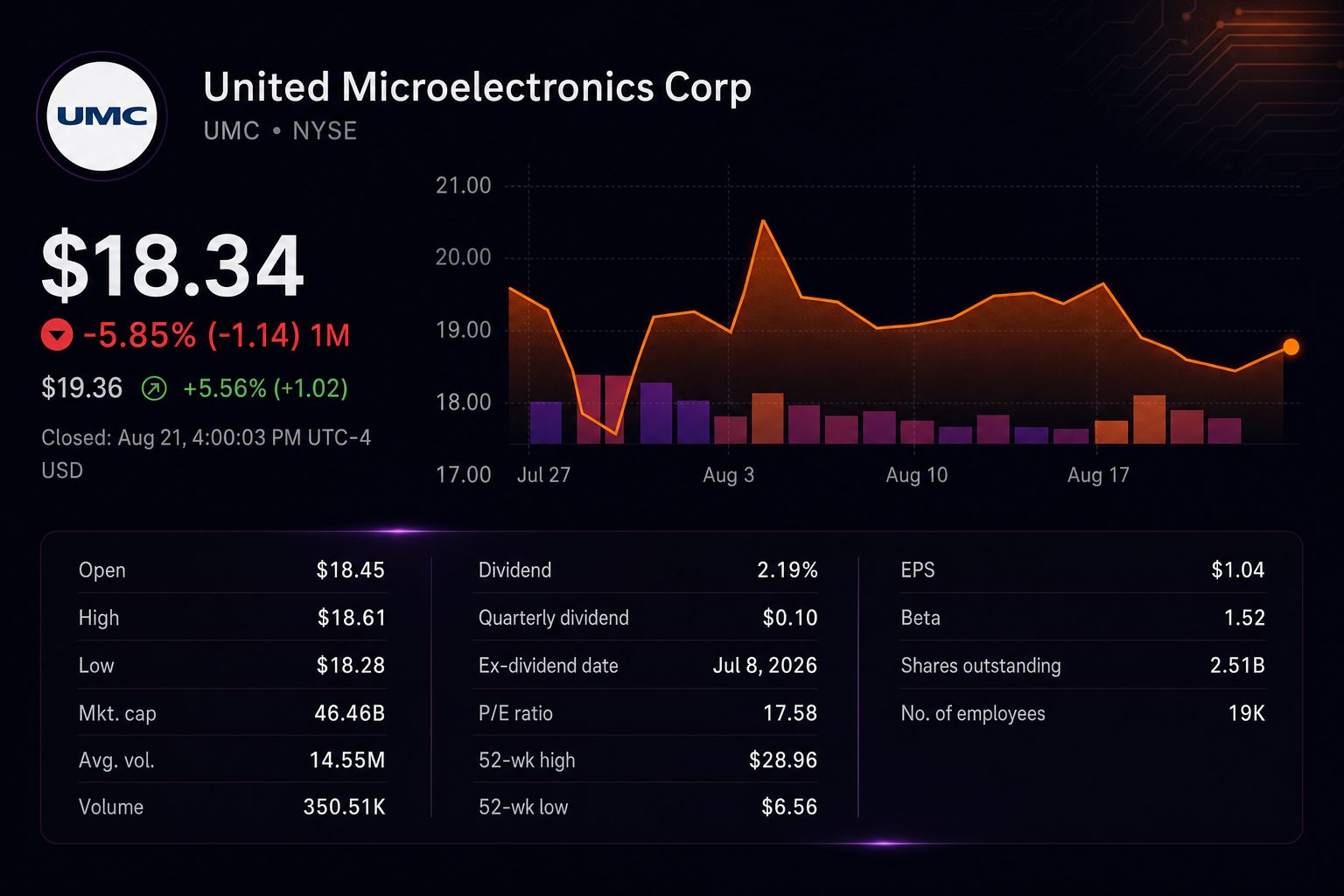
The surge increased UMC’s market value by approximately $2.85 billion, referencing Friday’s market cap. That early boost is equivalent to 1.43 times the foundry’s projected capital expenditure for 2026.
Taiwan investors acted ahead. UMC finished at NT$123.50, gaining 6.0%, as the Taiex slipped 1.0%. The 7.0-point difference indicates targeted stock buying, rather than a market-wide move.
| Security | Price | Move | Data time |
|---|---|---|---|
| UMC ADR | $19.48 | up 6.22% | 06:00 EDT |
| Taiwan Semiconductor Manufacturing Co. NYSE: TSM | $414.77 | down 1.00% | 07:16 EDT |
| GlobalFoundries Inc. NASDAQ: GFS | $47.36 | down 1.44% | 06:20 EDT |
| SOXX ETF | $509.30 | down 2.07% | 07:05 EDT |
There was no new corporate filing released with Monday’s movement. Market participants turned their attention back to a stronger operational rebound and UMC’s expanding role in AI infrastructure. Nasdaq futures were down 0.6% ahead of Nvidia’s earnings, highlighting the variation.
Revenue for the second quarter increased 12.6% from the previous quarter to NT$68.73 billion. Utilization improved to 85%, compared to 79% in the first quarter. Gross margin widened by 3.3 percentage points.
| Operating measure | Q2 2026 | Q1 2026 | Q2 2025 |
|---|---|---|---|
| Revenue | NT$68.73bn | NT$61.05bn | NT$58.76bn |
| Gross margin | 32.5% | 29.2% | 28.7% |
| Utilization | 85% | 79% | 76% |
| Shipments, 12-inch equivalents | 1.129m | 1.021m | 0.968m |
UMC CEO Jason Wang said the company needs to “prepare in advance” for opportunities from AI. Management forecasts third-quarter shipments will increase by a high-single-digit percentage and predicts utilization will top 90%. UMC results statement
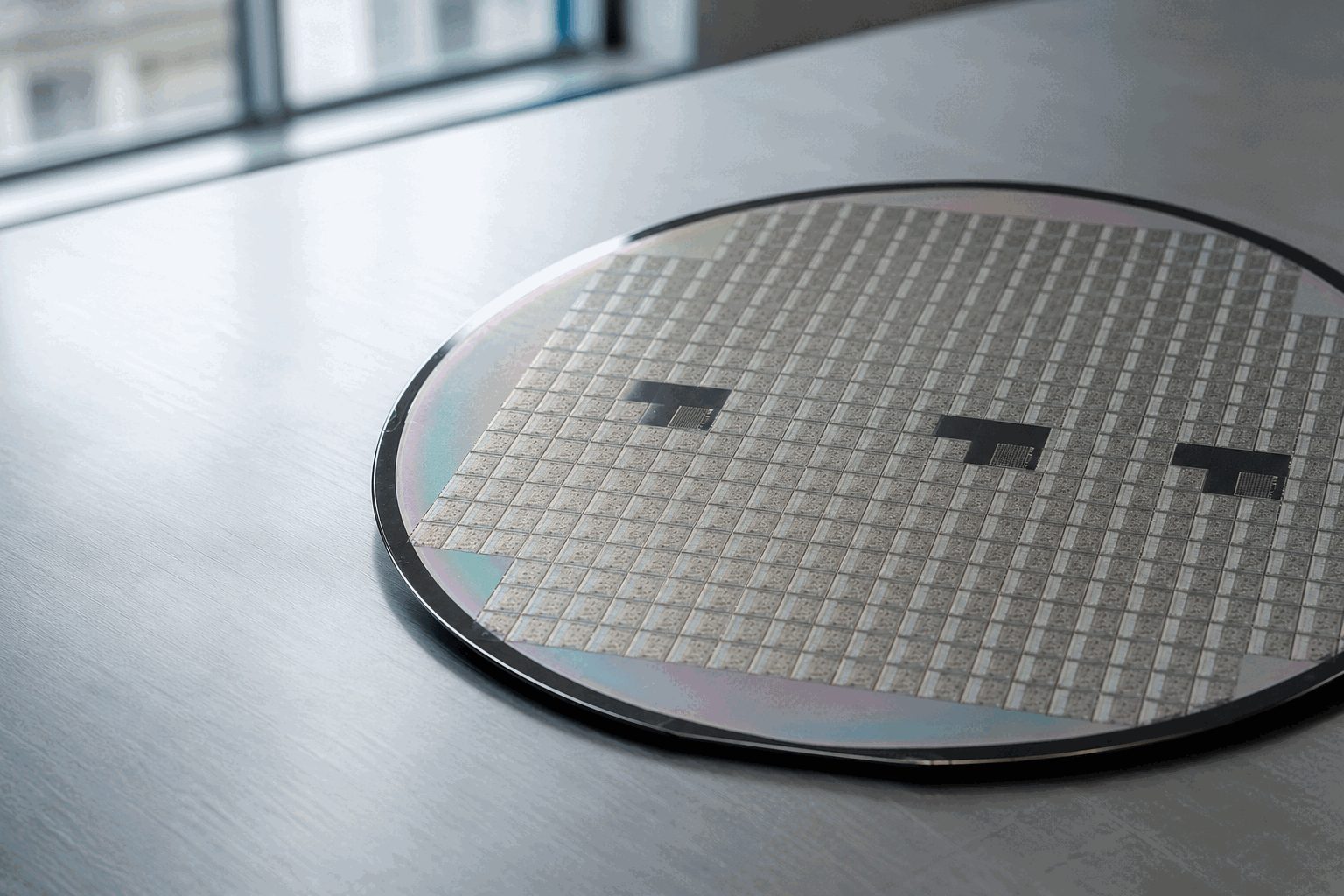
Part of the preparations involves silicon photonics. UMC began volume shipments of its photonics wafers from Singapore in July. The company’s 1.6-terabit platform is designed for cloud data connectivity, with wider customer availability scheduled for 2027.
| Investor bridge | Value | Reading |
|---|---|---|
| Preliminary value lift on Monday | $2.85bn | 6.22% increase on Friday’s market value |
| Projected capital expenditure for 2026 | $2.00bn | Boosted by growth in Singapore and Taiwan |
| Value increase / yearly capex | 1.43x | Market rally surpasses one-year investment plan |
| UMC differential against SOXX | +8.29 points | Premarket outperformance margin |
The stock’s value has outpaced stated targets, with the ADR at $19.48—5.1% higher than the $18.49 average target. The four analysts surveyed continue to rate it as a Sell.
| Analyst assessment | Action | Price target | Issued |
|---|---|---|---|
| Arete Research | Buy | Not disclosed | Aug. 10, 2026 |
| Bernstein SocGen | Sell | $13.60 | July 28, 2026 |
| BNP Paribas Exane | Hold | Not disclosed | March 31, 2026 |
| S&P Global poll, 4 analysts | Sell consensus | $18.49 average | Aug. 24, 2026 |
The spread is still significant. The floor target stands at $10.80, while the ceiling is $33.76. Monday’s share price is about halfway between these two levels.
Risks: Premarket advances may not hold after trading starts. Supply for mature nodes is still subject to cycles, and fluctuations in currency can impact ADR performance. UMC’s net profit for the second quarter also reflected a NT$30.05 billion gain from investments.
Investors are set to test the rally, focusing on trading volume and management’s third-quarter outlook. Sustaining the peer spread would indicate confidence in utilization and pricing, while a pullback could signal that the rotation is temporary.
Related articles: Semiconductors