
New York, August 31, 2026, 04:07 (ET)
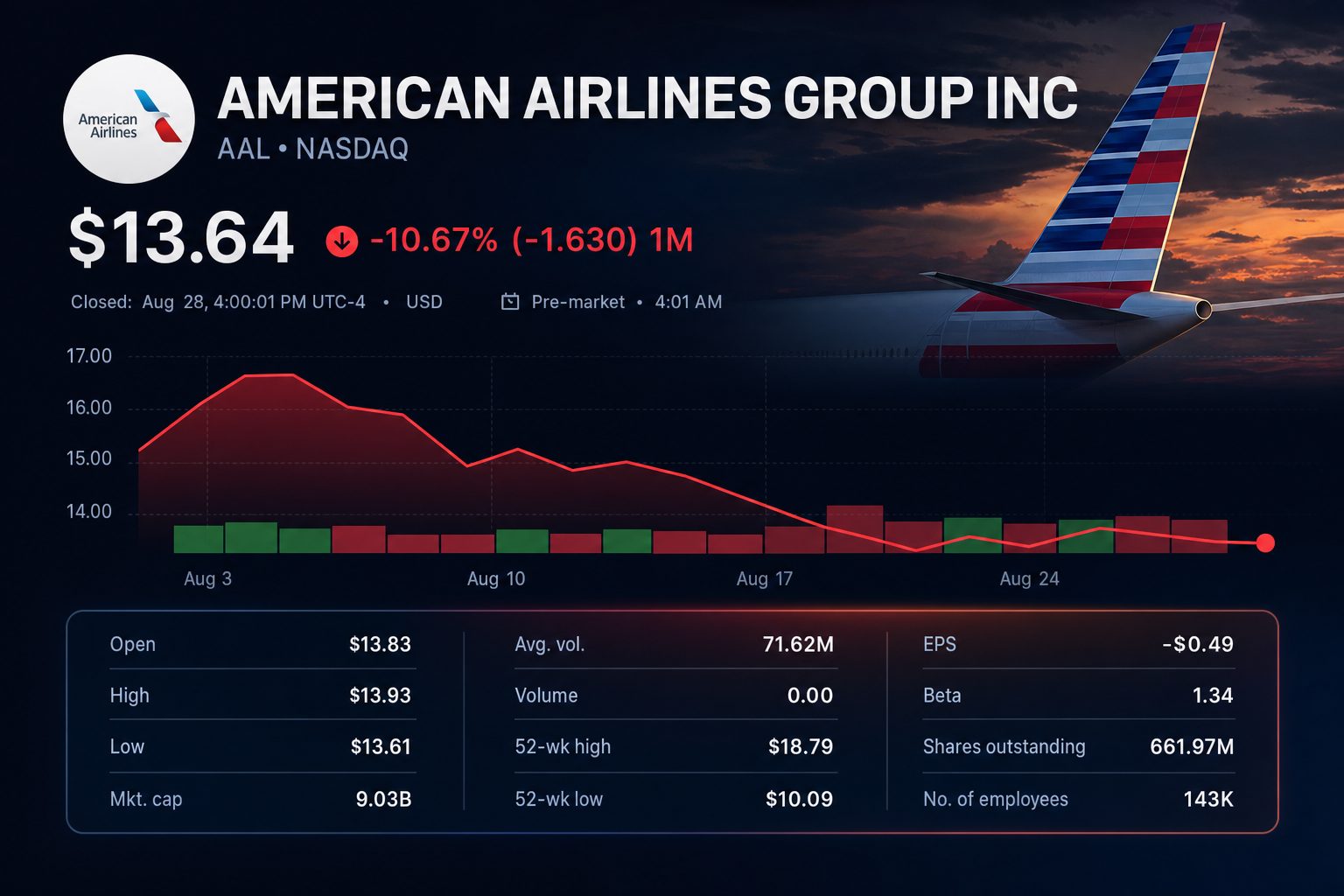
- American ended Friday at $13.64, a decline of 0.6%, with roughly 63.5 million shares traded.
- Revenue for the second quarter increased by 16.3% to reach an all-time high of $16.7 billion.
- GAAP net income totaled just $71 million, representing a net margin of 0.4%.
- Fuel costs rose by over $2.2 billion compared to the previous year.
Shares of American Airlines Group Inc. NASDAQ:AAL dropped 0.6% on Friday, with investors considering record revenue versus a sharp decline in profit due to higher fuel costs.
The carrier posted second-quarter revenue of $16.7 billion, but reported just $71 million in GAAP net profit, producing a margin of 0.4%.
The investment challenge lies in that gap. The airline reported that robust demand helped counter approximately half of a year-on-year fuel expense rise of more than $2.2 billion.
Adjusted earnings reached $0.15 per share, surpassing the consensus estimate of $0.03 reported by Investing.com. Premium revenue climbed by 19%, and revenue from corporate travel was up 26%.
| Metric | Q2 2026 | Q2 2025 | Investor read-through |
|---|---|---|---|
| Revenue | $16.7bn | $14.4bn | Demand and pricing hit new highs |
| GAAP net income | $71m | $599m | Fuel costs offset increases |
| Net margin | 0.4% | 4.2% | Minimal cushion against shocks |
| Liquidity | Not updated here | $12.0bn | Strong balance sheet still key |
American projects third-quarter capacity will increase by 3% to 5%. Executives also said that fuel costs close to $3.75 per gallon might raise expenses by about $1.7 billion.
The adjusted full-year earnings forecast ranges from a loss of $0.65 to a profit of $0.65. The midpoint stands at zero, highlighting the company’s slim operating margin.
Friday saw a milder move compared to Delta Air Lines Inc. NYSE:DAL and United Airlines Holdings Inc. NASDAQ:UAL. Shares of Delta declined 1.3%, and United slipped 1.6%.
Analyst price targets are generally positive but show wide variation. The consensus average stands at roughly $18.50, with projections spanning from $10 up to $25.
The $13.64 average suggests potential gains of around 36%. The wide range highlights ongoing questions over fuel prices, ticket pricing, capacity controls and leverage.
Risks: A drop in oil prices or increased premium demand may swiftly improve margins. However, weaker demand, operational issues, or a prolonged surge in jet fuel costs could result in earnings falling short of the guidance range.
The next boost in valuation requires more than just rising revenue. Investors are looking for evidence that record sales can endure fuel price swings and consistently generate sustainable free cash flow.
Related articles: NASDAQ:AAL