
SYDNEY, August 18, 2026, 23:54 AEST
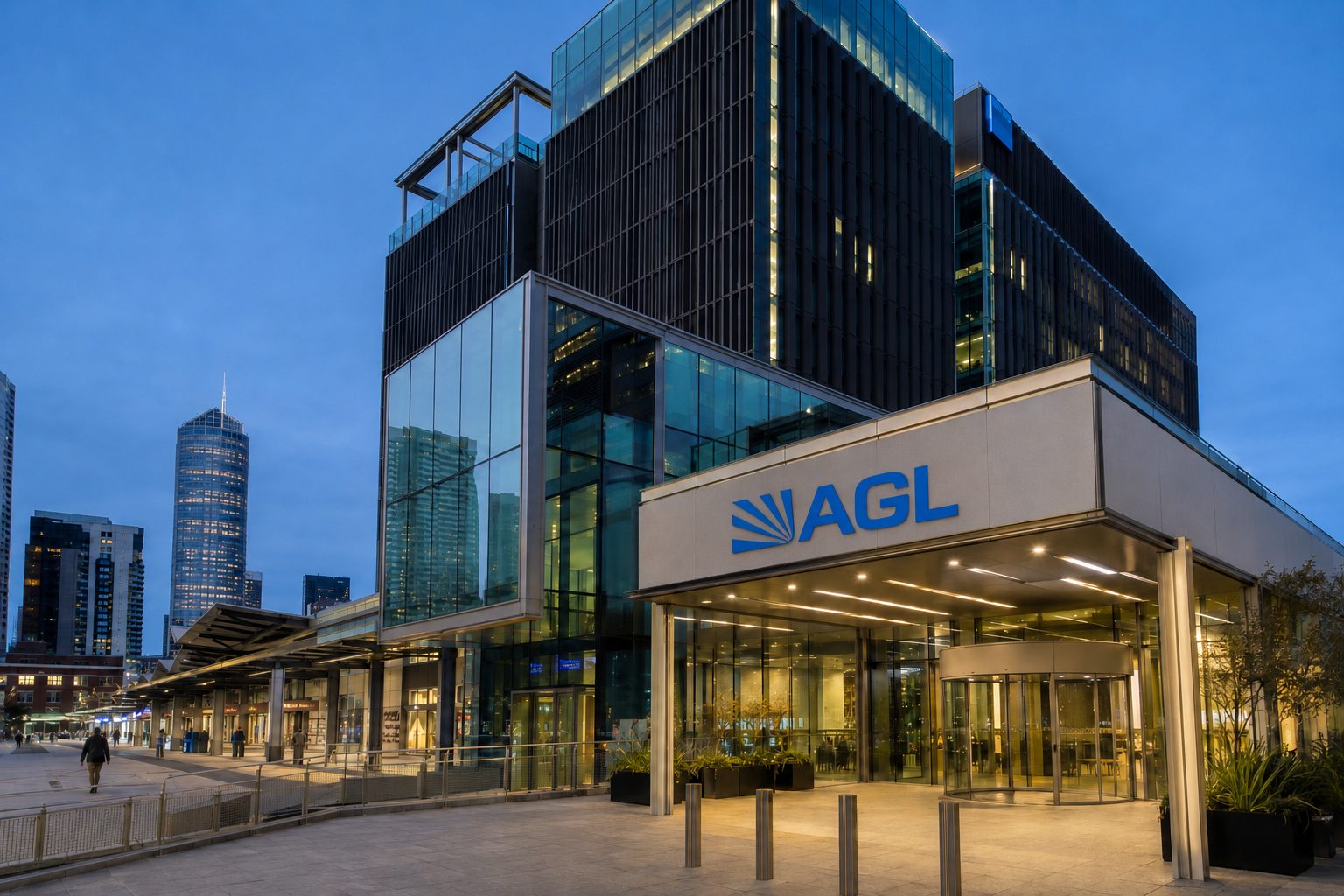
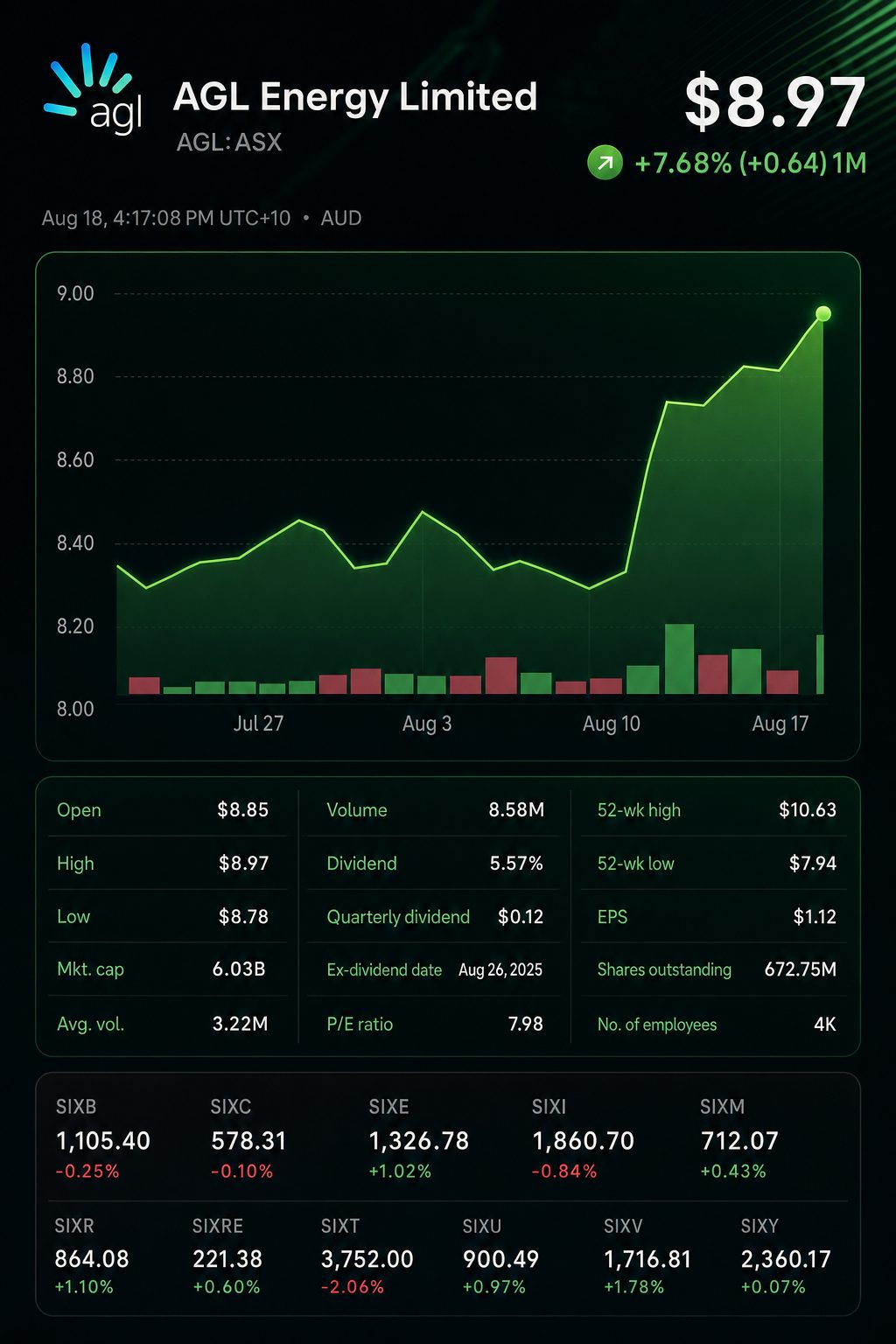
Shares in AGL Energy Limited ASX:AGL gained 1.9% on Tuesday, with investors considering both a significant decline in wholesale electricity prices and the utility’s increasing capacity to benefit from brief periods of market volatility. The stock finished at A$8.97 following a volume of 8.58 million shares traded, roughly 2.7 times its recent daily average.
Investors no longer debate if renewables cut electricity prices—they do. The focus has shifted to whether AGL’s batteries, hedges, and flexible generators can maintain adequate spread as average prices decline.
The latest market data underscored that tension. The average price on Australia’s National Electricity Market was A$74 per megawatt-hour in the June quarter, representing a 47% drop from the same period a year ago. For a second consecutive quarter, renewables provided a record 42.1% of supply.
| Q2 market measure | Q2 2026 | Year-on-year change |
|---|---|---|
| NEM average wholesale spot price | A$74/MWh | -47% |
| Renewable share of generation | 42.1% | +5.0 percentage points |
| Evening grid-battery discharge | — | +228% |
| Dispatch intervals when batteries set prices | 36% | +19 percentage points |
AGL’s contracted generation book comes under pressure from declining average prices. However, increasing solar and wind capacity has potential to broaden intraday spreads. Batteries absorb power during low-price periods and release it when supply becomes limited.
AGL’s data demonstrates that option value. The company’s flexible fleet achieved 118% of the time-weighted market price for fiscal 2026, an increase of five points compared to the prior year. Operated batteries generated EBITDA of A$57 million, up by A$10 million.
Chief Executive Damien Nicks stated the fleet delivered that premium “in a period of lower volatility.” He added that increasing investment in flexible assets is expected to expand the premium in the future. AGL FY26 results presentation
| AGL measure | FY26 | FY25 | Change |
|---|---|---|---|
| Underlying EBITDA | A$2.10bn | A$2.06bn | up 2% |
| Underlying net profit | A$631m | A$642m | down 2% |
| Operating free cash flow | A$850m | A$531m | higher by 60% |
| Operated-battery EBITDA | A$57m | A$47m | increase of 21% |
| Fleet realised-price ratio | 118% | 113% | rise of 5 points |
The hedge remains modest. Battery EBITDA accounted for only 2.7% of the group’s underlying EBITDA. This proportion is expected to increase following the start of operations at the 500-megawatt Liddell Battery in July.
Management anticipates reporting a complete year of Liddell earnings in fiscal 2027. It forecast underlying EBITDA between A$1.9 billion and A$2.2 billion, and underlying profit in the range of A$470 million to A$670 million. The midpoint of that profit outlook came in above the A$550.8 million Visible Alpha estimate referenced by Reuters.
The range is broad. Ongoing headwinds include reduced contracted power prices and the expiration of lower-cost gas contracts. AGL stated that steady retail margins, decreased costs and profits from batteries are expected to help balance these challenges.
| ASX energy company | Aug 18 closing price | Change on day |
|---|---|---|
| AGL Energy ASX:AGL | A$8.97 | +1.93% |
| Origin Energy ASX:ORG | A$12.11 | +1.00% |
| APA Group ASX:APA | A$10.01 | +0.30% |
On Tuesday, AGL led gains among the three energy companies. Increased trading volumes indicate that investors are continuing to adjust holdings following last week’s results, during which AGL climbed up to 6.1% in a single session.
| Analyst measure | Current reading | Implied move from A$8.97 |
|---|---|---|
| Consensus rating | Neutral: 5 Buy, 2 Hold, 2 Sell | — |
| Average 12-month target | A$10.43 | +16.3% |
| High target | A$12.00 | +33.8% |
| Low target | A$7.75 | -13.6% |
The analyst range reflects the division. Supporters highlight a 118% realised-price ratio and increased battery capacity. Critics note that battery earnings are still limited compared to the established fleet.
Risks: Unusually warm weather, minimal volatility, or a steeper drop in wholesale prices may drive profit to the lower bound of guidance. Disruptions at plants, gas prices, timing setbacks on projects, and changes in policy may further impact cash flow.
In the coming week, investors will monitor if AGL maintains its gains following its results. APA is set to report full-year results on August 20, providing further insight into Australian energy sector capital expenditures and financing expenses.
AGL’s flexibility premium is reflected in its cleaner signal. Should battery EBITDA increase and the 118% ratio remain stable, a drop in average power prices does not have to lead directly to a similar decrease in earnings. However, if either metric weakens, the 47% fall in market prices will have a greater impact.
Related articles: Energy