Browse Category

Night Sky 24 June 2025 - 19 August 2025

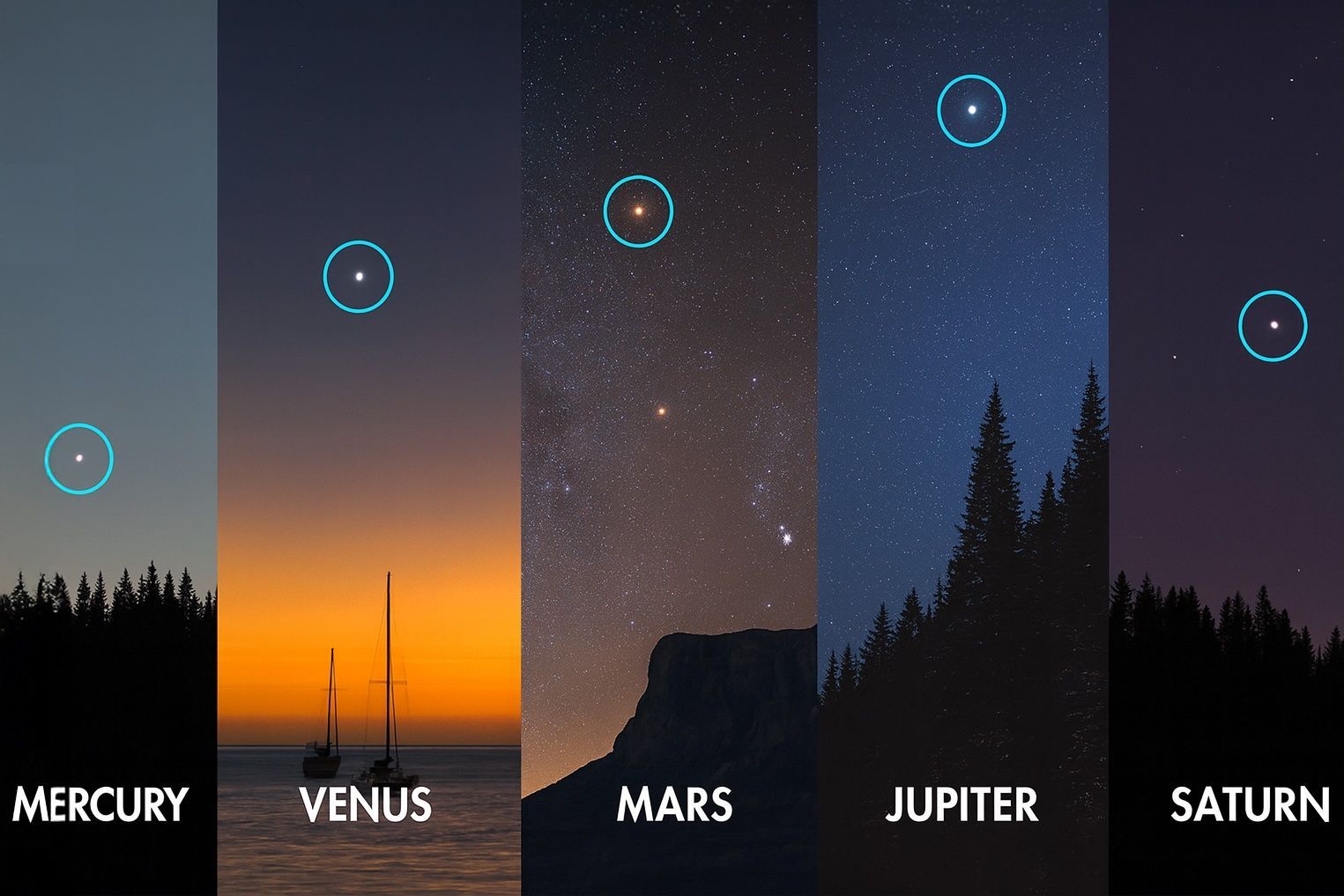
Six Planets Will Align in the Sky This Month—Here’s When and How to Watch the Rare “Planet Parade”

Sky Spectacle Alert: Rare Planet Parade Converges with a Black Moon – Here’s What to Know

A six-planet alignment—Mercury, Venus, Jupiter, Saturn, Uranus, and Neptune—will be visible in the pre-dawn sky August 17–20, 2025, peaking around August 18–19. A rare Black Moon occurs at 2:06 a.m. EDT on August 23, creating darker skies for stargazing. Mercury, Venus, Jupiter, and Saturn can be seen with the naked eye; Uranus and Neptune require binoculars or a small telescope.
19 August 2025
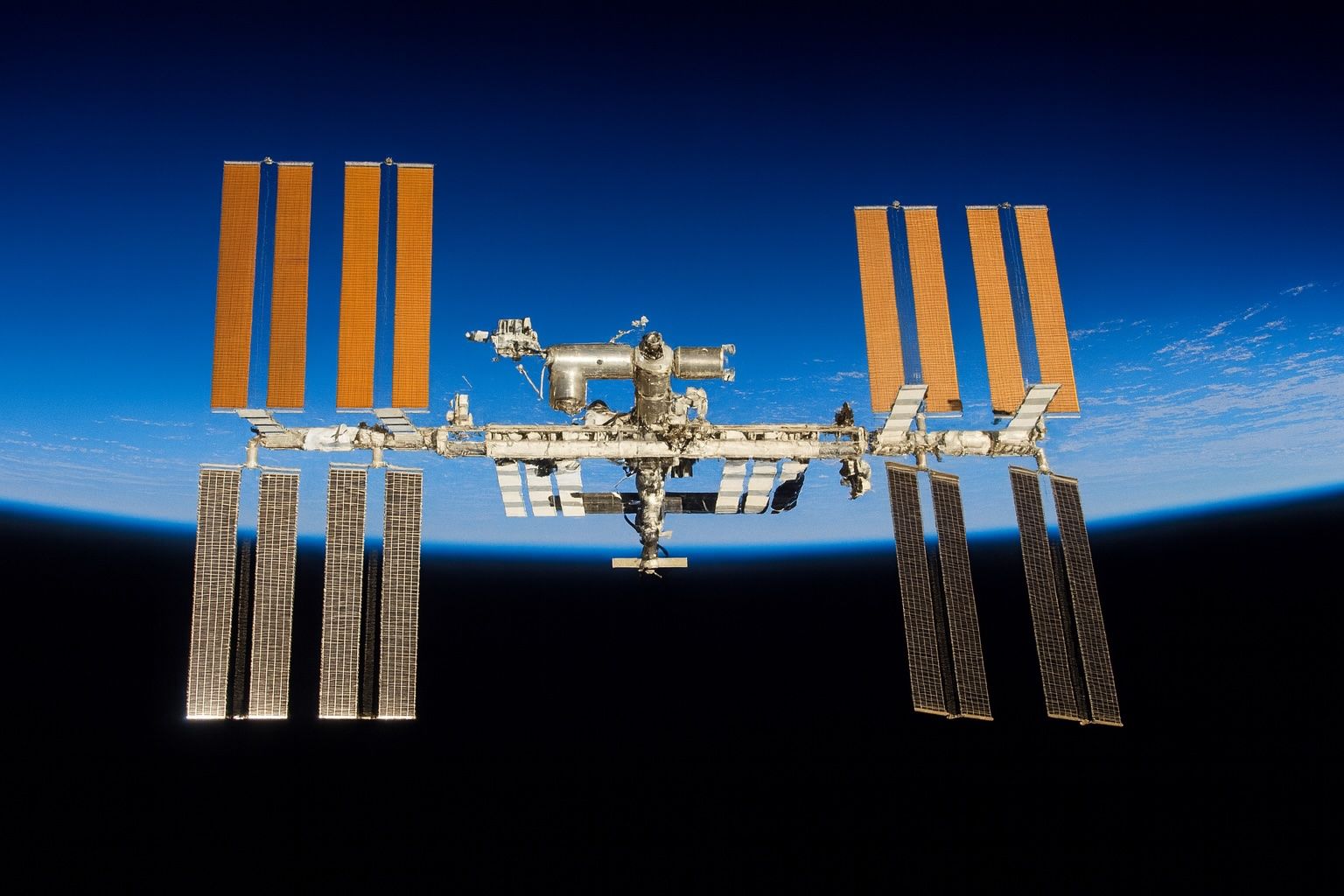
You Won’t Believe How Easily You Can Spot the ISS – Ultimate International Space Station Viewing Guide

You Won’t Believe How Easily You Can Spot the ISS – Ultimate International Space Station Viewing Guide

The ISS orbits Earth every 92 minutes at about 250 miles altitude and 17,500 mph, visible as a steady white dot at dawn or dusk. NASA’s Spot the Station app and sites like Heavens-Above give sighting times and directions. Axiom Mission 4 launched June 25, 2025, with astronauts from India, Poland, and Hungary. The ISS marks its 25th anniversary in November 2025; NASA plans deorbit around 2030–2031.
16 August 2025
Skywatch Alert: Meteor Fireballs, Auroras & Planetary Spectacles Dazzle the Night Sky (Aug 15–16, 2025)

Skywatch Alert: Meteor Fireballs, Auroras & Planetary Spectacles Dazzle the Night Sky (Aug 15–16, 2025)

The Perseid meteor shower remains active through August 23, 2025, with only about 15 meteors per hour visible due to moonlight, down from the usual 60–100. The Kappa Cygnids peak around August 16, producing up to three meteors per hour. Venus and Jupiter appear close together before sunrise on August 15–16. No major auroras are expected, with geomagnetic activity forecast to stay low.
15 August 2025
Don’t Miss the Cosmic Show: Perseid Meteors, Planetary Duet & Auroras (Aug 13–14, 2025)

Don’t Miss the Cosmic Show: Perseid Meteors, Planetary Duet & Auroras (Aug 13–14, 2025)

The Perseid meteor shower peaks August 12–13, 2025, but a bright Moon at 84% full will cut visible meteors to about 10–20 per hour. NASA recommends viewing between midnight and 4 a.m. local time. A G2 geomagnetic storm on August 8–9 brought auroras to northern U.S. states, but as of August 13–14, Earth's magnetic field is quiet and auroras are limited to far northern regions. Venus and Jupiter appeared in close conjunction before dawn August 12–13.
13 August 2025
How to Watch the Perseid Meteor Shower 2025 – Peak Dates, Best Viewing Times, and Tips

How to Watch the Perseid Meteor Shower 2025 – Peak Dates, Best Viewing Times, and Tips

The Perseid meteor shower peaks August 12–13, 2025, with maximum activity around 02:30–03:00 UTC. A bright waning gibbous Moon at 83–84% illumination will cut visible rates to 10–20 meteors per hour. Best viewing is after midnight local time, with the radiant in Perseus. NASA and Sky & Telescope call the Perseids the "fireball champion," though moonlight will limit fainter meteors.
11 August 2025
Don’t Miss the 2025 Perseids: Ultimate Guide to Photographing August’s Meteor Shower

Don’t Miss the 2025 Perseids: Ultimate Guide to Photographing August’s Meteor Shower

The Perseid meteor shower peaks overnight August 12–13, 2025, with bright moonlight limiting visible meteors to about 10–20 per hour. Best viewing in North America and Europe is from midnight to dawn; in Asia and Australia, the peak is around 2:30 UTC on August 13. Observers are advised to seek dark skies away from city lights. Photographers should use wide-aperture lenses, long exposures, and continuous shooting for best results.
August 2025 Night Sky Spectacles: Rare Black Moon, Nebula Treasure, Mars in Virgo & Saturn’s Shadow Show

August 2025 Night Sky Spectacles: Rare Black Moon, Nebula Treasure, Mars in Virgo & Saturn’s Shadow Show

A rare Black Moon New Moon occurs in Virgo on August 23, 2025, at 06:06 UTC. Mars passes 8 arcminutes from Beta Virginis on August 2 and appears near Porrima by August 24. Saturn’s moon Titan casts its shadow across Saturn on August 3 and August 19, with no further Titan shadow transits until the 2040s. The Dumbbell Nebula remains visible throughout August.
10 August 2025
Beaver Moon 2025: November’s Supermoon Spectacle Illuminates Sky and Storytelling

Beaver Moon 2025: November’s Supermoon Spectacle Illuminates Sky and Storytelling

The Beaver Moon reaches peak illumination on November 5, 2025, at 13:19 GMT, appearing 7.9% closer and 16% brighter than an average full Moon. This supermoon will be the biggest and brightest of the year and the closest since 2019. The nearly full Moon passes within one degree of the Pleiades on November 6. No lunar eclipse will occur; 2025’s eclipses happened in March and September.
10 August 2025
July 10 2025’s ‘Buck Moon’ Will Be the Farthest‑From‑the‑Sun, Low‑Riding Full Moon of the Decade—Here’s the Exact Time, Best Viewing Tricks & Pro Photo Hacks You Need

Don’t Miss the August 9, 2025 “Sturgeon Moon” – Two Nights of Lunar Spectacle, Cosmic Meaning & Global Traditions

The full Moon peaks on August 9, 2025, at 3:55 a.m. EDT, fully illuminated in Capricornus near Deneb Algedi. It rises near sunset on August 8 and 9, with New York City moonrises at 8:03 p.m. and 8:32 p.m. respectively. The bright Moon will reduce Perseids meteor visibility on August 12–13. August’s full Moon coincides with Raksha Bandhan, Tu B’Av, and Nikini Poya.
9 August 2025
Skywatch Alert: Meteors, Auroras & a Planetary Spectacle on Aug 5–6, 2025

Skywatch Alert: Meteors, Auroras & a Planetary Spectacle on Aug 5–6, 2025

The Perseid meteor shower will produce 10–20 meteors per hour after midnight on August 5–6, 2025, under dark skies. Venus and Jupiter appear 7–8° apart before sunrise, with their closest pairing around August 11–12. The full Sturgeon Moon on August 9 will brighten the sky, reducing meteor visibility during the peak. Saturn and Neptune align on August 6, visible together through a telescope.
5 August 2025
Cosmic Light Show Alert: Meteors, Auroras & Planetary Surprises Dazzle Aug 3–4, 2025

Cosmic Light Show Alert: Meteors, Auroras & Planetary Surprises Dazzle Aug 3–4, 2025

SpaceX plans a Starlink launch on Aug 3, 2025, after sending 28 satellites up July 29. The Perseid meteor shower brings about a dozen meteors per hour after midnight on Aug 3–4, with the Southern Delta Aquariids and Alpha Capricornids also active. Saturn rises after 10 p.m., and Titan’s shadow crosses Saturn’s disk early Aug 3. Venus and Jupiter appear about 8° apart before dawn.
3 August 2025
Eyes to the Skies August 2–3, 2025: Meteor Showers, Auroras, and Planets Put on a Show

Eyes to the Skies August 2–3, 2025: Meteor Showers, Auroras, and Planets Put on a Show

About 20 Perseid meteors per hour are visible before dawn Aug 2–3 at mid-northern latitudes, though a first-quarter Moon will set in the early morning and reduce rates by up to 75%. Venus and Jupiter appear together in the eastern sky at dawn, separated by 9 degrees. Saturn and Neptune rise together and are visible in the same telescopic field. Titan’s shadow transits Saturn on Aug 3, viewable from North America.
2 August 2025
All Eyes on the Skies: September 2025 Celestial Spectacles (Meteor Showers, Eclipses & More)

All Eyes on the Skies: September 2025 Celestial Spectacles (Meteor Showers, Eclipses & More)

A total lunar eclipse on September 7, 2025, will last about 83 minutes, visible from Antarctica, Australia, Asia, the western Pacific, and Africa. A deep partial solar eclipse follows on September 21, peaking at 85% coverage near New Zealand. Venus is occulted by the Moon on September 19, visible from parts of Africa, Europe, Asia, and eastern Canada. Saturn and Neptune both reach opposition in late September.
30 July 2025
Spectacular Skywatching Alert: Twin Meteor Showers, Dazzling Planets & More on July 30–31, 2025

Spectacular Skywatching Alert: Twin Meteor Showers, Dazzling Planets & More on July 30–31, 2025

The Southern Delta Aquariids and Alpha Capricornids meteor showers peak July 29–31, 2025, with dark skies and a 27% illuminated Moon aiding visibility. Southern Delta Aquariids may produce 15–20 meteors per hour. Venus and Jupiter are visible in the pre-dawn sky, nearing conjunction in August. The ISS will make multiple evening passes, including two over Los Angeles on July 28.
30 July 2025
Sky‑Spectacle Tonight: 15 U.S. States Could Witness a Rare Aurora Outburst—Everything You Must Know Before Sunset

Sky‑Spectacle Tonight: 15 U.S. States Could Witness a Rare Aurora Outburst—Everything You Must Know Before Sunset

NOAA’s Space Weather Prediction Center has issued a G2 geomagnetic-storm outlook for 25–26 June UTC as a high-speed solar wind stream targets Earth. Solar wind gusts over 600 km/s are expected, with the K-index peaking at 5–6. Auroras may be visible across 15 northern U.S. states. Power-grid transformers in high latitudes could experience geomagnetically induced currents.
24 June 2025
Go toTop