Browse Category

NYSE:MAXR News 7 June 2025 - 22 September 2025

Argentina’s Space Industry Is Taking Off: Inside the Satellite Boom and What’s Next

Argentina’s Space Industry Is Taking Off: Inside the Satellite Boom and What’s Next

Key Facts Historical Evolution of Argentina’s Space Industry Argentina’s journey into space began remarkably early. In the 1940s, visionary engineer Teófilo Tabanera formed the Sociedad Argentina Interplanetaria, making Argentina the first Latin American country with a spaceflight organization en.wikipedia.org. By 1960 – nearly a year before humans reached space – Argentina established the National Commission for Space Research (CNIE) with Tabanera at the helm en.wikipedia.org. Throughout the 1960s, CNIE and the Air Force’s research institute launched a series of indigenous multistage high-altitude rockets (Alfa Centauro, Beta Centauro, Orión, Canopus, etc.), successfully sending scientific payloads to the upper atmosphere en.wikipedia.org. In

Canada’s Space Boom: Inside the Great White North’s $5B Space & Satellite Surge (2025 Report)

Canada’s Space Boom: Inside the Great White North’s $5B Space & Satellite Surge (2025 Report)

Key Facts and Figures (Quick Reference) Historical Overview: From Pioneering Satellites to a National Space Agency Early Pioneers (1960s–1970s): Canada’s space journey began boldly in the Cold War era. In 1962, Canada stunned the world by launching Alouette-I, becoming the third country to design and build its own satellite asc-csa.gc.ca. Alouette’s success in ionospheric research established Canada’s reputation for scientific satellites. By the late 1960s, Canada was also a telecommunications trailblazer – 1969 saw the creation of Telesat Canada as a domestic satellite operator asc-csa.gc.ca, and in 1972 Anik A1 was launched, making Canada one of the first nations with
10 September 2025
Watch Earth Live from Space – Your Ultimate Guide to Real-Time Satellite Imagery

Watch Earth Live from Space – Your Ultimate Guide to Real-Time Satellite Imagery

Near-real-time satellite imagery is common: Landsat 8 images can appear within seconds of downlink, NASA Worldview layers update within about 3 hours, and geostationary weather satellites refresh every 5–15 minutes. The ISS HD Earth Viewing Experiment streams live video of Earth from about 400 km up with roughly 1-second latency, and the view shifts as the station orbits about 16 times per day. NOAA’s Earth in Real-Time weather map updates GOES-East and GOES-West every 5 minutes for cloud imagery, with full-hemisphere views about every 15 minutes and resolutions around 0.5–2 km. NASA Worldview offers more than 1,000 imagery layers updated
6 August 2025
Live Satellite Views on the Internet: Platforms, Tools, and Trends

Live Satellite Views on the Internet: Platforms, Tools, and Trends

NASA Worldview offers over 1,000 imagery layers from NASA and partner satellites, with a typical 60–125 minute delay after capture. NOAA GOES weather satellites update the continental United States every 5 minutes or less and the full hemisphere every 15 minutes, enabling near real-time weather loops. Landsat 8 imagery is available on the USGS server within seconds of downlink in some cases. Sentinel-2 imagery provides new images of any location roughly every 5 days at 10-meter resolution. Planet Labs operates about 200 Dove nanosatellites that image the entire land surface daily at 3–4 meter resolution, and also runs SkySat satellites
See Your House from Space? Inside the World of Live Satellite Maps and Weather from Orbit

See Your House from Space? Inside the World of Live Satellite Maps and Weather from Orbit

Google Earth was downloaded over one billion times in its first six years. Google Earth’s Time Machine covers 1984 to 2022 in a 4D interactive map built from millions of satellite photos. The Landsat program began in 1972 and offers a 50+ year global land-surface data record, with Landsat 8 and 9 providing 30-meter resolution imagery. Sentinel-2A and 2B image the entire Earth’s land every 5 days at 10-meter resolution (20 meters for some infrared bands). Maxar’s WorldView-3 and WorldView-4 offer 30-centimeter imagery, and the upcoming WorldView Legion aims for up to 15 revisits per day at 30 cm. Planet
Bunker‑Buster Earthquake: New Satellite Images Expose Fordow’s Ruin—What the Bombs Hit, What Survived, and Why It Matters

Bunker‑Buster Earthquake: New Satellite Images Expose Fordow’s Ruin—What the Bombs Hit, What Survived, and Why It Matters

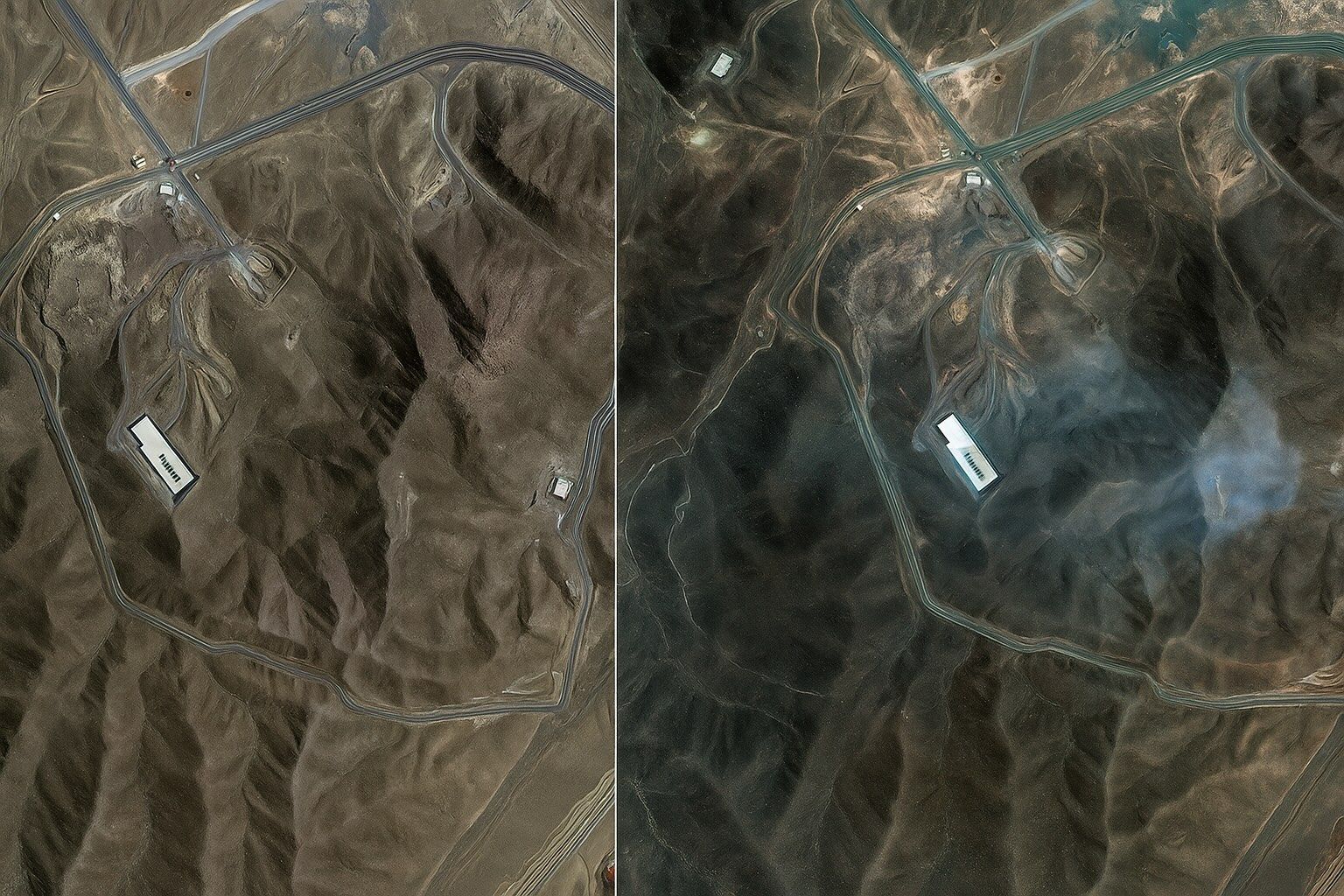
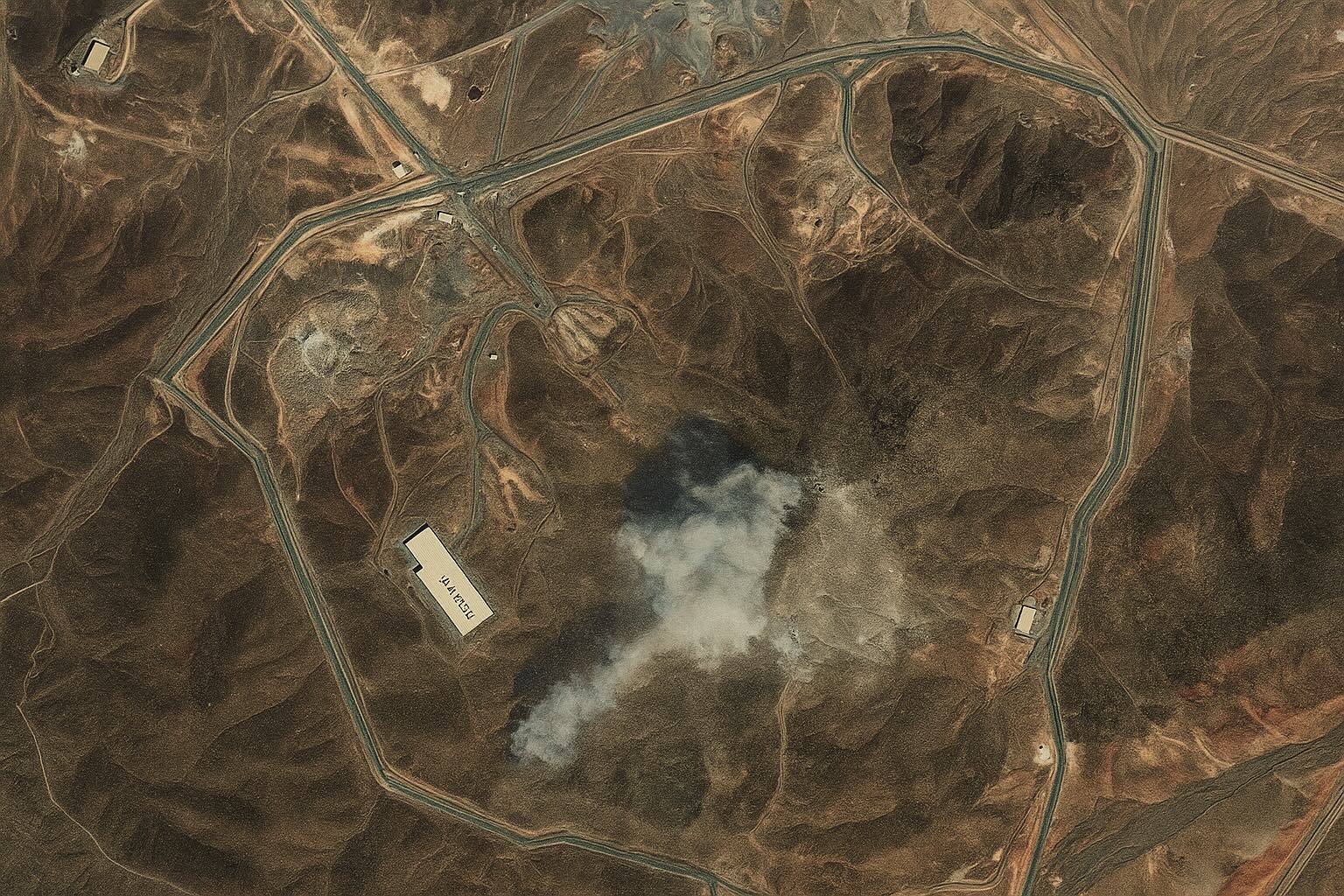
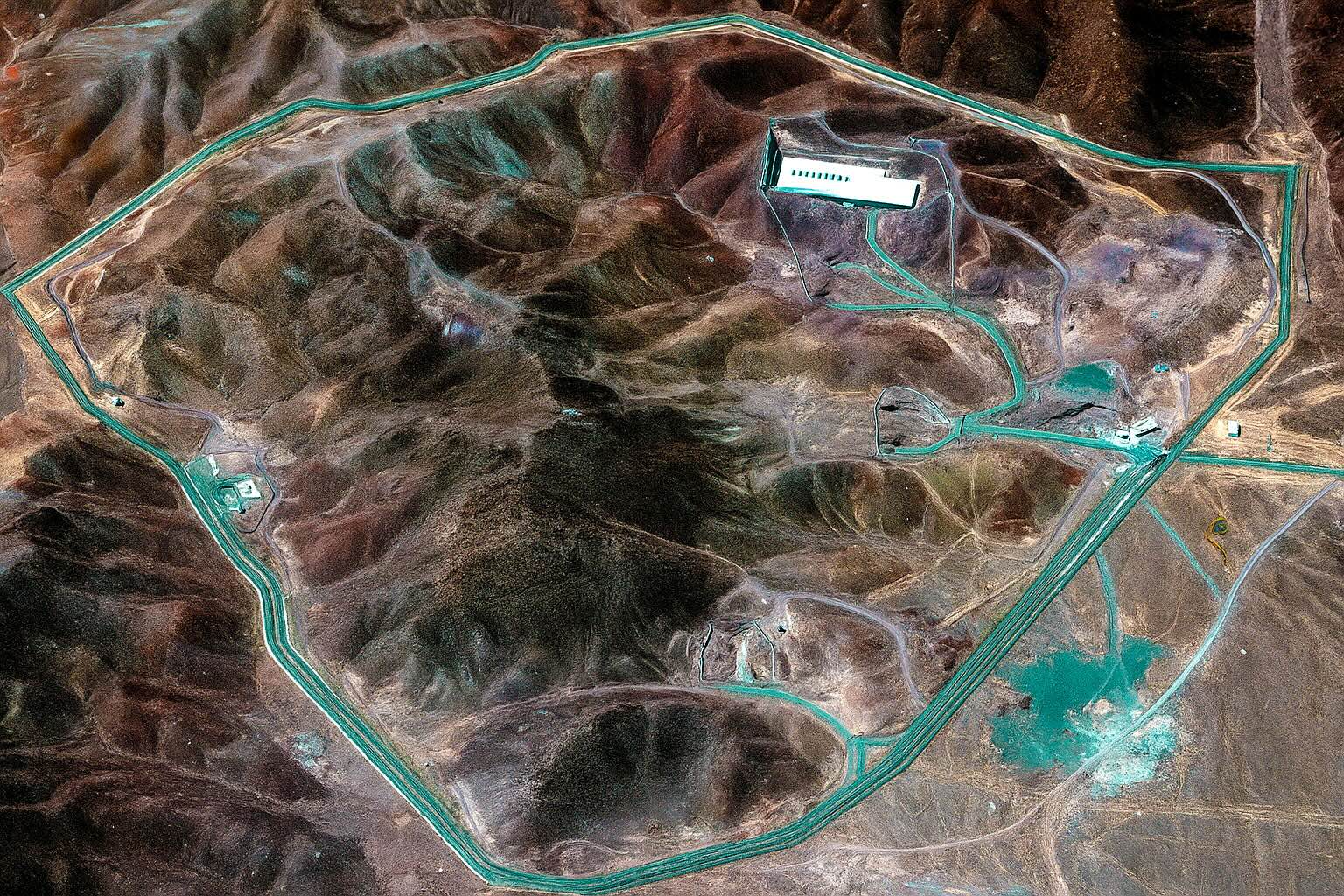
Shortly after 02:00 local time on 22 June, seven U.S. B‑2 Spirit bombers dropped 14 MOPs on Fordow with Tomahawks suppressing Iranian SAM sites. Maxar/Planet imagery shows six precisely spaced entry craters along the ridge above the centrifuge halls, forming a textbook double‑tap pattern consistent with the MOP fuse sequence. Damage signatures include collapsed tunnel portals, landslide debris, scorched support buildings, and dust plumes obscuring the cliff face and vent shafts. Fordow is carved 80–100 m inside Kuh‑e‑Fordow mountain, reinforced by concrete and IRGC air‑defence rings, and was designed for 3,000 centrifuges with IR‑6 cascades enriching to 60%. IAEA Director‑General
Stunning Satellite Images Reveal Fordow Nuclear Facility Cratered by U.S. Airstrike

Stunning Satellite Images Reveal Fordow Nuclear Facility Cratered by U.S. Airstrike

Before the Strike: Trucks and Bulldozers Spotted at Fordow Satellite surveillance captured telltale signs of Iranian preparations at Fordow. On June 19, 2025 a Maxar satellite image shows cargo trucks parked outside the underground entrance of the Fordow complex foxnews.com. The next day (June 20) another image reveals bulldozers and heavy vehicles moving toward the tunnel entrance foxnews.com. These vehicles were clearly visible in the raw imagery – Fox News reports that “trucks and vehicles can be seen at the Fordow site” in pre-strike pictures foxnews.com foxnews.com. Open-source analysts say this “unusual activity” likely indicates that Iran was shuffling equipment
22 June 2025
Stunning Satellite Images Expose the Full Impact of U.S. Airstrikes on Iran’s Fordow, Natanz and Isfahan Nuclear Sites — What the Pictures Reveal, Why They Matter, and What Happens Next

Stunning Satellite Images Expose the Full Impact of U.S. Airstrikes on Iran’s Fordow, Natanz and Isfahan Nuclear Sites — What the Pictures Reveal, Why They Matter, and What Happens Next

On 21 June 2025, the U.S. strike package used B-2 launched GBU-57 bunker-busters and sea-launched Tomahawks to damage Natanz and Isfahan and cut external power to Fordow. Maxar Technologies and Planet imagery circulated minutes after President Trump’s confirmation, enabling open-source observers to map bomb craters, scorched roads, and collapsed roofs at Natanz and Isfahan. IAEA Director-General Rafael Grossi said the sudden loss of external power made it “very likely” the roughly 15,000 Natanz centrifuges were badly damaged or destroyed, based on satellite evidence. Fordow is buried 80–90 meters inside Mount Kuh-e-Daryacheh and was designed to withstand direct air attack, with
Space Showdown: How Military Satellites Are Shaping the Ukraine‑Russia War

Space Showdown: How Military Satellites Are Shaping the Ukraine‑Russia War

SpaceX deployed 5,000 Starlink terminals to Ukraine within days of the 2022 invasion, rising to about 15,000 active terminals by June 2022, with Ukraine at one point accounting for roughly 58% of global Starlink traffic. Russia attempted to jam Starlink signals on the battlefield, SpaceX rolled a software update to bypass the jamming, and by 2023–2024 reports noted illicit Starlink terminals in Russian hands that had to be disabled. On February 24, 2022, Russia launched a cyberattack against Viasat’s KA-SAT network that crippled thousands of Ukrainian modems and disrupted satellite links across Europe. In August 2022, Ukraine crowdfunded $20 million
Exploring the World from Above: Top Satellite Mapping Services for Web & Mobile in 2025

Exploring the World from Above: Top Satellite Mapping Services for Web & Mobile in 2025

Google Earth offers imagery from global 15 m resolution down to sub-meter detail (30–50 cm) in many urban areas, plus 3D buildings and terrain across hundreds of cities, accessible on web, iOS/Android, and Google Earth Pro desktop. Imagery updates on Google Earth are rolling, with urban areas refreshed roughly every 1–3 years, rural areas 5+ years, major disasters updating within days, and new imagery patches released about twice a month. Google Earth Pro provides a historical imagery slider that lets users go back in time to view satellite and aerial photos dating back to the 1930s in some locations. Google
Live Satellite Images and Real-Time Maps: Top Platforms for Web & Mobile

Live Satellite Images and Real-Time Maps: Top Platforms for Web & Mobile

NOAA Earth in Real-Time offers an interactive, real-time global weather map with live imagery from GOES geostationary satellites, updated continuously and accessible free via nesdis.noaa.gov. NASA Worldview provides more than 1,000 global image layers (MODIS, VIIRS, Sentinel-2, etc.) with many layers updated within three hours of observation, plus animation, date comparison, and data download, all in a free web app. Zoom Earth aggregates imagery from NOAA GOES-East/West, EUMETSAT Meteosat, JMA Himawari, and NASA Terra/Aqua MODIS, updating as frequently as every 10–15 minutes and offering a free web and mobile app service. Google Earth provides high-resolution imagery from Landsat-8 and aerial
How Satellite Technologies Are Transforming Ukraine: From Warzones to Wheat Fields

How Satellite Technologies Are Transforming Ukraine: From Warzones to Wheat Fields

In August 2022, a Ukrainian charity crowdfunded access to an ICEYE SAR satellite, providing 24/7 all-weather imaging from one satellite and access to ICEYE’s full constellation for over a year. Commercial high-resolution imagery from Maxar, Planet Labs, and BlackSky documented battlefield events such as Russian troop buildups and missile strikes. Analysts have described the Russia-Ukraine war as the most documented conflict in history thanks to the avalanche of satellite data. After the 2022 invasion, SpaceX shipped thousands of Starlink user terminals to Ukraine, and by 2024 Starlink was a reliable frontline communications partner. In February 2022, commercial satellites captured a
Satellite Imagery: Principles, Applications, and Future Trends

Satellite Imagery: Principles, Applications, and Future Trends

The first space images were captured in 1946 from a sub-orbital U.S. V-2 rocket at about 105 km altitude. The first actual satellite photograph of Earth was taken on August 14, 1959 by the U.S. Explorer 6 satellite. In 1960, TIROS-1 transmitted the first television image of Earth from orbit, a milestone for weather observation. Landsat 1, launched in 1972, began the longest-running civilian Earth-observation program with a 50-year archive, and Landsat 9 was launched in 2021 to continue it. The KH-11 KENNEN program began near-real-time digital imaging in 1977, eliminating the need for film return. IKONOS, launched in 1999,
Sky Scanners: How SAR Imaging Satellites Are Redefining Earth Observation

Sky Scanners: How SAR Imaging Satellites Are Redefining Earth Observation

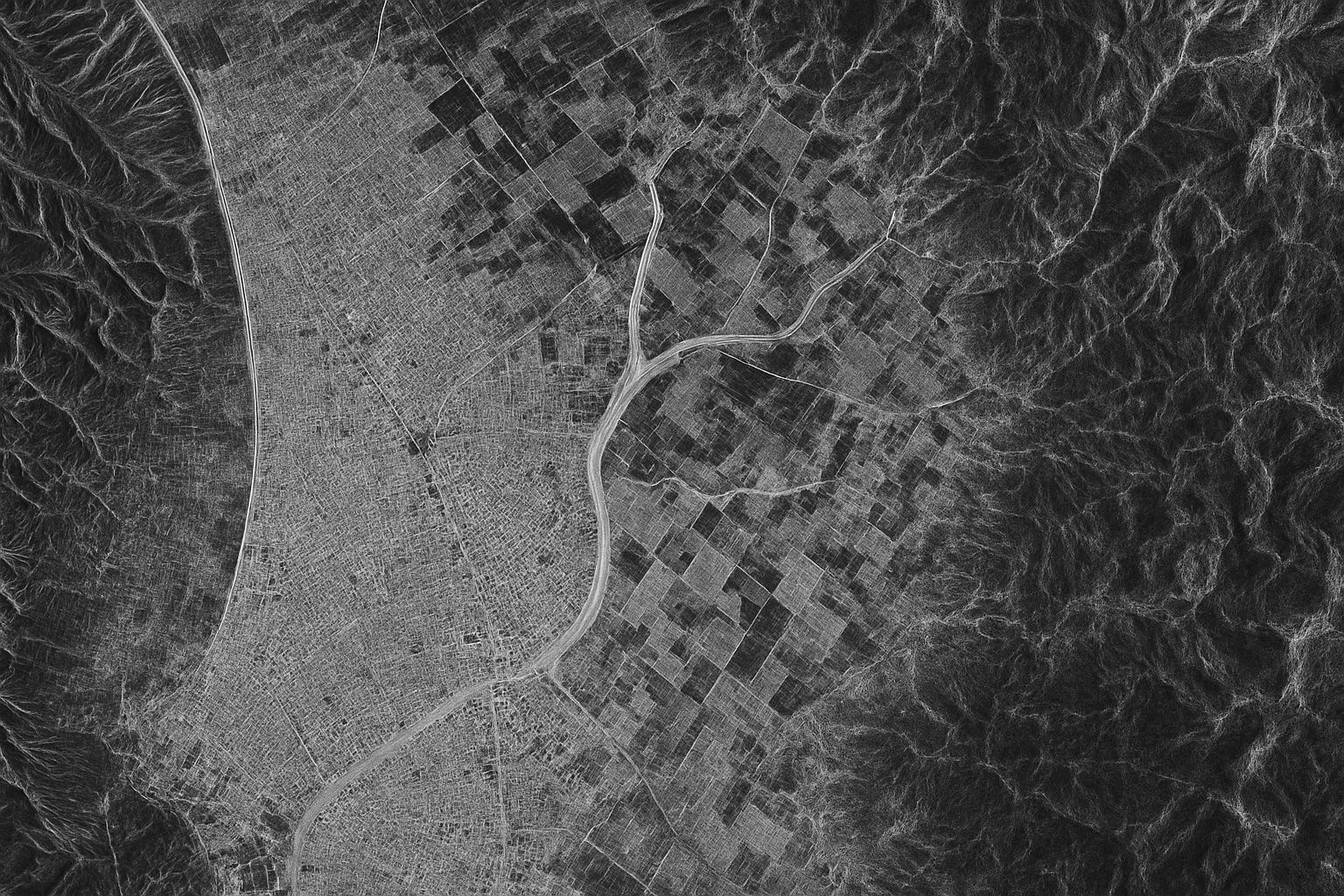
About 75% of the planet is obscured by cloud cover or darkness at any moment, making optical imaging inaccessible. Synthetic Aperture Radar (SAR) satellites actively illuminate the ground with microwave radar and synthesize a large aperture by moving the antenna to produce high-resolution images. SAR can operate day or night and in all weather, providing 24/7 imaging. Sentinel-1 (ESA) comprises satellites Sentinel-1A launched in 2014 and Sentinel-1B in 2016, with C-band SAR offering ~5 m resolution in high-resolution modes and 250–400 km swaths, and a 12-day revisit. RADARSAT-2 (Canada) launched in 2007, followed by the RADARSAT Constellation Mission (RCM) in

Stock Market Today

Deutsche Telekom stock slips despite fresh buyback — what matters before earnings

Deutsche Telekom stock slips despite fresh buyback — what matters before earnings

8 February 2026
Deutsche Telekom shares fell 1.1% to 30.26 euros Friday, despite the company repurchasing 250,873 shares for about 7.63 million euros on Xetra. The drop came as European stocks rose and T-Mobile US shares slipped 2.2%. Deutsche Telekom’s 2025 results are due Feb. 26. The company has completed its 2025 buyback and launched a new 2 billion euro programme for 2026.
Airbus stock price ends higher near 191 euros as January deliveries slow, earnings loom

Airbus stock price ends higher near 191 euros as January deliveries slow, earnings loom

8 February 2026
Airbus shares rose 0.94% to 191.30 euros Friday as the company reported 19 aircraft deliveries in January, down from 25 a year earlier. Supply chain bottlenecks remain an issue, with executives at the Singapore Airshow calling delays “unacceptable.” Jefferies kept a Neutral rating and a 215-euro price target. Airbus will report full-year 2025 results on Feb. 19.
Banco Santander stock heads into Monday after Friday bounce as buyback and Webster deal loom

Banco Santander stock heads into Monday after Friday bounce as buyback and Webster deal loom

8 February 2026
Banco Santander shares closed up 1.85% at €10.66 in Madrid Friday after launching a €5.03 billion buyback and agreeing to acquire U.S. lender Webster Financial for $12.2 billion. Santander said its board will review the 2025 cash dividend proposal on Feb. 24. The bank also raised its UK motor finance redress provision to £461 million amid regulatory uncertainty.
Go toTop