
Today: 1 July 2026
Browse Category

Space 5 June 2025 - 21 June 2025

Rocketing Satellite Stocks: Global Space Industry Performance & Bold 2025 Forecasts

Rocketing Satellite Stocks: Global Space Industry Performance & Bold 2025 Forecasts

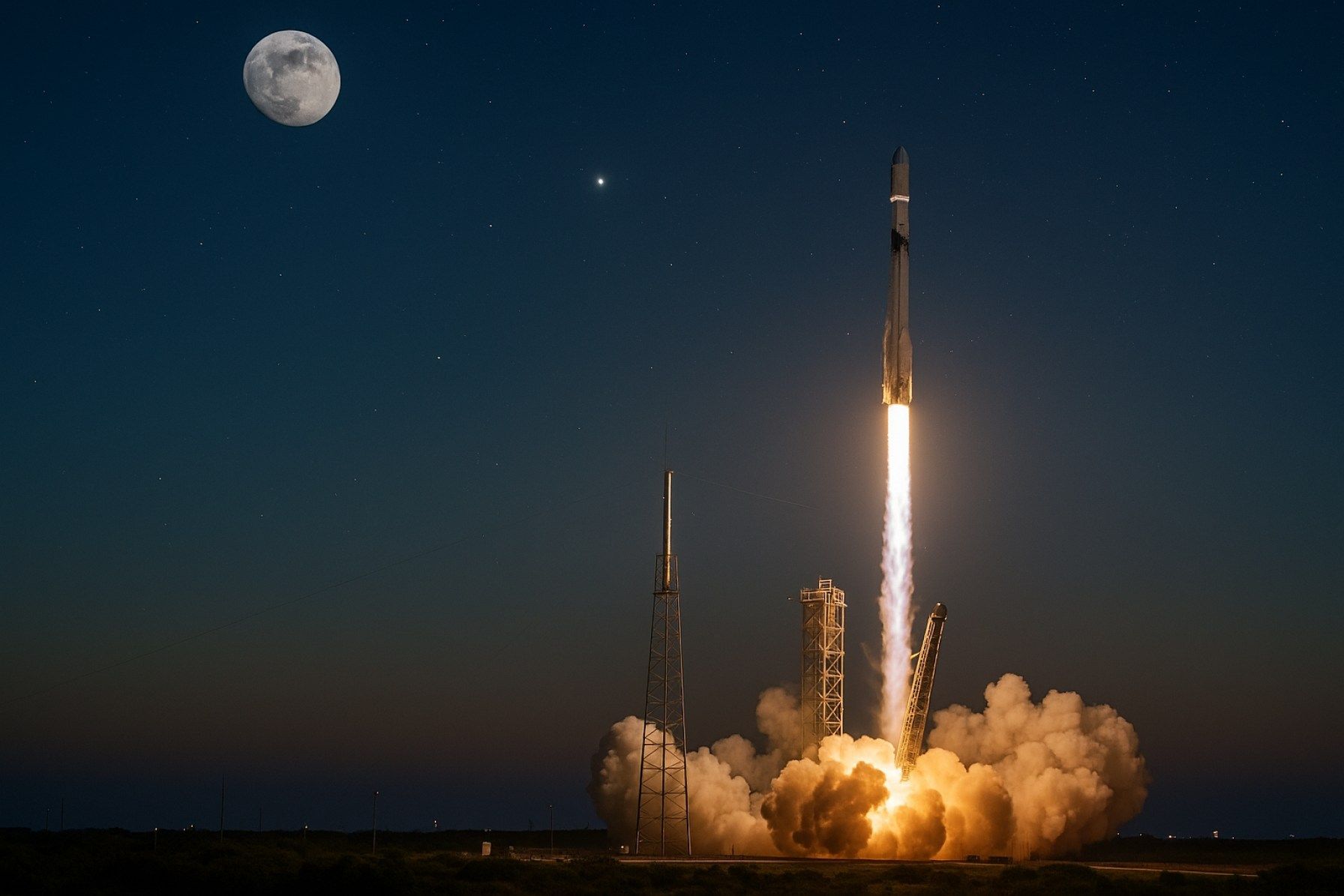
The space industry is experiencing a new wave of growth and investor excitement. From satellite communications providers to rocket launch startups, companies around the world have seen stock prices soar over the past year, followed by a period of consolidation. This report dives into the current stock market performance of publicly traded satellite and space-related companies globally, highlights major private space firms and their funding, and examines the market trends, technological developments, and geopolitical factors shaping the industry’s future. All regions – North America, Europe, Asia, and beyond – are contributing to the accelerating “new space” economy, which some analysts project to reach $1 trillion by 2040 entrepreneur.com. Below, we break down the latest financial results, forecasts, and strategic outlooks across the global space sector. Publicly traded satellite and space companies have delivered mixed performance recently, with spectacular gains in 2024 giving way to volatility in early 2025. In 2024, a number of small-cap “pure play” space stocks saw explosive rallies: for example, Rocket Lab surged over 360% thanks to record launch rates, Intuitive Machines jumped 720% amid lunar mission contracts, and Redwire climbed 436% on high-profile space infrastructure projects entrepreneur.com. This reflected strong investor enthusiasm for the expanding space
10,000 Satellites and 5 Million Users: Inside the Satellite Internet Revolution of 2025

10,000 Satellites and 5 Million Users: Inside the Satellite Internet Revolution of 2025

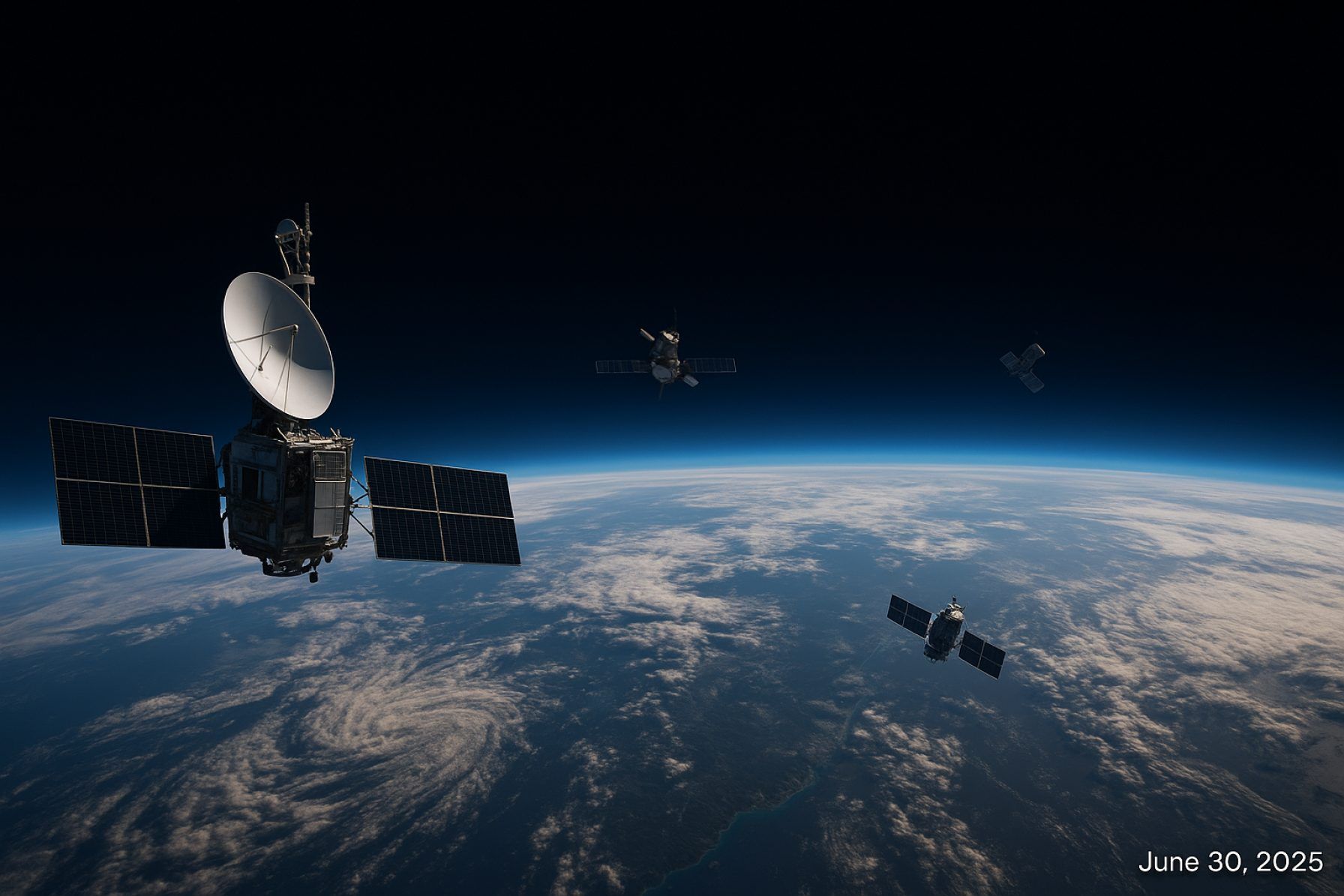
A revolution is underway above our heads. In the past year alone, companies and governments worldwide have turbocharged efforts to beam high-speed internet from space down to Earth. SpaceX’s Starlink constellation has surpassed 8,000 satellites launched since 2019, amassing over 5 million users across 125+ countries reuters.com. In April 2025, Amazon’s Project Kuiper entered the fray by launching its first 27 satellites, kicking off a $10 billion program to rival Starlink reuters.com reuters.com. Not to be left behind, Europe has greenlit a €10.6 billion satellite network to secure “digital sovereignty,” spurred by Starlink’s rapid expansion reuters.com. Even China has begun lofting the first of 13,000 planned “Guowang” satellites to create its own space-based internet space.com space.com. These developments, all hitting headlines in the last 12–18 months, signal an intense new space race for global broadband. Behind the flashy rocket launches are profound implications. Satellite internet is quickly shifting from a niche service of last resort to a cornerstone of global connectivity. In remote villages and rural farmlands, satellite links are bridging the digital divide, bringing online education and telehealth to places once left offline. In war zones and disaster areas, they’re providing lifelines when terrestrial networks fail. And as geopolitical
Space Force’s Secret 480-Satellite MILNET: Inside SpaceX’s New Military “Starlink” Revolution

Space Force’s Secret 480-Satellite MILNET: Inside SpaceX’s New Military “Starlink” Revolution

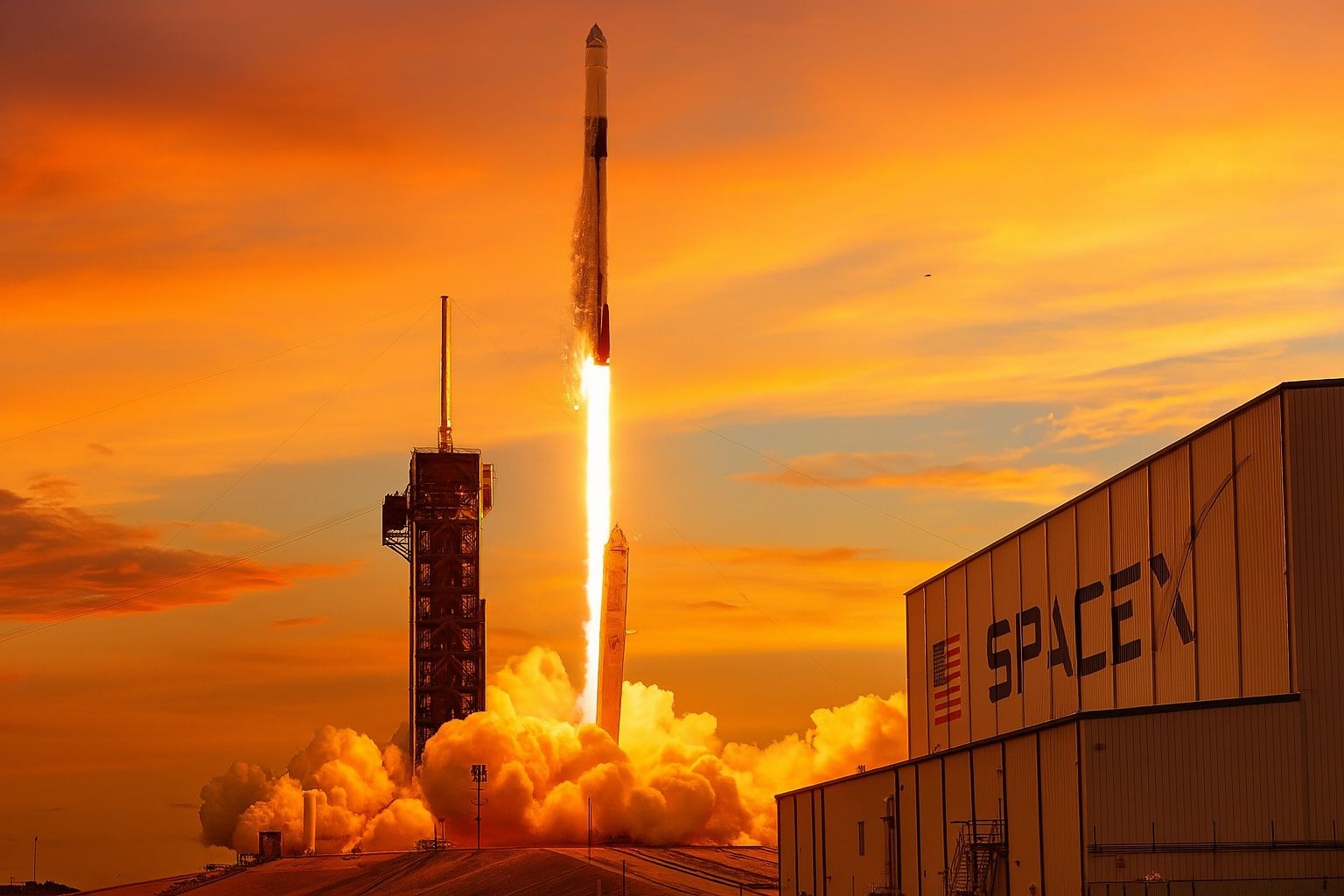
The U.S. Space Force has quietly teamed with SpaceX to create a secretive satellite Internet constellation for the military. Dubbed “MILNET,” this government-owned but SpaceX-operated network will comprise “480-plus” small satellites in low Earth orbit breakingdefense.com. Announced in June 2025, the MILNET contract marks a groundbreaking shift in Pentagon space strategy – harnessing commercial mega-constellation technology to build a secure “space internet” for warfighters breakingdefense.com thecipherbrief.com. Why is the Space Force betting on SpaceX’s tech? What does MILNET entail, and how could it reshape military communications and the global space race? This report dives into the details – from the contract’s scope and industry reaction to strategic implications and comparisons with other networks. In brief, MILNET aims to provide the U.S. military and intelligence community with a fast, resilient broadband satellite network akin to Starlink, but with beefed-up security and government control thecipherbrief.com. It will ultimately integrate with other Defense Department and allied satellites as part of a “hybrid mesh network” spanning commercial and military orbits breakingdefense.com. Below, we explore the contract’s context and content, SpaceX’s role and technology, expert and industry reactions, related secure satcom developments, and the far-reaching consequences for defense and commerce.
21 June 2025
Zombie Satellite! Defunct NASA Orbiter Emits Blazing Radio Burst After 60 Years

Zombie Satellite Awakens: Defunct 1960s NASA Orbiter Blasts Earth with Mysterious Radio Pulse

Relay 2 is an experimental communications satellite NASA launched on January 21, 1964, as part of the early Relay programen.wikipedia.org. Similar in design to its predecessor Relay 1, this satellite was built by RCA and tasked with relaying television signals and studying Earth’s radiation beltsen.wikipedia.or en.wikipedia.org. After a successful launch atop a Delta B rocket from Cape Canaveral, Relay 2 operated for only a few years. By late 1965, NASA had already stopped routine use of Relay 2 ts2.tech ts2.tech. The satellite’s onboard transmitters then began failing: the first transponder died on November 20, 1966, and the second went silent on June 9, 1967, at which point Relay 2 was considered officially defunct foxweather.com ts2.tech. In total, Relay 2 transmitted data for less than three years before falling mute, effectively becoming a “dead” satellite in orbit. After 1967, Relay 2 spent decades as an inert piece of space hardware orbiting Earth. It circles in an elliptical medium Earth orbit roughly 1,870 km by 7,600 km in altitude en.wikipedia.org ts2.tech. This long-abandoned satellite, weighing about 78 kg at launch, joined the growing population of orbital debris – part of the 3,000+ defunct satellites estimated to be adrift around Earth today foxweather.com
21 June 2025
France Tightens Grip on Space: Inside the €1.35 Billion Eutelsat Power Play

France Tightens Grip on Space: Inside the €1.35 Billion Eutelsat Power Play

In June 2025 the French government announced a €1.35 billion capital injection into Eutelsat, Europe’s leading satellite operator marketscreener.com. Under the plan, the state will invest €717 million and absorb France’s existing 13.6% stake, boosting its holding to 29.99% marketscreener.com spacenews.com. This deal makes France Eutelsat’s largest shareholder and is explicitly aimed at building a “European satellite champion” to rival U.S. players like Starlink marketscreener.com marketscreener.com. Officials stressed it ensures “sovereign access” to space infrastructure amid geopolitical tensions marketscreener.com defensenews.com. In French Finance Minister Eric Lombard’s words, satellite connectivity is a “strategic issue” for Europe’s digital sovereignty marketscreener.com reuters.com. Eutelsat traces back to 1977, when it was created to operate Europe’s first generation of communications satellites eutelsat.com. Over decades it grew into a global satellite broadcaster and internet provider. By the 1990s Eutelsat had pioneered Europe’s direct-to-home TV and digital broadcast services, expanding its GEO fleet to dozens of satellites. In July 2022 Eutelsat agreed an all-share merger with Britain’s OneWeb reuters.com, and on Sept. 28, 2023 the deal closed to form the new Eutelsat Group reuters.com. At that point Reuters ranked Eutelsat as the world’s third-largest satellite operator by revenue reuters.com.
21 June 2025
Pentagon’s Space Internet Nightmare: Why the Unified Satellite Network Keeps Stalling

Pentagon’s Space Internet Nightmare: Why the Unified Satellite Network Keeps Stalling

Executive Summary: The Pentagon has long sought a “space internet” – an integrated military satellite network that automatically routes data across U.S., allied, and commercial satellites. This enterprise SATCOM vision promises resilience and high-speed connectivity, but it has been dogged by technical, bureaucratic, and industrial challenges. Recent reporting and studies show that legacy hardware, fragmented standards, supply-chain bottlenecks, and inter-service turf fights have slowed progress. With Congress and watchdogs demanding accountability, U.S. space leaders are now scrambling to modernize ground stations, develop software-defined “hybrid” terminals, and finalize contracts to break the logjam. This report traces the background, goals, key players, and setbacks in the unified satellite-network initiative; compares it to allied and adversary efforts; and assesses what the struggles mean for future warfare and space strategy. The idea of a unified military satellite network dates back years. The U.S. defense community realized that current SATCOM is “linear” and siloed – each branch uses different radios and satellites that cannot interconnect on the fly gao.gov spacenews.com. In practice this means U.S. forces sometimes rely on “bespoke pizza box” terminals – custom hardware racks that link to a single satellite constellation – to talk over space spacenews.com. In a modern war, this
Solar Tempests & Orbital Guardians: The Secret Life of Space-Weather Satellites

Solar Tempests & Orbital Guardians: The Secret Life of Space-Weather Satellites

Space Weather refers to the changing environmental conditions in space driven by the Sun’s activity – including bursts of solar radiation, charged particles, and magnetic disturbances. Just as terrestrial weather can produce hurricanes or blizzards, our Sun generates “solar tempests” like solar flares, coronal mass ejections, high-speed solar wind streams, and energetic particle storms. These phenomena can trigger disturbances in Earth’s magnetic field and upper atmosphere, collectively known as space weather. Understanding space weather is not just academic – it affects our modern technological society in tangible ways. For example, when a strong CME slams into Earth’s magnetosphere, it can induce currents in power lines and pipelines, potentially knocking out electrical grids. Communications and navigation systems can be disrupted: airline pilots sometimes lose high-frequency radio contact during solar flares, GPS signals can become error-prone, and satellites may experience glitches or even permanent damage. Astronauts traveling beyond Earth’s protective magnetic field face increased radiation risk during solar particle events. Even on the ground, critical infrastructure like aviation and power networks are vulnerable – prompting space-weather forecasts to be taken as seriously as terrestrial weather forecasts in operations. In short, space weather matters because a major solar storm could “wreak havoc” on
Inside Israel’s Space Power: Satellites, Services, and the Secret Strength of the Israel Space Agency

Inside Israel’s Space Power: Satellites, Services, and the Secret Strength of the Israel Space Agency

Israel’s space program may be modest in scale, but it has achieved outsized capabilities. In 1988, Israel became the world’s eighth nation to launch its own satellite into orbit nasaspaceflight.com, and today it remains the smallest country to develop indigenous launch vehicles and an operational space agency en.wikipedia.org. What began as a strategic effort to secure independent reconnaissance from space during the 1980s has grown into a multifaceted enterprise spanning civilian communications, scientific research, and commercial services. Leveraging its high-tech prowess, the nation has focused on “miniaturizing the technology” of satellites and innovating cost-effective solutions israel21c.org. Israel’s ambitions are to punch above its weight – positioning itself among the world’s leading spacefaring nations through innovation, niche expertise, and international partnerships space.gov.il space.gov.il. In the process, Israel has transformed its early security-driven space program into a dynamic sector blending government initiatives with the country’s famed startup ingenuity. Established in 1983 by government decision, the Israel Space Agency is the state body that oversees and coordinates Israel’s civilian space activities en.wikipedia.org space.gov.il. It operates under the Ministry of Innovation, Science and Technology and was founded under the leadership of physicist Yuval Ne’eman to advance Israel’s nascent space program en.wikipedia.org. The ISA’s mandate
20 June 2025
Inside China’s Space Empire: Satellites, Services, and the Secret Power of CNSA

Inside China’s Space Empire: Satellites, Services, and the Secret Power of CNSA

China’s space program has rapidly transformed into a space empire of global scale, guided by the China National Space Administration. In just a few decades, China went from launching its first satellite in 1970 to operating a fleet of over 1,000 satellites and a fully crewed space station in orbit andrewerickson.com space.com. Today, China conducts one of the world’s most active launch schedules, rivaling or surpassing other space powers with dozens of missions each year en.wikipedia.org. This report dives deep inside China’s space empire – outlining CNSA’s mission and history, surveying Chinese satellite categories and services, detailing launch capabilities, and exploring future plans from the Moon to Mars and beyond. Established in 1993, the China National Space Administration is the government agency responsible for China’s civil space activities and international cooperation en.wikipedia.org. CNSA provides overall policy direction and diplomatic outreach, while actual missions are executed by state-owned enterprises – notably the China Aerospace Science and Technology Corporation – and by specialized program offices en.wikipedia.org. This structure reflects the unique civil-military blend of China’s space program: civilian agencies handle administration and foreign liaisons, while military branches oversee launch and satellite operations. In fact, until 2024 the People’s Liberation Army Strategic Support
20 June 2025
Iranian Satellites and Space Agency: Capabilities, Missions, and Strategic Vision

Iranian Satellites and Space Agency: Capabilities, Missions, and Strategic Vision

Iran’s involvement in space activities dates back to the late 1950s, when it became a founding member of the U.N. Committee on the Peaceful Uses of Outer Space in 1958 en.wikipedia.org. Early efforts focused on satellite communications and remote sensing: by 1976, Iran had established a “Remote Sensing Center” with satellite data receiving stations in Mahdasht en.wikipedia.org en.wikipedia.org. After the 1979 revolution, space efforts stalled until the late 1990s when Iran sought partnerships with Russia and China to develop satellite technology warontherocks.com warontherocks.com. The Iranian Space Agency was formally established on 28 February 2004 by parliamentary law, as an organization under the Ministry of Communications and Information Technology en.wikipedia.org en.wikipedia.org. ISA was tasked with all peaceful uses of space science and technology, guided by a Supreme Space Council chaired by the President of Iran en.wikipedia.org en.wikipedia.org. In its early years, ISA oversaw Iran’s first satellite launches and laid out a 10-year space development roadmap. However, Iran’s space program faced a slowdown around 2015 due to international pressures – President Rouhani quietly suspended major projects – before being revitalized in 2021 under President Ebrahim Raisi en.wikipedia.org. Raisi reconvened the Supreme Space Council and set ambitious targets, including routine satellite launches to
20 June 2025
Space Showdown: How Military Satellites Are Shaping the Ukraine‑Russia War

Space Showdown: How Military Satellites Are Shaping the Ukraine‑Russia War

The war in Ukraine is not just being fought on land and in the skies – it’s also being waged in orbit. Since the full-scale invasion in 2022, both sides have leaned heavily on military satellite services for communication, intelligence, navigation, targeting, and early warning. From SpaceX’s Starlink internet constellation keeping Ukrainian forces online to Russian reliance on GLONASS navigation, satellites have become game-changers in modern warfare. Below, we break down the key satellite services deployed by Ukraine, Russia, and their allies, the platforms and players involved, and how space-based technology is influencing the course of the conflict – all backed by publicly documented sources. Robust communication is the nervous system of any modern military, and Ukraine turned to satellite communications to maintain its wartime network. Within days of the invasion, SpaceX sent an initial batch of 5,000 Starlink terminals to Ukraine, providing off-grid high-speed internet via its constellation of low-Earth orbit satellites cetas.turing.ac.uk. By June 2022, that number had tripled to about 15,000 active Starlink terminals, enabling critical command-and-control and keeping civilians online even as Russian strikes knocked out cell towers and power grids cetas.turing.ac.uk cetas.turing.ac.uk. At one point, roughly 58% of global Starlink traffic was coming from Ukraine
Satellite TV Secrets Unveiled: From Space-Age Origins to the Future of Television

Satellite TV Secrets Unveiled: From Space-Age Origins to the Future of Television

Satellite television is a system of delivering television programming to viewers by transmitting signals via communications satellites orbiting the Earth. In a typical setup, broadcasters send their TV feeds to a powerful uplink dish on the ground, which beams the signals up to a satellite in space. The satellite, usually positioned in a high geostationary orbit 36,000 km above the equator, then relays those signals back down to Earth over a wide area. Households receive the broadcasts using a parabolic satellite dish antenna and a low-noise block downconverter that collects, amplifies, and converts the signals for a set-top receiver en.wikipedia.org. The receiver decodes the video and audio, allowing viewers to watch satellite channels on their TV. This direct-to-home delivery model enables hundreds of channels to reach even remote locations that lack cable infrastructure. In fact, one of the biggest advantages of satellite TV is its unmatched coverage – it’s often available in rural or hard-to-reach areas where terrestrial cable or broadband services are unavailable. This wide footprint made satellite TV a critical technology for expanding television access globally, from urban apartment blocks to isolated villages. The concept of using satellites for television was first envisioned in the 1940s, but it
Spies in the Sky: The Ultimate Guide to Spy Satellites and Their Secrets

Spies in the Sky: The Ultimate Guide to Spy Satellites and Their Secrets

Spy satellites – officially known as reconnaissance satellites – are orbiting spacecraft used by governments to secretly monitor activities on Earth for national security purposes. They serve as high-tech “eyes in the sky,” peering down from space to collect intelligence on foreign military forces, weapons developments, missile launches, and other strategic targets. The primary purpose of a spy satellite is to provide critical surveillance information that would be difficult or impossible to obtain otherwise, all without violating sovereign airspace. In essence, these satellites allow nations to keep watch on each other from the impersonal safety of outer space, offering a constant flow of imagery and data that informs military planning, treaty verification, and threat assessments. By capturing detailed pictures, radar images, or intercepting electronic signals, spy satellites give decision-makers a strategic advantage – uncovering hidden missile sites, tracking troop movements, and alerting leaders to impending dangers. As U.S. President Dwight Eisenhower envisioned in the 1950s, such orbiting sentinels help prevent another “Pearl Harbor” surprise attack by ensuring “no more blind spots” in monitoring adversaries. How Spy Satellites Work: Unlike airborne reconnaissance planes that risk intrusion into enemy airspace, satellites operate from outer space, which is free for all nations to
13,000-Year-Old Alien Satellite? Unraveling the Black Knight Conspiracy Theory

13,000-Year-Old Alien Satellite? Unraveling the Black Knight Conspiracy Theory

The Black Knight satellite conspiracy theory alleges that a mysterious object of extraterrestrial origin has been orbiting Earth for thousands of years, monitoring humanity. Over decades, this legend has woven together disparate events – from Nikola Tesla’s early radio experiments to NASA space shuttle photographs – into a single narrative. Despite scientific debunking and official explanations, the Black Knight story refuses to fade, thriving in UFO circles, tabloid media, and internet lore. This report presents a neutral, in-depth look at the Black Knight satellite legend, covering its origins, supposed evidence, notable figures involved, media/pop culture references, and the scientific counterarguments and official explanations that address the claims. The Black Knight myth did not arise all at once; it evolved by retroactively connecting several unrelated incidents across the 20th century. Key milestones in its purported timeline include:
19 June 2025
Internet Access in Macedonia: From Fiber to the Final Frontier

Internet Access in Macedonia: From Fiber to the Final Frontier

North Macedonia’s fixed broadband landscape has evolved from legacy DSL lines to modern fiber-optic networks. The incumbent Makedonski Telekom remains the dominant fixed-line provider, but its once-ubiquitous DSL service is gradually being eclipsed by fiber. In recent years MakTel has aggressively expanded fiber-to-the-home, migrating many DSL customers to fiber for higher speeds Globenewswire. The company boasts the largest fiber network – over 270,000 households passed by fiber as of the early 2020s Telekom – and now offers plans up to 1 Gbps on its optical infrastructure Telekom. Where fiber isn’t yet available, MakTel still provides ADSL/VDSL to ensure nationwide coverage. Meanwhile, A1 Macedonia has emerged as a strong competitor. A1 inherited a substantial hybrid fiber-coaxial cable network and has since been rolling out FTTH in many areas Club200 A1. A1’s cable and fiber networks cover all major cities and towns. For example, A1 offers 200 Mbps symmetric fiber plans in its combo bundles A1, highlighting its push into high-speed fiber services. The country’s largest independent ISP, Telekabel, has also been pivotal. Telekabel started as a cable TV provider in the 1990s and pioneered cable internet in Macedonia, helping drive broadband adoption with affordable prices Club200. Today Telekabel operates in 17
17 June 2025
Space at Stake: The Boom in Satellite Insurance & Risk Management (2025–2032)

Space at Stake: The Boom in Satellite Insurance & Risk Management (2025–2032)

Space is becoming an increasingly crowded and critical domain, and with it comes a rising demand for robust satellite insurance and risk management solutions. Satellite insurance – covering risks from launch failures to in-orbit malfunctions and third-party liability – has evolved from a niche product into a vital component of the space economy. In 1965 Lloyd’s of London issued the first space insurance policy for an early Intelsat satellite; since then, the market has matured alongside decades of satellite launches payloadspace.com payloadspace.com. Today, the global space insurance market is experiencing renewed growth, driven by an explosion in satellite activity and new commercial ventures. The market’s size was roughly $3–5 billion in the mid-2020s openpr.com marketresearchintellect.com and is forecast to expand to the ~$10–12 billion range by 2032, reflecting a healthy CAGR in the high single to low double digits datahorizzonresearch.com marketresearchintellect.com. This report provides a comprehensive analysis of this booming sector through 2032, examining market segmentation, key growth drivers, competitive dynamics, emerging risk management strategies, and challenges ahead. The space insurance market has shown steady long-term growth and is poised for significant expansion through 2032. According to recent industry analyses, the global space insurance market was valued at ~$3.6 billion
16 June 2025
Cosmic Time Machine: The Jaw-Dropping Science Unleashed by the James Webb Space Telescope

Cosmic Time Machine: The Jaw-Dropping Science Unleashed by the James Webb Space Telescope

The James Webb Space Telescope is the largest, most powerful and most complex space telescope ever launched science.nasa.gov. A joint mission of NASA, ESA, and CSA, JWST serves as a “cosmic time machine” for modern astronomy by using infrared vision to peer back over 13.5 billion years and reveal the earliest stars and galaxies northropgrumman.com science.nasa.gov. With a 6.5-meter gold-coated mirror and ultra-sensitive instruments, JWST can detect objects too distant, faint, or ancient for its predecessor, the Hubble Space Telescope en.wikipedia.org. This enables investigations across every phase of cosmic history – from the first luminous glows after the Big Bang, through the formation of galaxies, stars, and planets, and even to the evolution of our own solar system science.nasa.gov. The telescope’s unprecedented capabilities have already begun to revolutionize astronomy, delivering jaw-dropping images and discoveries that deepen our understanding of the universe and our cosmic origins. Conceived in the 1990s as the “Next Generation Space Telescope”, the project that became JWST had a long and challenging development. Initial plans in 1996 envisioned an 8-meter infrared telescope at the Sun–Earth L2 point, roughly estimated to cost ~$500 million en.wikipedia.org. By 2002, the mission was renamed in honor of James E. Webb and
7 June 2025
The Space Race for the Internet: Inside the Billion-Dollar Satellite Mega-Constellation Boom

The Space Race for the Internet: Inside the Billion-Dollar Satellite Mega-Constellation Boom

Stacks of Starlink satellites awaiting deployment in orbit. A new space race is underway—not for the Moon or Mars, but to blanket Earth in high-speed internet from space. Private companies and governments are launching mega-constellations of satellites by the thousands, aiming to beam broadband connectivity to every corner of the globe. The stakes are enormous: billions of dollars are pouring into these projects, and the outcome could redefine how the world connects and who controls that connectivity. Rocket launches carrying dozens of satellites at a time have become routine, signaling a technological revolution that promises to bridge digital divides and create a truly global internet infrastructure. This report dives into the history, technology, key players, and far-reaching implications of this 21st-century space race. Satellite communications have come a long way since the first communications satellites of the 1960s. Traditional satellite internet relied on a few large geostationary satellites parked 36,000 km above Earth, which provided broad coverage but suffered high latency and limited capacity. Companies like HughesNet and Viasat built GEO-based networks for rural internet, but speeds were slow and lag times of ~600 ms made real-time applications difficult. In the 1990s, pioneers dreamed of low Earth orbit constellations: projects
Inside America’s Silent Sentinels: The Untold Story of GSSAP in Space Surveillance

Inside America’s Silent Sentinels: The Untold Story of GSSAP in Space Surveillance

High above Earth, in the crowded expanse of geosynchronous orbit some 22,300 miles up, a set of American satellites quietly keeps watch. These are the Geosynchronous Space Situational Awareness Program satellites – often dubbed “neighborhood watch” satellites – and they form a covert but crucial line of defense in space. Born in secrecy and now a linchpin of U.S. Space Force operations, GSSAP’s “silent sentinels” monitor other spacecraft, guard vital national assets, and exemplify the new era of space surveillance. What follows is an in-depth look at GSSAP’s origins, missions, capabilities, and its role in securing America’s dominance in the high frontier. The GSSAP program began under a veil of classification in the early 2010s as the U.S. Air Force sought better ways to surveil objects in GEO – the orbital ring where critical satellites for communications, navigation, and missile warning reside. The existence of GSSAP was first publicly revealed in 2014 after years of covert development en.wikipedia.org. In July 2014, the Air Force launched the first two operational GSSAP satellites into near-geosynchronous orbit, together with a small experimental satellite known as ANGELS stratcom.mil stratcom.mil. According to Air Force Secretary Deborah Lee James, these spacecraft would “enhance the nation’s ability
5 June 2025
Orbiting at Zero Speed: How Geostationary Satellites Rule Global Communications

Orbiting at Zero Speed: How Geostationary Satellites Rule Global Communications

A geostationary orbit is a circular orbit around Earth’s equator at approximately 35,786 km altitude where a satellite orbits once per sidereal day in the same direction as Earth’s rotation Wikipedia Esa. This precise altitude and orbital period make the satellite appear motionless at a fixed point in the sky to ground observers. In other words, the satellite orbits with Earth’s rotation, effectively “hovering” over a single longitude. This special orbit was first popularized by Arthur C. Clarke in 1945 as a way to revolutionize global radio communications Space Wikipedia, and the region of space at ~36,000 km altitude above the equator is often called the “Clarke Belt.” In practical terms, a satellite in GEO maintains a constant position relative to the Earth’s surface. Ground antennas can be aimed at that spot permanently without tracking moving targets Wikipedia Wikipedia. The satellite orbits at about 3 km/s to keep pace with Earth’s rotation Esa. Just three such satellites, spaced roughly 120° apart in longitude, can provide near-global coverage because each GEO satellite “sees” about a third of the Earth’s surface from its high vantage point Esa. This wide, continuous coverage and fixed positioning make GEO satellites ideal for communications and other
5 June 2025

Stock Market Today

  • General Mills (GIS) tops Q4 earnings estimates, stock still lags S&P 500
    July 1, 2026, 9:57 AM EDT. General Mills (GIS) posted Q4 EPS of $0.95, ahead of the $0.82 consensus. Revenue was $4.61 billion, a slight beat. Shares are still down 25.2% on the year, far behind the S&P 500's 9.6% rise. The outlook stays cautious, with a Zacks Rank #4 (Sell) after recent estimate cuts. Wall Street is looking for $0.81 EPS and $4.38 billion sales next quarter. Management's guidance and industry news could move the stock soon.
Go toTop