
New York, February 27, 2026, 19:03 (EST) — After-hours
Shares of Eli Lilly and Company jumped 2.93% to finish at $1,051.99 on Friday, breaking a three-session slump and pulling ahead of a broader market that dropped. The S&P 500 slipped 0.43%, while the Dow lost 1.05%, as traders grappled with stretched valuations and renewed jitters over the speed of artificial intelligence’s impact on market leaders and laggards.
Lilly shares remain hitched to a single driver: the prospect of advancing its upcoming obesity and diabetes treatments from injectable formats to once-daily pills.
The GLP-1 category — medications that act like a gut hormone to suppress appetite and manage blood sugar — is suddenly a battleground for price, supply, and ease of use. Pills could open the door to more patients, yet how well people tolerate them, and whether insurers will cover them, will set the pace for adoption.
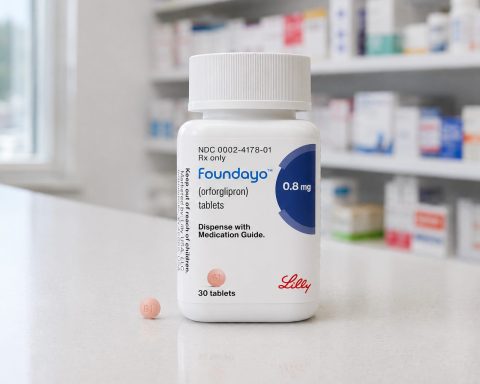
Lilly’s experimental orforglipron pill led to higher rates of nausea, diarrhea, and vomiting compared to Novo Nordisk’s Rybelsus in a head-to-head type 2 diabetes trial, according to full results out Thursday. Among those taking the 36 mg orforglipron dose, 58% experienced mild-to-moderate side effects and 10% discontinued treatment. That stacks up against 45% and 5% for patients on the 14 mg dose of Rybelsus. The 36 mg orforglipron group also saw greater drops in A1C — the average blood sugar marker — and more weight loss, the data showed. “The profile here is a trade-off that patients will be very happy to make,” said Kenneth Custer, president of Lilly Cardiometabolic Health. Reuters
Lilly reported that its 52-week ACHIEVE-3 study, covering 1,698 adults with type 2 diabetes, stacked two doses of orforglipron against two doses of oral semaglutide as an add-on to metformin. The company said findings appeared in The Lancet. Discontinuations due to side effects reached 9.7% for orforglipron 36 mg, compared with 4.9% for 14 mg semaglutide. “The differences were clinically meaningful,” said Julio Rosenstock, lead investigator from University of Texas Southwestern Medical Center. PR Newswire
The rush for a winning pill is just one front in a wider battle with Novo, a rivalry marked by recent missteps. Earlier this week, Novo published late-stage results: its next-gen obesity candidate CagriSema failed to match up against Lilly’s tirzepatide — sold as Zepbound for weight loss — in a direct comparison. BMO Capital Markets analyst Evan Seigerman didn’t mince words: “They literally ran a trial that said that Lilly’s product is better.” Reuters
Still, that surge in demand comes with its own issue: falling prices thanks to stiff competition, a sticking point investors can’t ignore. Novo is set to slash U.S. list prices for Ozempic and Wegovy 50% starting Jan. 1, 2027, dropping them to $675 per month. Bernstein’s Courtney Breen, though, argued the cut “doesn’t constitute the beginning of a price war.” Reuters
Lilly faces a short-term hurdle on tolerability. Should drop-out rates remain elevated as the drug moves to wider groups, or if concerns like increased pulse rates catch regulators’ attention, strong efficacy might not translate to rapid uptake.
Lilly is pushing forward on the operational front too. The company picked up U.S. Food and Drug Administration clearance this week for its four-dose KwikPen device for Zepbound—meant to cover a full month’s treatment using just one injector.
April is the next key date on traders’ calendars. According to a filing, Lilly built a $1.5 billion pre-launch inventory of orforglipron ahead of an FDA ruling expected that month. The company also has a fast-track review voucher, potentially trimming the FDA’s process to just one or two months—if the timeline sticks. Investors are watching closely for any updates, especially as competition among oral treatments intensifies.
Related articles: NYSE:LLY