
LONDON, June 22, 2026, 11:19 BST
- Brent fell sharply, dropping from $82.30 to around $79.10, for an intraday loss of 3.9%, as renewed U.S.–Iran talks brought back talk of increased Gulf supply.
- Gross Brent shorts held by managed money jumped 47.6% to 231,218 contracts, a high not seen since the pandemic. At the same time, the net-long position was down 45.4%.
- With crude at $80 a barrel, that short position comes to about $18.5 billion in face value.
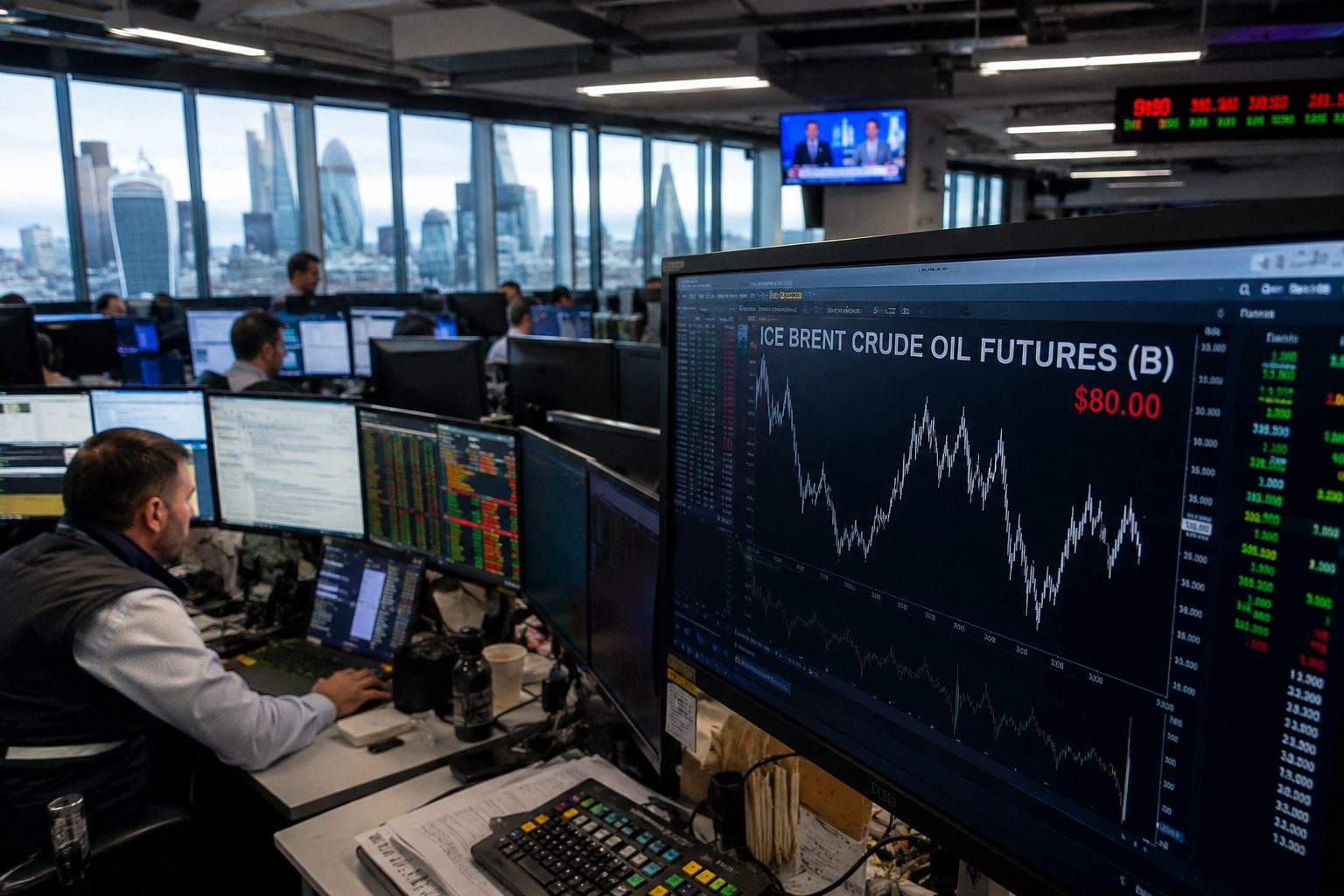
ICE Brent crude (ICE Futures Europe: B) dropped near $79.10 a barrel on Monday, off almost 2%, after running up to $82.30 earlier. That’s a $3.20 swing, or 3.9%, on reports of U.S.–Iran negotiation progress and Tehran saying it secured waivers for oil and petrochemical exports. The new supply story outweighed warnings about the Strait of Hormuz and fueled hedge fund bets that Brent can stay under $80.
The market move wasn’t about a demand change. Supply is starting to appear. Reuters said more than 25 million barrels of Iranian oil have now moved across the old U.S. blockade, with mediators setting out a 60-day talks plan. “Progress between the U.S. and Iran in the talks in Switzerland is likely the main factor weighing on oil prices today,” UBS commodity analyst Giovanni Staunovo said. Reuters
No single hedge fund has been identified in the short move. ICE Commitments of Traders data puts hedge funds and systematic players together, but doesn’t break out names. Gross shorts shot up from 156,637 to 231,218 contracts for the week through June 16. The net-long count slid from 208,891 to 114,128 contracts. Ole Hansen at Saxo Bank called it straight: “Gross short positions surged to 231k contracts, the highest level since the pandemic.” Ice
The bigger story is inside those net numbers. ICE data rebuilt shows gross longs slipped just 5.5% to around 345,346 contracts; gross shorts jumped 47.6%. New shorts made up about 79% of the net length drop this week. Long selling was only 21%. Short to long positions moved from roughly 43% to 67%. That’s not people taking profits. It’s a sharp bearish move.
Each ICE Brent contract is for 1,000 barrels, so the gross short position works out to 231.2 million futures-adjusted barrels. With Brent at $80, that adds up to $18.5 billion in notional exposure. A $1 move in Brent shifts the gross position by about $231 million mark-to-market. If the June 16 position held steady, Monday’s $3.20 move would have meant a swing of about $740 million toward the shorts. Actual results will differ since the entry levels, options, spreads and trade timing are not public.
Traders weigh supply returning and falling demand. The International Energy Agency projects global oil demand will drop by 1.1 million barrels a day in 2026, while supply bounces back by 8 million barrels a day in 2027 for a total of 110.3 million barrels a day. August Brent futures traded near $79.85, about $2.41 more than December, showing markets still see near-term tightness but bet that premium will shrink through the year.
But the size of the positioning dwarfs the recent move in physical supply. The IEA said global inventories dropped 143 million barrels in May, with stocks falling 3.8 million barrels a day on average since the start of the war. Gross hedge-fund shorts are 62% larger than the total draw in May and equal to about 61 days of supply falling at that same daily rate. “The physical market remains tight and that should provide some support,” Chris Weston, head of research at Pepperstone, said. IEA
Supply coming back will show who moved too soon. Gulf producers have started offering more crude, while Iraq is working to raise output toward 4.2–4.3 million barrels a day. ANZ puts the return of disrupted supply at 2–3 million barrels a day for the first four weeks, with another 2–3.5 million barrels a day possibly coming online in the third quarter. The bank also thinks 1–2 million barrels a day could stay off the market for good or for a long time.
The risk is two-sided here. If prices finish the day below Monday’s $78.58 low, that would firm up the bearish signal and open up a test of the $76.36–$76.54 zone. On the other hand, getting back over $82.30 would knock out the immediate sub-$80 case—especially with inventories dropping and gross shorts at highs last seen during the pandemic. That kind of rebound could set off forced covers instead of steady buying.
For traders, $80 acts more as a line in the sand for positioning than any true value call. The market’s next real signal will come from watching tanker movements at Hormuz, then the ICE positioning numbers due June 26. If exports keep climbing and shorts stay high, the evidence builds that $80 is a tough ceiling. If those extra barrels don’t show up, noise from diplomacy drops out—what matters is the squeezed trade it helped set up.