
New York, June 14, 2026, 17:01 (EDT)
- Pfizer closed up 0.15% at $26.21 on Friday. The S&P 500 was up 0.50%.
- The stock’s dividend yield is drawing notice, but investors are watching pricing pressure and patent cliff risk.
- Eyes are on Pfizer’s earnings, coming August 4, and also the FDA’s August 17 target for a Padcev-Keytruda decision.
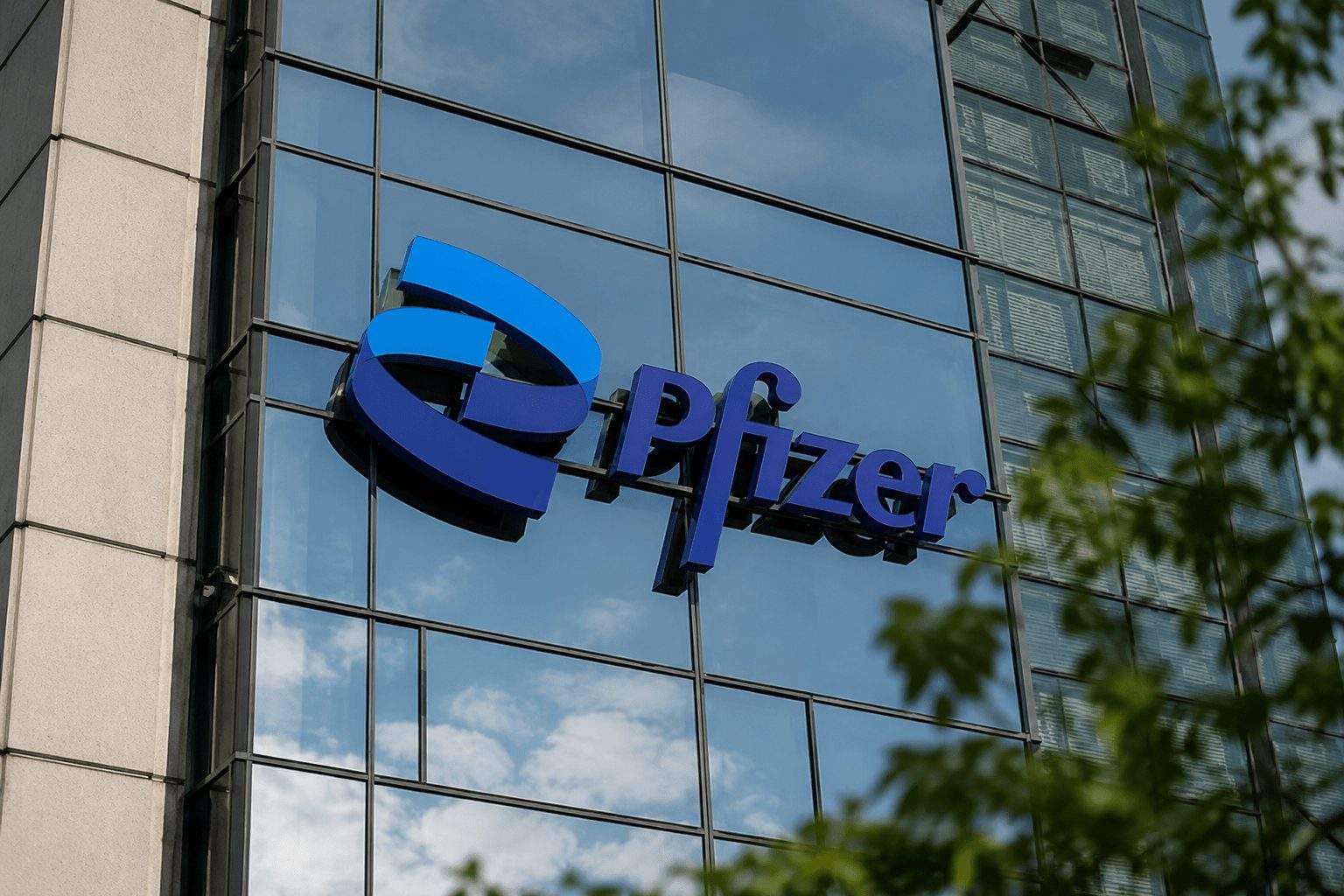
Pfizer Inc. NYSE:PFE ended the U.S. session at $26.21, up 4 cents. Volume was around 38.8 million shares and market cap was close to $150.2 billion. Shares barely budged even as the S&P 500 gained 0.50% and the Dow added 0.70%, according to market data. Pfizer’s trailing P/E hovered near 20.
PFE’s main near-term draw is income. Pfizer’s board kept the dividend at $0.43 for the second quarter, payable June 12 to holders of record on May 8. That keeps the streak alive at 350 straight quarters. The stock ended Friday at $26.21, giving the $1.72 annual payout a yield near 6.6%. That’s annual dividends divided by share price. The high yield helps support the shares, with growth prospects still limited. It also keeps focus on Pfizer’s cash flow.
Germany pushes harder on drug costs. Reuters reported Friday that German Health Minister Nina Warken said drugmakers won’t escape cost cuts, telling reporters: “Every sector must play its part in this reform.” Pfizer CEO Albert Bourla told the news service the company is reconsidering when and where to invest in Germany after rules to cap health-insurance expenses. That could be an issue for Pfizer investors, as pricing and reimbursement caps threaten to curb sales growth, regardless of demand. Reuters
Pfizer reported Q1 revenue of $14.5 billion in May, a 2% gain operationally after currency effects. Excluding Comirnaty and Paxlovid, operational revenue climbed 7%. Newer and recently bought products made up a 22% increase. Adjusted diluted EPS landed at $0.75. Pfizer left its 2026 targets the same, with revenue guidance between $59.5 billion and $62.5 billion, and adjusted diluted EPS at $2.80 to $3.00. Shares have trailed since the Covid boom, but the company’s numbers are steady for now.
Pfizer looks cheap if the company can deliver. At Friday’s close, shares traded at about 9 times the midpoint of Pfizer’s 2026 adjusted EPS forecast, which is under the trailing P/E in current market data. Management is pointing to higher demand for Padcev, Eliquis, Nurtec, and Lorbrena. Reuters reported in June that new drugs and deal gains are offsetting weaker COVID sales. RBC Capital’s Trung Huynh put it this way: “Pfizer remains a catalyst story, not an earnings story.” Pfizer Investor Relations
Pfizer’s recovery is still uncertain. Adjusted income for the first quarter fell 18% from a year earlier as COVID-product sales dropped again—Comirnaty declined 59% and Paxlovid slumped 63%. Reuters said the drugmaker faces more headwinds from patent cliffs and falling COVID demand. The company’s latest quarterly release also notes that its 2026 guidance does not factor in any share buybacks. That risk makes the dividend look tempting, but there’s no promise it will last.
Pfizer’s next big date is August 4, when it posts earnings. Investors are watching to see if full-year guidance stays in place. Wall Street is looking for Q2 EPS of $0.68, Public.com’s consensus shows. Revenue for the next quarter is seen at $14.44 billion, according to Investing.com. On August 17, the FDA hits its PDUFA target for Padcev plus Keytruda in muscle-invasive bladder cancer. Pfizer is seeking to expand use beyond cisplatin-eligible patients.
Pfizer is near fair value for yield hunters, but growth names may see more risk. Its dividend yield and a low expected earnings multiple provide a cushion. But drug price pressure, upcoming patent cliffs, weaker COVID product revenue, and uncertainty around the pipeline make it harder to argue the stock is a clear value pick. Investors are waiting for the next earnings report to find out if new launches in oncology, migraine, and obesity can offset weaker sales from older drugs and keep the dividend steady.
Related articles: NYSE:PFE