
New York, June 21, 2026, 12:08 (EDT)
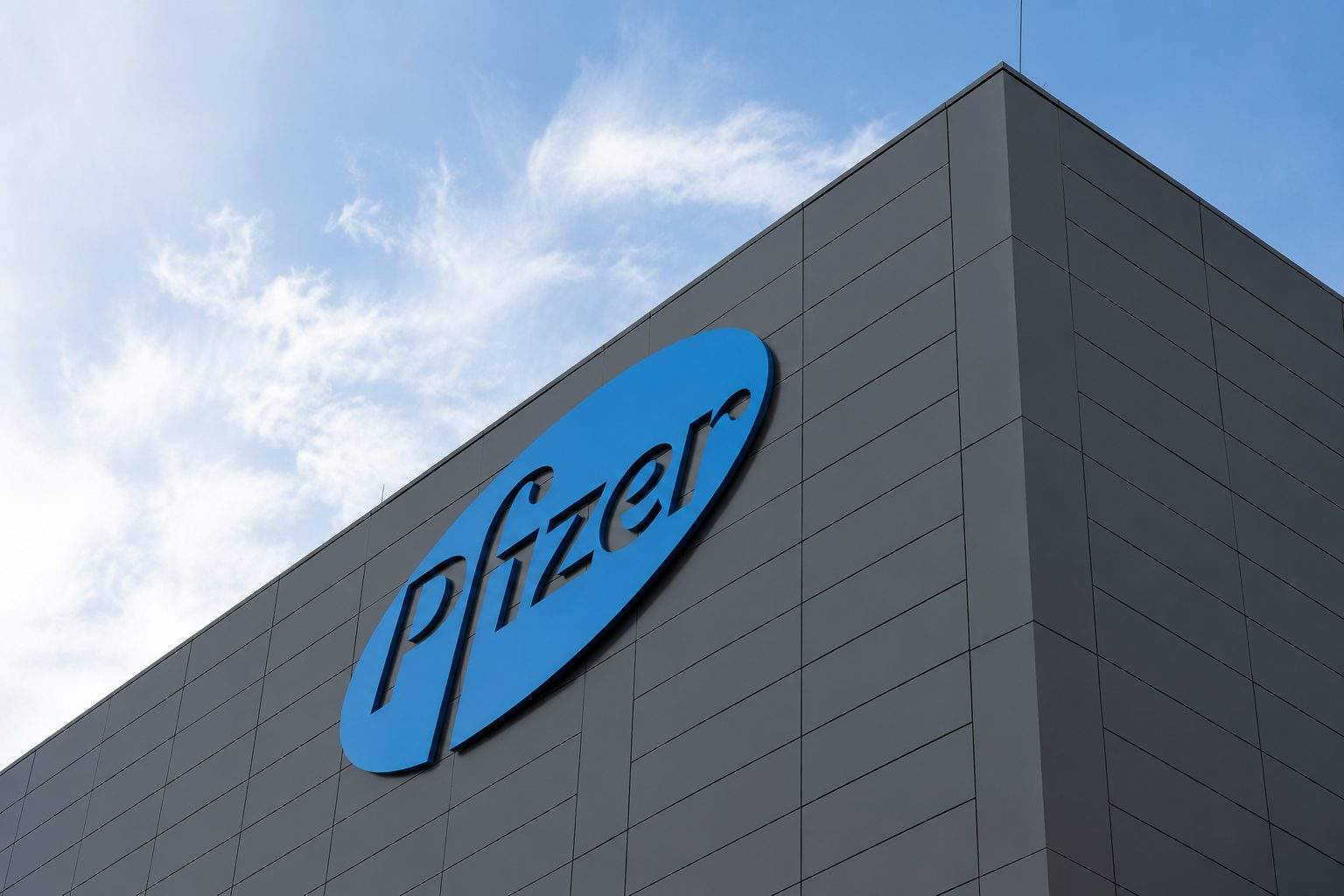
- Pfizer shares fell over the holiday-shortened week after CFO Dave Denton said he will step down in August.
- The drugmaker kept its 2026 forecast unchanged. Investors stayed focused on who will lead next, how the company will execute, and the pressure from obesity-drug rivals.
- U.S. cash markets stayed closed Friday for Juneteenth and will stay shut through Sunday. Monday’s session will be the next test for the selloff.
Pfizer Inc. shares slid again after its CFO said he’ll step down in August. The stock closed at $25.21, losing 2.7% on Thursday before the Juneteenth holiday and the weekend.
Dave Denton has been a key figure pitching Pfizer’s post-COVID plan to Wall Street—cutting costs after weaker pandemic sales, adding big deals, and leaning on a pipeline with unproven strength. Pfizer said Denton will leave Aug. 15. Cecile Guegan steps in as interim CFO the next day while Pfizer looks inside and outside for a replacement. CEO Albert Bourla called Denton a “steady and trusted steward.” Denton said Pfizer is “in excellent hands.” Pfizer
Pfizer dropped 2.74% to $25.21 on Thursday, trailing the S&P 500’s 1.08% gain and the Dow’s 0.14% rise. The stock also lagged behind Johnson & Johnson, Eli Lilly, and Abbott, according to MarketWatch data. Volume came in well over the 50-day average—this was more than just quiet pre-holiday trading.
Pfizer shares fell 3.8% over the four-session week, dropping from a June 12 close of $26.21 to $25.21 on Thursday. The move came as chip stocks and receding geopolitical worries lifted the Nasdaq and S&P 500 on Thursday, sending broader U.S. indexes higher ahead of the holiday.
Pfizer moved to calm markets. The company, in a June 18 filing, kept its outlook for all of 2026. It still sees revenue between $59.5 billion and $62.5 billion, with adjusted diluted EPS held in a $2.80 to $3.00 range. Adjusted diluted EPS is profit per share with some items stripped out and all possible shares counted.
Still, Denton’s departure brought up the same questions that a stable forecast was supposed to settle. Scotiabank analyst Louise Chen said investors were now uneasy about the 2026 forecast, about who comes next, and the timing, as Pfizer gets ready to jump into obesity drugs, Reuters said.
Eli Lilly and Novo Nordisk still lead the obesity-drug race while Pfizer fights to get in. Pfizer acquired Metsera, the obesity-drug developer, after a bidding contest. CEO Albert Bourla told reporters in January, “We are all in on obesity.” Pfizer lined up 10 Phase 3 studies on Metsera obesity drugs this year. Reuters
There’s a catch. Obesity drug prices have been squeezed and some market forecasts are down. Earlier this year, Jefferies analyst Michael Leuchten told Reuters, “That $150 billion pie is gone.” Some analysts still believe cheaper drugs will bring in more patients and keep demand strong. Reuters
Pfizer heads into the week with investors looking for clues on Monday—will buyers step in on the reopen, or does selling pick up? The company is expected to update on the search for a permanent CFO. But the main issue isn’t just the absence of one executive. Confidence is the problem. Faith in the outlook, faith in deal plans, and belief that fresh drugs will fill the gap as old ones go off patent—all remain in question.
But there’s no guarantee of a relief rally. In its filing, Pfizer cautioned that research outcomes, regulatory moves, rivals, price pressure, COVID demand, tariffs and deal execution could all push results away from forecasts. If the CFO change stirs worries about spending or how deals get absorbed, shares may stay under pressure, even if the outlook holds.
Related articles: NYSE:PFE