
New York, July 13, 2026, 12:45 EDT
U.S. chip stocks dropped hard Monday, with the Philadelphia semiconductor index sliding 3.6% in late-morning deals as Micron Technology NASDAQ:MU, Sandisk NASDAQ:SNDK, and SK Hynix NASDAQ:SKHY paced the losses. Oil prices moved higher on renewed U.S.-Iran fighting, spurring a wider risk-off move. “The conflict is testing whether the stock market’s broad-based growth can hold,” said Alex Guiliano, chief investment officer at Resonate Wealth Partners. Reuters
The selling comes even though chip demand hasn’t cratered. Taiwan Semiconductor Manufacturing Co. NYSE:TSM reported June revenue up 67.9% year over year to NT$442.68 billion, and said first-half sales gained 35.6%. Its U.S. stock still fell.
| Reporter-constructed basket | Component moves at about 12:30 p.m. ET | Equal-weight move |
|---|---|---|
| Memory and storage | Sandisk NASDAQ:SNDK off 11.6%; Western Digital NASDAQ:WDC down 6.7%; Micron NASDAQ:MU fell 5.0% | -7.8% |
| AI infrastructure design and connectivity | Astera Labs NASDAQ:ALAB dropped 14.1%; Arm Holdings NASDAQ:ARM off 7.5%; Marvell Technology NASDAQ:MRVL lost 6.9% | -9.5% |
| Large compute and foundry | Nvidia NASDAQ:NVDA slipped 2.5%; Advanced Micro Devices NASDAQ:AMD down 3.1%; TSMC NYSE:TSM off 1.6% | -2.4% |
| Broad semiconductor ETF | iShares Semiconductor ETF NASDAQ:SOXX fell 4.5% | -4.5% |
The gap told the tale. Memory and storage names lagged the bigger compute and foundry group by about 5.4 percentage points. Smaller design and connectivity stocks trailed even further. Investors are dialing back the scarcity premium — the high valuations tied to tight supply — and trimming bets on companies with profits forecast years out.
SK Hynix triggered a memory selloff that quickly turned into a market-structure story. Its Seoul shares slid 15.4%. The U.S. ADRs, which represent foreign shares, dropped 7.9% just after last week’s $26 billion Nasdaq debut. The ADRs still sold at a 25.6% premium over the Korean stock. A double-leveraged Hong Kong fund tied to SK Hynix tumbled by more than a third. “A component of profit taking” was clear, said Phil Blancato, CEO at Ladenburg Thalmann Asset Management. He said he’s still seeing strong demand through 2027 and 2028. Reuters
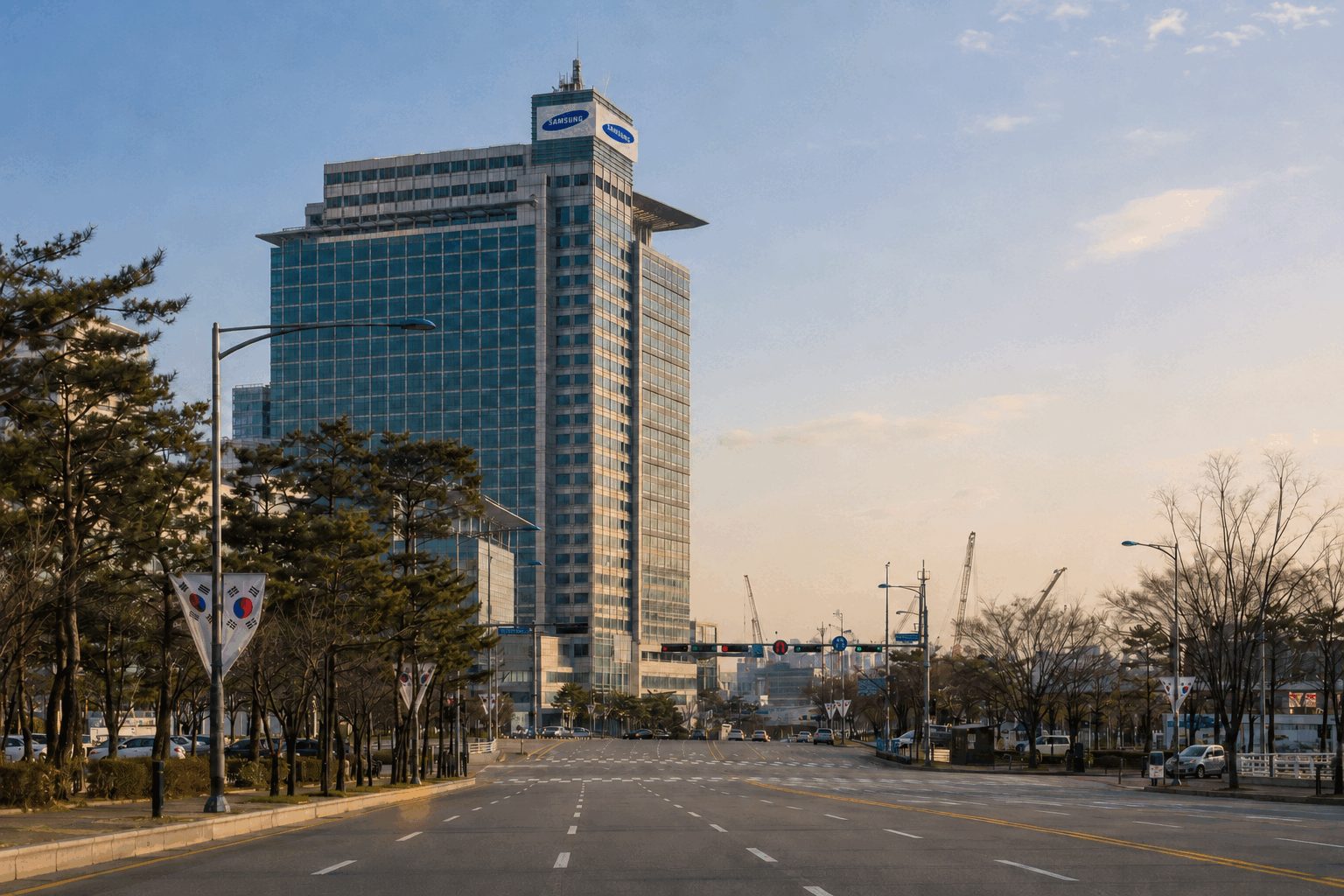
Supply risks are real. South Korea’s $576 billion push into AI chips includes roughly $518 billion that Samsung Electronics KRX:005930 and SK Hynix have earmarked for new fabs. This capex on plants and gear will take years before it turns into supply, but markets usually price new output long before production starts. Jing Jie Yu at Morningstar said chips coming online in 2027 and 2028 could cause “price erosion.” Reuters
| Investor lens | Evidence supporting chip shares | Evidence behind Monday’s decline |
|---|---|---|
| Current demand | TSMC posted record second-quarter sales, NT$1.27 trillion, up 36% on the year. Reuters | U.S. shares didn’t respond to the report, suggesting markets had already priced in the strong numbers. |
| Future supply | SK Hynix CEO Kwak Noh-jung sees the worst memory crunch in 2027 and demand outrunning supply after 2030. Reuters | Samsung is advancing its first Yongin fab to 2029, accelerating by up to two years; Korea also targets double the memory output in five years. Reuters |
| Positioning | Wall Street targets show over 60% upside for Micron and 30% plus for Sandisk. | Semiconductor funds lost about $11 billion for the week through June 24—biggest weekly pull in decades. Short bets in the sector hit a three-year high. Reuters |
| Macro backdrop | No fresh signals of a dropoff in AI-chip orders. | Oil moved up about 4.5%, and bond yields rose as the Gulf conflict escalated. Reuters |
Oil fueled the move but wasn’t the main driver. Rising energy costs can keep inflation and rates up, while higher bond yields cut into the value of future profits. That pressure landed harder on Astera, Arm, and Marvell than on Nvidia or TSMC. The market stopped pricing every AI supply chain stock like it’s just as rare as the next.
Bears may be jumping the gun. Last month Micron said its customers lined up $22 billion in deals to lock in memory supply, and it sees production tight for at least two more years. If those orders stick, the drop on Monday could just be positions shaking out. Bigger risks are if cloud firms pull back on spending or if South Korea ramps up capacity faster than bets, which would drive down prices and margins before analysts cut numbers.
TSMC is set to release its second-quarter report Thursday, July 16. Investors are likely to key in on updates about capacity, advanced packaging, and what customers are spending. For now, the market action Monday points to a tighter risk for stocks that trade on scarcity stories, not always those with the biggest orders in hand.
Related articles: NASDAQ:MRVL




![US Stock Market Today 08/26/2026 [UPDATE: 02:11 EDT] [QQQ Loss Widens as Intuit Slides 10.5% Overnight]](https://ts2.tech/wp-content/uploads/2026/08/US-market-dashboard-2026-08-26-0210-480x384.jpg "US Stock Market Today 08/26/2026 [UPDATE: 02:11 EDT] [QQQ Loss Widens as Intuit Slides 10.5% Overnight]")