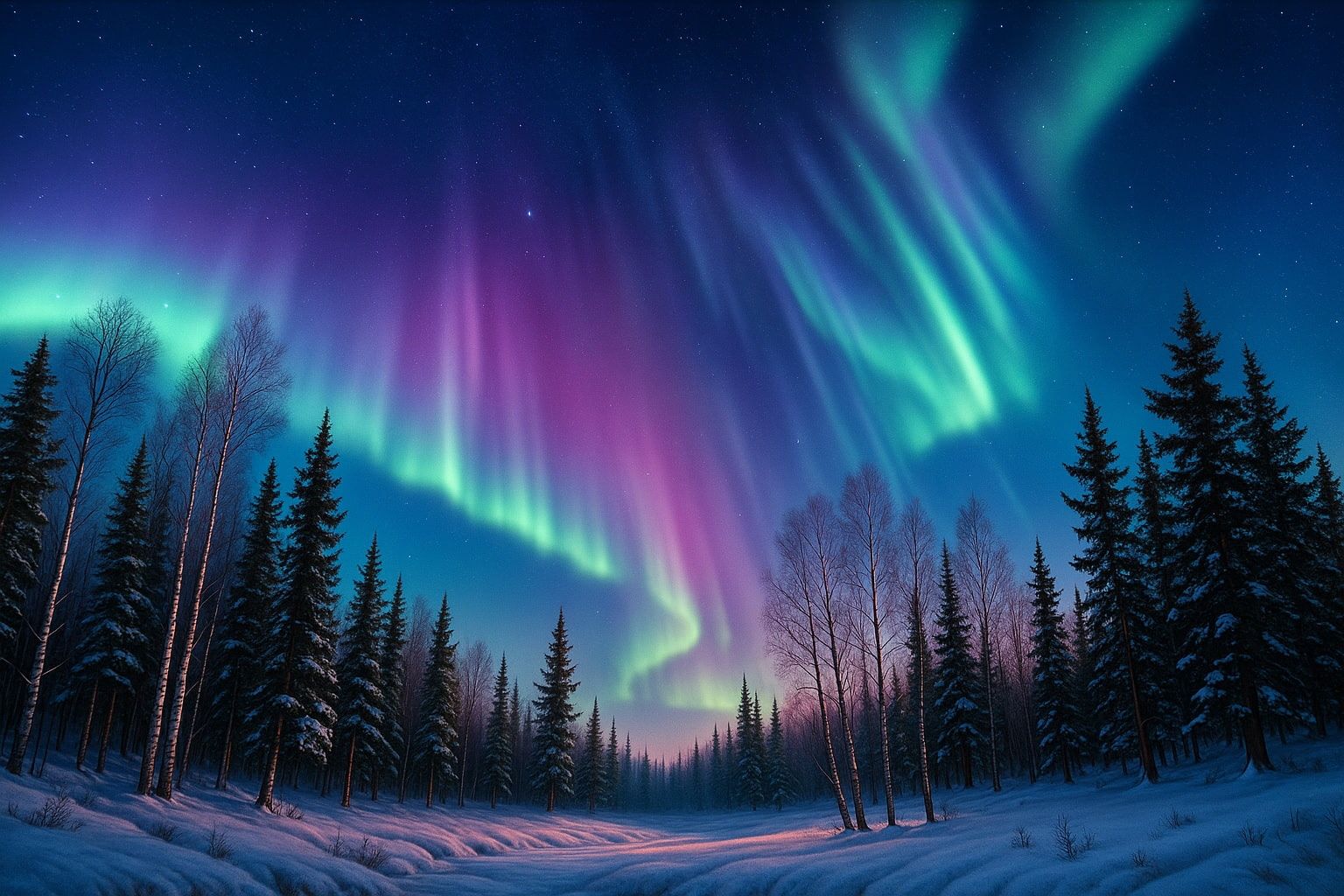

- NOAA confirms a G4 “severe” geomagnetic storm reached Earth at 01:20 UTC on Nov. 12, fueling dazzling auroras and likely continuing into tonight. NOAA Space Weather Prediction Center
- A G4 watch remains in effect, following an X5.1 solar flare and multiple coronal mass ejections (CMEs) earlier this week.
- Aurora sightings spanned the U.S. overnight—from the Mid‑Atlantic to the Upper Midwest—with more chances this evening if skies are clear.
- Southern Hemisphere glow: Australia’s space‑weather forecasters report G4 conditions, with visibility possibly as far north as Sydney and Perth tonight.
- Potential impacts at G4: degraded GPS accuracy, HF radio disruptions, and grid voltage control issues are possible.
What’s happening
The Sun’s recent burst of activity sent a train of CMEs toward Earth. Overnight, the storm escalated to G4 (severe) levels, which NOAA’s Space Weather Prediction Center (SWPC) confirmed at 01:20 UTC on Nov. 12 (8:20 p.m. EST, Nov. 11). Forecasters say geomagnetic storming “is anticipated to continue into the night,” keeping aurora chances elevated. NOAA Space Weather Prediction Center
The severe watch was posted ahead of time due to a sequence of CMEs—including one tied to an X5.1‑class solar flare at 10:04 UTC on Nov. 11—with forecasters flagging uncertainty around the exact arrival timing but high confidence that Earth would catch at least part of the blast.
Where the aurora may be visible tonight (Nov. 12)
- United States: After last night’s widespread display—including the Philadelphia region and across Minnesota—NOAA and local forecasters note another chance this evening. Visibility prospects improve the farther north you go and away from city lights; some forecasts say the glow could reach as far south and west as Alabama and California if storm intensity holds.
- Great Lakes & Midwest: Local meteorologists in the Detroit area are flagging “another chance to see them” as winds and clouds fluctuate through the day. Clear breaks after dusk will be key. CBS News
- Australia & New Zealand: Australia’s Bureau of Meteorology reports G4 conditions and says the aurora australis could be seen unusually far north—Tasmania, Victoria and New South Wales, possibly even Sydney and Perth—with the best viewing opportunities tonight.
For the most current visibility maps and short‑term (30‑minute) projections, consult NOAA’s Aurora resources at SpaceWeather.gov.
What we saw overnight
Social feeds and local newsrooms filled with images of bright greens and reds across the U.S. On the East Coast, the Delaware Valley caught the aurora Tuesday night, and in the Upper Midwest the sky lit up over Minneapolis and beyond. These reports align with the storm’s quick jump to G4 levels after sunset.
What a G4 storm means (and why it matters)
NOAA’s space‑weather scale runs from G1 (minor) to G5 (extreme). At G4, operators may see:
- Power systems: possible widespread voltage control problems and protective devices tripping on parts of the grid.
- Satellites & spaceflight:surface charging, tracking/orientation corrections, and increased drag for low‑Earth‑orbit spacecraft.
- Radio & navigation:sporadic HF radio outages; satellite navigation (GPS) can be degraded for hours; low‑frequency navigation disrupted.
- Aurora reach: historically as far south as Alabama and northern California during G4 episodes.
The current event was primed by an X5.1 flare on Nov. 11 and multiple CMEs that have been interacting en route to Earth—exactly the kind of setup that can supercharge auroras and produce short‑lived disruptions to radio and navigation systems.
How to see (and photograph) the lights tonight
- Get dark and look low: Go well away from city lights and find a clear view toward the northern horizon in the Northern Hemisphere (south in the Southern).
- Let your camera help: Even when color looks faint to your eyes, a long exposure (around ~10 seconds) on a tripod can reveal vivid structure. Modern phones have night modes that work in a pinch.
- Check clouds twice: Local forecasts around the Great Lakes and Northeast call for breezy, changeable conditions; a brief clearing can make all the difference.
- Refresh official dashboards: Conditions can ramp up or down quickly—use NOAA’s SWPC for alerts and the latest storm status before you head out.
The science in brief
Auroras occur when charged particles from CMEs disturb Earth’s magnetosphere and stream into the upper atmosphere near the poles. There, they excite oxygen and nitrogen, which emit the greens, reds, and purples captured in so many photos. With the Sun near a solar‑cycle peak, bursts like the recent X‑class flare can align to deliver multi‑night sky shows.
Safety & infrastructure notes
Everyday life usually continues uninterrupted, but temporary issues are possible at G4: amateur and aviation HF radio can fade, GPS positioning can wobble, and grid operators may take precautionary actions to manage voltage. If you depend on precise GNSS (e.g., agriculture, surveying), have a fallback plan in case accuracy dips.
Bottom line
With G4 conditions confirmed and another night of elevated activity possible, tonight (Nov. 12) offers a strong chance to catch the Northern Lights across the northern U.S. and Southern Lights across unusually large swaths of Australia—weather permitting. Keep an eye on SpaceWeather.gov and your local forecast, head for dark skies, and let your camera roll.
Sources: NOAA/NWS Space Weather Prediction Center updates and scale guidance; on‑the‑ground coverage from CBS local newsrooms and MPR News; Australia visibility and tips via The Guardian.
Related articles: Space