
New York, June 12, 2026, 12:55 PM EDT
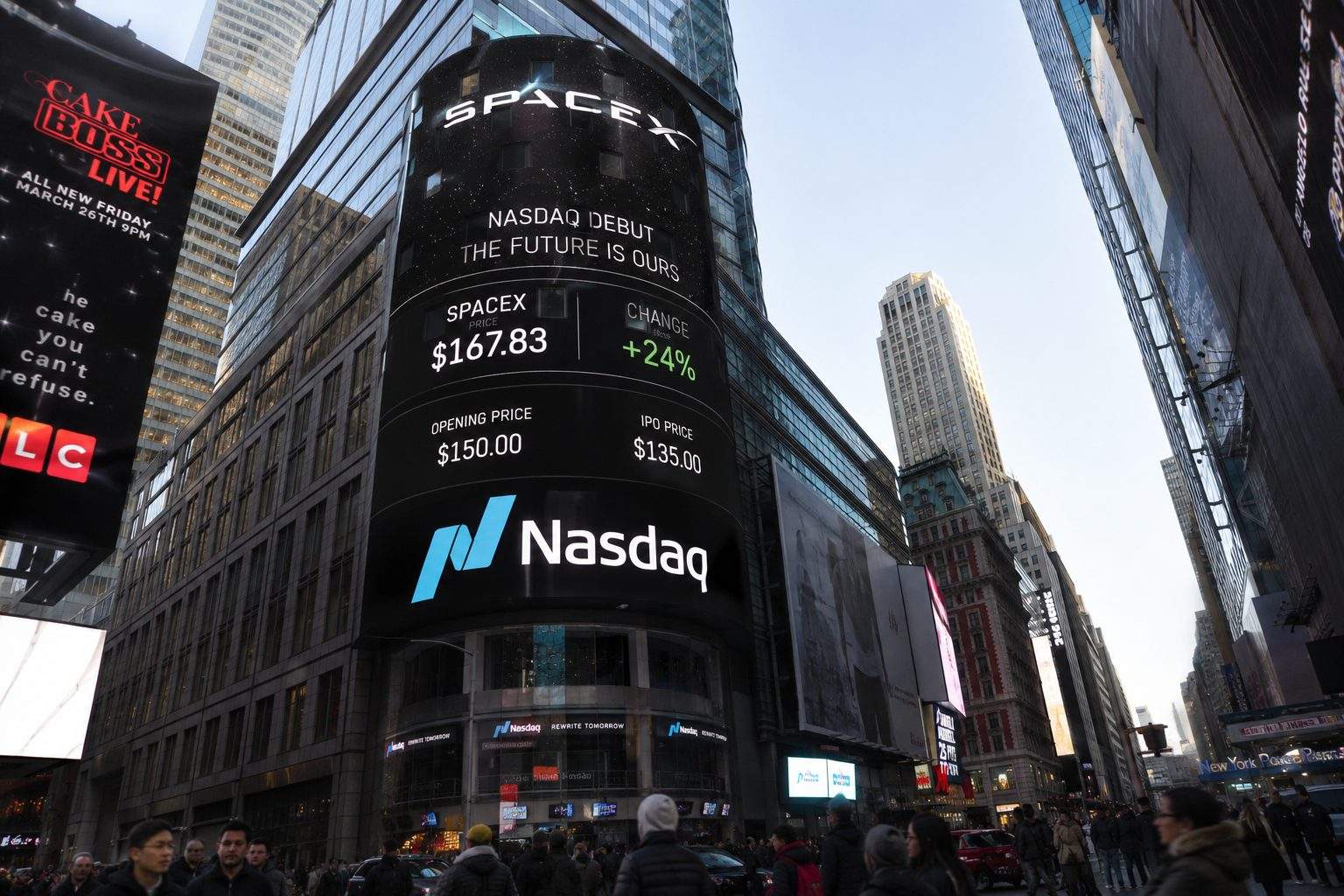
- SpaceX started trading on Nasdaq at $150 and last changed hands at $167.83, roughly 24% over its $135 IPO price.
- SpaceX priced its IPO at $135 per share, raising $75 billion through the sale of 555.56 million shares. The deal values the company at $1.77 trillion.
- The next big trigger is fast Nasdaq 100 inclusion, then investors will look for the first real signs that Starlink, Starship, and AI spending can back up the valuation.
SpaceX stock blasted higher in Friday’s debut, with the SPCX ticker drawing heavy attention on Wall Street. The stock was last at $167.83 after opening at $150. That’s above the IPO price of $135. An IPO is when a company sells shares to the public for the first time. With 13.08 billion shares outstanding, according to Reuters, the price gives SpaceX a market cap near $2.2 trillion.
SpaceX is now a public stock, not just an Elon Musk private venture. The name moves past Starlink and Starship as shares start trading on the Nasdaq Global Select Market and Nasdaq Texas under “SPCX.” SpaceX confirmed it sold 555,555,555 Class A shares at $135 each. Reuters said the deal brought in $75 billion—more than double what Saudi Aramco’s IPO raised in 2019. The stock could affect tech indexes, exchange-traded funds, and retail accounts. Newswire
Stocks go up when buyers pay more for future cash flows, growth or scarcity than sellers want. They drop when earnings, valuation, liquidity or risk expectations shift the other way. SpaceX is seeing early gains thanks to demand for a limited IPO float, investor excitement about Musk’s track record, and bets that index funds could have to buy in soon. Adam Sarhan, CEO at 50 Park Investments, told Reuters: “The real test will be how the market digests the IPO over the next several weeks, not just one day.” Reuters
SpaceX’s operating edge is at the heart of the bull case. Reuters said SpaceX sales jumped 33% to $18.67 billion last year. Starlink brought in around 60% of that, with about 10.3 million users on 9,600 satellites. SpaceX has gone from a single launch in 2006 to over two a week now. The Starship rocket can haul more than 100 metric tons to low-Earth orbit, key for launches, Starlink buildout, and maybe orbital computing down the road.
Valuation and execution risk are the main bear arguments. When SpaceX went public at $135 a share, Reuters said that priced the company at about 94 times trailing sales. Price-to-sales compares market value to revenue—investors are paying far above current revenue on this one. At $167.83, the ratio is roughly 118 times 2025 revenue. SpaceX lost $4.94 billion last year after merging with xAI, Reuters reported, as AI costs outpaced profits from Starlink.
Governance and competition are also on the table for investors. Reuters said Musk will control 82% of SpaceX voting power after its IPO, leaving minority shareholders with little sway. Rivals such as Blue Origin are chasing similar launch and government work. Morningstar’s Nicolas Owens stayed cautious on valuation: “We think the company has been significantly overvalued and investors will have opportunities to buy the stock at more attractive levels after the IPO,” he said. Morningstar puts SpaceX’s value at $780 billion. Reuters
SpaceX’s next move could be a quick addition to the Nasdaq 100, with the firm expected to get in under new fast-entry rules. The Nasdaq 100 covers big Nasdaq-listed firms outside of financials and is popular with ETFs. Reuters reported SpaceX might have to wait before joining the S&P 500, but Morningstar sees a possible Nasdaq 100 inclusion after 15 trading days. Index additions can pull in buying from passive funds. But risk can pile up if shares turn south after the post-IPO jump.
SpaceX at today’s price doesn’t look clearly attractive or fairly valued; it looks risky. Bulls point to Starlink’s big revenue contribution and the company’s unmatched launch pace, which both help it pull ahead of smaller rivals. But the stock’s first-day valuation is built on expectations for years of flawless Starship rollouts, satellite broadband growth, and AI infrastructure wins. For now, the company is posting losses and spending heavily. The big question for investors: can SpaceX turn its tech lead into lasting profits quickly enough to back up a valuation that’s already more than $2 trillion?
Related articles: NASDAQ:SPCX