
NEW YORK, May 31, 2026, 13:01 (EDT)
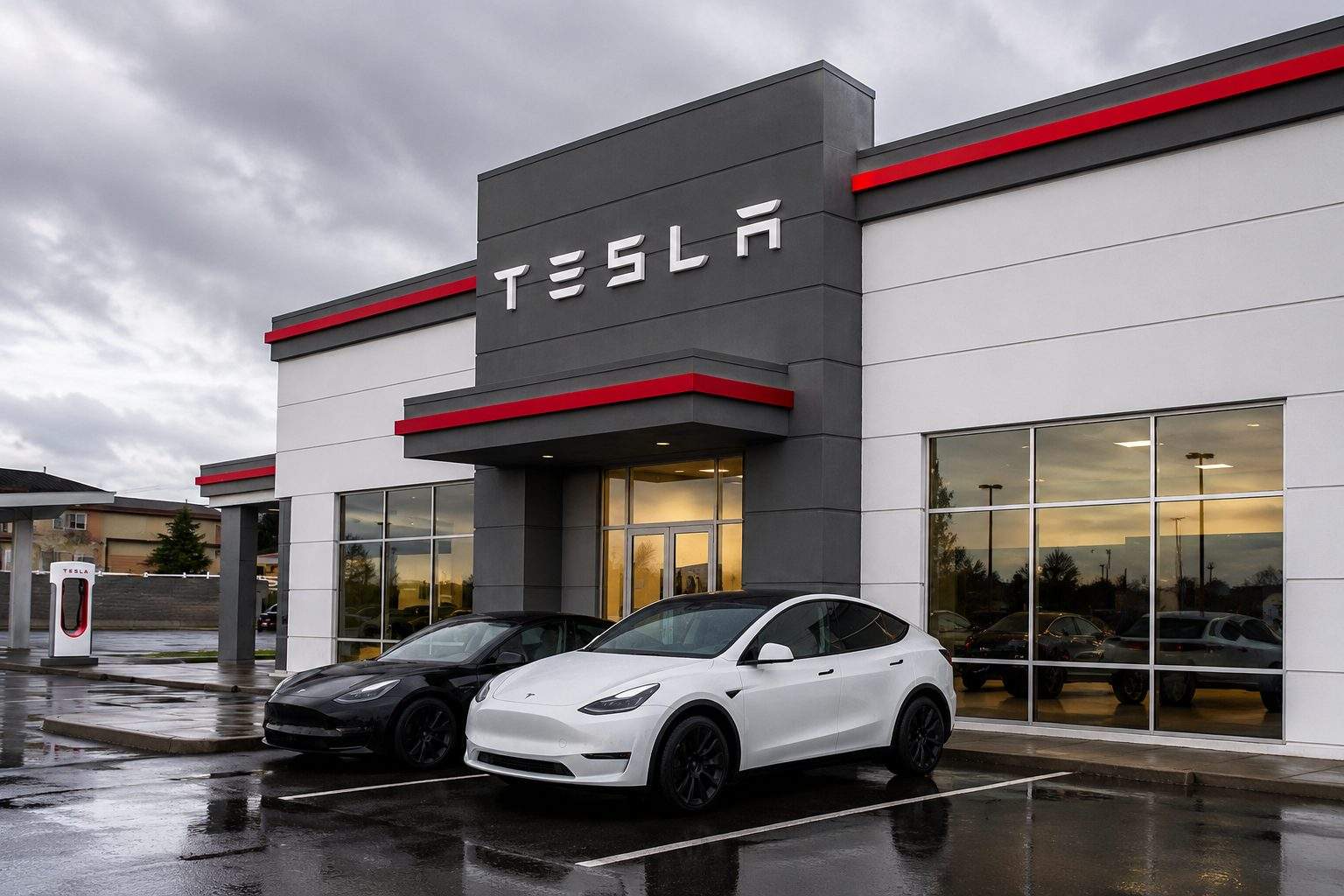
Tesla shares started June showing mixed action. The stock dropped 1.43% to close at $435.79 Friday, breaking a six-day winning streak, but still finished the Memorial Day week up about 2.3%. After hours, shares were at $434.35, moving between $428.14 and $441.07 during Friday’s regular session.
Tesla’s stumble late last week was notable, as the rest of the market moved higher. The S&P 500 climbed 1.4% for its ninth week of gains, and the Nasdaq Composite added 2.4%. Growth stocks stayed strong, giving Tesla some cushion.
U.S. cash stocks are closed Sunday. Nasdaq opens for its usual trading hours from 9:30 a.m. to 4:00 p.m. Eastern most weekdays. The next full-day market holiday after Memorial Day is Juneteenth, set for June 19.
Tesla found some support from Europe. The company’s vehicle registrations in the EU, UK and EFTA jumped 46.5% to 10,654 units in April, Reuters said, stretching a rebound that started after over a year of drops. BYD did more, with registrations up 114.5% to 27,008 there.
Registrations stand in for sales, tracking when new cars actually hit the road. Battery-electric vehicles made up 19.7% of the EU’s market through April, ACEA said, up from 15.3% last year. These figures cover only fully electric cars, not hybrids or gas-powered models.
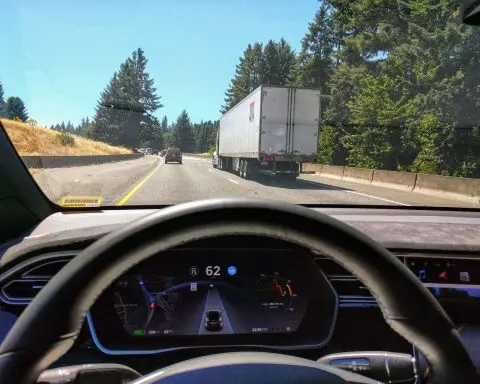
The bigger story is robotaxis. Tesla’s market cap is tied to whether it can turn Full Self-Driving, or FSD — the paid driver-assist software — into a big autonomous ride business. Reuters reported last week that Tesla’s site still tells users the current FSD features need driver supervision and don’t make the car autonomous.
The week ahead brings new risks for Tesla. Reuters said current and former Tesla staff, including ex-data labelers and a self-driving engineer, described software problems with basic driving moves lately, like handling school buses and emergency vehicles. Tesla did not answer Reuters’ questions. One safety comparison is off, said Phil Koopman, a Carnegie Mellon engineering professor: “Any new car is dramatically safer than a 12-year-old car.” Reuters
Musk has dialed back the timing talk. In April he said robotaxis probably “not be super material this year,” pointing to “rigorous validation” as the key limit. Morningstar analyst Seth Goldstein said Tesla is cautious because “the stakes are very high.” Reuters
Tesla said in April it’s moving ahead with robotaxis, launching in Dallas and Houston after starting in Austin. The company shared videos showing Model Y SUVs operating with no human driver or front-seat safety monitor. No fleet numbers or pricing details yet.
Scale is still the big challenge for the sector. Business Insider, using data from the Texas Department of Motor Vehicles, said Tesla has 42 autonomous vehicles registered in Texas. That’s far behind Alphabet’s Waymo, which has 577 vehicles there.
Reuters reporters ran their own tests and saw some hiccups with the service: in Austin, half the time they tried it over three weeks in April, waits went over 15 minutes, and in 27% of tries no cars showed up. Austin police told Reuters there haven’t been major crashes or any traffic tickets for Tesla.
Tesla’s costs are piling up. Back in April, the company lifted its 2026 capital spending outlook to over $25 billion. Musk is spending on AI, robotics and chips. Capital spending is money for bigger assets, like factories and computer systems. Tesla also warned of negative free cash flow through 2026 — that’s after operating costs and investment — even as Musk said the company was “substantially increasing” spending to drive future sales. Reuters
Tesla is heading into Monday with support from a firmer market, better Europe sales, and the same robotaxi pitch that continues to move the stock. But the risks are out there. If investors think issues like safety, spending, or scaling are outpacing revenue, Friday’s drop may not be the end of it.
Related articles: NASDAQ:TSLA