
NEW YORK, Dec. 12, 2025 — Wealthfront, one of the best-known robo-advisers in US consumer finance, is officially entering the public markets today. The Palo Alto-based company priced its initial public offering at $14 per share , raising roughly $485–$486 million and setting up a Nasdaq debut under the ticker WLTH .
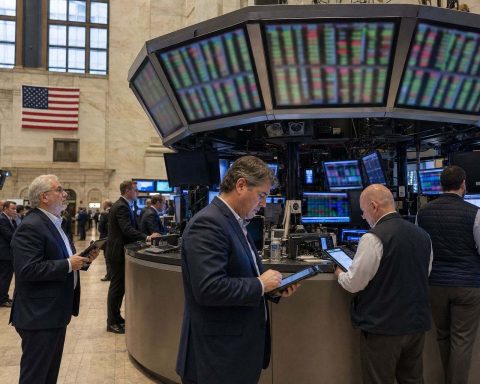
The listing-day milestone comes with a high-profile moment in Times Square: Wealthfront’s leadership is scheduled to ring the Nasdaq Opening Bell at the MarketSite this morning, marking the fintech’s transition from a private “digital-first” platform into a public company polled quarter by quarter.nasdaq.com
The IPO in numbers: pricing, proceeds, and valuation
Wealthfront priced at the top of its marketed range ($12–$14), a signal of solid demand even as the broader IPO market remains selective about consumer-facing fintech stories.
Here are the key terms disclosed across today’s reporting and the company’s IPO announcement:
- IPO price: $14.00 per shareGlobeNewswire+ 1
- Shares sold: 34,615,384GlobeNewswire+ 1
- Gross proceeds raised: about $485–$486 millionGlobeNewswire+ 2Reuters+ 2
- Primary vs. secondary mix:
- 21,468,038 shares sold by Wealthfront (primary)
- 13,147,346 shares sold by existing shareholders (secondary)GlobeNewswire
- Over-allotment option: underwriters can buy up to 5,192,308 additional shares within 30 daysGlobeNewswire
- Headline valuation (market value): around $2 billion based on outstanding shares at the IPO priceReuters+ 1
- “Fully diluted” valuation (broader share count): about $2.6 billion Axios+ 1
Why the valuation numbers differ: in today’s coverage, you’ll see both an “around $2 billion” market value and an “about $2.6 billion” fully diluted value. These can both be true—market value typically refers to outstanding shares at pricing, while fully diluted calculations incorporate additional potential shares (like options and other equity instruments).Reuters+ 2Axios+ 2
Nasdaq Opening Bell: who’s ringing it and why it matters
Wealthfront’s Nasdaq bell ceremony is scheduled for 9:15–9:45 am ET at the Nasdaq MarketSite (4 Times Square). According to Nasdaq, Wealthfront CEO David Fortunato will ring the bell alongside co-founder and chairman Andy Rachleff and co-founder Dan Carroll —a symbolic “we made it” moment for a company that helped popularize automated investing for younger customers.nasdaq.com
For consumer fintechs, these optics matter: in an era where many IPOs depend as much on narrative clarity as on financial metrics, the opening bell is a public-facing proof point that Wealthfront has crossed the regulatory, investor, and underwriting hurdles that have stalled many would-be issuers.
What Wealthfront is selling to public-market investors
Wealthfront built its reputation as a robo-advisor —software-driven portfolio management designed to deliver diversified, low-cost investing without a traditional human advisory model. Over time, it expanded beyond automated portfolios into a broader platform that includes cash management, borrowing/lending, and financial planning tools , aimed heavily at Millennial and Gen Z customers.
By the time it reached the IPO window, the company had scaled to:
- More than 1.3 million funded customers (as of July 31, 2025)Renaissance Capital
- $88.2 billion in platform assets (as of July 31, 2025), split between cash management (53%) and investment advisory (47%) Renaissance Capital
That asset mix matters because it directly influences revenue resiliency—especially in shifting interest-rate environments.
The business model reality: cash is the engine (and rates are the risk)
A core theme in today’s Wealthfront coverage is that the robo-advisor story is no longer “just” about automated ETF portfolios. Wealthfront’s cash offering has become central to its growth and economics, a dynamic that looks smart in a higher-rate world—and more complicated if rates drift down.
Barron’s reporting highlights that cash management represented a large share of Wealthfront’s revenue in the most recently cited half-year period, while also pointing to the company’s sensitivity to interest-rate changes.
Separately, a Bloomberg write-up carried by InvestmentNews provides a snapshot of recent profitability and revenue changes, noting net income of $60.7 million on $175.6 million in revenue for the six months ended July 31 , compared with $132.3 million in net income on $145.9 million revenue a year earlier (with tax-related impacts also discussed).
Together, these data points underscore the central question investors will likely debate in the weeks after the debut:
- Is Wealthfront a sustainable, diversified wealth platform that can compound user assets over time?
- Or is it unusually exposed to the economic cycle—especially to the direction of interest rates and cash spreads?
Tiger Global’s IPO moment: from private bet to public mark-to-market
Today’s IPO is also a liquidity event for long-time backers. In the Bloomberg report, Tiger Global is cited as holding a 19.7% stake before the offering , alongside other major investors including DAG Ventures (12.3%) and Index Ventures (11.5%) .
And in a closely watched angle for venture and growth investors, The Information reported that Wealthfront’s IPO pricing could triple Tiger Global’s investment —a reminder that, even after a volatile few years for late-stage tech valuations, some high-profile fintech bets are reaching the public markets at meaningful step-ups.
Axios’ Pro Rata newsletter similarly frames the IPO as part of a broader liquidity trend and notes the same pre-IPO stake figures for major holders, while also referencing Wealthfront’s prior acquisition talks.
A second act after the UBS deal that didn’t happen
Wealthfront’s path to the Nasdaq today also reads like a classic “fintech resilience” story: in 2022, UBS agreed to acquire Wealthfront for $1.4 billion , but the deal was ultimately abandoned.Investment News+ 1
Now, Wealthfront’s public valuation metrics—whether you anchor on the roughly $2 billion market value at pricing or the ~$2.6 billion fully diluted figure cited in multiple reports—suggest a materially higher public-market reference point than that earlier would-be exit.
Why this IPO is being watched across fintech—and what it signals about 2025’s market
Wealthfront’s debut lands in a year where US fintech listings have been more active than many expected, helped by improved risk appetite compared with the tightest post-2021 period—yet still shaped by “prove it” skepticism around consumer platforms.
Reuters describes Wealthfront’s deal as part of a strong year for fintech flotations , noting other notable 2025 debuts including Chime and Klarna .
But Axios adds the cautionary context: investor appetite for consumer fintech has been tested recently, with some high-profile names slipping below early trading benchmarks—meaning Wealthfront’s after-market performance will be closely read as a sentiment indicator, not just a single-company outcome.
Renaissance Capital also points to another crucial feature of the deal: the presence of cornerstone interest —with BlackRock and Wellington indicated for $150 million of the IPO (about 31% of the deal at pricing, per its note).
Underwriters and what happens next
Wealthfront is entering public markets with a heavyweight banking syndicate:
- Lead book-running managers: Goldman Sachs and JP MorganGlobeNewswire
- Additional active bookrunners include Citigroup, Wells Fargo Securities, and RBC Capital Markets, among othersGlobeNewswire+ 1
The company’s press release says the IPO is expected to close on Dec. 15, 2025 , subject to customary conditions—important because it marks when proceeds formally settle and when the company transitions fully into post-offering reporting cadence.
What to watch after Wealthfront’s Nasdaq debut
For readers tracking the fintech IPO pipeline—or simply wondering what this listing means for automated investing—the next few sessions will likely focus on:
- Trading stability after the opening prints (does WLTH hold above issue, or fade?)
- Public-market expectations for growth vs. profitability (especially given rate sensitivity)Barron’s+ 1
- The secondary overhang (a meaningful portion of the deal is selling shareholders)GlobeNewswire+ 1
- How management frames the roadmap —including any emphasis on AI-driven planning tools, automation, and product expansionReuters+ 1
For Wealthfront, ringing the bell is the headline moment. But for markets, the real story starts immediately after: whether a robo-advisor built for digital natives can sustain public-company performance—and whether its IPO becomes a confidence boost for consumer fintech, or another reminder that the IPO window is open, but not forgiving.
Related articles: Fintech