
NEW YORK, Dec. 27, 2025, 12:27 p.m. ET — U.S. stock market closed
EV stocks are heading into the final stretch of the year with a familiar mix of catalysts: regulatory headlines around Tesla, a high-profile autonomy narrative that continues to shape valuations, and new demand signals suggesting U.S. EV retail momentum cooled after earlier incentive-driven buying.
With the New York Stock Exchange and Nasdaq closed for the weekend, investors are positioning for Monday’s open (Dec. 29) after a thin, post-holiday Friday session that left major indexes still near record territory.
What the market just told EV investors
Wall Street ended Friday’s quiet, light-volume session slightly lower, snapping a five-day winning streak while still keeping the broader year-end “Santa Claus rally” window in view. Reuters
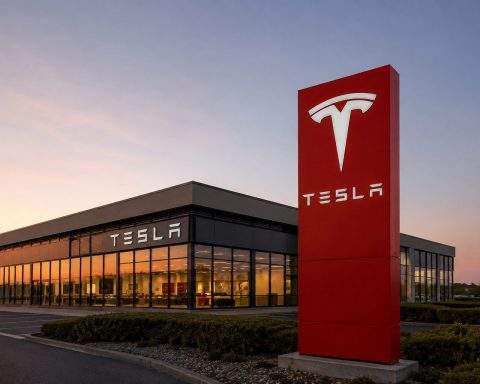
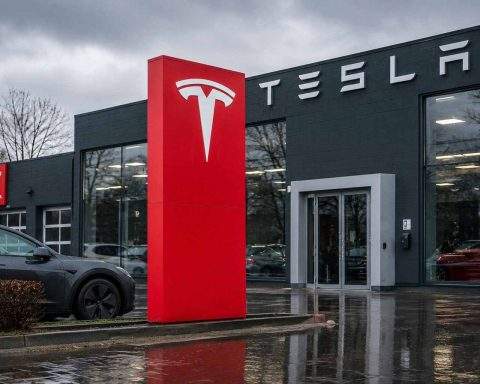
For EV stocks, the key takeaway wasn’t broad risk-off behavior—it was headline sensitivity. Tesla was among the notable single-stock movers after reports highlighted a U.S. safety regulator’s scrutiny of emergency door release controls.
Tesla: NHTSA door-release review adds another regulatory variable
One of the most concrete EV-stock developments investors are digesting is a newly opened U.S. safety review tied to emergency egress controls in the 2022 Tesla Model 3.
According to the National Highway Traffic Safety Administration’s Office of Defects Investigation (ODI) “resume,” NHTSA opened Defect Petition DP25002 on Dec. 23, 2025 to evaluate allegations that a mechanical door release is “hidden, unlabeled, and not intuitive to locate during an emergency.” The ODI document lists an estimated population of 179,071 vehicles and describes the agency action as opening the petition to determine whether to grant or deny it. NHTSA Static
Markets often react before outcomes are known. In recent coverage, Tesla shares dipped after the news circulated—an example of how regulatory uncertainty can act like a volatility lever even when no recall has been issued.
What matters into Monday: the next session could see investors price the headline in one of two ways—either as a short-term sentiment drag or as a manageable compliance issue unless it escalates into a broader investigation and remediation timeline. The ODI document itself emphasizes that the petition is being evaluated.
Tesla: Robotaxi narrative heats up into a year-end deadline
While safety scrutiny pressures sentiment at the margin, Tesla’s valuation debate remains dominated by autonomy and AI.
In the past day, Tesla has stepped up its messaging around Full Self-Driving (FSD) capability as CEO Elon Musk approaches a self-imposed year-end objective related to safety-monitor-free robotaxis in Austin. Coverage has pointed to Musk discussing unsupervised testing and Tesla’s AI lead, Ashok Elluswamy, sharing video of driverless testing—framing autonomy progress as a potential stock catalyst.
On the bullish side of Wall Street’s autonomy thesis, Wedbush analyst Dan Ives has described 2026 as a “defining year” for Tesla, centered on moving from promises to real-world robotaxi execution—an argument that helps explain why Tesla’s stock can stay buoyant even when vehicle-delivery expectations wobble. Investors.com
What matters into Monday: for traders, the question is less about messaging and more about evidence—timelines, operating constraints, and any signals about scaling plans. In the near term, autonomy headlines can move the stock quickly because they influence the market’s willingness to value Tesla as an AI platform rather than “just” an automaker. Investors.com+1
The next big near-term catalyst: Tesla deliveries, with estimates diverging
Tesla deliveries remain a high-impact event—especially near year-end—because they can reset the conversation around pricing, demand, and margin pressure.
Recent coverage points to Tesla reporting Q4 deliveries around Jan. 2, with some forecasts cited around 449,000 units (a year-over-year decline in that estimate).
But the range of expectations is wide. In a delivery preview published today, Gene Munster wrote that he expects deliveries reported on Jan. 2 to come in around 415,000 versus “the Street” at 449,000, tying part of the gap to the post-incentive environment. GeneMunster.com
Why the spread matters for EV stocks: a meaningful miss—or a surprise beat—doesn’t just affect Tesla. It often drags or lifts sentiment for the broader EV complex (Rivian, Lucid, charging names, battery plays) because Tesla is frequently treated as the sector’s liquidity center and narrative bellwether.
U.S. demand signal: J.D. Power says EV share is sliding in December
A major cross-current for EV stocks is whether demand is accelerating, stabilizing, or softening as incentives change and affordability remains stretched.
A J.D. Power–GlobalData forecast published Dec. 26 projects December 2025 U.S. new-vehicle retail sales at 1,222,800 units, down 7.4% year over year (selling-day adjusted). In the same release, J.D. Power’s Thomas King, president of OEM solutions, attributed much of December’s decline to slower EV sales and said EVs are on track to represent 6.6% of retail sales in December, down from 11.2% a year ago.
The release also describes a “pull-ahead” dynamic: EV purchases spiked ahead of the Sept. 30 expiration of federal EV tax credits, followed by a slowdown whose effects were still being felt in December. J.D. Power
Why EV stock investors care: if EV mix is compressing, it can pressure near-term revenue growth expectations (especially for pure-play EV makers) and strengthen the case for companies with diversified profit engines—software, services, energy storage, or hybrids—while also influencing how investors think about pricing power.
Global demand snapshot: EV sales still growing, but the pace is the story
Outside the U.S., demand signals can look very different—and that matters for EV manufacturers with international exposure and for supply-chain names tied to global volume.
A MarkLines update dated Dec. 26 says global EV sales (including BEV, PHV and FCV) in November rose 5.3% year over year to 1.85 million units. MarkLines also reported EVs accounted for 31.9% of total sales in November and that total EV sales for the first eleven months of 2025 were up 20.7% year over year to 16.35 million units.
Investor implication: the global data points to continued adoption, but growth rates—and where growth is concentrated—will likely determine which EV stocks are rewarded. Mature markets with incentive pull-forward can look soft even as other regions keep scaling.
China EV ADRs: XPeng expansion headline moves the conversation
For U.S.-listed China EV names, news flow is often less about U.S. incentives and more about international expansion, model cadence, and competitive dynamics.
In the past 24–48 hours, XPeng drew attention after announcing its official entry into Qatar, including a brand launch event in Doha and plans to introduce multiple models locally.
Why this matters for EV stocks: for XPeng and peers, incremental market access can support the medium-term growth narrative—especially if investors believe exports and overseas distribution can offset intense price competition at home. (Investors will still watch profitability and execution, but market-expansion headlines can be a near-term catalyst.
NIO-linked headline: battery-asset operator financing
Another China EV-related development in the last day involved NIO’s battery-asset ecosystem. CnEVPost reported that Mirattery, described as NIO’s battery asset operator, completed an expanded Series C equity financing totaling nearly RMB 1 billion (about $140 million).
For EV investors, funding updates like these can matter because they touch the broader questions of capital access, balance-sheet durability, and how EV players structure ownership of battery assets and infrastructure.
What investors should know before the next U.S. session opens
With markets closed, the most practical edge for EV-stock investors is going into Monday with a clear “catalyst map” and a plan for volatility.
1) Tesla headline risk remains two-sided
- Safety/regulatory: the DP25002 petition is an active variable, and any sign of escalation could become a Monday headline driver.
- Autonomy narrative: the year-end robotaxi messaging push can also swing sentiment quickly—especially in thin year-end liquidity.
2) Deliveries are the near-term scoreboard—but estimates are split
Investors are weighing delivery expectations that range from “near-consensus” to meaningfully lower forecasts—setting up a potential volatility event around early January reporting. Investors.com+1
3) The demand backdrop is getting more nuanced
J.D. Power’s December outlook argues the EV market is still digesting incentive pull-forward and affordability constraints, which may keep investors more selective across EV makers, charging names, and battery/tech plays.
4) Global growth continues, but leadership matters
MarkLines’ November snapshot underscores that EV adoption is still expanding globally—yet the market is increasingly rewarding the companies that can grow profitably and defend margins amid competition.
EV stocks to watch into Monday
Investors commonly focus on a core basket of high-volume EV tickers and sentiment proxies—especially as year-end trading can amplify moves:
- Tesla (TSLA): regulatory and autonomy headlines; delivery expectations into early January.
- China EV ADRs (XPEV, NIO, LI): international expansion and corporate-financing headlines can shift momentum quickly.
- Broader EV complex: Rivian (RIVN), Lucid (LCID), and EV-adjacent names tend to react to Tesla sentiment and macro EV demand signals.
As the market heads toward the next open, EV stocks remain a sector where narrative and numbers both matter—and where the biggest catalysts (regulators, delivery prints, and demand data) can collide in a single trading day.
Related articles: NASDAQ:TSLA