
New York, June 26, 2026, 12:01 (EDT)
- Bloom dropped 12.4% to $270.88 midday in New York. Shares hit a 52-week high of $351.28 the day before.
- The stock is moving out of the Russell 2000 and into the Russell 1000’s top 200 when trading ends Friday.
- Midday, shares were trading at about 126 times WSJ/FactSet estimates for 2026 EPS. The median analyst target was just 3% above the current price.
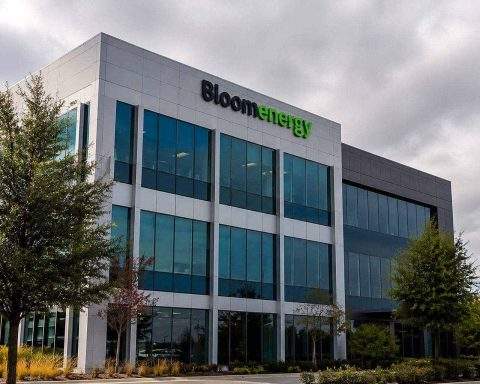
Bloom Energy Corporation NYSE:BE fell 12.4% to $270.88 Friday, slashing back a jump from Thursday’s 52-week high at $351.28. The stock hit $265.11 at its session low, with 8.3 million shares changing hands as of 12:01 p.m. in New York. Bloom’s Russell index move no longer looked like much of a win as the fuel-cell firm came under pressure.
Bloom shares gave up big gains from earlier this month. At midday, the stock traded about 23% lower than the high it reached just a day before. Even with the drop, Bloom was still sharply up from last year’s low of $21.52. The move spelled out risk in one of 2026’s biggest AI power trades.
Russell reconstitution day saw a selloff Friday. FTSE Russell said the new U.S. indexes become active after the close on June 26. Bloom is moving out of the small-cap Russell 2000, joining the large-cap Russell 1000 as one of the top 200 names.
This is important because the trade isn’t only whether Bloom can sell more onsite power systems into AI data centers. It’s now a question of who will own the shares once the market closes. T. Rowe Price said around $12.2 trillion tracked Russell U.S. indexes as of June 30, 2025, and the reconstitution may change how portfolios are positioned and impact fund flows linked to the benchmarks.
Bloom’s market value is still well above the cutoff for its new FTSE Russell size bucket, despite the drop. April 30 data from FTSE Russell had the low end of the Russell Top 200 at $62.1 billion. Bloom’s latest quoted market value is about $87.3 billion, or around 1.4 times that minimum line, according to market data.
The FTSE Russell rebalance wraps up on “one of the highest trading volume days of the year,” Catherine Yoshimoto, director of product management at FTSE Russell, said. That closing price from Bloom matters for index funds, momentum buyers, and shorts all at once. LSEG
The valuation still looks tough. WSJ/FactSet has Bloom at $2.15 a share for 2026 and $4.35 for 2027. With shares at $270.88, Bloom trades at about 126 times this year’s figure and 62 times next year’s. Analysts set a median price target at $280. The average is $282.16, with the top at $380 and the lowest at $207.
Bernstein SocGen’s Sunaina Ocalan launched coverage of Bloom this month, setting a Market Perform rating and $276 price target. The analyst called Bloom’s solid oxide fuel-cell the fastest-to-deploy generation tech in its group, but the firm is looking for a capital plan that can scale and better visibility on free cash flow.
Short interest is rising. On June 15, 29.78 million Bloom shares were reported sold short, which is 10.79% of the float, and up 4.29% from the last update. Days to cover is at 2.8, so bears are loaded up but don’t have a big window to cover.
Power demand from data centers is still driving the stock. In a June 15 report, Bloom said 61% of data-center developers expect to supply their own power if the grid falls short. Bloom also pointed to 18 state bills and 86 local moratoriums linked to new data-center projects. “Access to power remains the biggest constraint to data center growth,” said Natalie Sunderland, the company’s chief marketing officer. She also said community worries now influence which projects move forward. Bloom Energy
Bloom Energy CEO KR Sridhar is calling the local resistance to data centers a chance to pitch the company’s onsite offerings. “Rationally, our deployment should not be a community issue,” Sridhar told Bloomberg, according to Seeking Alpha. Seeking Alpha
Bloom said it surveyed 156 data-center decision-makers in April, covering hyperscalers, colocation players, neoclouds, developers, and chip firms. 79% of those polled were in the U.S.
Related articles: NYSE:BE