
London, July 13, 2026, 12:06 (BST)
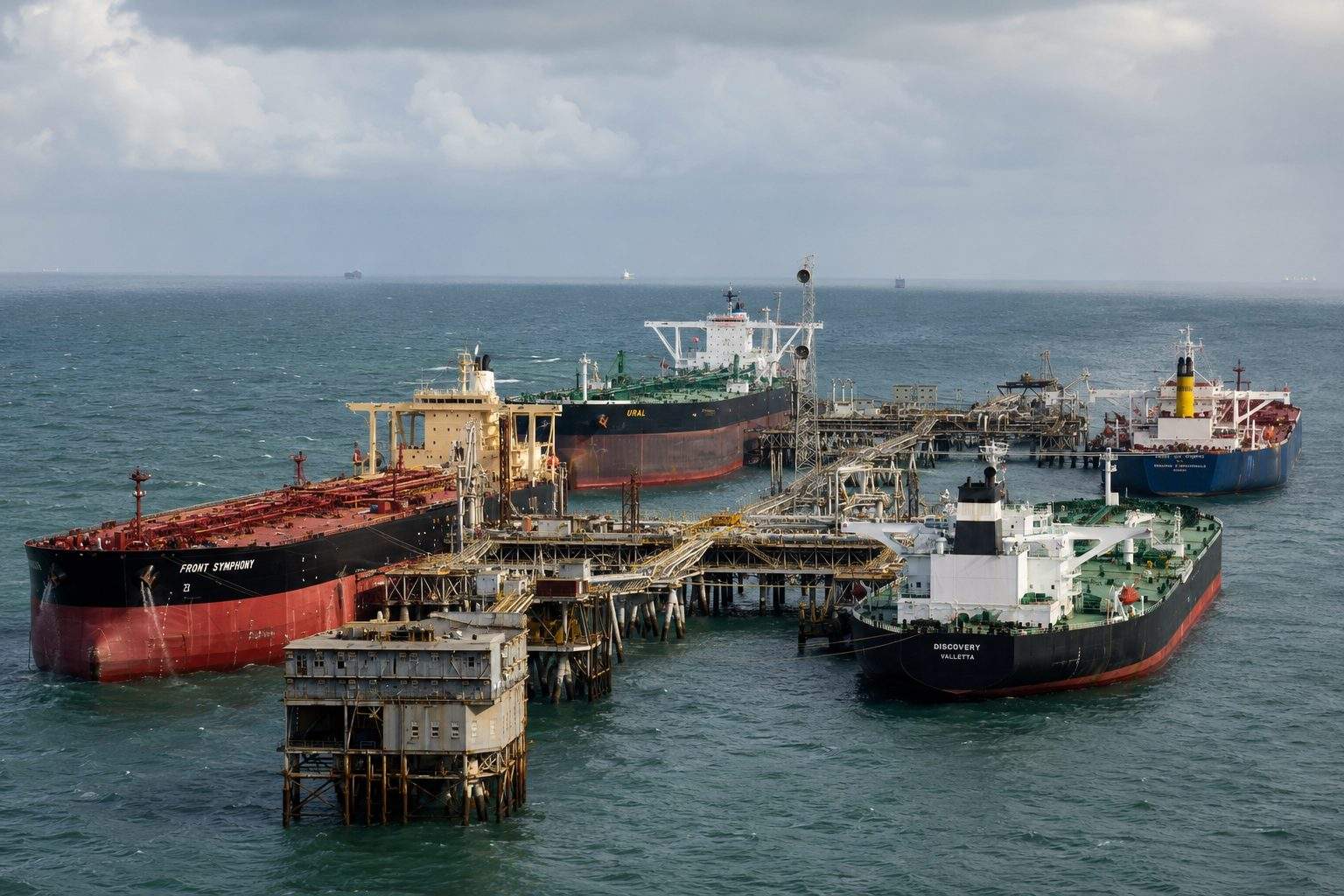
Only six vessels crossed the Strait of Hormuz on Sunday, about 95% to 96% below the 125 to 140 daily sailings recorded before the war. Brent crude, the global oil benchmark, was up a comparatively modest 2.2% at $77.68 a barrel at 0955 GMT on Monday. “The focus will remain on the number of inbound tankers,” UBS analyst Giovanni Staunovo said, because too few ships heading into the Gulf can force producers to curb output. Reuters
That is the investor angle. Hormuz is neither fully open nor fully closed; it is operating as a low-volume, high-cost corridor. The gap between physical traffic and futures prices suggests traders still expect military escorts, inventories or negotiations to prevent a prolonged loss of Gulf supply. ING analysts said the slowdown had renewed concern about oil-market tightness through the third quarter, Barron’s reported.
| Gauge | Latest reading | Comparison | Difference |
|---|---|---|---|
| Visible vessel transits | 6 on Sunday | 125–140 a day before war | 95.2%–95.7% lower |
| Visible vessel transits | 6 on Sunday | 40 a day in recent recovery | 85% lower |
| Brent futures | $77.68 on Monday | $76.01 Friday close | 2.2% higher |
Friday’s Brent settlement provides the market comparison; the percentage gaps are calculations from the reported figures. The table captures why futures may be under-reading the physical squeeze. A contract can price a likely political fix. A refinery cannot process a cargo that does not arrive.
The official and observable pictures also diverge. U.S. officials said about 20 commercial vessels had transited with military coordination over 24 hours, while the Joint Maritime Information Center said the southern route remained passable. Bloomberg ship tracking showed the liquefied natural gas tanker Al Hamra had crossed over the weekend. Ships can switch off their automatic identification system, or AIS, which broadcasts their position, so neither the six-vessel count nor the U.S. figure measures the full flow.
Freight was warning before crude. The TD3C rate for a very large crude carrier, or VLCC — a tanker able to carry roughly 2 million barrels from the Middle East Gulf to China — rose to Worldscale 343 on July 8. Worldscale quotes freight as a percentage of a standard voyage cost.
| Date | TD3C Worldscale rate | Market signal |
|---|---|---|
| June 23 | 501 | Post-agreement freight spike |
| July 1 | 294 | Recent low |
| July 8 | 343 | Up 16.8% in one week |
The rebound showed tanker owners were charging more for scarcity and security risk even before the latest weekend strikes.
Empty ships may be the tighter constraint. Gulf crude-shipping capacity had fallen below 100 million barrels from roughly 150 million before the war, with only a small portion of the remaining fleet made up of empty, or ballast, vessels available to load, Reuters Breakingviews reported. Paul Horsnell, chair of the Oxford Institute for Energy Studies, estimated that about 9 million barrels a day of potential regional production was being curtailed. That turns a shipping problem into a production problem.
European equities reflected the split. BP LON:BP rose 2.5% and peer Shell LON:SHEL gained 1.5% in morning trading, while European airline shares fell as much as 3%. It was not a broad risk-on move: producers gained from higher crude, while fuel users absorbed the cost and inflation risk.
The second-round effect was already visible in bonds. The two-year U.S. Treasury yield reached 4.2393%, its highest since February 2025, while futures priced 39 basis points — 0.39 percentage point — of Federal Reserve tightening by year-end. Nasdaq futures fell 1.2%. Jefferies economist Mohit Kumar said a political “fudge or a patch” could allow oil to flow and cap prices before the U.S. midterm elections. Reuters
But the risk to the bullish oil and tanker-freight case is a fast diplomatic or military workaround. “Brent and WTI could climb further if tensions threaten tankers, ports or production,” GivTrade analyst Waleed Said said, but he also judged that credible negotiations and stable shipping would quickly remove part of the risk premium. Voyages made with AIS switched off could also mean actual traffic is higher than public data indicate. The Wall Street Journal
For investors, the next confirmation will not be another declaration that Hormuz is open. It will be a sustained rise in empty tankers entering the Gulf, a return of visible LNG traffic and a fall in TD3C freight at the same time. Until those three gauges move together, the strait is open in official statements, not yet in normal commercial practice.
Related articles: Stock Market