NEW YORK, July 13, 2026, 09:04 (EDT)
U.S. stock futures pointed lower before Monday’s opening bell, but the damage was concentrated. Nasdaq-100 futures fell about 1%, S&P 500 contracts lost roughly 0.3%, and Dow futures were nearly flat as renewed U.S.-Iran fighting lifted crude prices and hit semiconductor shares.
The more useful signal is the 0.91-percentage-point gap between Nasdaq and Dow futures. With the 10-year Treasury yield near 4.58%, up about two basis points — 0.02 percentage point — the market is treating the oil move as an inflation and valuation problem. Higher yields reduce the present value of profits expected years from now, which tends to hurt growth stocks more than established, cash-generating businesses.
| Contract or asset | Indicative level | Change | Premarket read-through |
|---|---|---|---|
| Dow futures | 52,838.00 | -0.13% | Limited broad-market stress |
| S&P 500 futures | 7,592.75 | -0.36% | Moderate risk reduction |
| Nasdaq-100 futures | 29,720.25 | -1.04% | AI and chip exposure under pressure |
| WTI crude | $74.11 a barrel | +3.78% | Fresh inflation impulse |
| Brent crude | $78.76 a barrel | +3.62% | Higher geopolitical risk premium |
| Gold futures | $4,060.93 an ounce | -1.23% | No conventional rush into havens |
The quotes were indicative snapshots recorded between 8:19 a.m. and 8:29 a.m. EDT and may move before the bell.
Gold’s decline is telling. A haven is an asset investors typically buy when fear rises; gold falling while oil and bond yields climb suggests traders are guarding against tighter monetary policy, not just war risk. Aneeka Gupta, macroeconomic research director at WisdomTree, called oil’s renewed inflation effect “a big wake-up call for markets.” Reuters
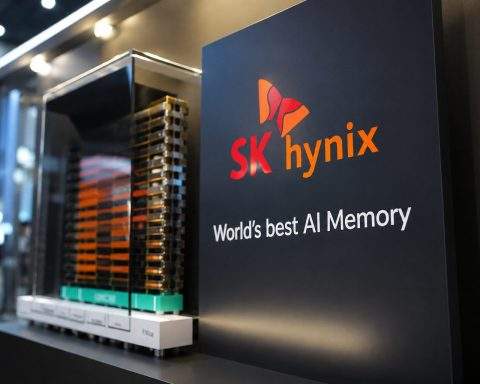
SK hynix NASDAQ:SKHY dropped 8.3% to $154.10 in premarket trade after gaining nearly 13% in Friday’s U.S. debut. U.S. peer Micron Technology NASDAQ:MU fell 4.5%, while storage-chip maker Sandisk NASDAQ:SNDK lost 5.1%. SK hynix held 58% of first-quarter revenue in high-bandwidth memory — the fast memory used in AI servers — against Micron’s 21%, yet its U.S. receipts still carried a roughly 37% premium to the Seoul-listed shares after Monday’s Korean rout. Lorraine Tan, a director at Morningstar, said her base case assumes “normalisation in cycle dynamics,” limiting further upside at current prices. Reuters
The breadth of the decline makes this more than a post-listing reversal. The iShares Semiconductor ETF NASDAQ:SOXX fell 2.6%, while several memory and storage names lost between 4% and 7%. Kathleen Brooks, research director at XTB, said higher oil was “disrupting the momentum trade” — the strategy of buying stocks mainly because they have recently risen — and was hitting both technology and chip shares. Reuters
The transmission point remains the Strait of Hormuz. Before the conflict, the waterway handled about one-fifth of daily global oil and liquefied-natural-gas supplies. Ship traffic fell to a five-week low on Sunday, with only six vessels recorded in transit, while UBS analyst Giovanni Staunovo said slower inbound tanker movements created both a price premium and a genuine disruption risk.
The macro calendar leaves little room for investors to look past that risk. The government will publish June consumer-price data at 8:30 a.m. EDT on Tuesday, followed by producer prices on Wednesday. Rate-futures contracts, which traders use to bet on Federal Reserve policy, imply a 50% probability of two or more increases by December, slightly higher than on Friday.
Earnings will test whether profits can offset the higher-rate pressure. The S&P 500 entered Monday up more than 10% this year and less than 1% below its record close, while second-quarter earnings are forecast to rise 23.7% from a year earlier. JPMorgan Chase NYSE:JPM and Goldman Sachs NYSE:GS report on Tuesday. Michael Reynolds, investment-strategy vice president at Glenmede, said geopolitical headlines, inflation data, earnings and AI skepticism were “all coming to a head at once.” Reuters
But the setup can reverse quickly. Brent slipped on Friday when traders saw better prospects for Hormuz shipping, and John Kilduff of Again Capital said oil was “ready, willing and able to jump on good news.” A sustained pickup in vessel traffic could strip out the crude risk premium and help chips recover; another shipping shock combined with a hot CPI reading could lift yields further and spread the selling beyond technology. Reuters
The opening test is whether the Nasdaq-Dow gap narrows. A steady Dow alongside weak chips would signal rotation away from expensive growth stocks. If blue chips join the decline while oil and yields continue higher, the session would be shifting toward a broader reduction in risk.
Related articles: NASDAQ:SKHY