NEW YORK, August 4, 2026, 04:17 EDT — U.S. cash markets have closed as premarket trade begins.
President Donald Trump has launched a fresh political challenge against major oil companies. He called on Exxon Mobil Corporation NYSE:XOM and Chevron Corporation NYSE:CVX to cut retail fuel prices following a surge in their profits. Trump stated that both firms had made “too much money” during the Iran conflict. Reuters
The numbers illustrate the strain. Exxon and Chevron reported total earnings of $26.60 billion in the second quarter, which is 2.78 times higher than their profit in the same period a year earlier.
| Company | Q2 2026 profit | Q2 2025 profit | Change |
|---|---|---|---|
| Exxon Mobil | $14.53 billion | $7.08 billion | up 105% |
| Chevron | $12.07 billion | $2.49 billion | up 385% |
| Combined | $26.60 billion | $9.57 billion | up 178% |
Company-reported figures served as the basis for percentage change calculations.
The source of those profits is the concern for investors. Upstream production accounted for approximately 61% of total earnings, while refining and fuel-marketing activities made up close to 39%.
| Reported profit source | Exxon Mobil | Chevron | Combined | Share of combined profit |
|---|---|---|---|---|
| Upstream | $7.93 billion | $8.18 billion | $16.11 billion | 60.6% |
| Refining and fuel marketing* | $5.47 billion | $4.87 billion | $10.33 billion | 38.9% |
| Other, net | $1.13 billion | $(0.98) billion | $0.16 billion | 0.6% |
| Total | $14.53 billion | $12.07 billion | $26.60 billion | 100% |
Exxon refers to the fuel division as Energy Products, while Chevron labels it Downstream. The companies define these segments differently.
Trump focused on lowering pump prices, but the majority of profits came from oil and gas production. Cutting retail prices would initially impact refining and marketing margins. Upstream profits driven by crude prices and volume would not be directly affected.
Trump made the call in the Oval Office and reiterated it on Truth Social, but did not reveal any fresh pricing policy. “They better cut the retail price, the consumer price,” Trump told reporters. Exxon and Chevron were not available for immediate comment. Reuters
The American Petroleum Institute challenged the assertion, stating that fuel prices are determined by worldwide supply and demand, as well as concerns over major shipping lanes. The industry group added these dynamics were “not driven by any one company.” Reuters
Crude prices continue to react rapidly. Brent slipped 7% to $83.77 per barrel on Monday. West Texas Intermediate retreated 5.1% to $80.34 after Trump halted fresh strikes and returned to negotiations.
Oil prices recovered some ground early on Tuesday. Brent increased by 1.2% to $84.79, with WTI up 0.6% to $80.80. Ongoing supply concerns persisted after Iran denied that negotiations were taking place.
Stock movements on Monday reflected the same concerns, with companies tied to refining declining even as the broader market advanced.
| Security | Monday close | Daily change |
|---|---|---|
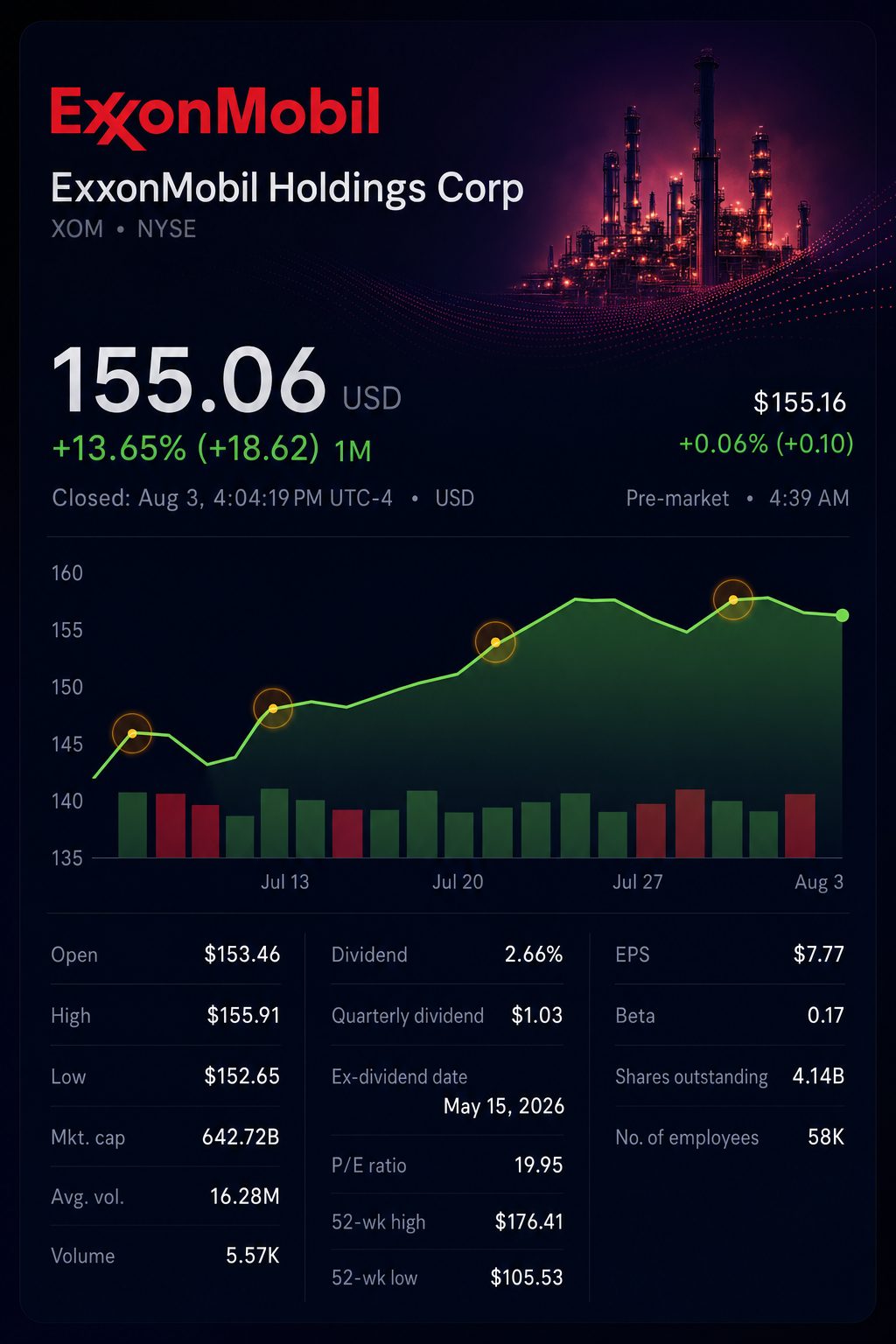
| Exxon Mobil | $155.06 | -0.25% |
| Chevron | $193.18 | -1.83% |
| Valero Energy Corporation NYSE:VLO | $307.54 | -1.75% |
| Marathon Petroleum Corporation NYSE:MPC | $307.03 | -2.93% |
| S&P 500 | 7,600.50 | +1.48% |
The discrepancy is significant. Investors sold off energy stocks and favored companies that benefit from lower oil prices. This trend aligns with the market anticipating reduced war margins, even before any official move by the White House.
Pump prices have not yet responded. On July 31, the national average for regular gasoline stood at $4.10. Changes in retail prices often trail shifts in crude oil and wholesale fuel markets.
Rising cash distributions heighten political scrutiny. Exxon returned $9.4 billion via dividends and buybacks. Chevron issued $3.50 billion in dividends and allocated $3.12 billion to share repurchases. The total outlay reached nearly $16.0 billion, making up roughly 60% of quarterly earnings.
Company leaders described the quarter in terms of operating performance. Exxon CEO Darren Woods said execution characterized the period, even in the face of challenges. Chevron’s Mike Wirth cautioned that supply difficulties increased throughout the quarter.
The sector saw its expectations recalibrated following last week’s earnings reports. Investors this week are focusing on Iran diplomatic developments, tanker movements, and how pump prices reflect costs. The broad market will look to Friday’s July employment figures, which are set for release at 08:30 EDT, as a key indicator.
Risks are balanced on both sides. If the Strait of Hormuz reopens reliably, crude prices and refining margins could fall. However, further attacks or disruptions to shipping could bring back the war premium, keeping consumer costs elevated for longer.
At present, markets anticipate de-escalation ahead of any regulatory moves. However, Trump’s involvement shifts the dynamics. What was an exceptional quarter for cash is now a measure of pricing strength, buyback persistence, and resilience to political scrutiny.
Related articles: NYSE:XOM