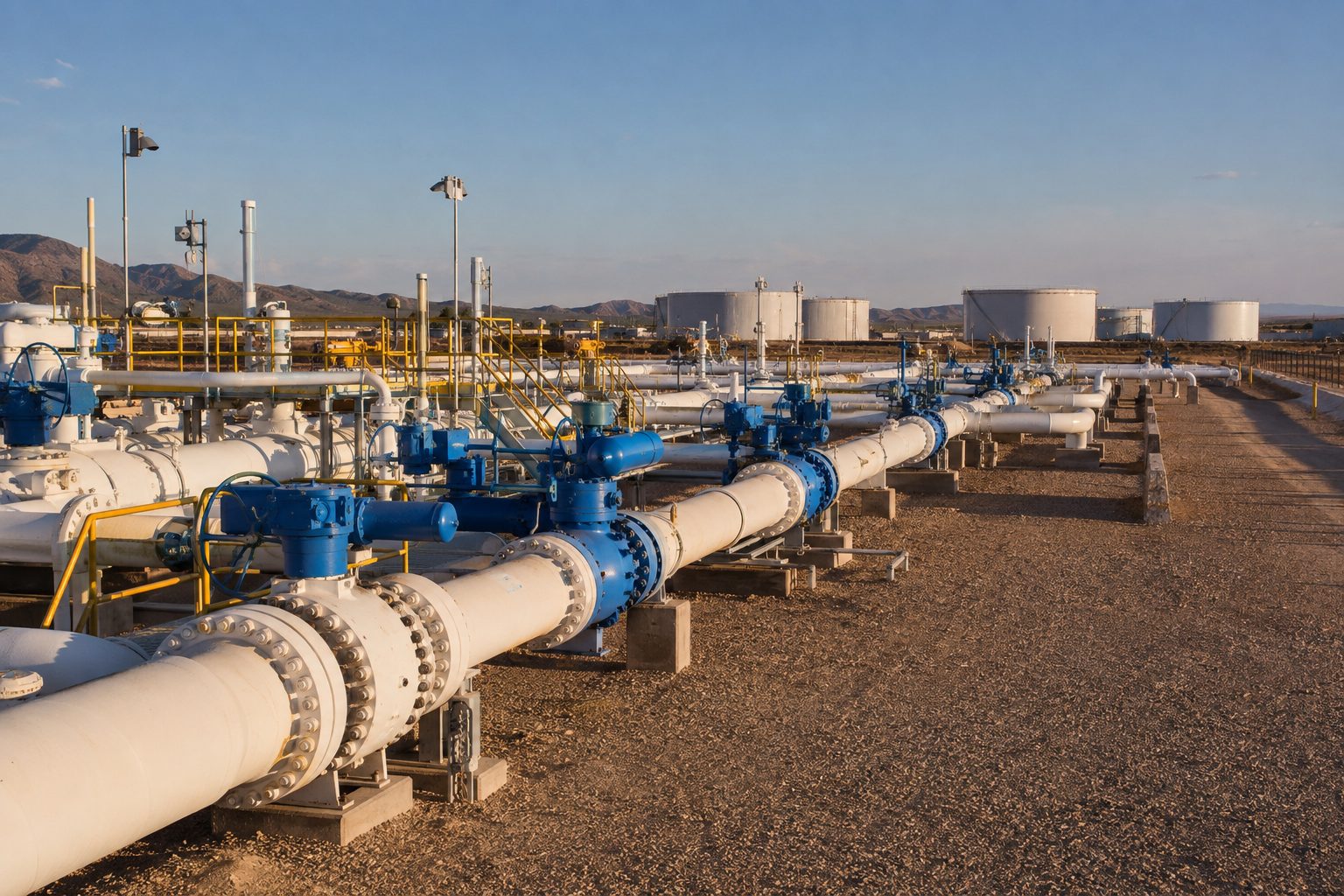

HOUSTON, August 11, 2026, 08:40 EDT
- A $5 billion investment was approved by three companies for a 1,300-mile refined-products pipeline, which is designed to carry 230,000 barrels per day.
- Phillips 66 is set to hold a 49.9% stake, with Kinder Morgan controlling 35.1% and HF Sinclair retaining 15%.
- The design capacity represents 74.4% of the nameplate crude capacity lost at two refineries in California, although the two metrics are not directly comparable.
Phillips 66 NYSE:PSX, Kinder Morgan NYSE:KMI, and HF Sinclair NYSE:DINO have approved the $5 billion Western Gateway Pipeline project. The companies have also completed the formation of their joint venture. This move advances a long-envisioned fuel corridor to the construction phase, following the closure of two significant refineries in California.
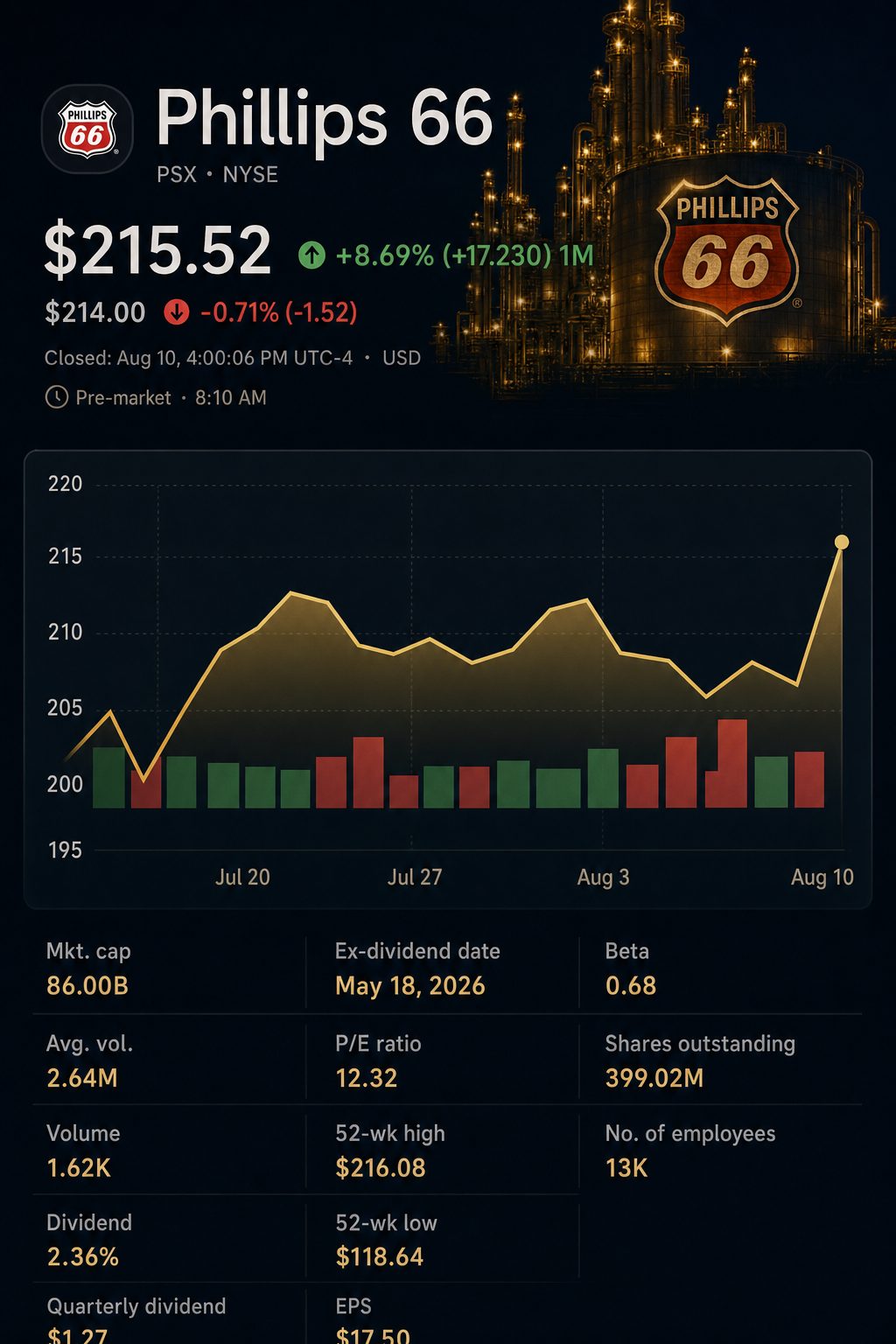
The investment thesis hinges on two figures. Western Gateway is designed for a capacity of 230,000 barrels per day. Its main contracts are expected to be 10-year, take-or-pay deals, aimed at minimizing volume risk after operations commence.
Capital exposure is not distributed evenly. Phillips 66 will provide almost $2.5 billion in cash, which exceeds the firm’s total capital budget for 2026. By contrast, Kinder Morgan is supplying significantly less cash, but it will contribute approximately $1.5 billion in pre-existing pipeline infrastructure.
| System element | Planned action | Investor-relevant measure |
|---|---|---|
| Western Gateway overall | Connect St. Louis and Gulf Coast points to Arizona and California | 1,300 miles; 230,000 bpd design capacity |
| Gold Pipeline | Reverse the current product flow from Borger to St. Louis | Transports products westbound to Borger |
| Borger-Phoenix segment | Construct a new pipeline | Primary new-build component |
| SFPP East and West Lines | Supply assets; reverse direction of Colton-Phoenix flow | Approximately $1.5 billion asset valuation |
The system is designed to transport gasoline, diesel and jet fuel into a remote western market. The current SFPP network currently supplies California, Arizona and Nevada. The companies remain on track for a mid-2029 service launch.
Following the open season, Phillips 66 Chairman and CEO Mark Lashier stated that “strong market interest validates the role this project can play in improving supply flexibility and reliability for West Coast markets.” Phillips 66
| Partner | JV ownership | Cash contribution | Other contribution | Cash vs. 2026 capital baseline |
|---|---|---|---|---|
| Phillips 66 | 49.9% | Close to $2.50 billion | — | 105% of $2.37 billion |
| Kinder Morgan | 35.1% | Roughly $250 million | Roughly $1.50 billion in assets | 7% of $3.40 billion |
| HF Sinclair | 15.0% | Roughly $750 million | — | 97% of $775 million |
The comparison reflects scale rather than timing, with project investments distributed over several years. Phillips 66’s budget for 2026 is set at $2.37 billion. Kinder Morgan expects to allocate close to $3.4 billion in discretionary investments, and HF Sinclair outlined a capital plan of $775 million.
The imbalance is significant. Phillips 66 holds 50% of the equity and shoulders the greater portion of the cash outlay. Kinder Morgan is exchanging operating assets for a 35.1% equity interest, maintaining flexibility to finance its broader pipeline of upcoming projects.
| California supply action | Processing capacity | Western Gateway comparison |
|---|---|---|
| Phillips 66 Los Angeles plant shutdown | 139,000 bpd crude throughput | 60.4% of pipeline planned capacity |
| Valero Energy NYSE:VLO Benicia facility idle | 170,000 bpd crude throughput | 73.9% of pipeline planned capacity |
| Total combined cut | 309,000 bpd | Pipeline meets 74.4% of reduction |
| Western Gateway specifications | 230,000 bpd refined output | Proposed east-to-west link |
According to the U.S. Energy Information Administration, the two shuttered refineries had capacities of 139,000 and 170,000 barrels per day. Western Gateway is designed to move 230,000 barrels daily, amounting to 74.4% of the total lost capacity. The figures are not directly comparable: refinery data reflect crude oil input, while the pipeline capacity covers finished product shipments.
California accounts for 9% of total U.S. refining capacity. However, its unique gasoline formulation and constrained pipeline network complicate replacement supply. As of the start of 2026, there were 13 active petroleum refineries in the state.
The gap is apparent in the market structure. Refineries operating in California now have a combined daily crude capacity near 1.34 million barrels. The Western Gateway project would boost transport infrastructure by an amount equal to about 17% of that capacity, using the most recent state figures as of July 8.
Stable fuel prices rely on factors beyond pipelines. “Price stability will depend on market participants’ continued advance preparation through maintaining adequate inventories, ordering sufficient cargoes, and avoiding reactive spot market behavior,” California petroleum watchdog director Tai Milder said in a previous market update. California Energy Commission
U.S. stock markets were yet to open when the project was disclosed. The initial trading response for Phillips 66, Kinder Morgan and HF Sinclair now awaits the 9:30 a.m. open on Tuesday. Market participants will consider safeguarded pipeline income in light of extended construction expenditures.
Risks: Western Gateway remains exposed to permitting and building challenges, along with cost escalation. California’s fuel use continues to drop as electric vehicles become more popular. Any postponement past mid-2029 could result in capital being committed ahead of the expected start of contracted cash flow.
The following key moment is execution. Authorization of milestones, definitive construction timetables, and any modifications to the $5 billion projection will indicate if the decade-long contracts are able to safeguard returns before California’s supply shortfall grows.
Related articles: NYSE:PSX